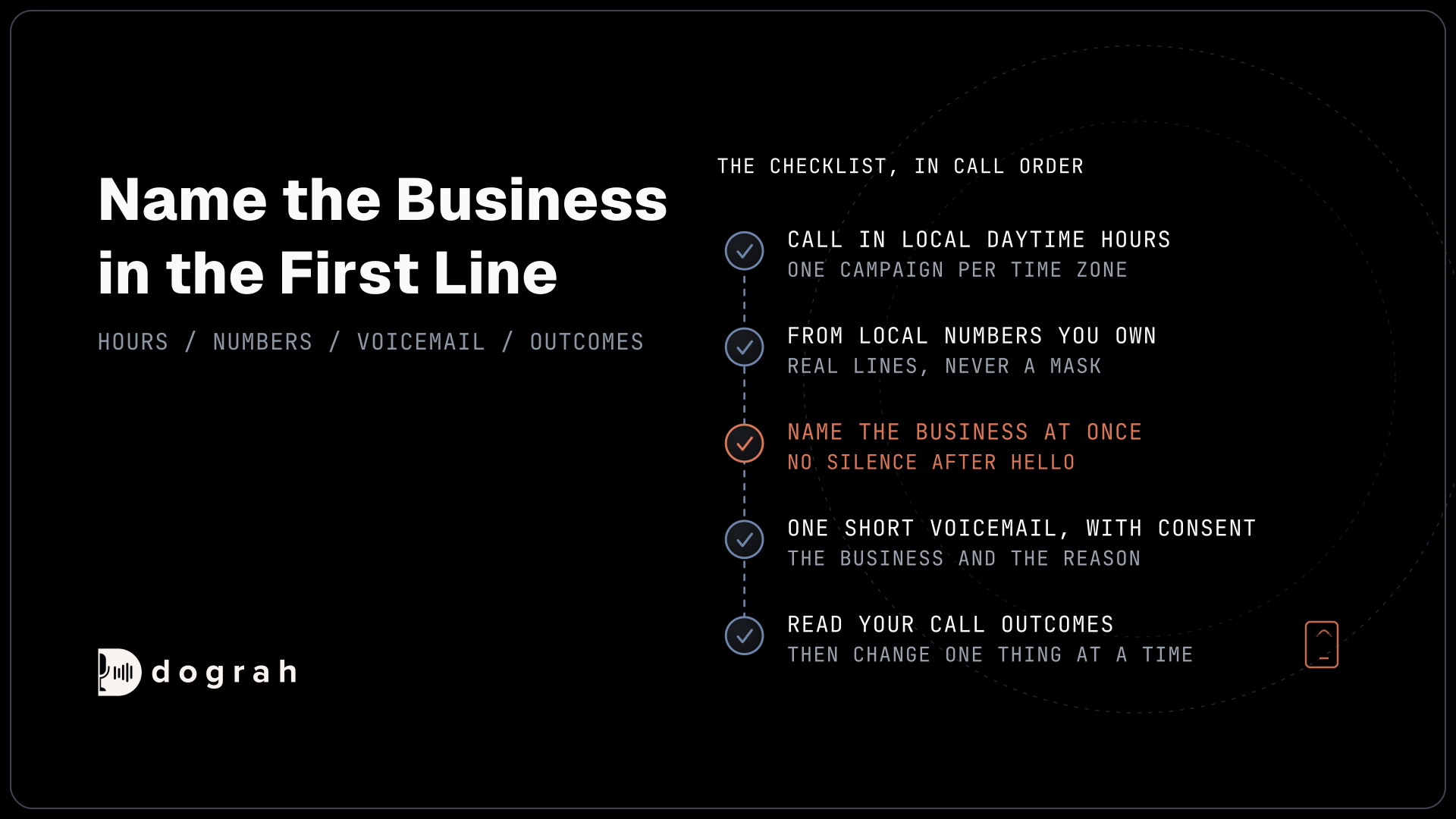

Low answer rates on AI outbound calls usually come from timing and from how hard each number is worked before anyone says hello. Call in local daytime hours, from numbers you own, name the business at once and keep voicemails short. Dograh, the open-source AI voice agent platform we build, runs these campaigns self-hosted or on Dograh Cloud.
Key Takeaways
- Rotating caller IDs never resets the Florida and Maryland three-call limits.
- Name the business in the first line, with no silence after hello.
- A rising wrong_number or voicemail_detected share points to the list or timing.
This post is part of our guide to AI cold calling, where most of a call's result is settled before the agent speaks. Below is a checklist of everything besides caller ID that lowers answer rates: calling times, how many numbers you use, local numbers, the first seconds and voicemail.
Start with the call outcomes you have
Most people now let unknown numbers ring out. Hiya, a caller ID company, reports that 86% of calls from unknown numbers go unanswered, a figure our cold calling guide puts in context, so a low rate on a cold list is normal. Your own call outcomes are a better guide to what to fix first than any industry average.
Every finished Dograh call carries a call disposition, and the defaults include qualified, not_interested, wrong_number, voicemail_detected, do_not_call and callback_requested. A rising voicemail_detected share usually points to timing, while a rising wrong_number share points to the list itself. Each call also keeps its transcript and recording, so you can hear the exact moment a person ended the call.
Calls that never connect, or that phones label as spam, are a caller ID problem. Our post on STIR/SHAKEN and caller ID for AI calls covers attestation, branded caller ID and how to recover a flagged number, so this checklist leaves those topics out.
Call inside local daytime hours
Time of day is both a legal issue and an answer-rate issue. The FCC's rules for the Telephone Consumer Protection Act allow sales calls from 8 a.m. to 9 p.m. at the called person's location, and several states end at 8 p.m. The last hour that looks free on a national list is often off limits, and our post on outbound calling rules for voice agents lists the state windows.
A Dograh campaign has one time zone, set in its Call Schedule along with up to 50 calling slots by weekday (campaigns). Split a national list into one campaign per time zone and set the slots to the narrower of the federal and state windows for the people on that list. A campaign with no slots dials continuously, so add them before launch.
Retries follow the same schedule. In each campaign you set the retries (0 to 10) and the wait between them, from 30 seconds to an hour, and choose whether busy, unanswered and voicemail calls are tried again. Dograh only retries calls that did not reach a person.
How many numbers, and how rotation works
No federal rule caps how many numbers a business may call from. A Dograh campaign rotates through every active number on its telephony configuration in round-robin order, so a larger pool spreads the calls and lets each number rest between them. The campaign form warns when Max Concurrent Calls is higher than the number of caller IDs, since some numbers would then carry two calls at once.
Rotation never resets the state call limits. The Florida Telemarketing Act bars more than three sales calls to the same person in 24 hours on the same subject from any number, and Maryland's Stop the Spam Calls Act sets the same three-call limit. Both laws also ban showing a different caller ID to hide who is calling. Spreading a list across more numbers therefore generally changes nothing about how often one person may be called, and since each campaign counts only its own retries, keep one campaign per person per day for contacts in these states and confirm your retry plan and number pool with counsel before you call there.
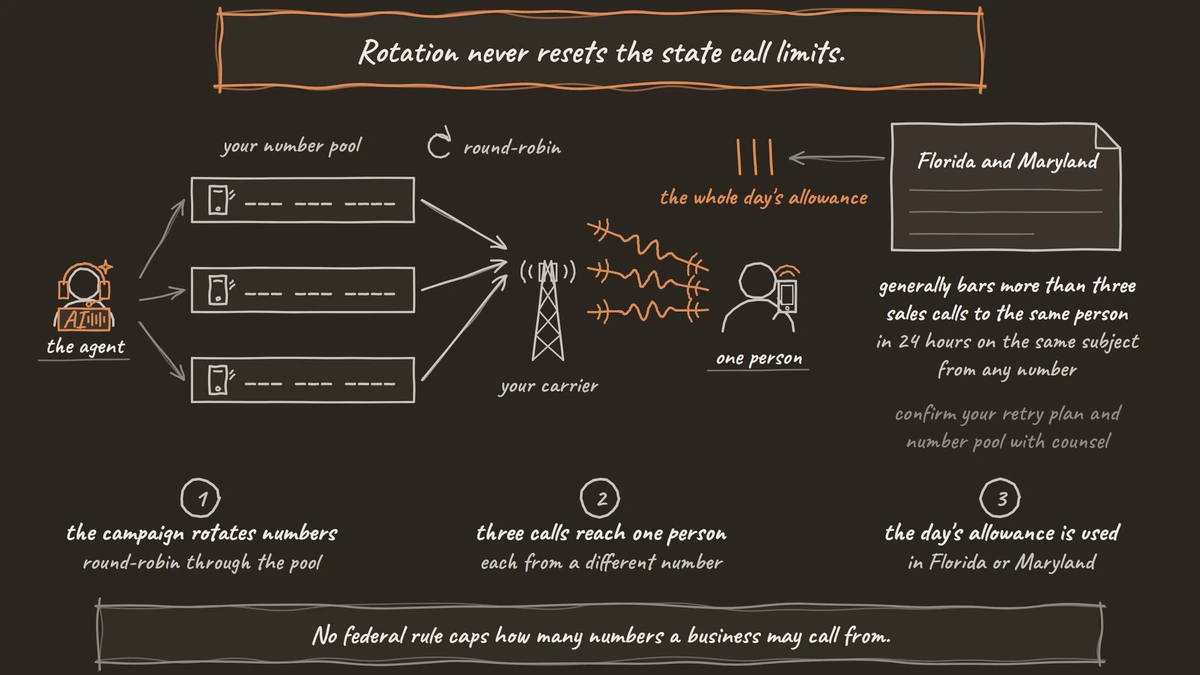
The arithmetic is easy to miss. If you allow two retries with a short wait, three calls can land within minutes, which uses the whole day's allowance for that person in Florida or Maryland. Pacing protects the numbers as well: Calls Started per Second defaults to 1, and the circuit breaker, on by default, pauses a campaign when too many calls fail.

Open Source Alternative to Vapi / Retell
Self-hosted voice agent platform — no per-minute fees
dograh-hq/dograh
Star on GitHub
Local numbers, used openly
Local numbers help when they are real lines you own in a region you serve. A Dograh campaign picks its caller IDs from the telephony configuration it uses, so to call one region from local numbers, put those numbers on their own telephony configuration and pick it on that region's campaign. Pair it with the one-campaign-per-time-zone split above.
Whatever number shows must be real and callable. The Telemarketing Sales Rule requires sales calls to transmit a caller ID number, and lets you show a customer service number answered during business hours. Anyone who calls the number back should reach your business or a message that names it. Treat a local number as a real line for that region and never as a mask, since the Florida and Maryland laws above ban displaying a different number to hide the caller.
The first seconds after hello
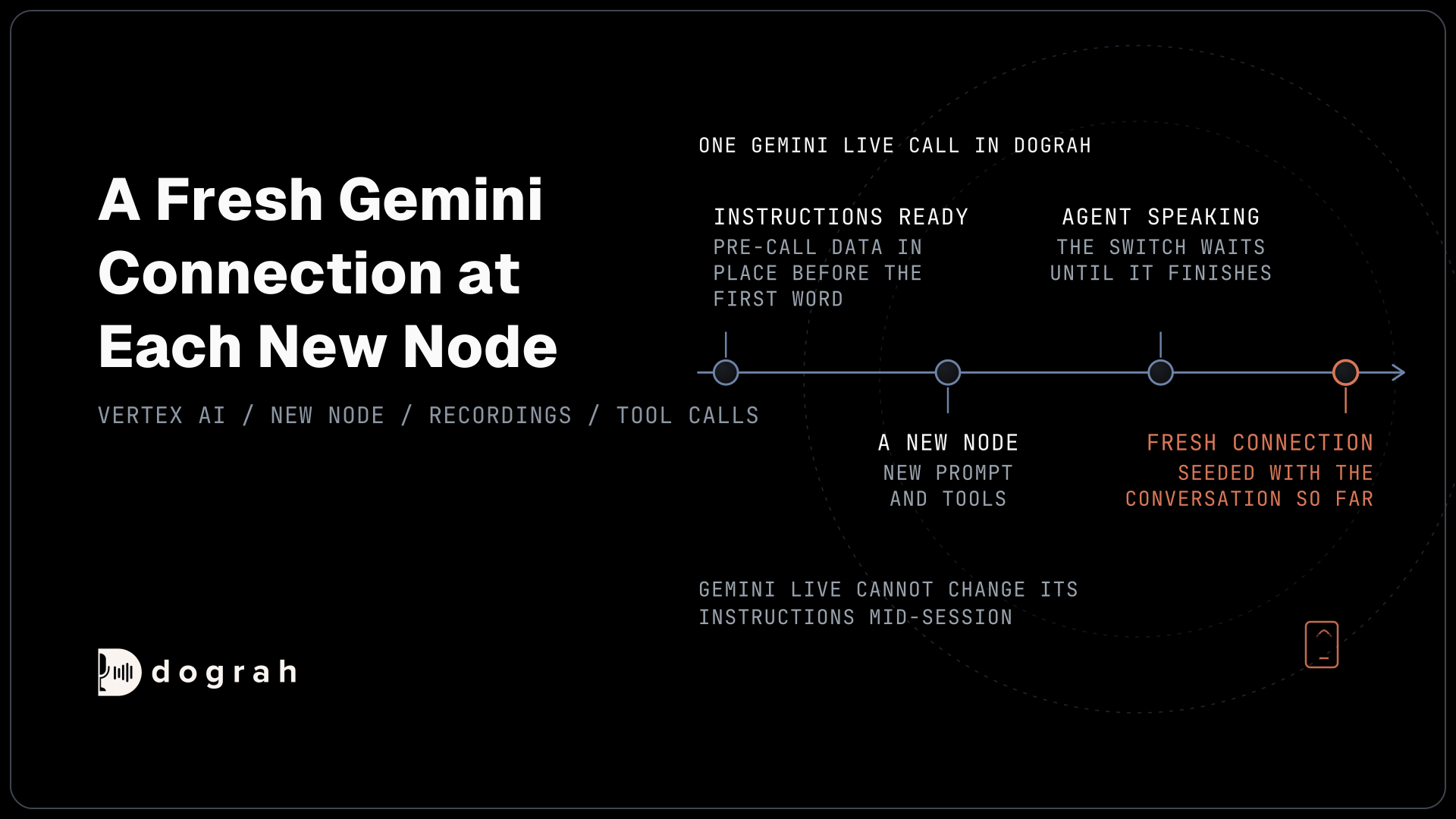
An answered call can still be lost in its first seconds. Greeting Text plays the moment the call connects, so a short line that names the business comes out with no gap (Start Call settings). Delayed Start holds the opening for 0.1 to 10 seconds, so keep it off or very short on cold calls. Pre-Call Data Fetch on outbound calls runs after the person answers and the greeting waits for it, so a slow endpoint means silence right after hello. For campaigns, put per-contact details in CSV columns instead.
The opening also carries legal weight. The FCC's February 2024 ruling on AI voices treats an AI voice as an artificial voice, and artificial-voice calls must state the business's name at the start and give a callback number. Sales calls also need an automated opt-out, by voice or key press, offered within 2 seconds of that identification.
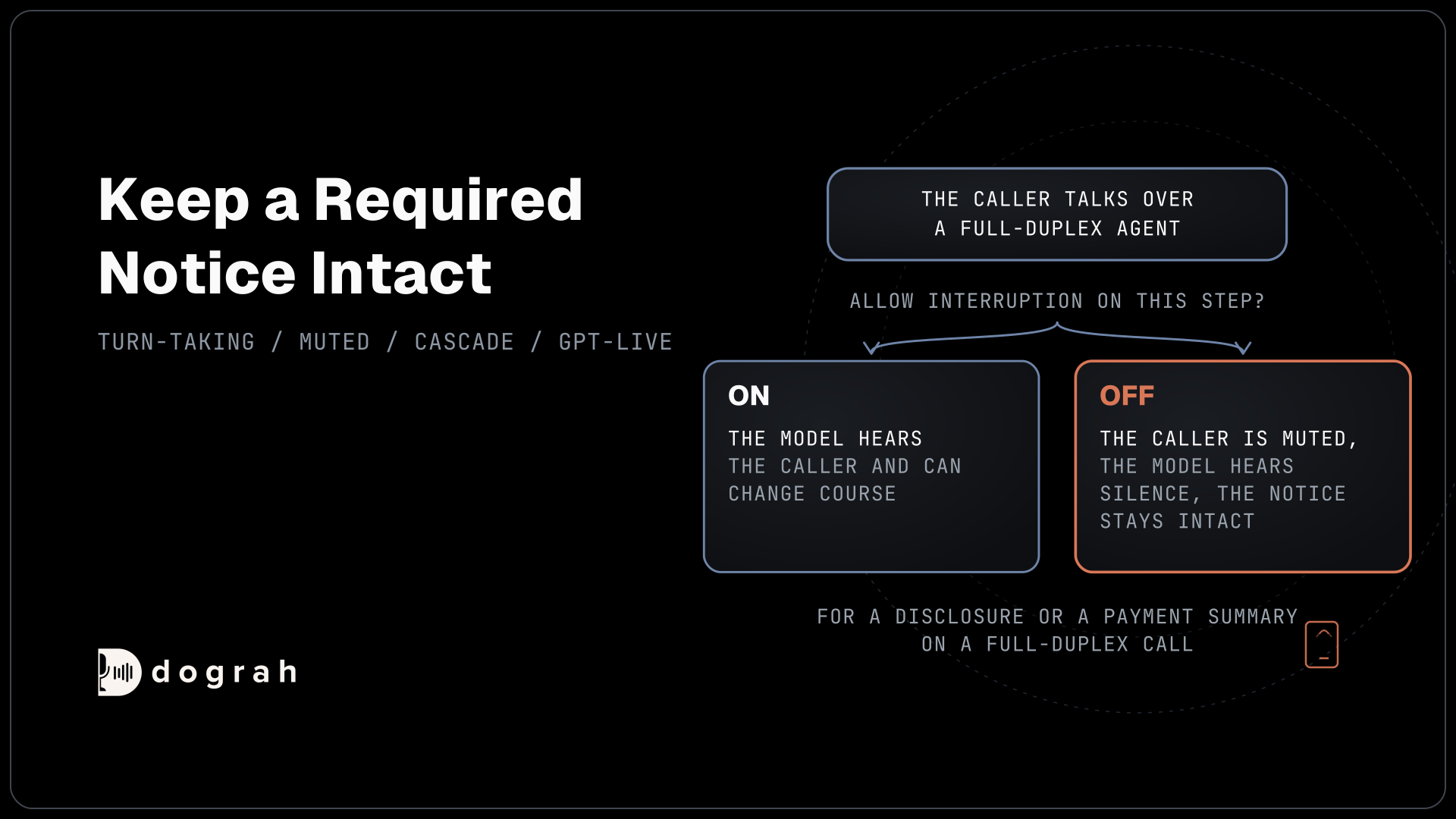
A recording of a real person can carry that first line. Set Greeting Type to a pre-recorded file and the agent's own voice takes over after it. If the opening holds a notice the caller must hear in full, switch Allow Greeting Interruption off, since it is on by default. Our post on the first 15 seconds of an AI outbound call covers the rest of the opening.
Join the Dograh Community
Dograh is an OSS alternative to Vapi. Join our Slack community for queries, releases, best practices & community interactions.
Voicemail: one short message
Voicemail handling in Dograh is off by default. Once you switch it on, "When voicemail is detected" starts on Disconnect the call, and "Leave a message" plays fixed text or a recording. One short message that names the business and the reason for the call tells the person who the next call is from. How the agent spots a machine is covered in our post on voicemail detection.
An AI voicemail counts as an artificial-voice message, so it needs the same consent as the call itself. A sales message left on a voicemail must also give a toll-free number that reaches an automated opt-out. With voicemail ticked in Retry On, a person who never answers can hear the same message on each attempt, so take voicemail out of Retry On for campaigns that leave a message.
Test each change on a slice of the list before you scale it. The built-in QA reviews a sample of calls, and a campaign can split traffic across up to five agent versions to compare two openings. Self-hosted Dograh has no per-minute platform fee, but servers, model keys and phone minutes still cost money. Dograh Cloud charges a 1¢-a-minute platform fee.
Change one thing at a time, such as the calling slots or the opening line, and compare the disposition shares before and after. Two changes at once hide which one moved the answer rate.
Glossary
- Answer rate
- The share of dialled calls that a person picks up. It differs from the connect rate, which also counts calls that reach a voicemail box, so read voicemail_detected separately.
- Caller ID rotation
- Spreading a campaign's calls across several numbers. A Dograh campaign rotates round-robin through the active numbers on its telephony configuration. Rotation spreads volume but never resets state limits on calls per person.
- Call disposition
- The outcome label a finished call carries, such as wrong_number, voicemail_detected or do_not_call. Tracking the share of each over time shows whether a problem sits in the list, the timing or the opening.
- Automated opt-out
- A voice or key-press way for the called person to stop future sales calls. Artificial-voice sales calls must offer it within 2 seconds of naming the business, and voicemails must give a toll-free number that reaches it.