
Outbound voice agents may make sales calls from 8 a.m. to 9 p.m. local time, and Florida and Maryland end at 8 p.m. and allow three calls per person in 24 hours. Stop requests must be honoured within 10 business days. Dograh, the open-source AI voice agent platform we build, runs campaigns self-hosted or on Dograh Cloud.
Key Takeaways
- One Dograh campaign covers one time zone, so split lists by zone.
- Two retries with a short wait can use a day's Florida allowance.
- A spoken stop must reach your own do-not-call list during the call.
This post is part of our guide to AI cold calling, which covers consent and the national do-not-call rules. Below, we add the state rules that federal law leaves out and the newest stop-request rules, each mapped to the Dograh campaign or agent setting that puts it into practice.
Calling windows by time zone
Under the FCC's rules for the Telephone Consumer Protection Act, sales calls may run from 8 a.m. to 9 p.m. at the called person's location. Several states end earlier, and the Florida Telemarketing Act allows calls only from 8 a.m. to 8 p.m. in the called person's time zone.
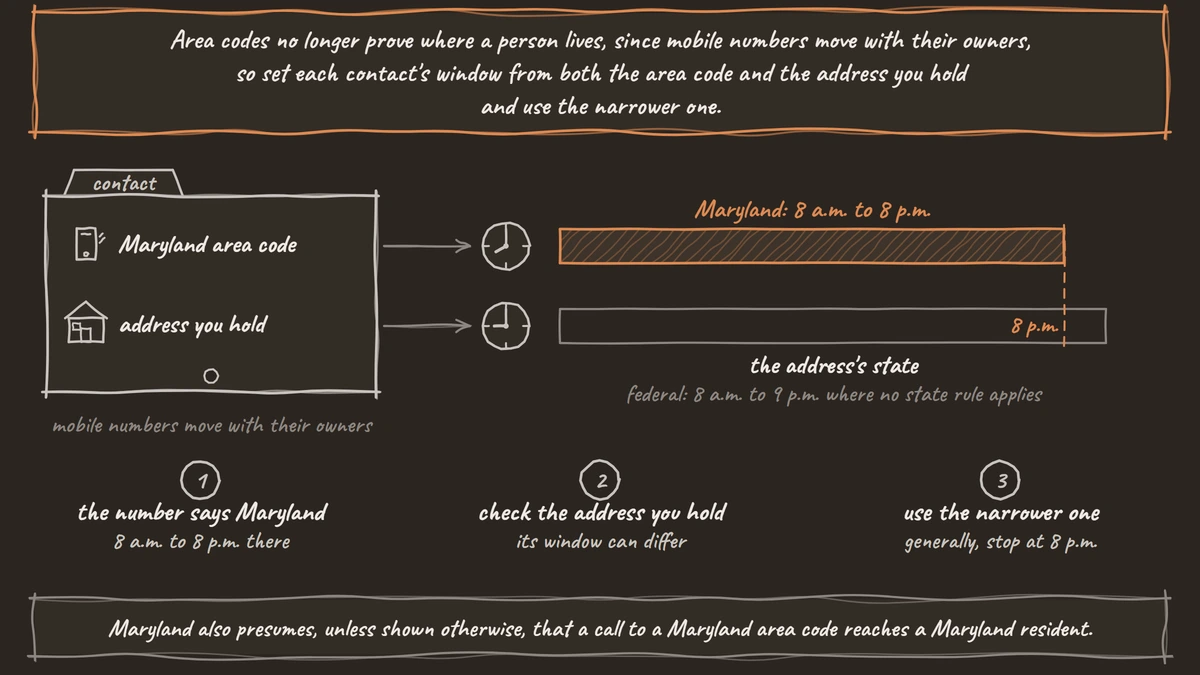
Maryland's Stop the Spam Calls Act bars calls between 8 p.m. and 8 a.m., and Washington's telephone solicitation law allows calls only from 8 a.m. to 8 p.m. Maryland also presumes, unless shown otherwise, that a call to a Maryland area code reaches a Maryland resident. Area codes no longer prove where a person lives, since mobile numbers move with their owners, so set each contact's window from both the area code and the address you hold and use the narrower one.
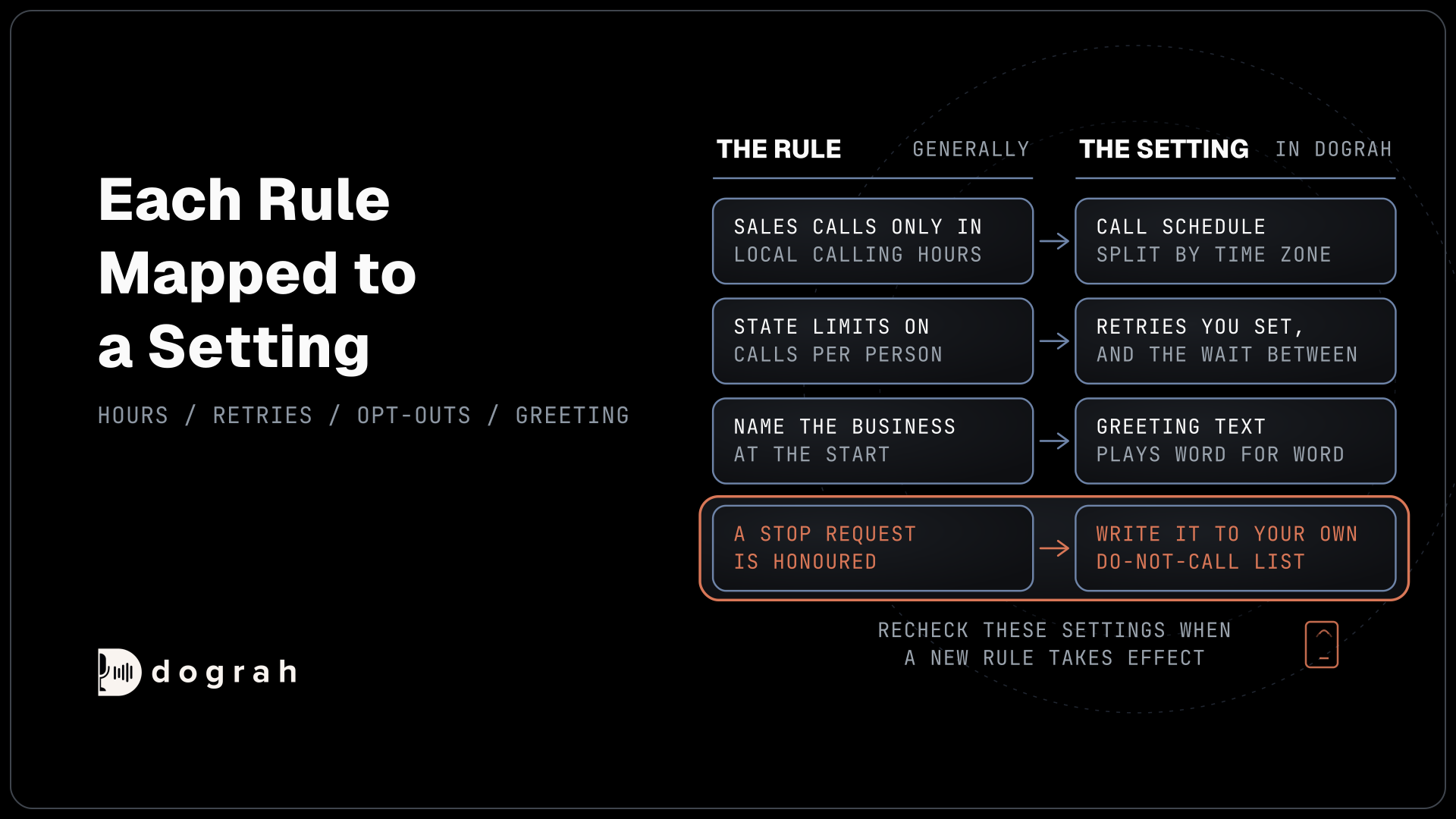
In Dograh, the window lives in each campaign's Call Schedule: one time zone and up to 50 calling slots by weekday (campaigns). Split the list into one campaign per time zone, then keep the slots inside 8 a.m. to 8 p.m. so Florida, Maryland and Washington contacts sit within the narrowest window. A campaign with no slots dials continuously, and our outbound campaigns guide walks through the form.
Retry caps and the three-call limits
Federal rules set no number for call attempts, but the state laws above do. Florida bars more than three sales calls to the same person in 24 hours on the same subject, from any number, and Maryland sets the same limit. Both count calls placed, answered or not, so every retry counts.
In each Dograh campaign you set the retries (0 to 10) and the wait between them, from 30 seconds to an hour, and choose which outcomes are retried: busy, no answer or voicemail. If you allow two retries with a short wait, three calls can land within minutes and use the whole day's allowance for a Florida or Maryland contact. Each campaign counts only its own attempts, so a second campaign on the same subject that day would go over the limit.
For contacts in these states, that generally means no more than two retries a day and one campaign per subject per day, with your own list tracking calls across campaigns. Dograh only retries calls that did not reach a person, so a contact who answered hears from that campaign once.

Open Source Alternative to Vapi / Retell
Self-hosted voice agent platform — no per-minute fees
dograh-hq/dograh
Star on GitHub
Stop requests during the call
Today, a person can withdraw consent in any reasonable way, including saying "stop" or "take me off your list" on the call, and you must honour it within 10 business days. A do-not-call request goes on your own list within the same 10 business days and stays there for 5 years. Washington keeps a person off for at least one year once they ask.
A new FCC order on revoking consent changes this from 25 November 2026. A caller may then name one way to opt out, such as an automated voice or key-press option on the call, but only if it says so clearly on the call, and requests made in any reasonable way still count when no single method is named. A stop said after a sales call covers all future sales calls from that caller, while a stop after an informational call may be treated as covering only that kind of call. The 10-business-day limit stays.
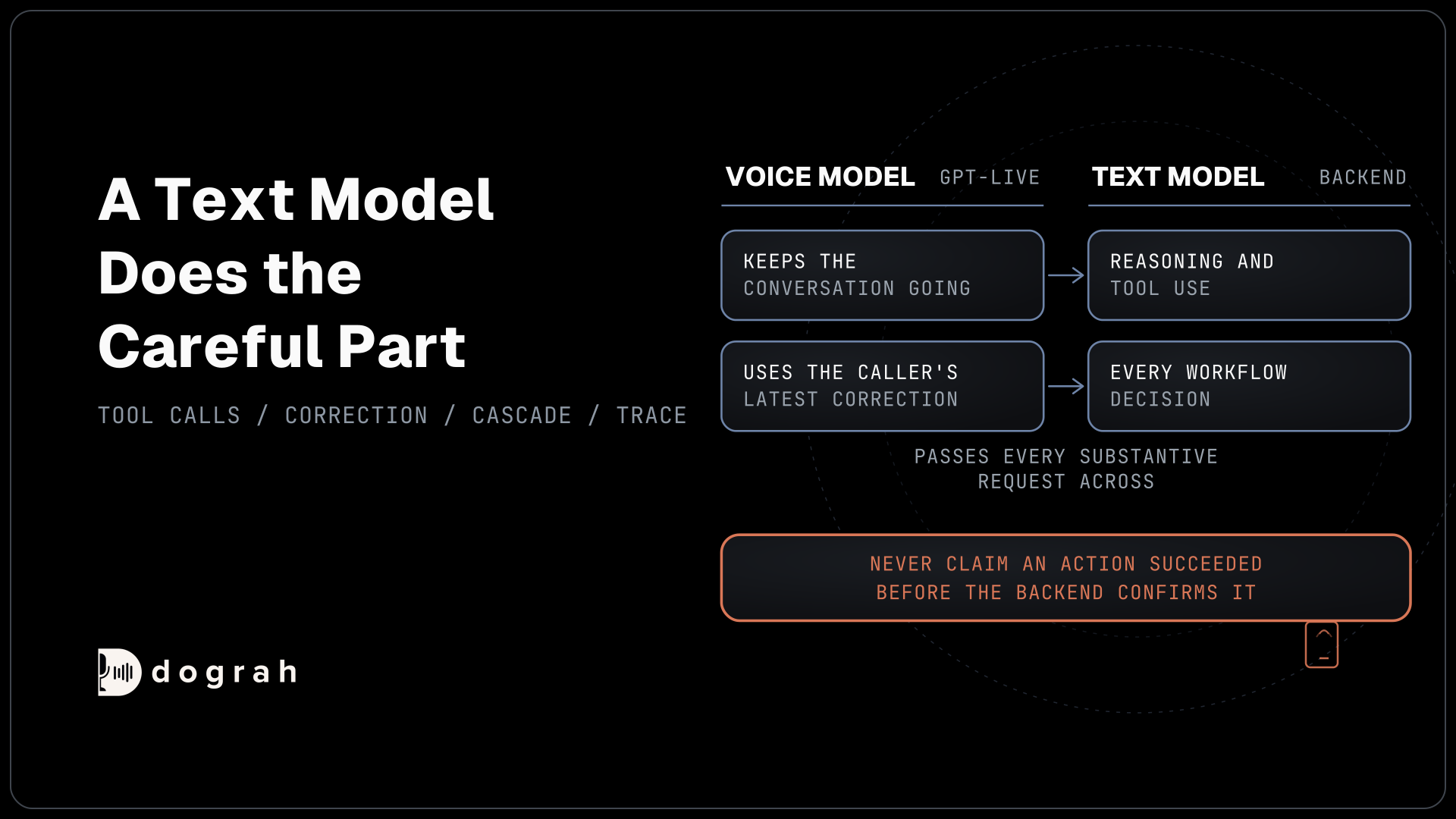
On a Dograh agent, the request is heard by voice. Write a prompt rule that treats any stop request as final, have the agent confirm it, write it to your own do-not-call list with an HTTP API tool and end the call with the End Call tool. The do_not_call disposition tags the call as well. Generally the simplest safe design honours a stop said in any words, even after 25 November, so confirm with counsel before you designate a single method.
Calls already queued need the change too. Pause the campaign, remove the number and restart from a corrected list, or start calls from your own system with the API Trigger so your list decides every call. Our post on outbound campaigns for BPOs covers that list workflow.
What an artificial voice must say first
An FCC ruling from February 2024 treats an AI voice as an artificial voice under the Telephone Consumer Protection Act. Artificial-voice calls must name the business at the start and give a callback number during or after the message. Sales calls must also offer an automated opt-out, by voice or key press, within 2 seconds of naming the business, and a sales voicemail must give a toll-free number that reaches it. Washington adds that the caller, the company and the purpose come within the first 30 seconds.
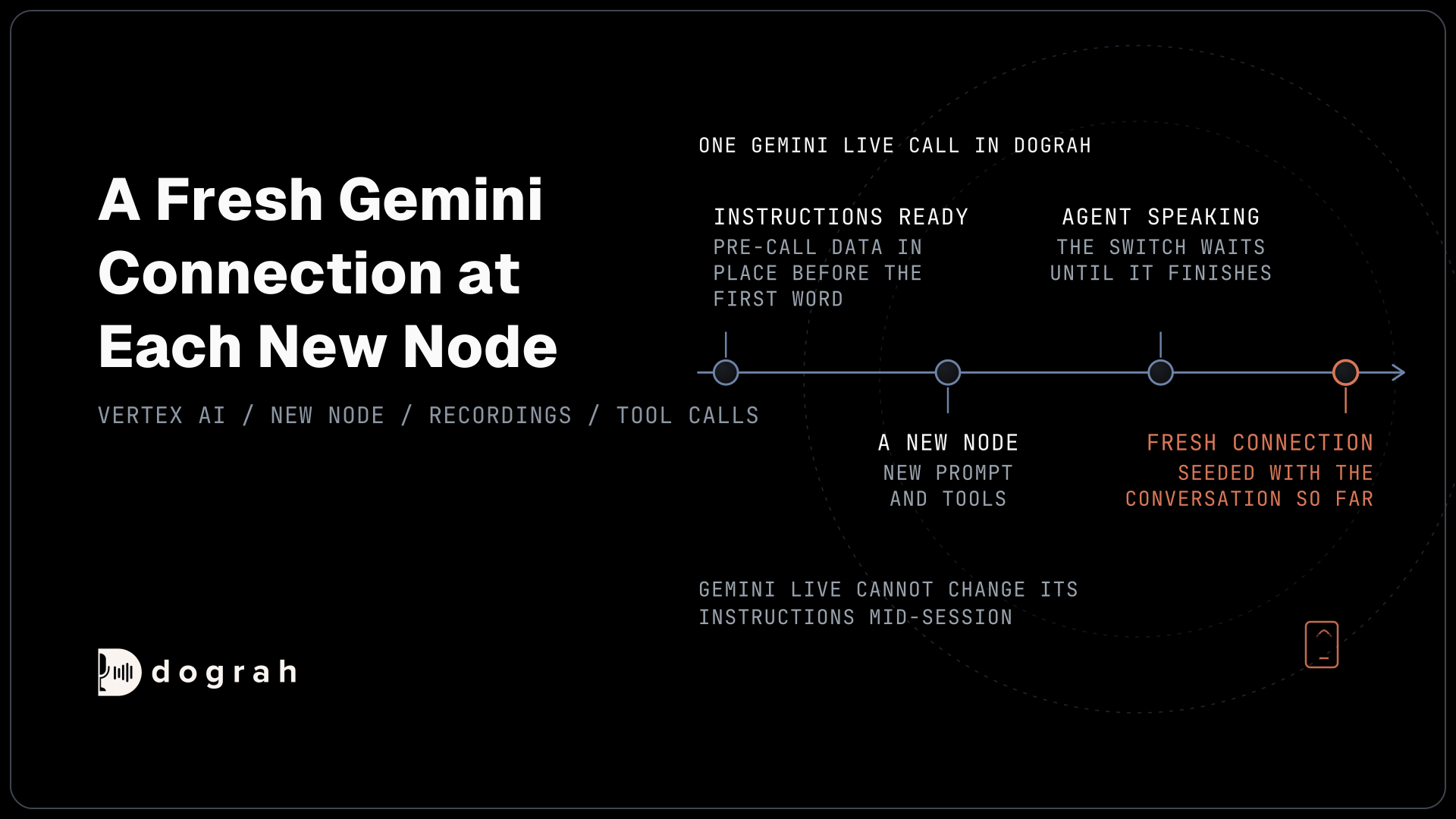
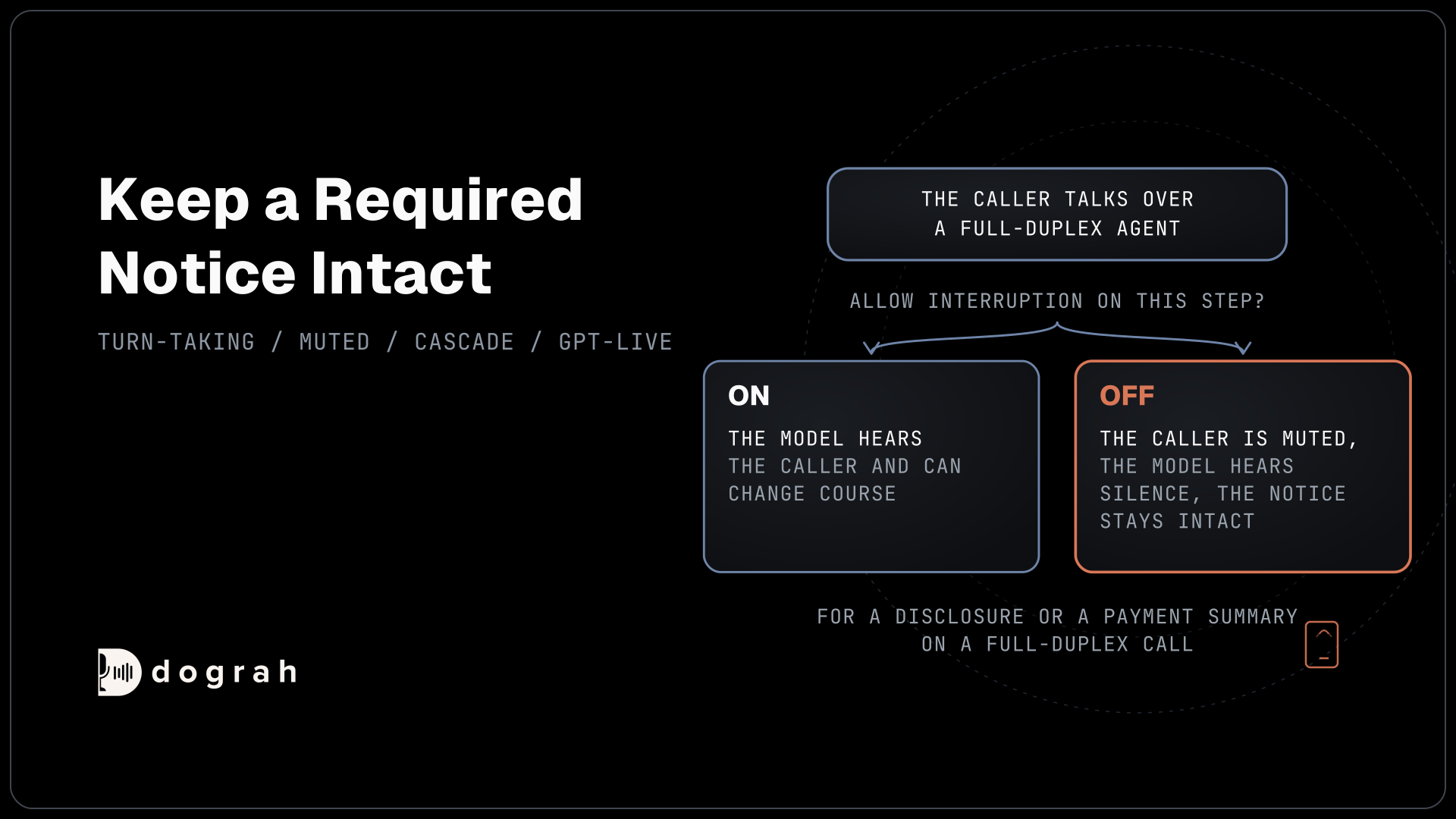
Put those lines in the Start Call node's Greeting Text, which plays word for word the moment the call connects (Start Call settings), or in a recording of a real person. A short opening covers it: "Hi, this is Ava calling from Acme Insurance about your renewal. Say stop at any time and we won't call again." Switch Allow Greeting Interruption off so the caller hears the full notice, since it is on by default, and keep Delayed Start and Pre-Call Data Fetch from adding silence before it.
Join the Dograh Community
Dograh is an OSS alternative to Vapi. Join our Slack community for queries, releases, best practices & community interactions.
Keep the record of every call
Each Dograh call keeps its transcript, recording and disposition, which together show when a stop request was made and what the agent did. That record is what you rely on to show a request was honoured within 10 business days. How long to keep it is your own policy, and our post on call data retention covers the rules that shape it.
The built-in QA reviews a sample of calls, so add a check that every stop request in the sample was confirmed, written to your list and followed by the end of the call. Self-hosted Dograh has no per-minute platform fee, but servers, model keys and phone minutes still cost money. Dograh Cloud charges a 1¢-a-minute platform fee.
The FCC is still taking comments on further changes to how consent is withdrawn, so recheck these settings when a new rule takes effect. For the answer-rate side of the same campaign settings, see our checklist for low answer rates on AI outbound calls.
Glossary
- Calling window
- The hours in which sales calls may reach a person, set by the called person's local time. Federal rules allow 8 a.m. to 9 p.m., and Florida, Maryland and Washington end at 8 p.m.
- Revocation of consent
- A person withdrawing permission to be called. It must be honoured within 10 business days, and from 25 November 2026 a caller may name one method only if it discloses that method clearly on the call.
- Automated opt-out
- A voice or key-press way to stop future sales calls, offered within 2 seconds of the business naming itself on an artificial-voice sales call. It adds the number to the caller's do-not-call list and ends the call.
- Do-not-call list
- The caller's own list of people who asked not to be called. Requests go on it within 10 business days and stay for 5 years under federal rules, and Washington adds its own one-year rule.