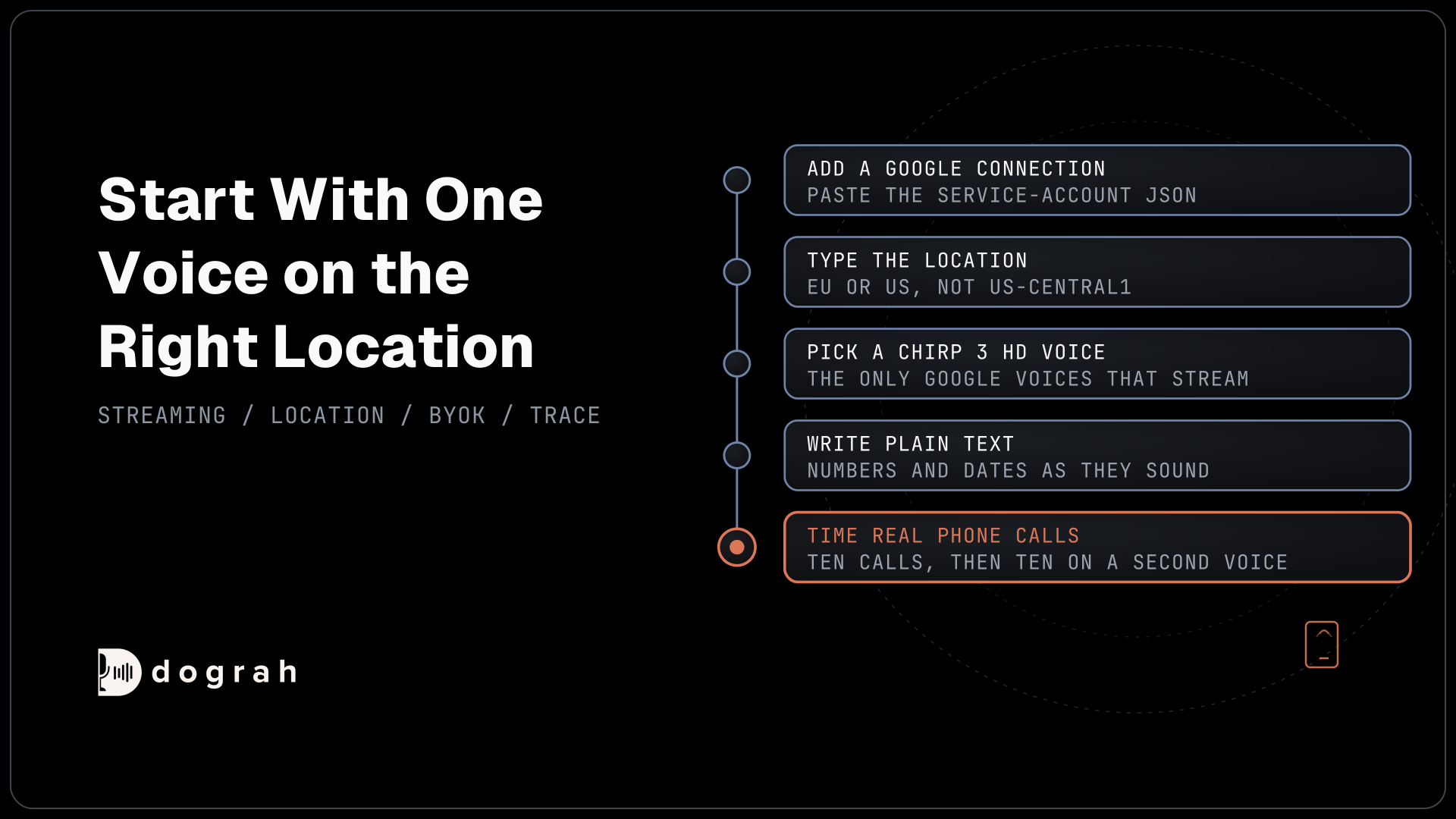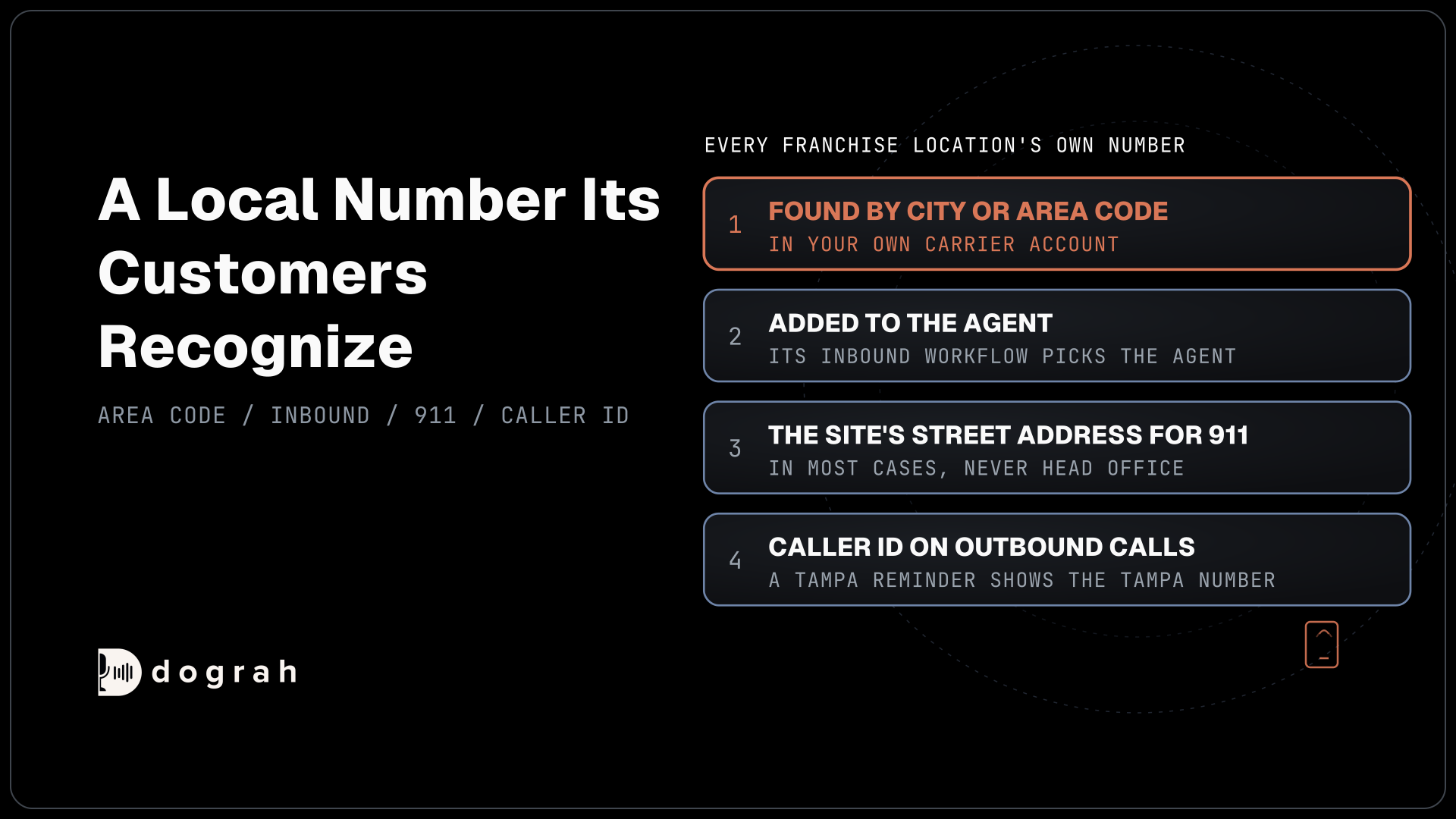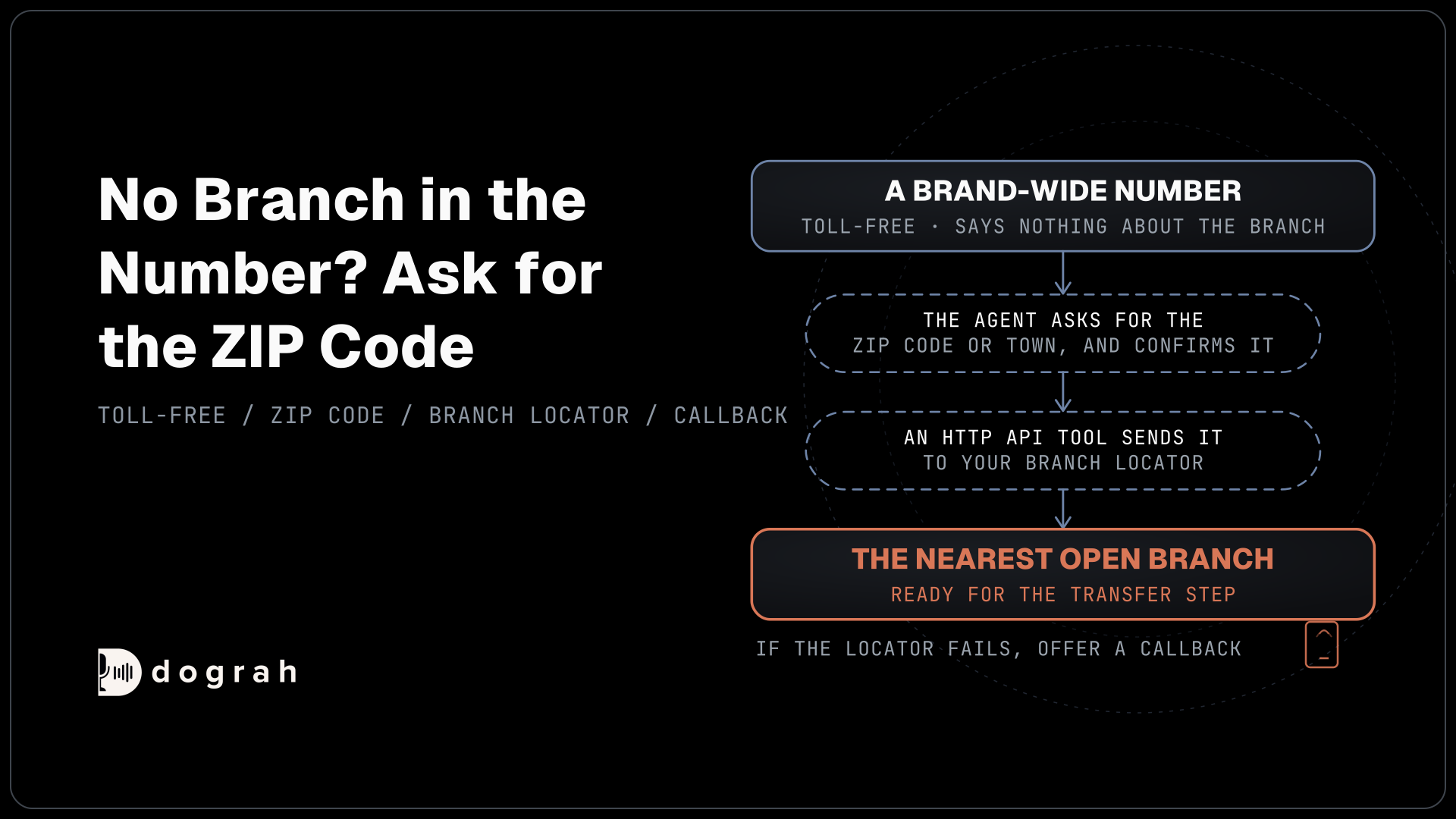

Hetzner's GEX45, a 24 GB RTX PRO 4000 Blackwell server at €214 a month plus a €209 setup fee, runs a 4-bit 27B language model beside Parakeet speech-to-text. The 96 GB GEX63 at €999 a month holds bigger stacks. Both sit in Europe. Dograh, the open-source AI voice agent platform, can share the box, or run on Dograh Cloud.
Key Takeaways
- The 24 GB GEX45 fits a 4-bit 27B model plus Parakeet.
- Hetzner's GPU servers sit in Helsinki and Falkenstein, so they suit European callers.
- A load test on your own calls sets the real cost per call.
This post is part of our guide to running voice AI on local, self-hosted models, where open-weight models keep call audio on servers you control. Below, we match each Hetzner GPU server to a voice stack, then cover location, the monthly bill and running Dograh on the same box.
Hetzner's GPU servers and what each card holds
Hetzner rents its GPUs as dedicated servers billed by the month, and four of them matter for a voice stack. The prices below are Hetzner's monthly GPU server rates, in euros before VAT, with an IPv4 address included.
| Server | GPU and memory | CPU and RAM | Monthly | One-time setup | Location |
|---|---|---|---|---|---|
| GEX45 | RTX PRO 4000 Blackwell SFF, 24 GB | Core i5-13500, 64 GB | €214 | €209 | Helsinki |
| GEX63 | RTX PRO 6000 Blackwell Max-Q, 96 GB | Core Ultra 7 265, 128 GB | €999 | €999 | Helsinki |
| GEX131 | RTX PRO 6000 Blackwell Max-Q, 96 GB | Xeon Gold 5412U, from 256 GB | from €1,499 | €1,499 | Falkenstein or Helsinki |
| GEX430 | 4 x RTX PRO 6000 Blackwell Max-Q, 384 GB in total | Xeon Gold 5412U, 128 GB | €3,599 | €3,599 | Helsinki |
For most voice teams the choice is between the first two. The GEX131 adds a server-class CPU and more memory to the GEX63's card, and the GEX430 puts four cards in one box for many calls at once.
The 24 GB GEX45 runs the standard local stack
The GEX45 has exactly the memory our recommended one-card stack was sized for. Qwen3.8-27B with 4-bit quantization, at a 64K context, peaks at about 20,266 MiB and leaves about 4.2 GiB of a 24 GB card. Parakeet TDT 0.6B v2 loads in roughly 2 GB, so English speech-to-text fits beside it. Voxtral Mini 3B needs about 9.5 GB and does not.
The voice model is small next to the other two. Kokoro has 82 million parameters, and Chatterbox is the open choice when you want to clone a voice. Our post on running voice AI on your own GPUs has the memory table for each model and the vLLM and Speaches setup, so we won't repeat them here.
The server around the card helps as well. The GEX45 comes with no minimum contract term and unlimited traffic on a guaranteed 1 Gbit/s port, which matters for a line that streams audio both ways all day. In our experience speech-to-text is usually the slowest stage of a turn, not the language model, so test a fast speech model on this card before you reach for a bigger one.
When the 96 GB GEX63 earns its price
The GEX63 costs nearly five times as much, and it pays off once the stack outgrows a 24 GB card. At 16-bit, Qwen3.8-27B's weights alone take about 54 GB. Add Voxtral Mini 3B at about 9.5 GB and the weights come to roughly 63.5 GB, under the card's 96 GB, with room left for a voice model and the conversation cache. That is our estimate from model sizes, not a measured run, so check it on the box.
The other reason is volume. A bigger card can hold more calls at once, but how many depends on your model, its quantization and your call length. No published figure covers this card with a 27B model, so your own load test decides. Our guide to load testing a voice agent through the real phone path raises the number of calls step by step until a turn runs over budget.
If neither reason applies yet, two GEX45 servers cost €428 a month, less than one GEX63, and the second box gives a line that must answer at any hour somewhere to fail over to.

Open Source Alternative to Vapi / Retell
Self-hosted voice agent platform — no per-minute fees
dograh-hq/dograh
Star on GitHub
Helsinki, Falkenstein and where your callers are
Hetzner's GPU servers sit in Finland and Germany only. The GEX45, GEX63 and GEX430 are in Helsinki, and the GEX131 is in Falkenstein or Helsinki. Hetzner Cloud reaches further, with virtual servers in Germany, Finland, Singapore and the USA, but none of them carries a GPU.
For European callers that is a good fit, since the audio, the transcript and the models all stay in the EU. Our post on EU-hosted LLM, STT and TTS providers covers the hosted options with EU hosting, for the parts you don't run yourself.
For callers in the US, the picture changes. Every turn's audio crosses the Atlantic to reach a Helsinki GPU, and the reply crosses back, a delay no tuning on the box removes. Keep Hetzner for your European lines, and run a US line's models close to where its carrier hands the call over.
The monthly bill, from setup fee to cost per call
A dedicated server bills a fixed month, so the useful sums are the first-year cost and the cost per call. Here is a worked example on the GPU server alone, with 5-minute calls and 30-day months.
| Example line | Sum | Result |
|---|---|---|
| GEX45, first month | €214 + €209 setup | €423 |
| GEX45, first year | €209 + 12 x €214 | €2,777, about €231 a month |
| GEX45 at 200 calls a day | €214 / 6,000 calls a month | about €0.036 a call |
| GEX45 at 2,000 calls a day | €214 / 60,000 calls a month | about €0.0036 a call |
| GEX63 at 200 calls a day | €999 / 6,000 calls a month | about €0.17 a call |
The 2,000-a-day row holds only if one card carries your busiest hour in a load test. The bill stays the same whatever the volume, so the cost per call falls only as calls rise. Phone minutes come from your carrier, and the staff time to keep the models running often costs more than the card.
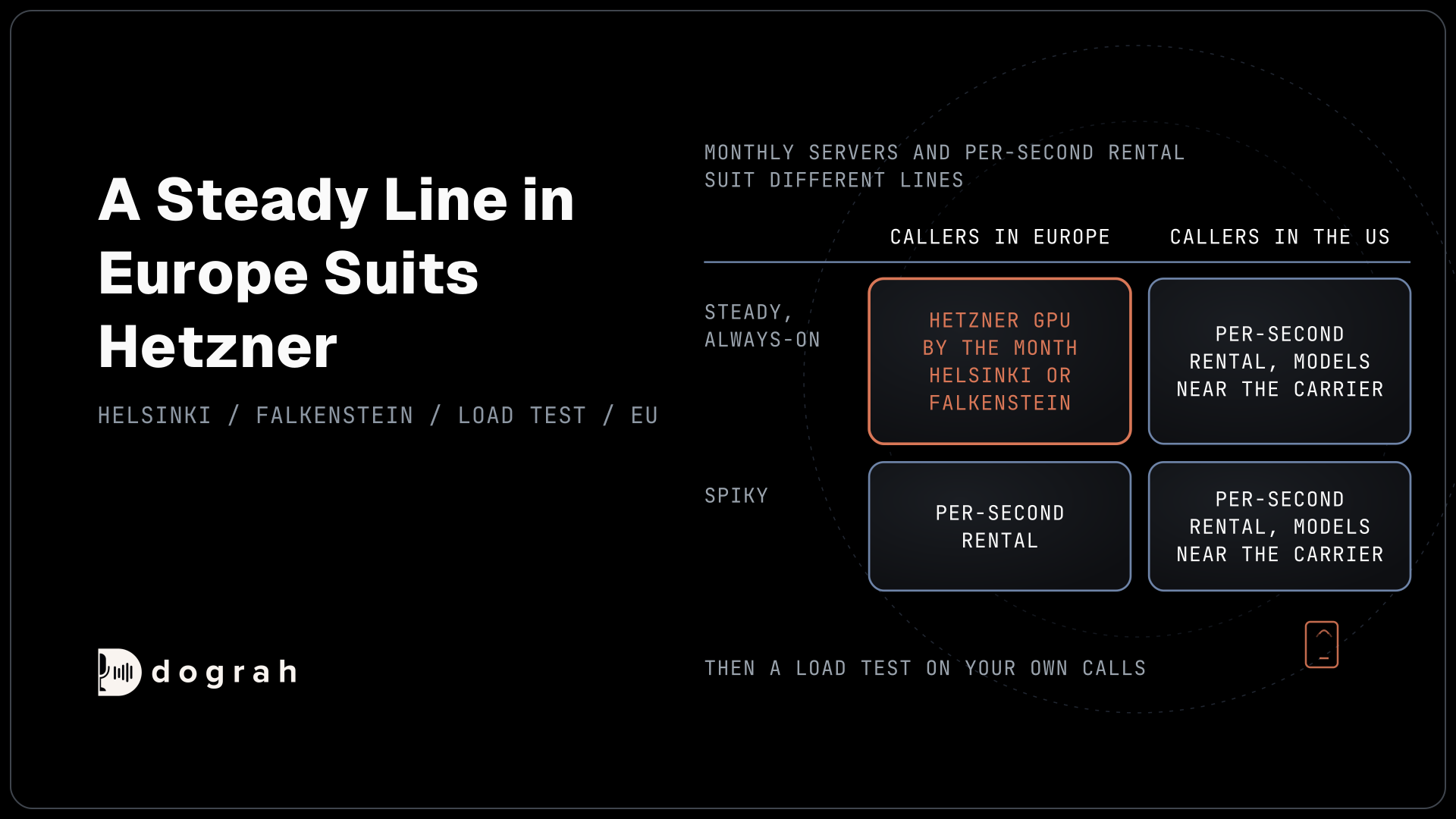
Monthly servers and per-second rental suit different lines. Our post on RunPod pricing for self-hosted voice agents covers a cloud that bills by the second with no setup fee, in many regions. Hetzner bills by the month, charges a setup fee of about one month's rent, and sits in Finland or Germany. A steady, always-on line in Europe suits Hetzner. A spiky line, or one with callers in the US, suits per-second rental.
Join the Dograh Community
Dograh is an OSS alternative to Vapi. Join our Slack community for queries, releases, best practices & community interactions.
Running Dograh and the models on one box
Dograh is the orchestration layer that runs the call flow, tools and phone line, and the speech and language models it calls form a separate layer you pick. It needs no GPU. The remote Docker install asks for at least 8 GB of RAM and 4 vCPUs, so it fits on a GEX45 beside the models.
Once the models run, open Providers in the sidebar, add a Local Models (Speaches) provider and give it each model server's address, as the LLM settings describe for Ollama and vLLM. Self-hosted, it accepts private network addresses, so the models never need a public URL. Inside Docker, localhost means the Dograh container itself, so enter the GPU server's network address instead.
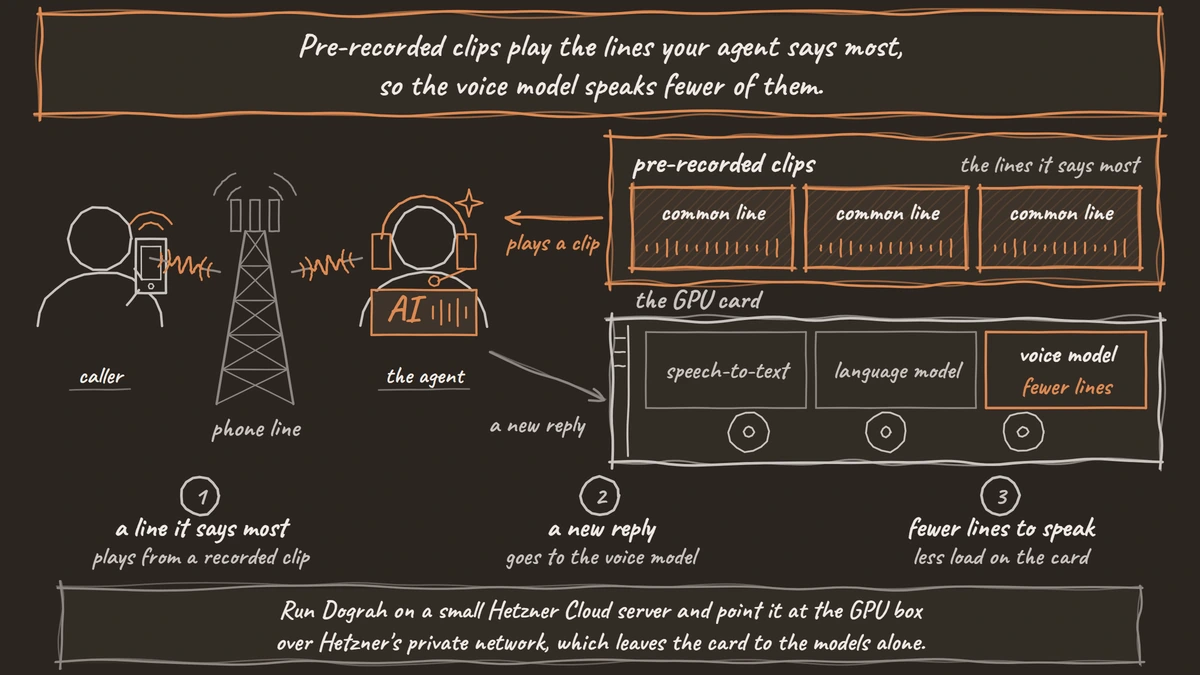
You can also split the work. Run Dograh on a small Hetzner Cloud server and point it at the GPU box over Hetzner's private network, which leaves the card to the models alone.
Two features take load off the card. Pre-recorded clips play the lines your agent says most, so the voice model speaks fewer of them. Self-hosted Dograh runs 10 calls at once by default, and you raise that once a load test shows the card can carry more.
During that test, each call's trace shows the speech-to-text, AI and voice time of every turn, which tells you which model slows down first as calls rise.
Self-hosted Dograh has no per-minute platform fee, but servers, model keys and phone minutes still cost money. Dograh Cloud charges a 1¢-a-minute platform fee. The Cloud option reaches models only at a public address, so give the GPU box one if you go that way. For the whole deployment in one place, see self-hosted voice AI on open-weight models.
Glossary
- Dedicated server
- A physical server, here with its own GPU, rented whole by the month rather than shared or billed by the second. Hetzner sells its GPUs only this way, which suits a voice line that has to stay on all day.
- Setup fee
- A one-time charge when a dedicated server is ordered. On Hetzner's GPU servers it equals about one month's rent, €209 on the GEX45, so it belongs in the first-year cost, not the monthly one.
- 4-bit quantization
- Storing a model's weights at 4-bit precision so a large model fits a small card. It brings Qwen3.8-27B from about 54 GB at 16-bit down to a peak of about 20,266 MiB at a 64K context.
- Load test
- Raising the number of calls on a setup step by step until a turn runs over its time budget. It is the only reliable source for how many calls one card carries, and so for the real cost per call.