
HappyRobot pricing is set in a contract after a demo, as a 12-month platform subscription plus usage credits spent each time an agent performs an action. Unused credits roll over monthly but expire when the term ends. For teams that want to price the platform themselves, Dograh, the open-source AI voice agent platform, runs self-hosted or on Dograh Cloud.
Key Takeaways
- HappyRobot bills a yearly platform subscription plus usage credits for each agent action.
- Unused credits roll over monthly but expire when the contract term ends.
- A per-action quote and a per-minute rate count different things, so convert first.
HappyRobot sells through a demo, so its price arrives as a contract, not a rate card. We cover the two parts of that contract, what uses up credits, the terms that move the total, how to compare a quote, what to ask and how open-source Dograh prices the same calls.
The two parts of a HappyRobot contract
Every HappyRobot deal has two price lines, a fixed subscription and metered usage. HappyRobot's AWS Marketplace listing shows them plainly, a "Base platform subscription fee" on a 12-month contract plus a "Per_action usage credit" billed as you use the agents. The amounts shown there are placeholders, so the real figures come from your own quote.
Outside the marketplace, the same structure is written into an Order Form under HappyRobot's license agreement. The agreement defines a usage credit as a unit of platform consumption and runs for at least a year from the first Order Form. The marketplace listing adds that all fees are non-cancellable and non-refundable except where the law says otherwise, and that access ends if the contract is not renewed. For what the product does with those credits, see our HappyRobot review.
What uses up usage credits
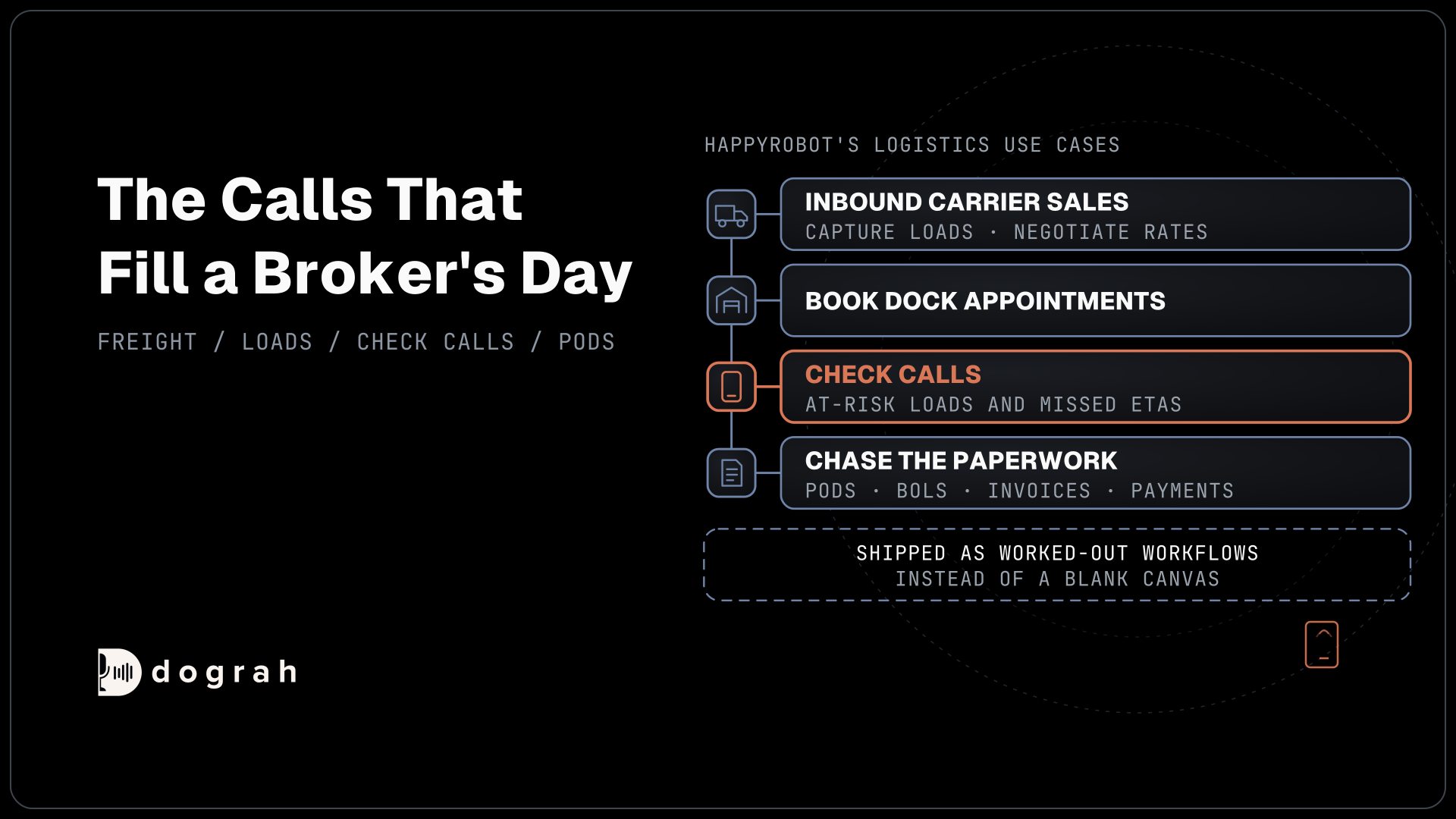
Credits are spent on actions, and HappyRobot defines an action as a task an agent performs during a workflow. Sending a message, reading a document or writing to a system each counts, so one freight job can use several. A carrier check call that ends with an ETA written to the TMS and an email to the shipper is a chain of actions, not a single charge.
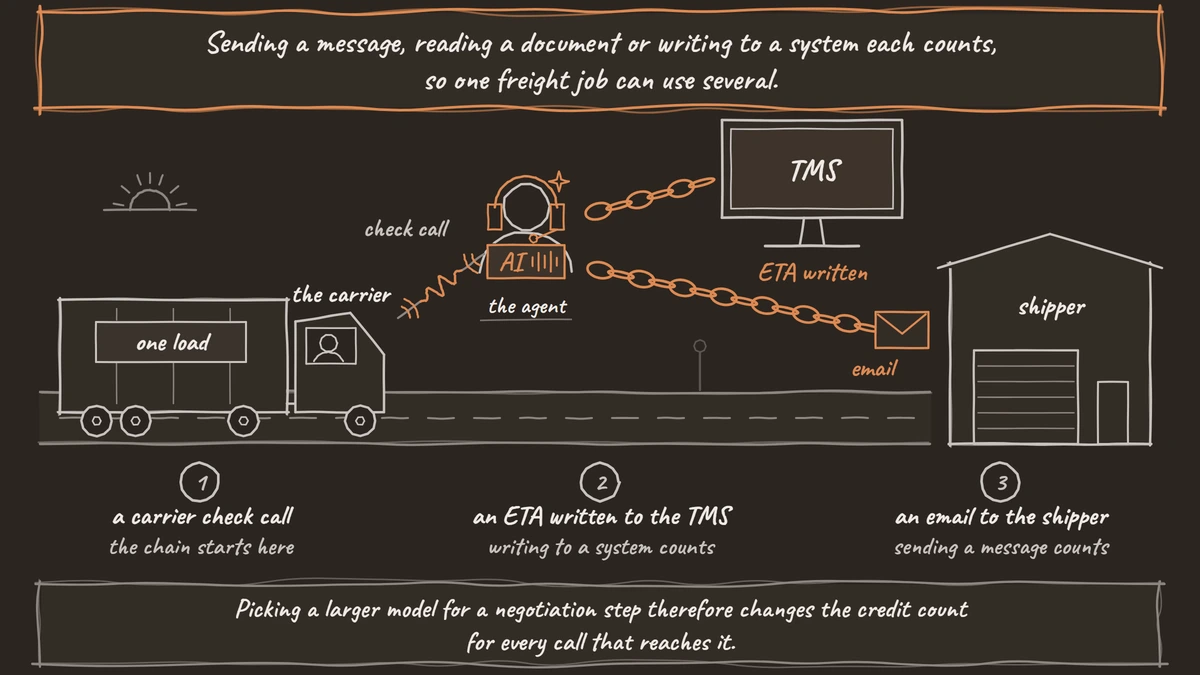
Model use is the other driver. In HappyRobot's post on model costs, each AI step in a workflow has its own model field, defaulting to a cost-efficient, low-latency model, and usage is broken down by credit consumption for speech-to-text, voice and the language model. Picking a larger model for a negotiation step therefore changes the credit count for every call that reaches it.
Since the rates arrive with the quote, the useful tool is a formula you fill in from it. Monthly credits are loads a month times actions per load times credits per action, plus the model credits per call. The monthly cost is the subscription divided by twelve plus those credits times the price per credit, with anything above the committed amount billed as overage. Ask HappyRobot for each of those letters in writing.

Open Source Alternative to Vapi / Retell
Self-hosted voice agent platform — no per-minute fees
dograh-hq/dograh
Star on GitHub
Contract terms that move the total
The terms in the agreement change the real cost as much as the rates do. Under HappyRobot's license agreement, fees are fixed for the initial term, and changes for a renewal need at least 30 days' notice. Unused credits roll over from month to month within the term but expire when it ends, and running out of credits does not reduce what you owe.
Overages are invoiced monthly in arrears and fall due within 10 days, while other invoices are due within 30. Late payments carry a charge of 1.5% a month or the legal maximum, whichever is lower, and access can be suspended for past-due fees.
Time is a cost too. HappyRobot says in its Series C announcement that first agents usually go live in 4 to 12 weeks, followed by ongoing refinement sprints with its engineers, so ask how that work is priced. The agreement also makes the workflows built on the platform HappyRobot's property, which affects what leaving costs, and the review covers that clause.
Comparing a quote with per-minute rates
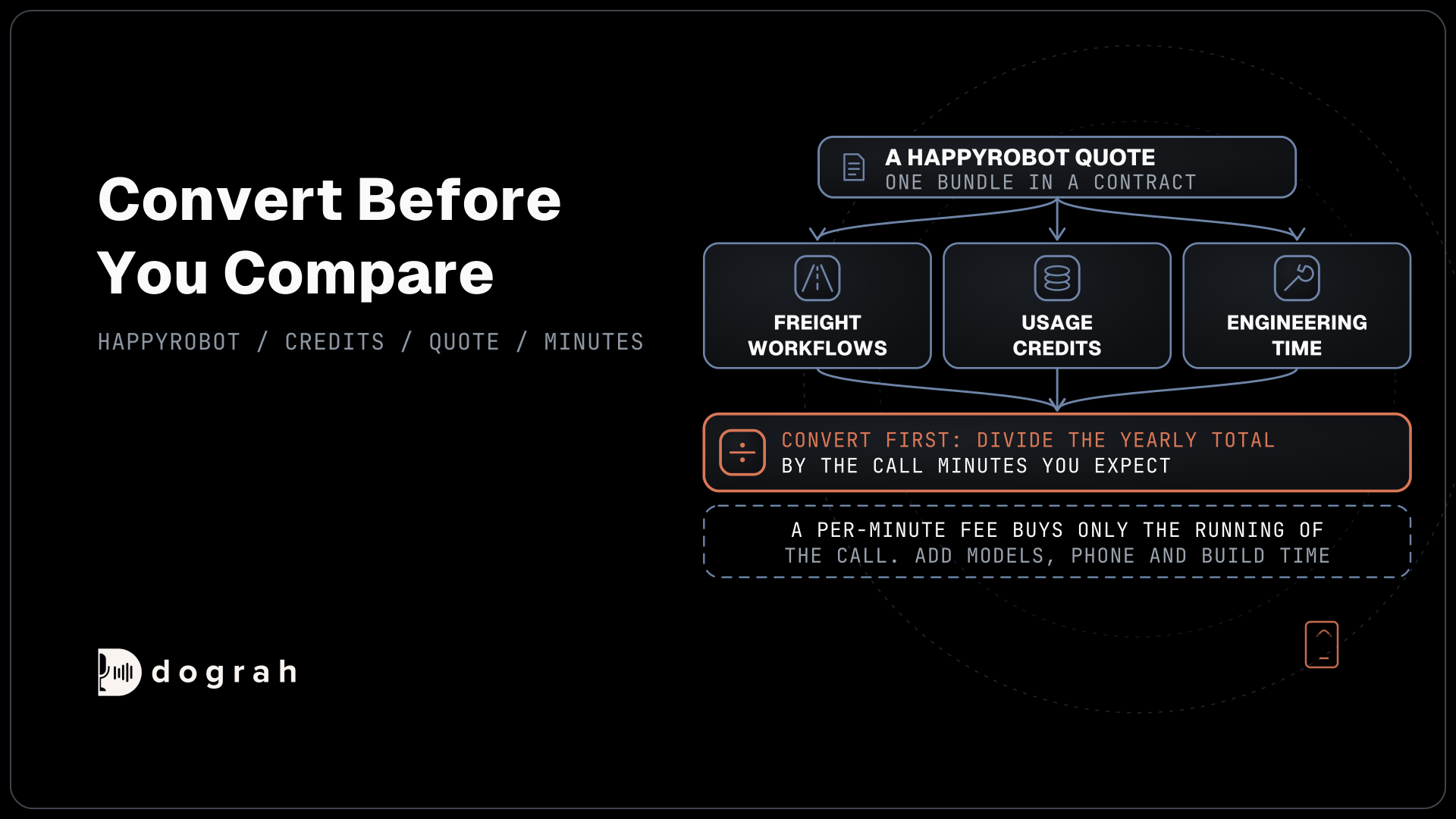
A HappyRobot quote buys freight workflows, credits and engineering time in one bundle, while a per-minute platform fee buys only the running of the call. Comparing the two numbers directly misleads in both directions. Convert first. Divide the yearly HappyRobot total by the call minutes you expect in that year, and you have a per-minute figure to set beside the others.
The hosted platforms publish their rates. Vapi charges $0.05 a minute for hosting, Retell AI charges $0.055 a minute for voice infrastructure with an all-in range of $0.07 to $0.31, and Bland's Start plan costs $0.14 a minute with its own models included. On those platforms you still add models where they are not included, the phone line and the time your team spends building the freight workflow. Our guide to HappyRobot alternatives groups those options by why teams leave.
Join the Dograh Community
Dograh is an OSS alternative to Vapi. Join our Slack community for queries, releases, best practices & community interactions.
Questions to ask before you sign
A quote is only as clear as the answers behind it, so ask these before the Order Form. What is the price per credit, and how many credits does each action type use, from a call minute to an email, a document read or a TMS write? Which model does each workflow step use by default, and what happens to credit use if you pin a different one?
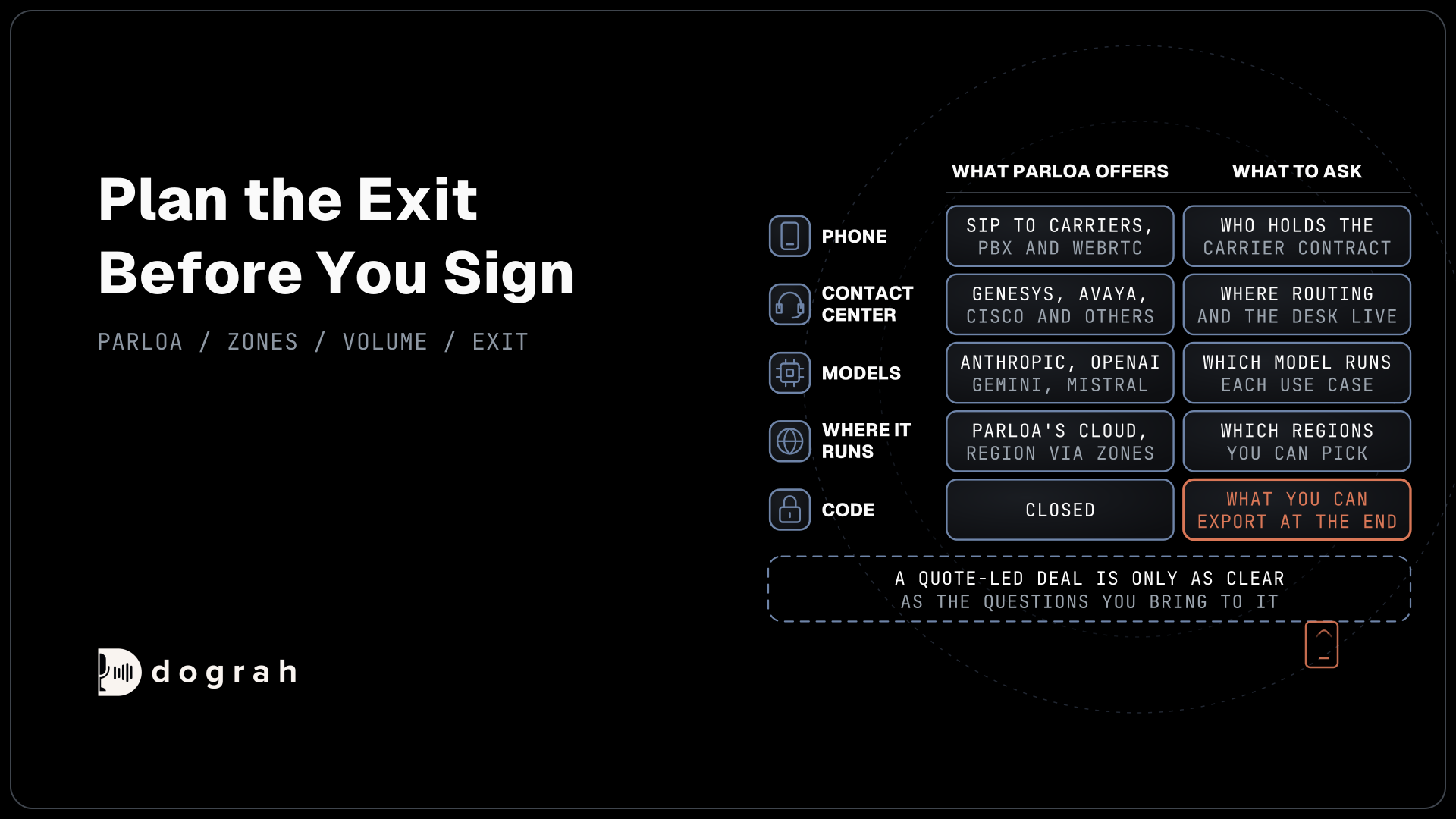
Then ask about the commitment. What is the minimum in the Order Form, what is the overage rate against the committed rate, and how much notice comes before a renewal price change? Who pays for forward-deployed engineering and refinement sprints after launch? Finally, ask what you can export when the term ends, and plan your own backups, because the agreement leaves that job to the customer.
Where Dograh fits on price and hosting
Dograh prices the platform and nothing else, so the rest of the bill stays visible. Self-hosted, it has no per-minute platform fee, but servers, model keys and phone minutes still cost money. Dograh Cloud charges a 1¢-a-minute platform fee. A desk running 30,000 call minutes a month on Cloud pays $300 in platform fees before models and phone. Running it yourself trades the fee for upkeep, since your team owns the server, the database and every upgrade, with community support on the open-source version and custom SLAs on Enterprise.
Models on your own keys are billed by each provider at its own rate, and our Decagon pricing post breaks down what each of those minutes is made of. Out of the box a self-hosted install takes 10 calls at once, which a setting raises, and Cloud's pay as you go plan includes 10 with more on request. On-prem deployment is available on the Enterprise plan.
Your team builds the freight workflow itself, and the TMS connects through an HTTP API tool that reads and writes it during the call, with Pre-Call Data Fetch loading the load record as the call connects. The workflows and call records then sit in your own database when self-hosted.
Glossary
- Usage credit
- The unit HappyRobot uses to measure platform use, spent each time an agent takes an action. Credits roll over month to month within the term and expire when it ends.
- Order Form
- The signed document that sets a HappyRobot customer's fees, term and committed usage under the license agreement. The real prices are set here.
- Overage
- Usage above the amount committed in the contract. HappyRobot invoices overage monthly in arrears, due within 10 days.
- Platform fee
- A voice agent platform's charge for running the call itself, with models and the phone line billed apart. Vapi, for example, bills $0.05 a minute for hosting.