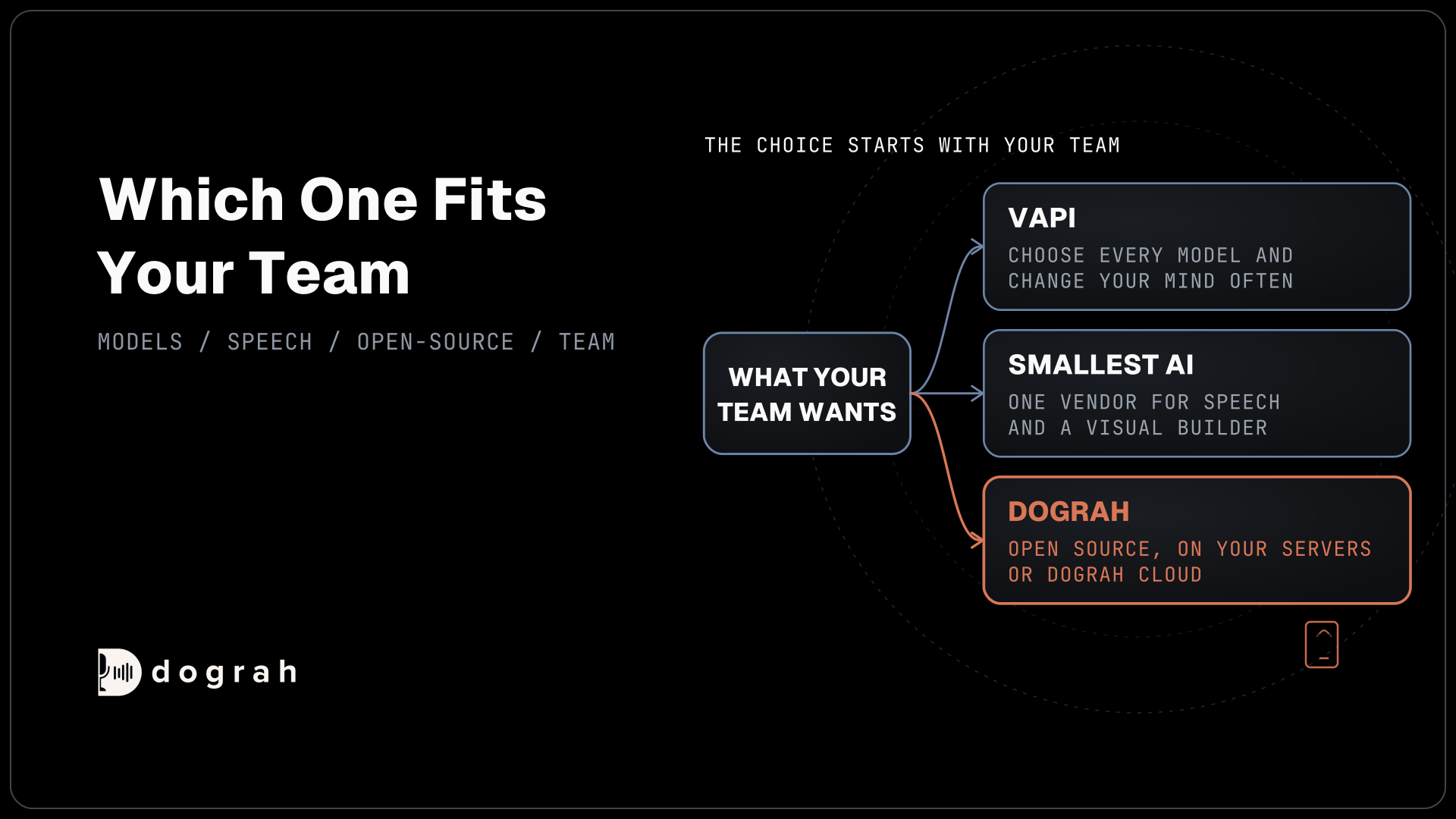

Bland AI suits outbound-heavy phone teams that want one rate with its models included, $0.14 a minute on Start or $0.12 plus $299 a month on Build, under daily call caps. PolyAI suits customer-service lines that want plans with minutes included, from $49 a month. Our open-source platform, Dograh, suits teams that want to run the agent themselves.
Key Takeaways
- Bland meters calls a day and rejects calls past its caps.
- PolyAI meters minutes: plans include a pool, then bill 20 to 30 cents a minute.
- PolyAI lists four data regions. Bland offers on-prem and FedRAMP on Enterprise.
Bland counts your calls, and PolyAI counts your minutes. We table both, explain how each charges and where its limits bite, price one month, then compare compliance and regions and say who each fits. If you want open source with no daily cap, the last section covers Dograh.
Bland AI and PolyAI in one table
Bland sells one per-minute rate with its own models inside and caps on calls, while PolyAI sells plans with a pool of minutes and its own models inside. Read each row as a choice about which limit you would rather live with.
| Row | Bland AI | PolyAI |
|---|---|---|
| How you pay | One rate per minute, models included | Plans with included minutes, or Platform pay as you go from 9.5¢ a minute |
| Plans | Start $0, Build $299 a month, Enterprise custom | Essentials $49, Plus $199, Scale $299 per location a month, Enterprise custom |
| Per minute | $0.14 on Start, $0.12 on Build | 30¢, 25¢ or 20¢ after included minutes |
| Calls at once | 10 on Start, 50 on Build | 5 on Essentials, 10 on Plus and Platform, 10 per location on Scale |
| Daily and hourly caps | 100 a day and 100 an hour on Start, 2,000 and 1,000 on Build | Minutes per plan, then overage |
| Past the limit | Calls are rejected | Overage minutes are billed |
| Builder | Bland Agents, with Norm building from plain language | Agent Studio, Wren and the ADK |
| Phone | Your carrier, or Bland's Twilio at pass-through | A PolyAI number, or your carrier over SIP at no charge |
| HIPAA | Signed BAA on Enterprise | HIPAA with a BAA on Enterprise |
| Where it runs | Bland's cloud, on-prem or VPC on Enterprise | PolyAI's cloud in US, UK, EU and APAC regions |
One bundled rate or plans with minutes inside
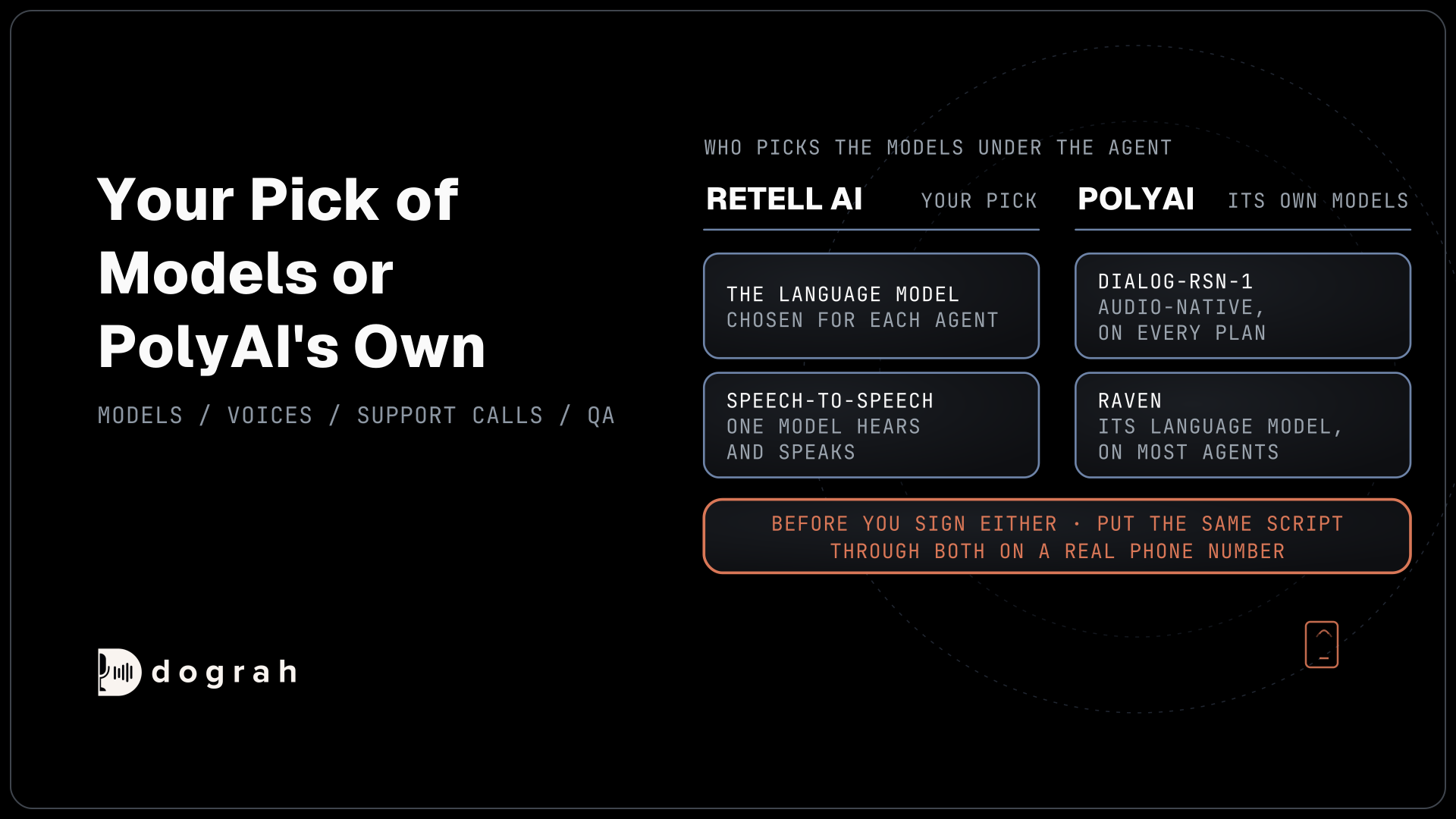
Both vendors put their own models in the price, but they package the minute differently. Bland promises "No token charges" and "No model-provider pass-throughs". Start costs nothing a month and $0.14 a minute, and Build costs $299 a month and $0.12 a minute. Your phone carrier bills separately, and when the agent hands a caller to a person on Bland's numbers, transfer minutes add $0.05 on Start or $0.04 on Build.
Voices follow the plan. Start gives you one voice and Build five, with unlimited voices on Enterprise. You build in Bland Agents, and Norm, Bland's assistant, drafts and edits an agent from plain language.
PolyAI sells buckets of minutes instead. Essentials costs $49 a month with 250 minutes, then 30¢ a minute, and Plus costs $199 with 1,000 minutes, then 25¢. Scale costs $299 per location a month with 1,500 minutes per location, pooled across up to 9 locations, then 20¢.
If you would rather pay per minute, PolyAI's Platform route starts at 9.5¢, made up of 5¢ for the platform, 3¢ for its Dialog-RSN-1 model and 1.5¢ for a standard voice. Every route bills connected time and never rounds a call up to the next minute.
Daily caps and calls at once
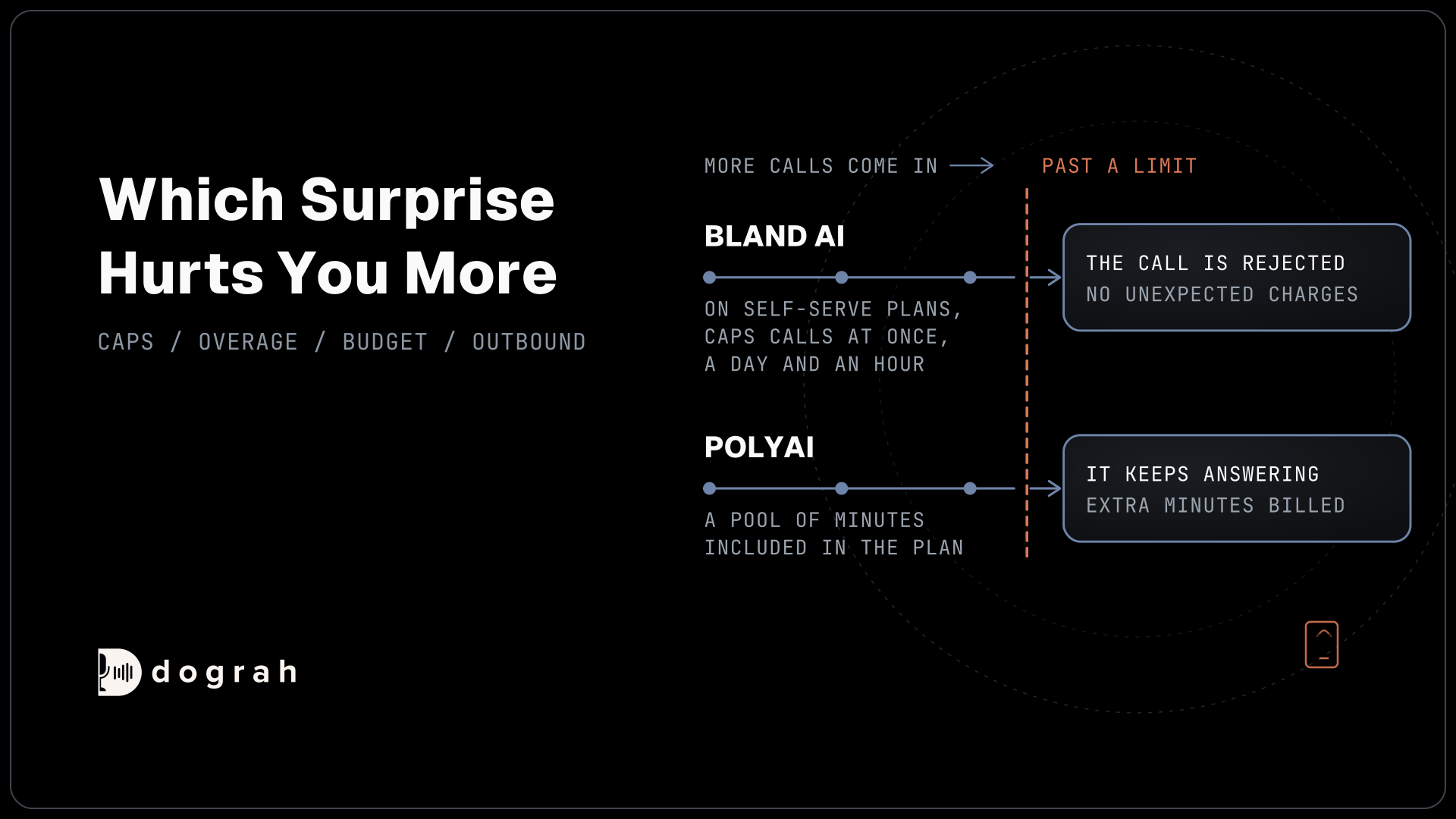
The limits are where outbound teams feel the difference. Bland caps calls in three ways on self-serve plans. Start allows 10 calls at once, 100 a day and 100 an hour. Build allows 50 at once, 2,000 a day and 1,000 an hour, and Enterprise removes the caps.
Past a limit, Bland rejects the call rather than billing more, so a busy day never brings unexpected charges. An outbound team planning 3,000 dials a day outgrows Build by the afternoon and needs an Enterprise contract. The hourly cap bites first on small plans. A clinic dialing 150 patients in a Monday-morning reminder push passes Start's 100 an hour before the hour is out.
PolyAI limits calls at once and meters minutes. Essentials allows 5 calls at once, Plus and the Platform route 10, and Scale 10 per location, with Enterprise matched to your volume. Busy months cost more in overage minutes instead of rejected calls. PolyAI's plans and connectors are built around customer-service calls: calendars, CRMs and helpdesks on the lower plans, contact-center platforms on Enterprise.
So Bland protects your budget with a hard stop, and PolyAI keeps answering and bills the extra minutes. Pick based on which surprise hurts you more.
What 3,000 minutes a month costs
A worked example shows how the two price models land on a small service line. Take 1,000 inbound calls of three minutes each, 3,000 minutes in a month, with your own carrier on both, since each accepts one.
| Route | Line by line for 3,000 minutes | Notes |
|---|---|---|
| Bland Start | 3,000 x $0.14 = $420 | About 33 calls a day, inside the 100-a-day cap |
| Bland Build | $299 + 3,000 x $0.12 = $659 | Five voices, 50 calls at once |
| PolyAI Essentials | $49 + 2,750 x $0.30 = $874 | 5 calls at once |
| PolyAI Plus | $199 + 2,000 x $0.25 = $699 | CRM connectors, 10 calls at once |
| PolyAI Platform | 3,000 x $0.095 = $285 | From 9.5¢, 10 calls at once |
| Dograh Cloud | 3,000 x $0.01 = $30 | Platform only, your model keys and carrier on top |
The rows are not like for like. Bland's and PolyAI's lines already include their own models, while Dograh's line does not. PolyAI's plans add connectors and Wren features that its Platform route leaves out, and Bland Build adds voices and room for more calls. Your carrier's per-minute charge sits on top of every row.
At this volume, Essentials is the dearest PolyAI route, because 250 included minutes run out early in the month. Our breakdown of Bland AI pricing shows where Bland's Build plan starts to beat Start and what phone time and texts add.

Open Source Alternative to Vapi / Retell
Self-hosted voice agent platform — no per-minute fees
dograh-hq/dograh
Star on GitHub
Compliance, regions and private hosting
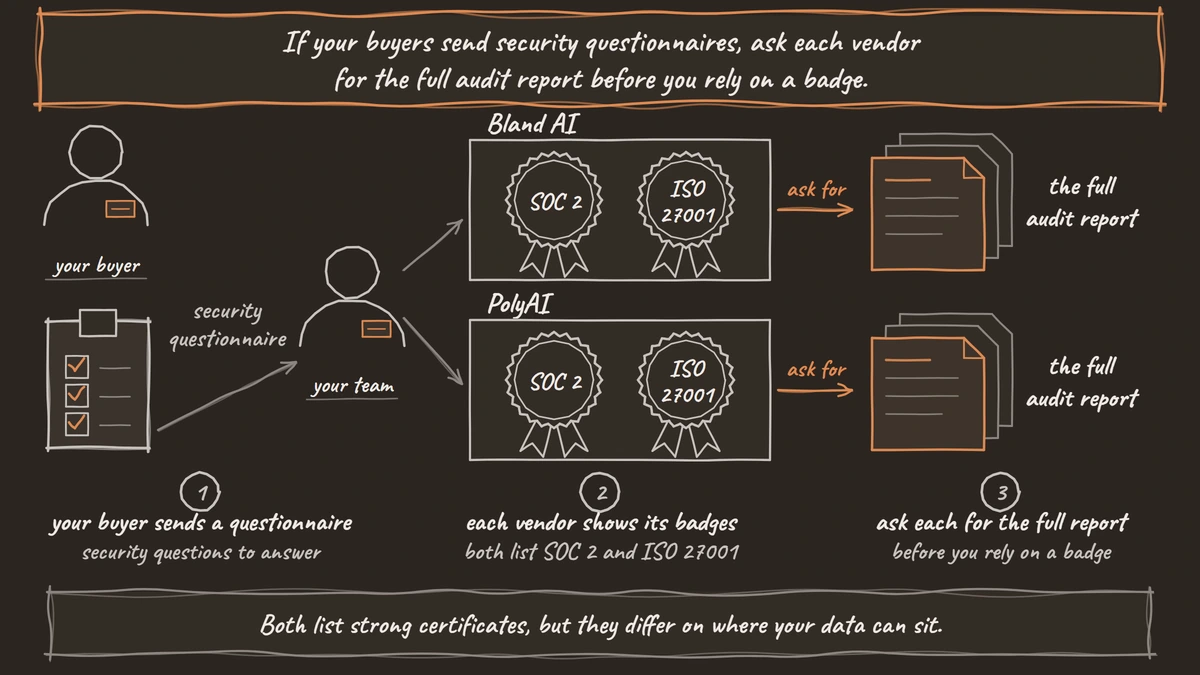
Both list strong certificates, but they differ on where your data can sit. Bland lists SOC 2 Type I and Type II, ISO 27001, GDPR with a data processing agreement, a self-attested PCI DSS and FedRAMP 20x Class A. Its business associate agreement (BAA) under the Health Insurance Portability and Accountability Act (HIPAA) is signed on Enterprise, which also adds data residency and on-prem or virtual private cloud (VPC) deployment.
PolyAI holds ISO 27001, SOC 2 Type II and Cyber Essentials Plus and covers GDPR, with HIPAA where relevant. Its plans run on SOC 2 and ISO 27001 certified infrastructure, and Enterprise adds HIPAA with a BAA, PCI card capture, data residency and an uptime SLA. PolyAI runs in US, UK, EU and APAC regions.
For a US public-sector buyer, Bland's FedRAMP listing matters. For a UK or European service line, PolyAI's regions answer the data-location question without a private install. In both cases the code stays closed, even when the software runs in your own building. If your buyers send security questionnaires, ask each vendor for the full audit report before you rely on a badge.
Join the Dograh Community
Dograh is an OSS alternative to Vapi. Join our Slack community for queries, releases, best practices & community interactions.
Which one fits your team
Bland fits an outbound team or phone operation that wants one vendor, one rate and no models to choose. If your volume stays under 2,000 calls a day and you prefer a rejected call to a surprise invoice, Build is simple to budget. It fits less well when you need more than five voices, a specific language model, or HIPAA before you are ready for Enterprise.
PolyAI fits an inbound customer-service line that wants ready connectors and a model built for support calls. Scale suits a business with several sites, since hours, FAQs and transfers are set per location and pooled minutes cover every site. It fits less well for high-volume outbound, where per-minute overage on a small plan adds up fast.
For outbound work on any platform, treat retries as a business decision. Set how many attempts each contact gets and when to stop, make sure an opt-out or a wrong number ends the retries, and keep a record of every attempt. Then run the same call script on both over a real phone line before you sign. Most calls still reach an agent as 8 kHz audio while a browser demo runs at 16 kHz, so judge each one on the audio your callers will actually send.
Where Dograh fits as the open-source option
If you want outbound campaigns and inbound lines on a platform you control, Dograh is the open-source third option. Dograh sets no cap on calls a day. Your servers and phone carrier set the ceiling, and you pick every model on your own keys or run open models yourself.
Campaigns run an agent down a contact list. You set the retries (0 to 10), the delay between them and the calling hours for each weekday, in one time zone per campaign, so split a national list by time zone. Inbound, several phone numbers can point at the same agent, one for each of your locations.
Self-hosted Dograh has no per-minute platform fee, but servers, model keys and phone minutes still cost money. Dograh Cloud charges a 1¢-a-minute platform fee. That is the $30 line in the example. Pre-recorded clips can play your most common lines in a real person's voice, with the voice model filling in the rest.
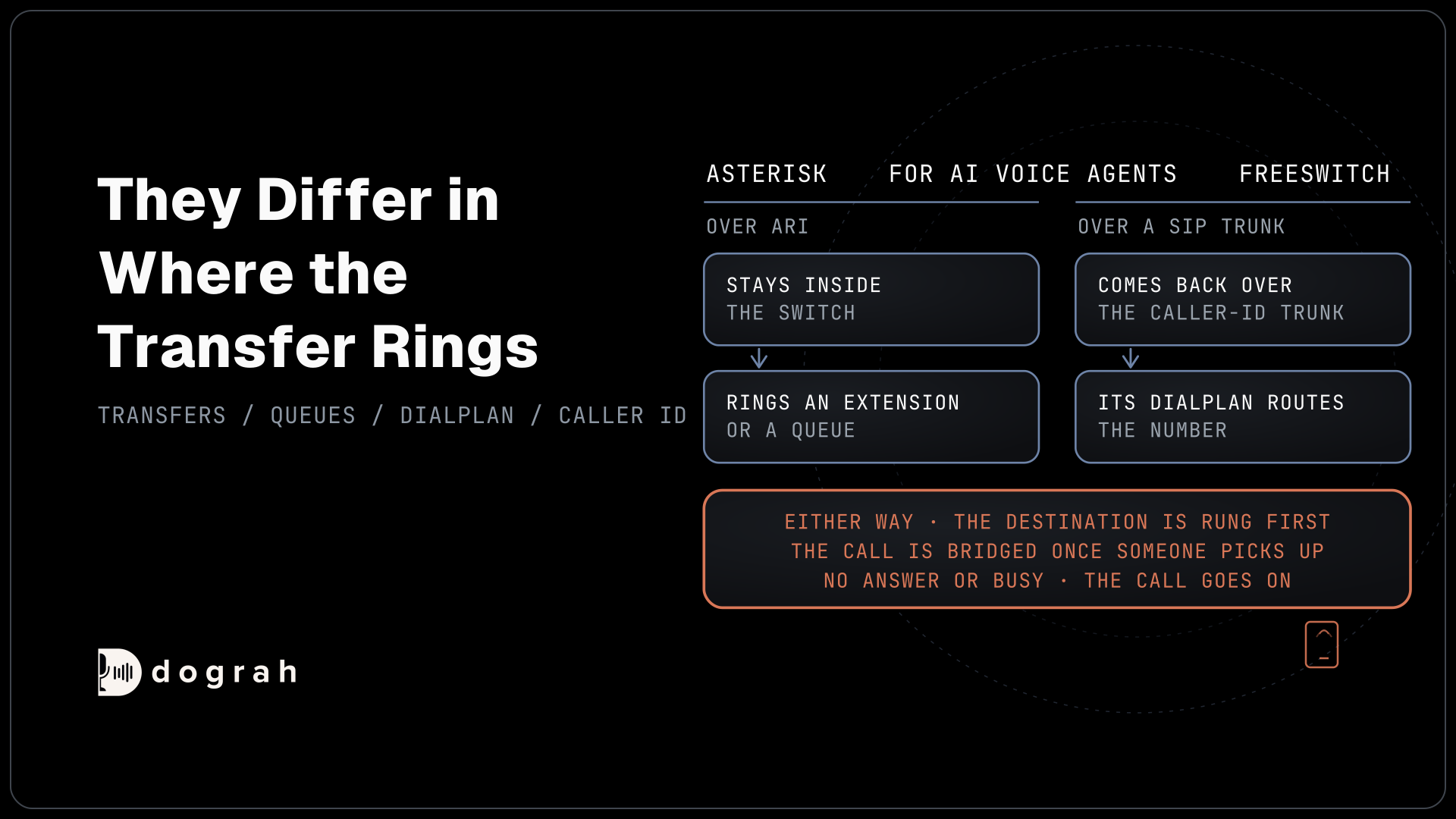
When a caller needs a person, the Transfer Call tool works on Twilio, Telnyx, Plivo, Cloudonix and Asterisk ARI. Dograh calls the person first and plays hold music to the caller until that call is answered, then connects them. If nobody picks up, the agent hears that the transfer failed and keeps the call going.
The QA step scores each step of test and live calls on a sample you choose, and each call's trace shows the time spent in speech-to-text, the AI and the voice.
For the wider field, see our guides to Bland AI alternatives and PolyAI alternatives.
Glossary
- Daily call cap
- A limit on how many calls a plan can make or take in one day. Bland's Start plan allows 100 a day and Build 2,000, and calls past the cap are rejected.
- Overage
- The per-minute price once a plan's included minutes run out. PolyAI charges 30 cents on Essentials, 25 cents on Plus and 20 cents on Scale.
- Pooled minutes
- Included minutes shared across locations on one plan. PolyAI's Scale plan gives 1,500 minutes per location, pooled across up to 9 locations.
- FedRAMP 20x
- The US government's newer route to cloud security authorization under the Federal Risk and Authorization Management Program. Bland lists FedRAMP 20x Class A among its certificates.