
AI voice agents for service reminders in home services call maintenance-plan members when an included visit is due. They verify the plan holder, offer live arrival windows from the field-service software, book the visit and write it back. The reminder carries no renewal or upgrade offer, and any request to stop calling is written to the business's own list.
Key Takeaways
- The service agreement in your field-service software decides who is due.
- No renewal or upgrade offer rides on a reminder call.
- Verify the plan holder before naming the plan or the visit.
This post is part of our guide to AI voice agents for solar and home services. The guide's "After and between jobs: reminders and review requests" section sums up this call in one line: it tells a plan member their included visit is due and books it, with no offer on the call. Here is that call in full, built on Dograh, an open-source, self-hostable voice agent platform.
The visit is already paid for
A maintenance-plan member has already bought the visit, so the reminder call is a service call. The service agreement in your field-service management (FSM) software knows what is owed and when, such as a spring cooling check or the next pest treatment. Seasonal timing comes from that record, never from the agent's prompt.
So treat it as a booking job: the call ends when the included visit is in the schedule. A voice agent built outside the FSM runs the same call, because it reads and writes the same records.
Car dealers make the same argument for service reminders in AI Voice Agents for Service Reminders in Automotive. At home, the visit is owed under a paid agreement, and the call has to sort out the arrival window and the access details as well.
A reminder carries no offer
The line between a reminder and a sales call decides the consent you need. This is general information, not legal advice.
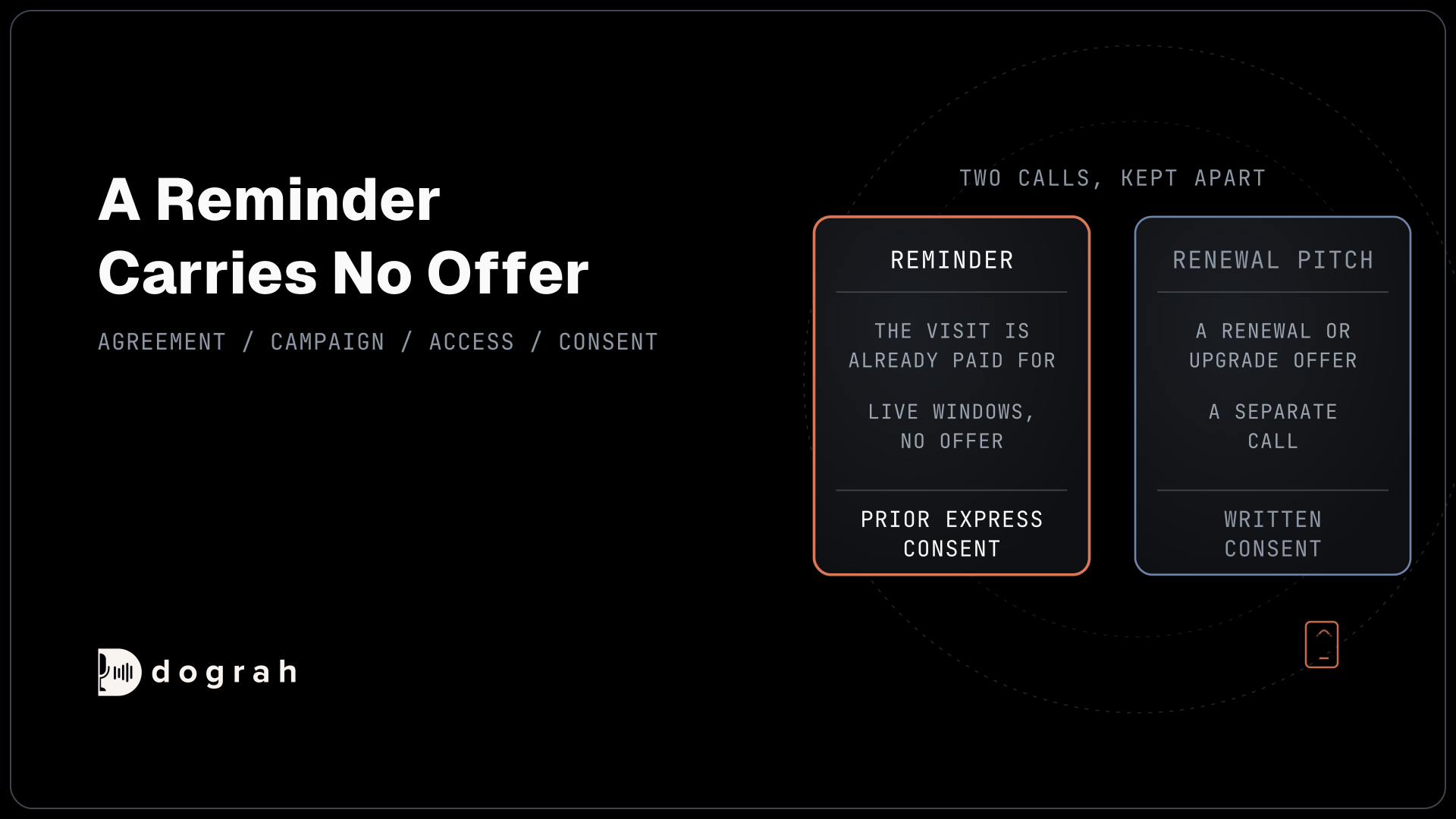
The Federal Communications Commission's declaratory ruling FCC 24-17 confirmed in February 2024 that the Telephone Consumer Protection Act's limits on artificial voices cover "current AI technologies that generate human voices". The rule text at 47 CFR 64.1200 allows an artificial-voice call to a mobile number when it "is made with the prior express consent of the called party", and sets a higher bar for telemarketing: "the prior express written consent of the called party".
Read together, a reminder for a visit the customer already paid for is generally informational. Add a renewal or upgrade pitch, and the same call generally becomes telemarketing, with the written-consent bar. So the reminder stays clean, and a renewal is a separate call to members with written consent on file, or a person's job. That call works like AI voice agents for quote follow-up in home services. Confirm your position with counsel before the first outbound campaign.
How the reminder call runs
The list comes from the service agreements in your field-service software. Export the members due this month as the contact list for a Campaign, or have your system upload it through Dograh's API and start the campaign with no manual step. Calling hours use one time zone per campaign, so split members across time zones into separate campaigns.
A seasonal batch can be large, and every booking takes a technician slot. Release the list in weekly slices that match the open capacity in the schedule, so the agent never runs out of windows to offer halfway through the month. Members who could not be booked this week move to the next slice instead of being called again the same day.
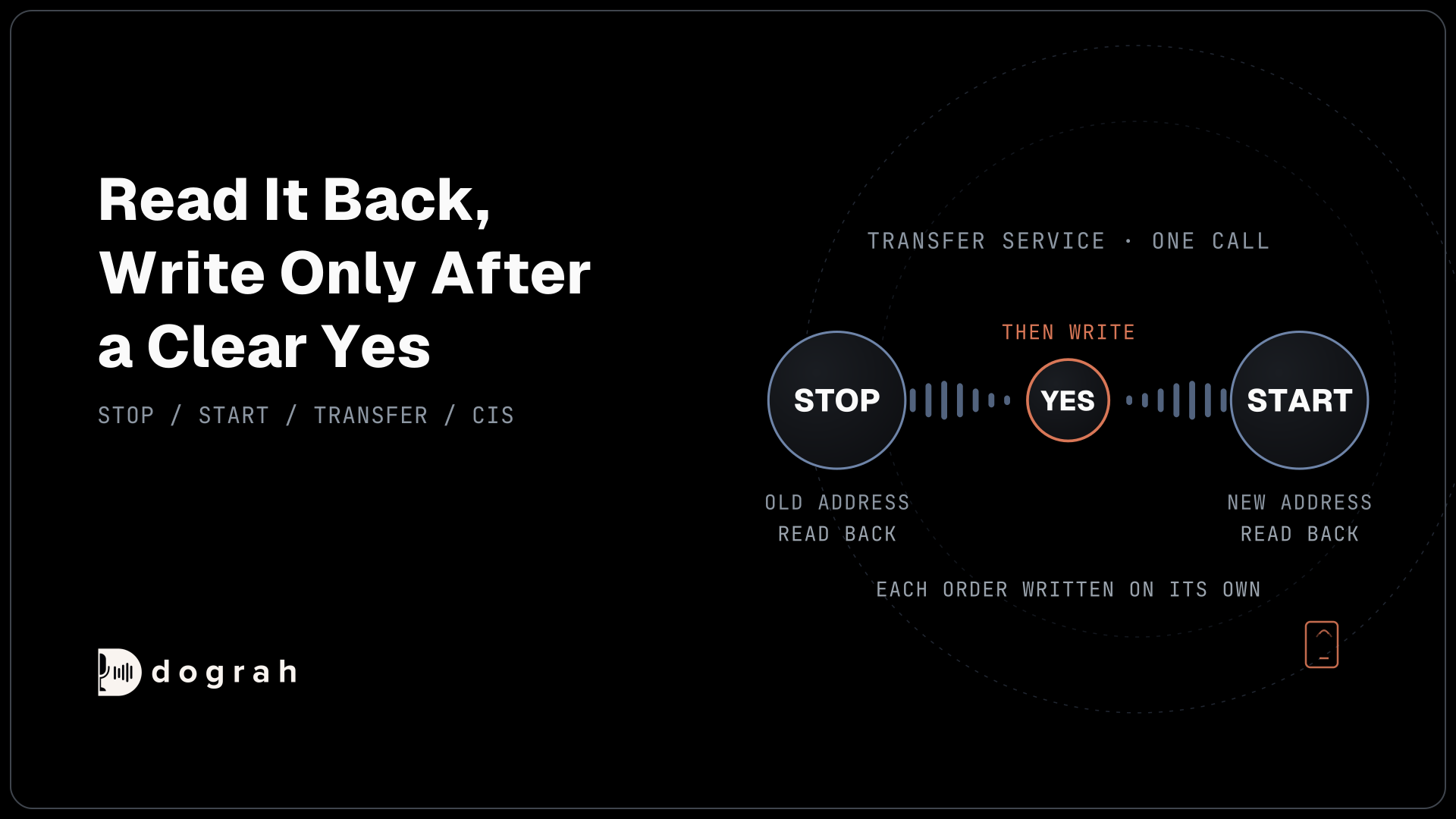
Pre-Call Data Fetch, set to Outbound calls only, loads the plan record as the call connects; write the prompt so the agent uses none of it (nothing from it is spoken) until the caller is verified. Greeting Text, the fixed line Dograh plays word for word, names the business. The agent asks for the plan holder by name, which finds the right person but does not verify them. Before it mentions the plan, it asks them to state the service address and compares it with the record. If someone else answers, such as a tenant or a teenager, the agent asks when the plan holder is free, writes that callback time to your system and says nothing about the plan.
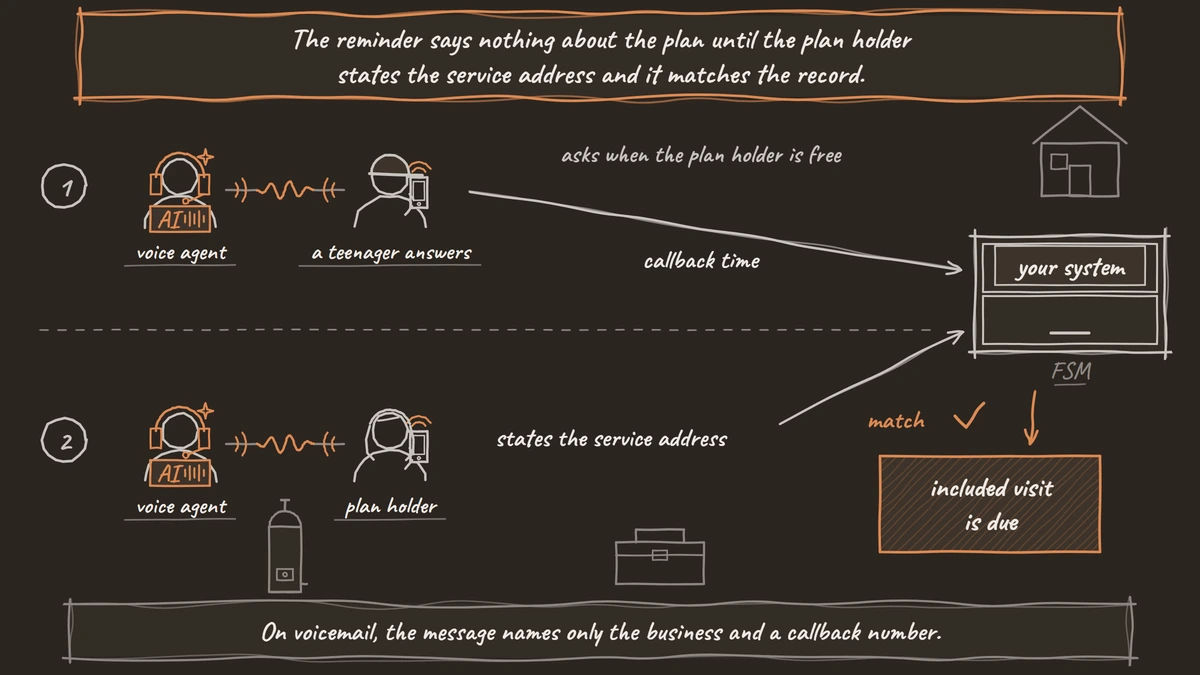
Then the agent says the included visit is due and offers arrival windows that an HTTP API tool reads live from the FSM. It reads back the visit type, the date, the window and the address, then asks about access: a gate code, pets, who will be home, and the filter size if the plan covers filters. Another tool writes the booking, and the agent reads back the job number the FSM returns. The confirmation text comes from your own system, since Dograh sends no texts itself.
If none of the windows work, or the customer wants to move a visit already booked, the change flow takes over, as set out in AI voice agents for reschedule and cancellation handling in home services.
On voicemail, Dograh either disconnects (the default) or leaves a message. A message names the business and a callback number and nothing about the plan, because nobody has been verified.

Open Source Alternative to Vapi / Retell
Self-hosted voice agent platform — no per-minute fees
dograh-hq/dograh
Star on GitHub
Stop requests and how often to call
A member who says "stop calling" means it, even on a service call. An HTTP API tool writes the request to your system at once. Dograh keeps no do-not-call list of its own: it can tag a call do_not_call, but the tag never blocks a future call, so remove those numbers before each campaign upload.
Retries run from 0 to 10, default 2, and never re-call someone who answered. There is no per-contact cap across campaigns, so your own list decides who is called again next month. A running campaign can be paused but not edited, so a member who books online after the upload may still get a call. To avoid that, upload smaller, fresh lists, or start each call from your system with the API Trigger after checking the plan record.
Join the Dograh Community
Dograh is an OSS alternative to Vapi. Join our Slack community for queries, releases, best practices & community interactions.
Where to start
Pick one plan and one season, such as spring cooling checks, and run it as a single campaign. Test the agent on a real phone line before members hear it. After each call, a Webhook node sends the outcome to your FSM, and a temporary failure there is retried automatically. Run QA on a random sample of calls and read the transcripts for any line that drifted toward a sale. Note the questions members asked that the agent could not answer, such as what the visit covers, and add the plan terms to the agent's Knowledge Base as a PDF or text file so the next call can answer from them.
Self-hosted Dograh has no per-minute platform fee (servers, model keys and phone minutes still cost); Dograh Cloud has a 1¢-a-minute platform fee.
Glossary
- Service agreement
- A paid maintenance plan that entitles the customer to set visits, such as two tune-ups a year. The reminder campaign is built from these records in the field-service software, so the agent calls only members whose included visit is due.
- Prior express consent
- Under the TCPA, the consent an artificial-voice call to a mobile number generally needs when it does not sell anything. A reminder for an included, already-paid visit generally falls here.
- Telemarketing
- A call that encourages the purchase of goods or services. A renewal or upgrade pitch generally turns a reminder into telemarketing, which needs prior express written consent for an AI voice.
- Calling hours
- The hours and weekdays a Dograh campaign may place calls. They use one time zone per campaign, so members in different time zones go into separate campaigns.