
An AI voice agent for a salon or barbershop answers calls while every stylist is with a client. It books the right service with the right stylist from your live booking system, fills same-day cancellations from the waitlist and passes the rest to a person. Dograh, an open-source AI voice agent platform, can run this front desk.
Key Takeaways
- Book by stylist and service length, read live from your booking system.
- Give walk-in wait times only when the agent can read a live queue.
- Deposits, card numbers and confirmation texts stay with your booking system.
The phone rings hardest when every pair of hands is holding scissors or a color brush. Below, we cover booking by stylist and service, barbershop walk-ins, waitlist fills, handoffs to a person and deposits. Then we show how each of these calls runs in Dograh, in your own voice.
Why salon phones ring at the wrong moment
Most salon and barbershop calls arrive while the person who would answer is busy with a client. The US Bureau of Labor Statistics counted 670,800 barber, hairstylist and cosmetologist jobs in 2025. It also found that 80% of barbers and 48% of hairdressers, hairstylists and cosmetologists were self-employed. For many chairs, the stylist is also the receptionist.
A stylist halfway through a fade cannot stop to check the book. A voice agent takes those calls on the shop's existing number. It books and moves appointments and answers price and hours questions from your own files, and anything else goes to a person.
Our post on AI phone agents for small businesses covers the general setup, from pointing your number at the agent to the first week of testing. Here we stay on what is different about salon calls.
Booking by stylist, service and chair time
A salon booking is two choices at once, the stylist and the service, and the service decides how long the chair is blocked. A men's cut and a full color with Maria are two very different holes in her day. So the agent never works out the length itself. It asks your booking system for open slots that fit that stylist and that service.
During the call, an HTTP API tool reads those slots, the agent offers two or three, and the same tool writes the chosen one back. The booking counts only when your system confirms it. Then the agent reads back the stylist, the service, the day and the time.
On Square, for example, the Bookings API can search availability by service, team member and location, and create, update or cancel bookings. Writes for your own salon need a paid Appointments plan. Any other booking system with an API connects the same way.
Some booking systems let a stylist start a short service while a color processes. Leave that logic in the booking system. If it offers the slot, the agent books it, and if it does not, the agent offers the next one. While the booking system answers, the tool's Messages setting can play a short line such as "Let me check Maria's book" so the caller is never left in silence.
When the requested stylist is full, write the order of fallbacks into the prompt: the next date with the same stylist first, then another stylist who does that service. The whole loop of reading slots, offering them, writing the booking and reading it back is laid out in our post on AI voice agents for appointment scheduling, along with how to stop a repeated request from booking twice.
Barbershop walk-ins and wait times
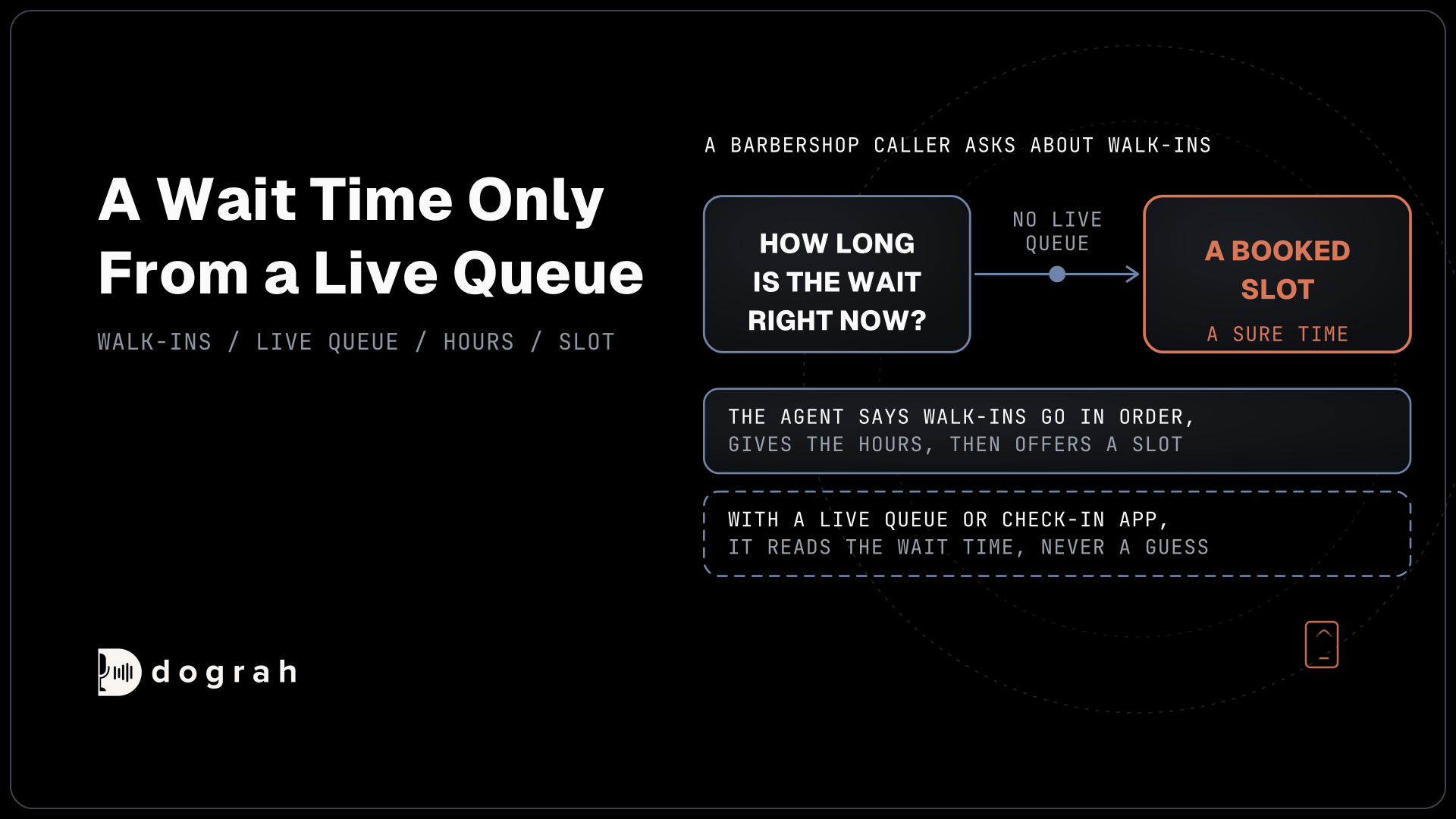
Barbershops get a call that salons rarely do: "How long is the wait right now?" The agent should give a wait time only when it can read one, from a queue or check-in app with an API. A guessed "about 20 minutes" sends someone across town to wait an hour.
Without a live queue, the prompt tells the agent to say the shop takes walk-ins in order, give the hours, and offer a booked slot instead. An offer such as "I can book you with Marcus at 4:30" gives the caller a sure time instead of a guess.
Barber names deserve care. A caller who asks for Marcus on Saturday wants Marcus, so the agent checks his calendar first. A caller who says "anyone" gets every barber who does that service. Names, nicknames and service words such as balayage or skin fade are easy for speech-to-text to mishear, so add them to the agent's Dictionary in Settings.

Open Source Alternative to Vapi / Retell
Self-hosted voice agent platform — no per-minute fees
dograh-hq/dograh
Star on GitHub
Same-day cancellations and the waitlist
A same-day cancellation is the call where the agent earns its keep, because an empty chair at 2 pm is income a one-chair stylist does not get back. The inbound side is simple. The caller's number finds the booking, but it does not prove who is calling. So the agent lets the caller name the appointment, or checks one detail on file such as the email address, before reading any booking back.
Once the slot is canceled in the booking system, the refill can start on its own. Your booking system, or a small script beside it, calls Dograh's API Trigger to place an outbound call to the first client on the waitlist, with the stylist, service and time passed in. On a yes, the agent writes the booking. On a no or no answer, the system moves to the next name.
Call one client at a time, so two people are never offered the same chair. Turn on voicemail handling and leave "When voicemail is detected" on Disconnect the call. The agent then moves on rather than leaving a message about a slot that may be gone in ten minutes.
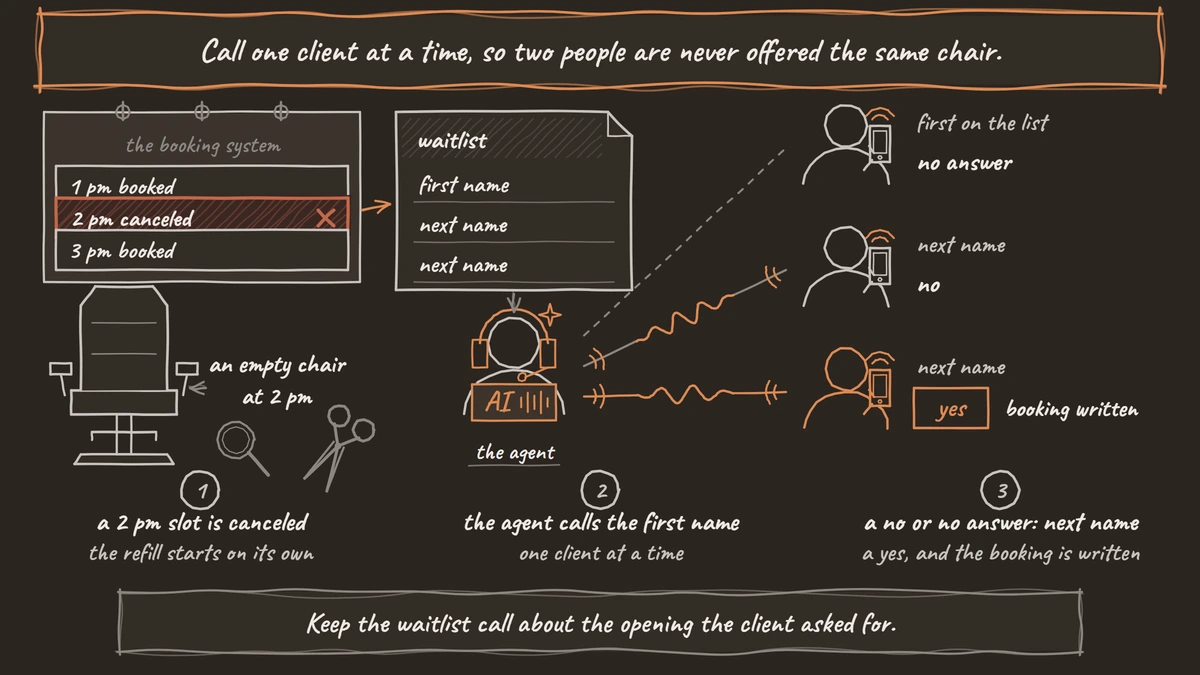
Keep the waitlist call about the opening the client asked for. A "you're due for a color" call is a different, promotional call, and our post on med spa booking and rebooking calls covers the consent that kind of call needs.
When the stylist is mid-cut
Send handoffs to whoever can pick up, which is almost never the stylist with a client in the chair. That usually means the front desk, or the owner's mobile between appointments.
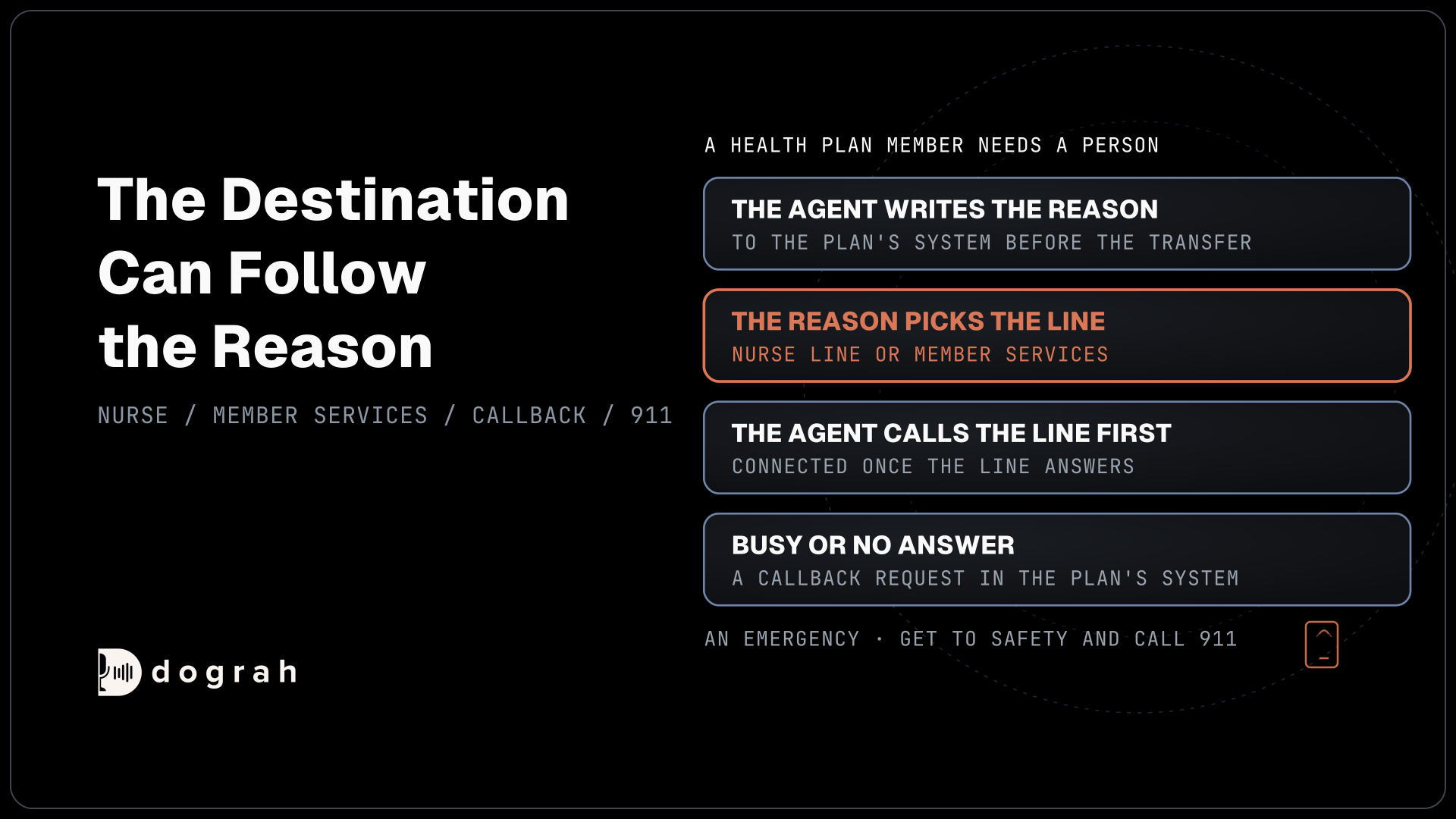
Transfer Call handles it on Twilio, Telnyx, Plivo, Cloudonix and Asterisk ARI. The destination is dialed first, with hold music for the caller, who is connected only after someone answers. If nobody answers within the timeout, 30 seconds unless you change it, the transfer is reported as failed and the agent stays with the caller. It then takes a message and writes the callback request to your booking system or inbox through an HTTP API tool.
Have the agent write the note before it transfers, so whoever picks up already knows what the caller wants. On Twilio you can also turn on a short spoken introduction that both people hear. A solo stylist can skip transfers entirely and return calls between clients.
Decide which calls always go to a person. Complaints about a service and a client describing a reaction to a product belong with the owner, never with the agent's own advice.
Join the Dograh Community
Dograh is an OSS alternative to Vapi. Join our Slack community for queries, releases, best practices & community interactions.
Deposits and texts stay with your booking system
The agent never takes a card number on the call. If your salon takes deposits for long services, an HTTP API tool asks your booking or payment system to send its own secure link, and the client pays there.
Confirmation texts and reminders come from the booking system too. That keeps one record of every booking, deposit and reminder in the system your staff already use.
Your own voice on every call
The greeting is the part clients remember, and you can record it yourself. Pre-recorded clips let you record the greeting and your opening hours once, and a cloned version of your voice covers everything else the agent says.
Should you want callers told they are talking to an automated assistant, or should local law require it, put that line in the Greeting Text next to the salon's name. Then turn off Allow Greeting Interruption on the Start Call node, so callers hear the whole line.
Hosted salon answering products run your calls on the vendor's servers and models. Here you pick every model, on your own keys or as open models on your own servers, and recordings stay on servers you control. Self-hosted Dograh has no per-minute platform fee, but servers, model keys and phone minutes still cost money. Dograh Cloud charges a 1¢-a-minute platform fee.
Built-in QA scores a sample of calls step by step, and each call's trace shows where a booking stalled. Clients who call on WhatsApp can reach the same agent, since a WhatsApp Business number can take voice calls into Dograh, and the agent takes a message there rather than transferring.
Salon groups with several sites face their own routing and local-number choices, and our guide to AI voice agents for franchises works through them. If you are weighing price first, our AI receptionist for small business guide sets what a small shop needs against what free tiers cover.
Start with booking and cancellations on one stylist's calendar. Listen to a week of calls, then add the waitlist.
Glossary
- Service duration
- The time a booking system reserves for a service with a given stylist. The agent reads open slots that already fit it, so a color never gets squeezed into a gap made for a cut.
- Waitlist fill
- Offering a canceled slot to clients who asked to be called about an opening, one at a time, until one says yes. The booking system decides who is next and the agent places each call.
- Transfer timeout
- How long Dograh rings the front desk or owner before the transfer counts as failed. It is 30 seconds by default, and the caller then stays with the agent, which takes a message.
- Pre-recorded clip
- A recording of a real person, often the owner, that the agent plays for fixed lines such as the greeting. Lines without a clip fall back to a cloned text-to-speech voice.