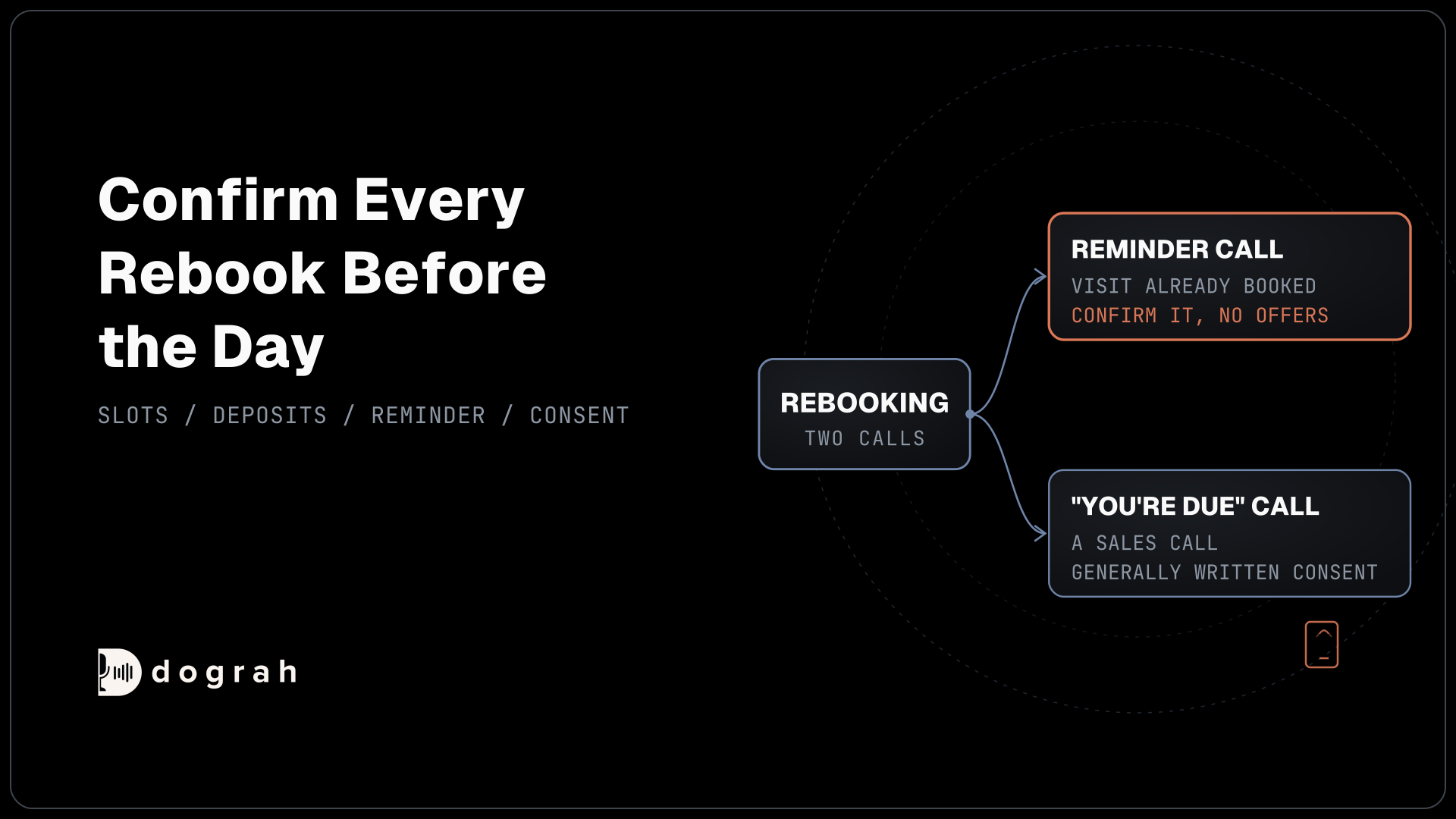

AI voice agents for med spa booking and rebooking answer booking calls by reading open slots from the spa's booking system, then write each booking back during the call. They confirm rebooked visits before the day. A call suggesting a client's next treatment is a sales call, so it goes only to clients with written consent on file.
Key Takeaways
- Book only slots your booking system returns, and write them back mid-call.
- Confirm every rebook. Zenoti found 37% of first rebooks were later cancelled.
- A "you're due" call goes only to clients with written consent.
This post is part of our guide to AI Voice Agents for Med Spas & Aesthetics. Below, we cover booking with deposits, where the agent books only slots your system returns. Then we set up both rebooking calls in Dograh, the open-source AI voice agent platform we build.
Inbound booking from live slots
The booking call reads open slots from your booking system and writes the booking back while the client is still on the line.
Pre-Call Data Fetch can look up the caller's number in your booking system as the call connects, so the agent knows whether this is a returning client. The greeting waits for it, and the caller hears ringing meanwhile. A number finds a record, but it does not prove who is calling. Before the agent mentions past treatments or upcoming visits, it asks for an approved check, such as date of birth.
Then an HTTP API tool asks the booking system for open slots for the treatment, and for a named provider if the client wants one. Zenoti's booking API is one example. It retrieves available slots, reserves one and then confirms the booking. Follow the same order on the call. Offer only slots the system returned, write the booking, and confirm it to the client only once the system says yes.
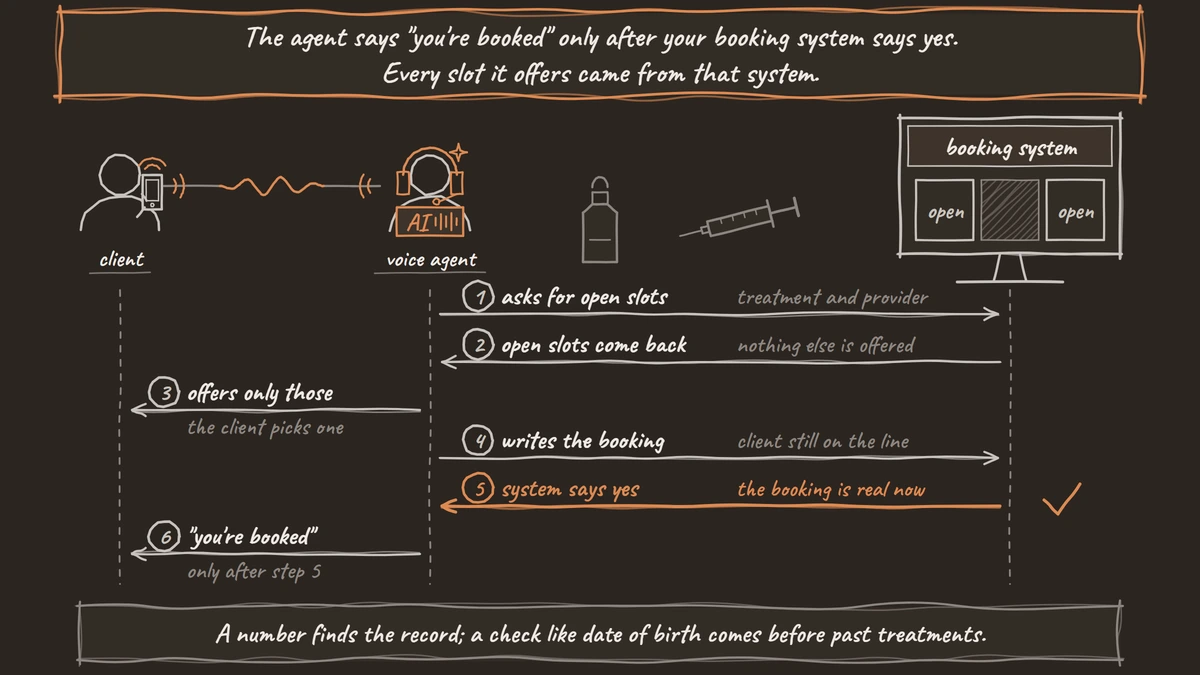
Each tool waits 5 seconds by default and does not retry on its own. If a request times out after the booking actually went through, a second attempt could book the slot twice. Add a Preset Parameter named workflow_run_id with the value {{initial_context.workflow_run_id}}, and your booking system can use that ID, with the slot, to ignore the repeat. AI voice agents for appointment scheduling covers this booking loop across industries.
Deposits and booking changes
Changes to a booking use the same tools, and money never changes hands on the call. Many spas take a deposit for a consultation or a long treatment. Dograh has no payment feature and no keypad (DTMF) tool, so the agent never takes a card number. The agent asks your booking system or payment provider to send its own secure deposit link by text or email, and the booking is held on whatever terms your system sets.
To reschedule, the agent reads fresh slots and writes the move, so the old slot opens for someone else. A cancellation is a single write. The agent can read your cancellation policy from the Knowledge Base and state the fee your system returns, but it never waives one. A client who asks for an exception goes to a person.
Confirm every rebook before the day
A rebooked visit is not a visit until the client confirms it, so the reminder call matters as much as the rebook.
In Zenoti's 2026 benchmark report, 37% of appointments rebooked after a client's first visit were later cancelled, against 21% for appointments of clients who were not rebooked. Once a client had completed a second rebooked visit, the rate fell to 4%. Zenoti calls bookings that are scheduled but not committed to "calendar inflation", and advises pairing every rebook with a confirmation step.
A reminder for a visit already booked promotes nothing. It generally rests on the number the client gave when booking, which is the prior express consent the calling rules ask for before an AI-voice call to a mobile. The call names the spa, verifies the client, reads the date and time, and asks the client to confirm or move the visit.
Voicemail handling is off by default. Once set to "Leave a message", the message should carry only the spa's name and a callback number, never the treatment, because anyone in the household can play it.

Open Source Alternative to Vapi / Retell
Self-hosted voice agent platform — no per-minute fees
dograh-hq/dograh
Star on GitHub
The "you're due" call is a sales call
A call to a client with no booking, suggesting it is time for their next treatment, encourages a purchase. It generally needs the client's prior express written consent.
Who is due comes from your system and your clinicians, never from the agent. Prospyr, a practice-software vendor, suggests return windows such as 12 to 14 weeks for neurotoxins and 6 to 12 months for fillers. Your medical director sets the real ones, and your system builds the list from them.
Under the Telephone Consumer Protection Act (TCPA), the FCC's calling rule treats a call made to encourage buying a service as telemarketing, and the FCC counts an AI voice as an artificial voice. A telemarketing call with an artificial voice to a mobile or home line needs prior express written consent, meaning a signed agreement that clearly authorizes the spa to make such calls to that number. A client's past visits are not that consent. The rule exempts health care messages from HIPAA covered entities, but whether a call for an elective cosmetic treatment counts is unsettled, so we treat it as a sales call.
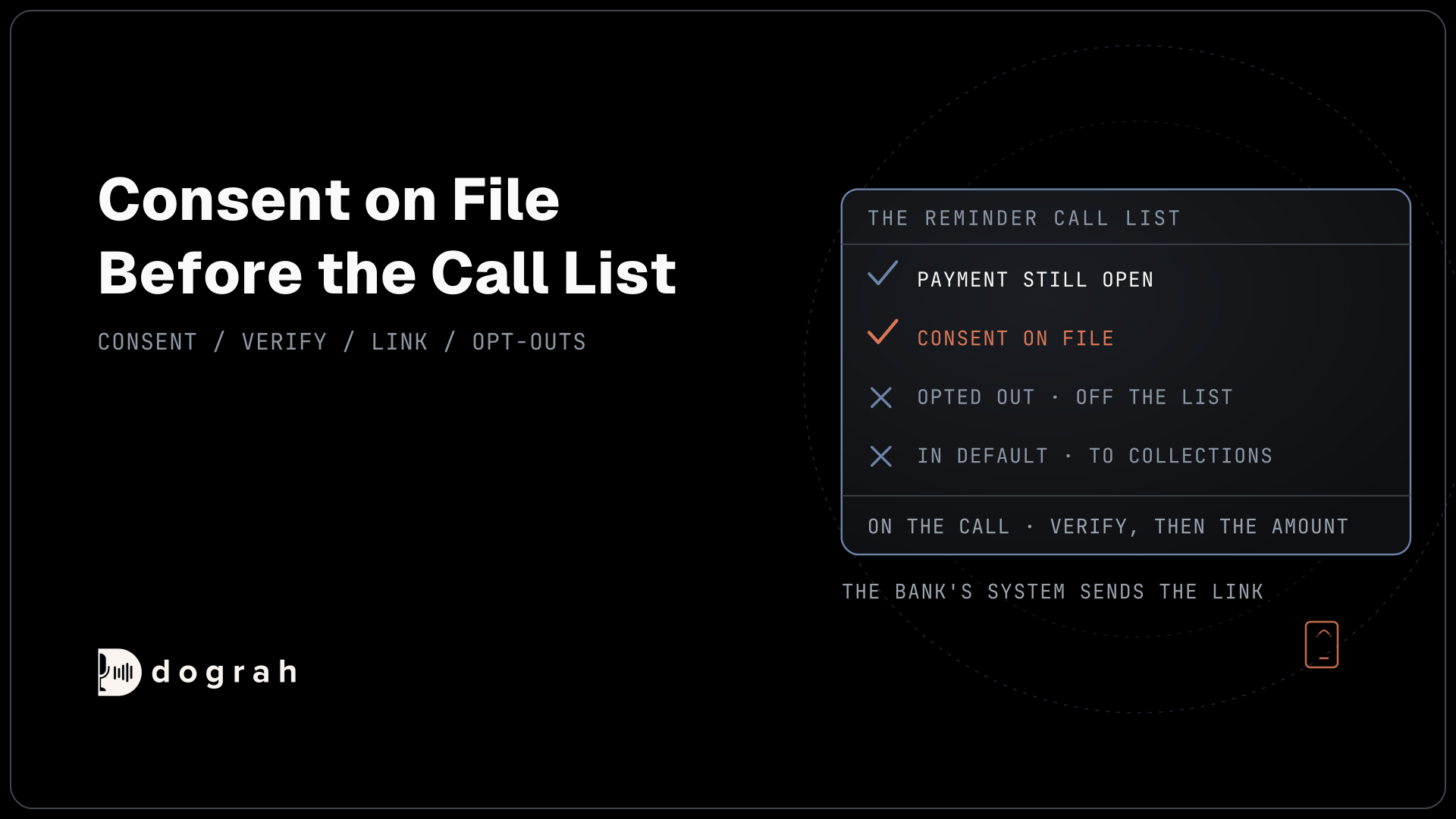
Dograh stores no consent record. Filter the list in your own system to clients with signed consent on file, then upload it to Campaigns. Each extra column becomes a variable the agent can use, and a per-row greeting can be set in the file as text or a recording. Calling hours run by weekday in one time zone per campaign, so split the list by time zone. Retries run from 0 to 10, 2 by default, and there is no per-client call cap, so your list sets how often anyone is called.
A sales call made with an AI voice must also name the spa at the start and let the client opt out by voice straight after. Put both in the Greeting Text, or in the per-row greeting. A client can withdraw consent in any reasonable way, and the rule gives you ten business days to honour it. The agent writes a stop request to your system. The do_not_call call tag marks the call but never blocks a later one. AI voice agents for upsell and cross-sell explains why the direction of the call decides the consent, and our post on win-back and drop-off recovery covers lapsed customers in general. Have counsel confirm how these calling rules apply to your spa.
Questions that go to a clinician
Booking calls draw clinical questions, and the agent hands every one to a licensed clinician. "Am I due yet?" and "Is it safe to come in early?" are questions about the client's treatment. The agent offers a clinician through Transfer Call, which works on Twilio, Telnyx, Plivo, Cloudonix and Asterisk ARI. Dograh calls the destination first and connects the client only when someone answers. On Twilio, it can play a short spoken introduction to both people before connecting them.
No summary goes across by default, so the agent writes the question to your system first. If nobody answers within the 30-second default, the client stays with the agent, and the prompt tells it to write a callback request instead. The guide's section on treatment advice explains why the agent never answers these questions itself.
Self-hosting keeps booking calls and client records on your own servers. Self-hosted Dograh has no per-minute platform fee (servers, model keys and phone minutes still cost). Dograh Cloud has a 1¢-a-minute platform fee.
Start with the inbound booking call, then add the reminder for booked visits. Add the consented "you're due" campaign once transcripts show clinical questions reaching clinicians.
Join the Dograh Community
Dograh is an OSS alternative to Vapi. Join our Slack community for queries, releases, best practices & community interactions.
Glossary
- Calendar inflation
- Zenoti's name for bookings that are scheduled but not committed to. A rebook made at checkout can sit in the calendar and still cancel, which is why each one gets a confirmation call.
- Preset Parameter
- A value Dograh adds to every request an HTTP API tool sends, filled from the call's own data. Setting workflow_run_id as one lets the booking system ignore a booking request that arrives twice from the same call.
- Prior express consent
- The consent the FCC's rule requires before a non-sales AI-voice call reaches a mobile number. A client who gave their number when booking has generally given it for reminders about that visit.
- Prior express written consent
- A signed agreement that clearly authorizes a business to make sales calls with an artificial voice, including an AI voice, to a named number. A call suggesting a client's next treatment generally needs it.