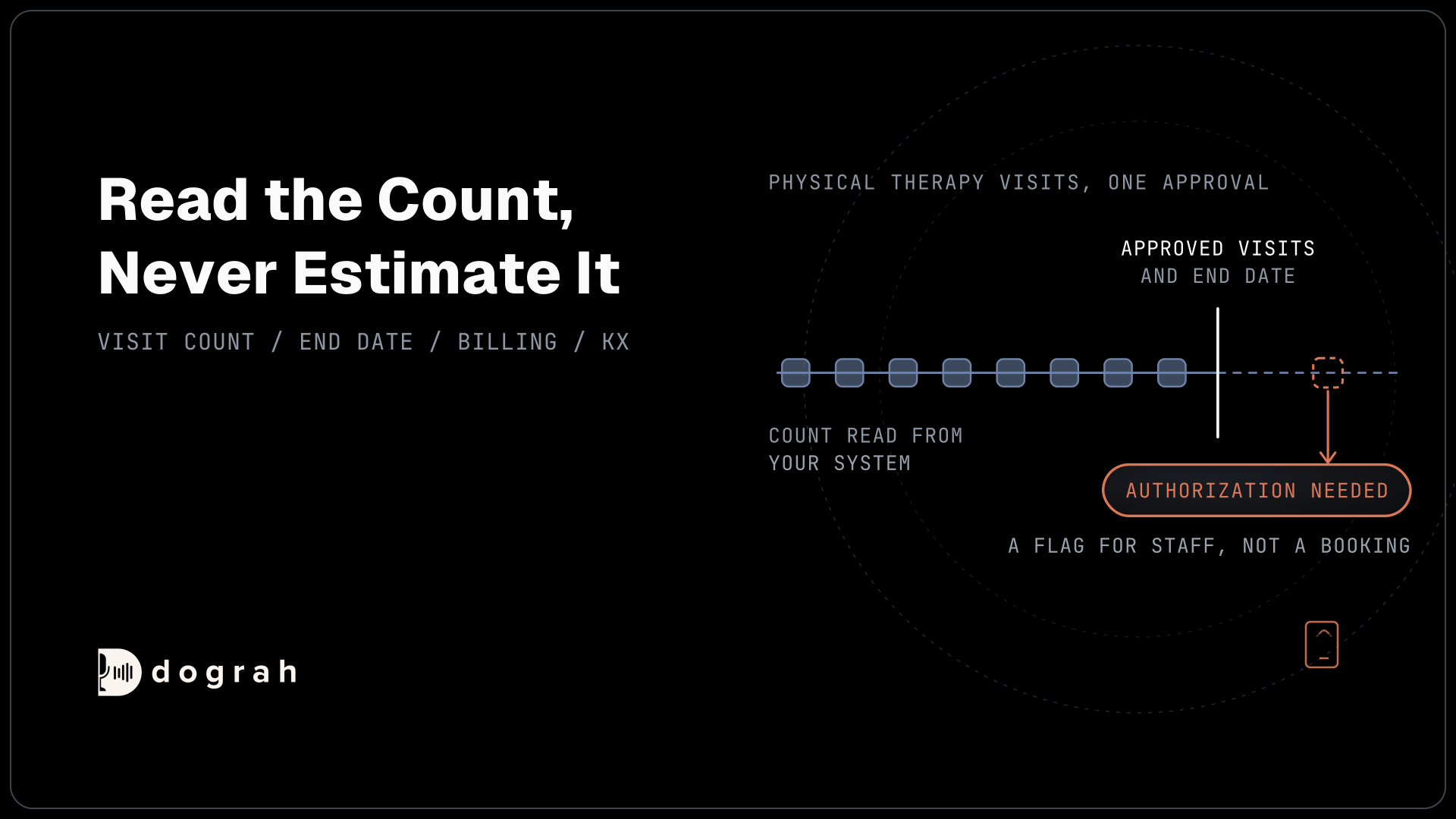

AI voice agents for PT authorization and visit limits read each patient's visit count and authorization end date from the clinic's own system after verifying the patient, then say what it shows. When the next booking would pass a limit, they flag staff. They never guess coverage, and they never call payers.
Key Takeaways
- The agent reads visit counts from your system and never estimates them.
- A booking past the approval becomes a flag for staff to act on.
- Coverage answers and the KX decision stay with billing staff and the therapist.
This post is part of our guide to AI voice agents for physical therapy and rehab clinics, where every count comes from your system. Below, we cover the limits a PT patient runs into. Then we set up the calls in Dograh, the open-source AI voice agent platform we build.
The limits a PT patient runs into
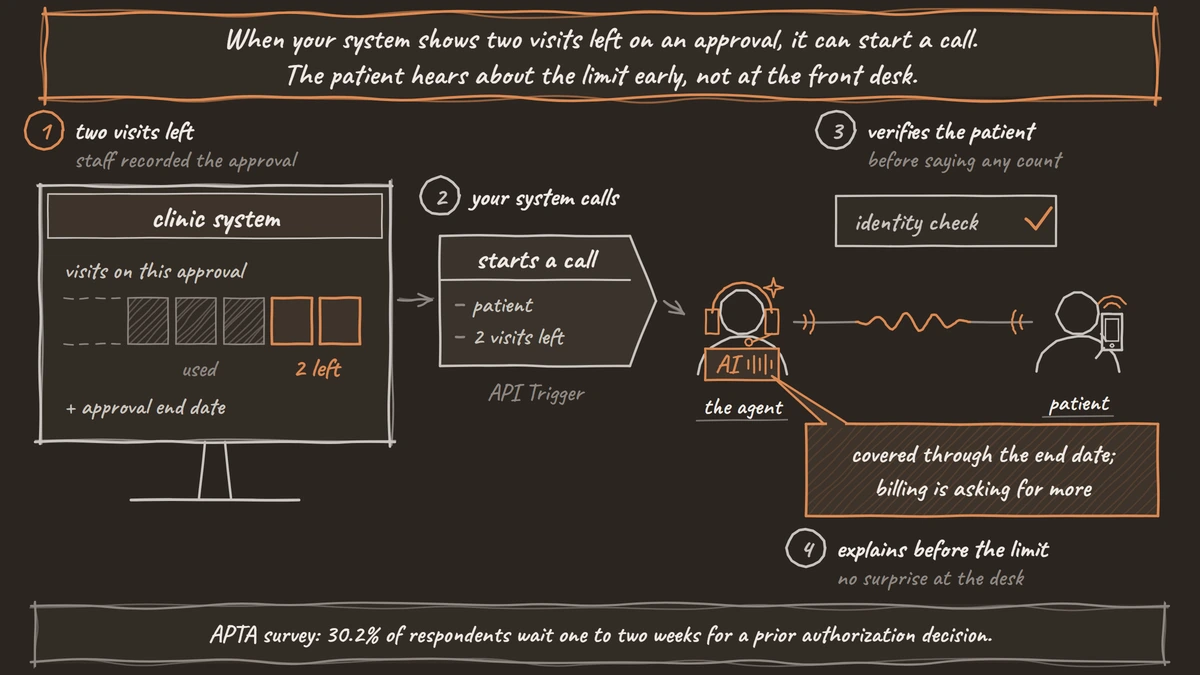
A PT patient can hit a limit halfway through the plan, and the patient is usually the last to know. Most commercial and Medicare Advantage plans approve a number of visits within set dates. When those run out, the clinic asks for more. In APTA's 2025 survey on administrative burden, 30.2% of respondents said they wait one to two weeks for a prior authorization decision, and nearly 83% agreed it has caused patients to abandon treatment.
Those are therapists' views from 856 responses, not a measured rate. The same survey found Medicare Advantage showed the most consistent rise in time spent on continued-visit requests. From 2026, Medicare Advantage plans must make a standard decision on a service that needs prior authorization within 7 calendar days, under Medicare Advantage's decision timeframes. A course-of-treatment approval must also stay valid for as long as it is medically necessary, and a patient who joins a plan mid-course gets at least 90 days of transition, under Medicare Advantage's course-of-treatment rule.
Original Medicare sets no visit cap. Instead, CMS's 2026 payment rule puts the KX modifier threshold at $2,480 for PT and speech-language pathology combined. Above it, the therapist adds the KX modifier to confirm the care is medically necessary, and claims without it are denied. The figure changes every year, and Medicare counts the patient's spending at every provider.
Read the count, never estimate it
The count the patient asks about is already in your system, because staff record each approval when it arrives. The agent only reads it. Pre-Call Data Fetch can load the patient's record as the call connects, and the prompt keeps it unspoken until the patient passes your approved check. Date of birth alone is weak, so pair it with a second item your system holds.
During the call, an HTTP API tool can ask for fresh numbers. Build that endpoint to return only what the agent may say, such as the visit count against the approval with its end date, and a flag when the KX threshold is reached. The tool hands the whole response to the language model, so payer notes and diagnoses stay out of it.
Tell the agent in the prompt to read the numbers back as the system gives them. It never adds up visits on the call and never estimates Medicare spending, because spending at other providers is not in your system.

Open Source Alternative to Vapi / Retell
Self-hosted voice agent platform — no per-minute fees
dograh-hq/dograh
Star on GitHub
Flag staff before the visit that breaks the limit
A limit is easy to handle a week early and hard to handle at the front desk. On inbound calls, if a patient asks for a visit past the approved count or the authorization end date, the agent does not book it. It writes an "authorization needed" flag to your system and tells the patient the clinic will call about the next visits.
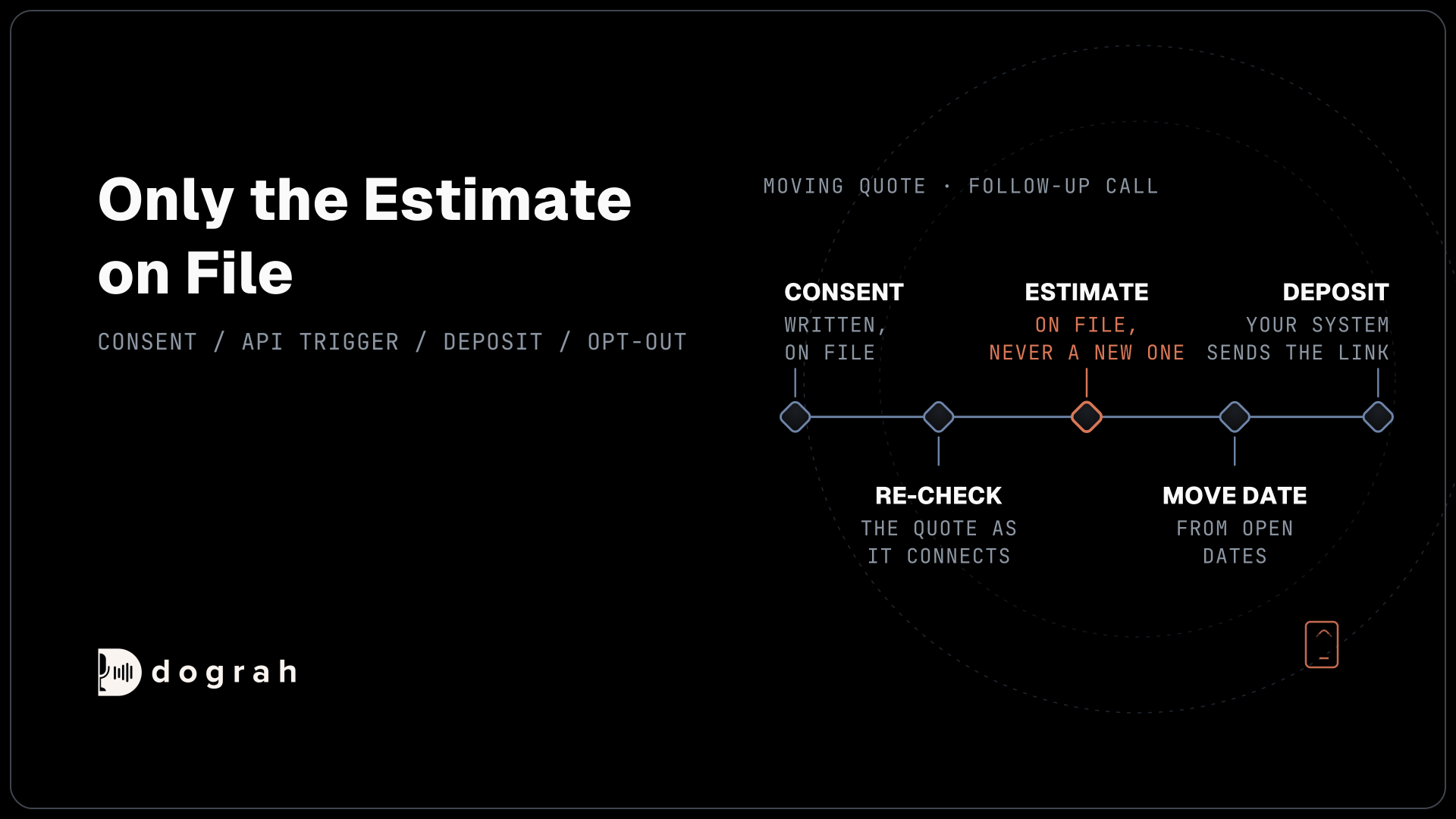
Outbound works from the same data. When the system shows two visits left on an approval, it can start a call through the API Trigger. The agent verifies the patient, then explains the approval covers visits through a given date and that the billing team is asking for more. Booking inside the approval stays with AI voice agents for PT scheduling and plan-of-care follow-up.
After the call, a Webhook node sends the outcome to your system. A temporary failure, such as a timeout, is retried automatically, up to 5 attempts.
What the agent never says about coverage
Coverage answers belong to billing staff, so the agent states only what the system shows. It never says whether insurance will pay, and it never quotes a copay it did not read from your system. It never decides whether care is medically necessary or whether the KX modifier applies. The therapist makes that call.
The agent also never phones the payer. Dograh has no keypad (DTMF) tool, so it cannot press through an insurer's phone menu. Your system gets coverage from the payer electronically, and staff submit authorizations. Home health agencies split the same work in AI voice agents for home health eligibility checks.
When a patient wants to talk coverage now, the agent writes the question to your system and uses Transfer Call to reach billing. It works on Twilio, Telnyx, Plivo, Cloudonix and Asterisk ARI. Dograh calls the destination first and connects the caller only when someone answers. On Twilio, it can play a short spoken introduction to both people before connecting them. This post is our reading of Medicare's rules, so confirm your billing position with counsel.
Join the Dograh Community
Dograh is an OSS alternative to Vapi. Join our Slack community for queries, releases, best practices & community interactions.
Chasing plan-of-care signatures
One more date sits behind every Medicare plan, the certification. Under Medicare's plan-of-care certification rule, the plan is recertified at least every 90 days. If a written order is on file and the therapist documents sending the plan to the physician or other practitioner within 30 days of the evaluation, no separate signature is needed. Without that, the clinic needs the plan signed.
The agent can chase those signatures on direct office lines that a person answers. It gives the clinic's name and a chart reference and asks whether the signed plan has been sent. Then it records the answer in your system. Dograh cannot press through a phone menu, so offices behind one stay with staff.
Glossary
- Continued-visit request
- A clinic's request to a payer for more visits once the first approval runs out. The voice agent flags staff before the last approved visit so the request goes in early.
- KX modifier
- The code a therapist adds to a Medicare claim above the yearly threshold, $2,480 in 2026 for PT and speech-language pathology combined, to confirm the care is medically necessary. Only the therapist decides on it.
- Course-of-treatment approval
- A Medicare Advantage prior authorization for a full course of care, which must stay valid as long as the care is medically necessary. The agent reads its end date, if any, from the clinic's system.