
AI voice agents for plan upgrades and cross-sell in telecom call customers who have agreed to sales calls, or answer them on inbound calls, and make one offer such as a bigger data plan or home internet. They verify the customer first, read the offer and full price from the billing system, and write an accepted change back.
Key Takeaways
- Dial only customers with written consent and the right CPNI approval.
- Read one offer and its full monthly price from the plan record.
- On inbound calls, offer only after the caller's issue is solved.
This post is part of our guide to AI voice agents for telecom, cable and broadband. The guide's section on growing the account puts it in one line: "An upgrade call makes one offer, read from the plan record, to a customer who has agreed to hear it." Here is that call in full, run on Dograh, an open-source, self-hostable voice agent platform that reads the offer from your billing system (BSS) and writes the accepted change back.
Why an upgrade call is a sales call
An upgrade or cross-sell call exists to sell, so every rule for sales calls applies to it. That is worth saying first, because the demand is real and it is tempting to dial everyone.
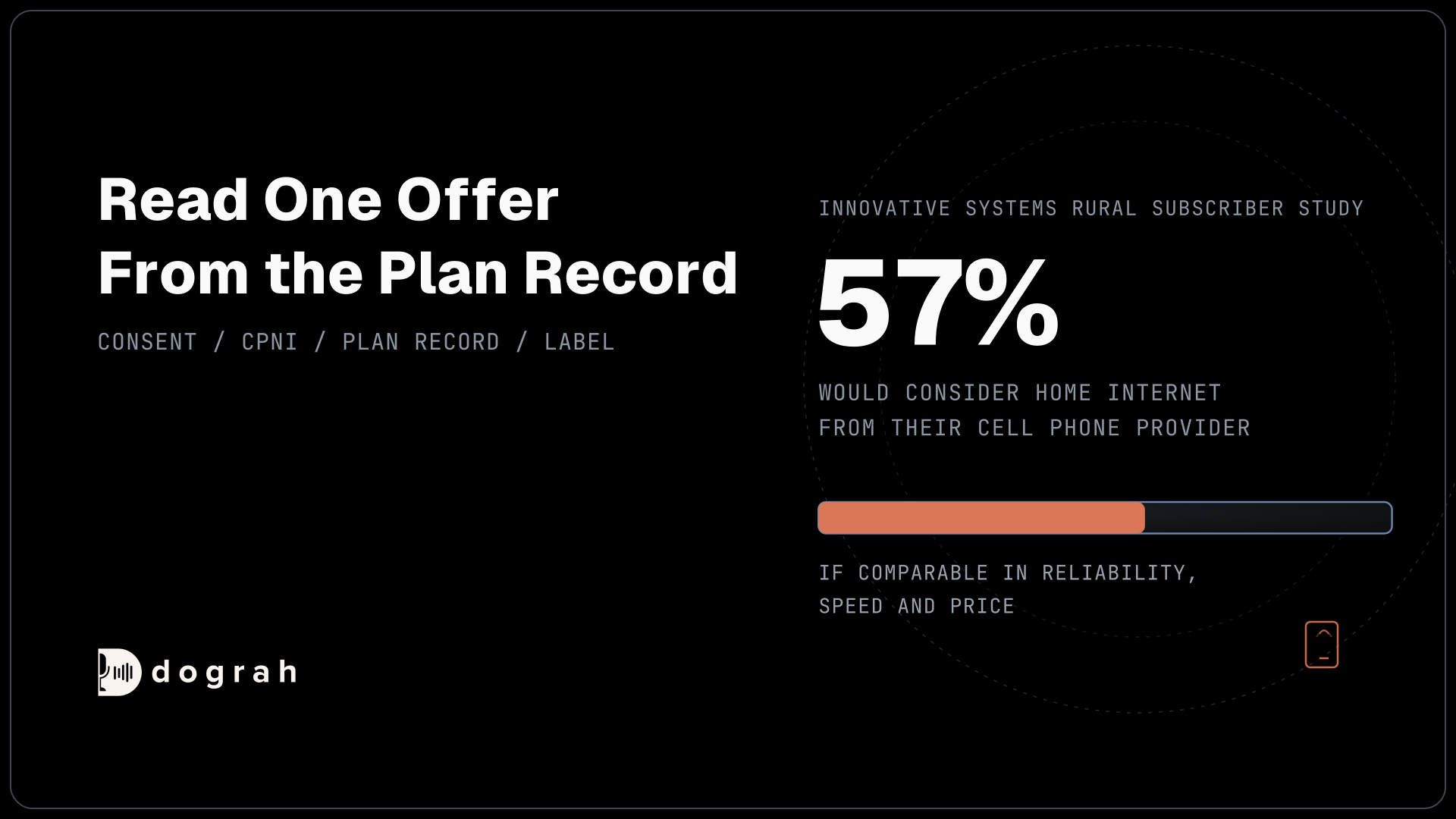
Customers do want bundles that match what they have. In Innovative Systems' 2026 Rural Subscriber Study, 57% of respondents said they would consider a home internet plan from their cell phone provider if it was "comparable in reliability, speed, and price".
Price leads the conversation. J.D. Power's 2026 internet provider study of 31,548 customers put the average monthly cost at $84 for wired internet and $77 for wireless internet. 70% of wireless customers called their plan affordable, against 55% of wired customers. An offer that hides fees or skips the full monthly price loses the customer it was meant to keep.
Who belongs on the call list
The list decides whether the call is lawful, so it is built and checked in your own system before anyone is dialled. This is general information, not legal advice; confirm your position with counsel.
The FCC's February 2024 ruling, FCC 24-17, confirmed that AI-generated voices count as "artificial" voices under the Telephone Consumer Protection Act (TCPA). The rule text at 47 CFR 64.1200 covers "any telephone call that includes or introduces an advertisement or constitutes telemarketing" and allows it with "the prior express written consent of the called party". An outbound upgrade call from an AI voice agent generally needs that written consent on file.
Customer proprietary network information (CPNI) adds a second check. Under 47 CFR 64.2005, a carrier may use CPNI to market offerings "among the categories of service (i.e., local, interexchange, and CMRS) to which the customer already subscribes from the same carrier, without customer approval". It may not use CPNI to market a category the customer does not already buy "unless that carrier has customer approval to do so". So a bigger mobile plan for a mobile customer and home internet for that same customer generally sit under different rules. Only customers with both on file go on the list.
Dograh keeps no do-not-call list. Opt-outs live in your own system, written there by an HTTP API tool during the call or by the webhook after it, and removed before each list upload. Calls stay between 8 a.m. and 9 p.m. local time, and a Dograh campaign runs on one time zone, so split the list by time zone. Your system can also start each call through the API Trigger, which our post on API triggers walks through.

Open Source Alternative to Vapi / Retell
Self-hosted voice agent platform — no per-minute fees
dograh-hq/dograh
Star on GitHub
One offer, read from the plan record
The agent makes one offer, and every number in it comes from the billing system. The trigger usually sits in the BSS too: a data allowance used up early, or a contract coming to an end.
A campaign or the API Trigger starts the call. The Greeting Text names the provider word for word. If you want to tell customers they're speaking with an automated assistant, or your location requires it by law, write it there too. Then the agent verifies the customer with an approved check, such as the last digits of the account number, before it mentions the plan, the usage or the reason for the call.
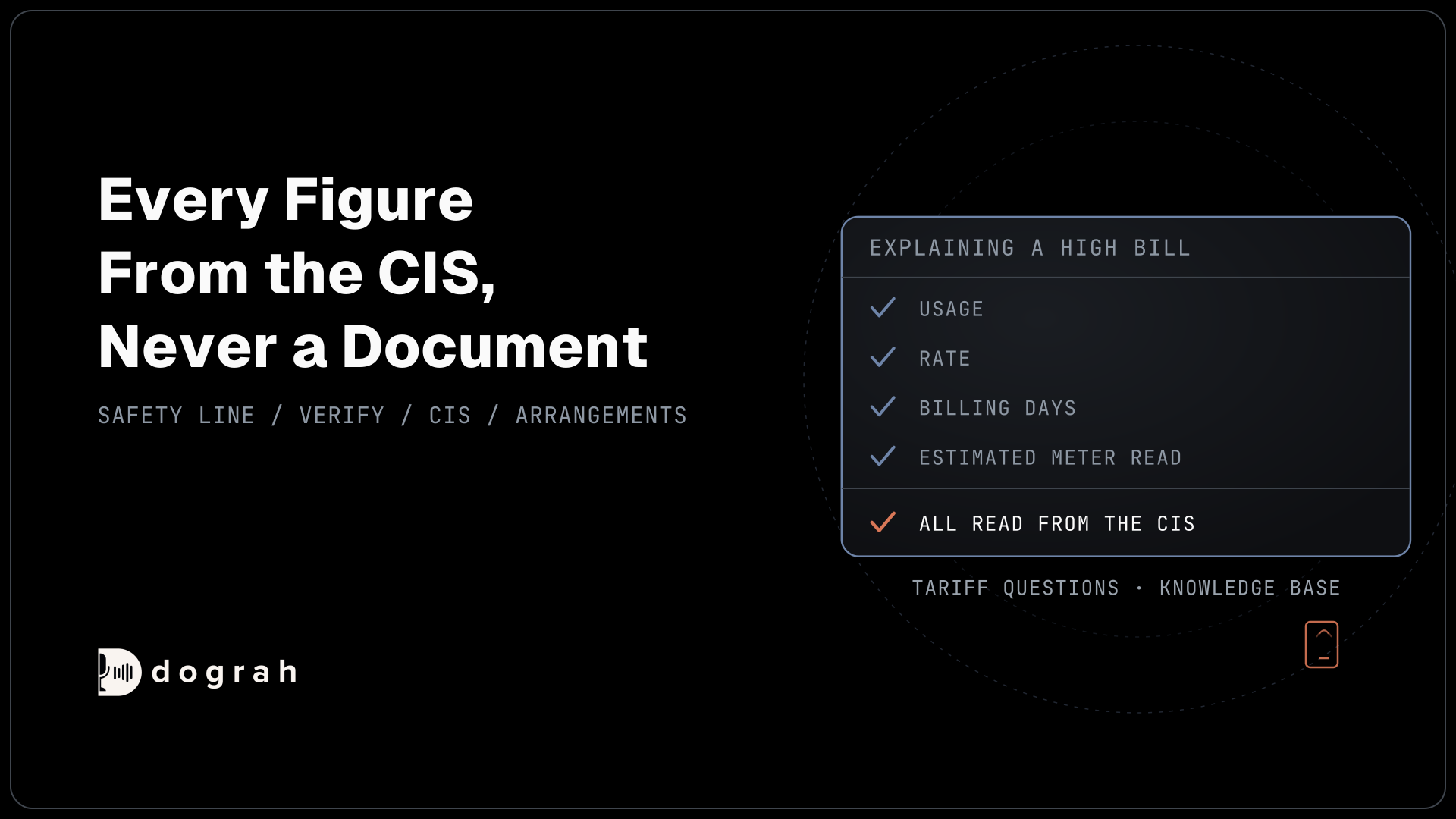
Once verified, an HTTP API tool reads the offer and its full monthly price from the plan record, and the agent states only what came back. It makes that one offer and records the customer's answer as stated. Our posts on room upgrade calls and on the first 15 seconds of an outbound call cover the one-offer pattern and the opening.
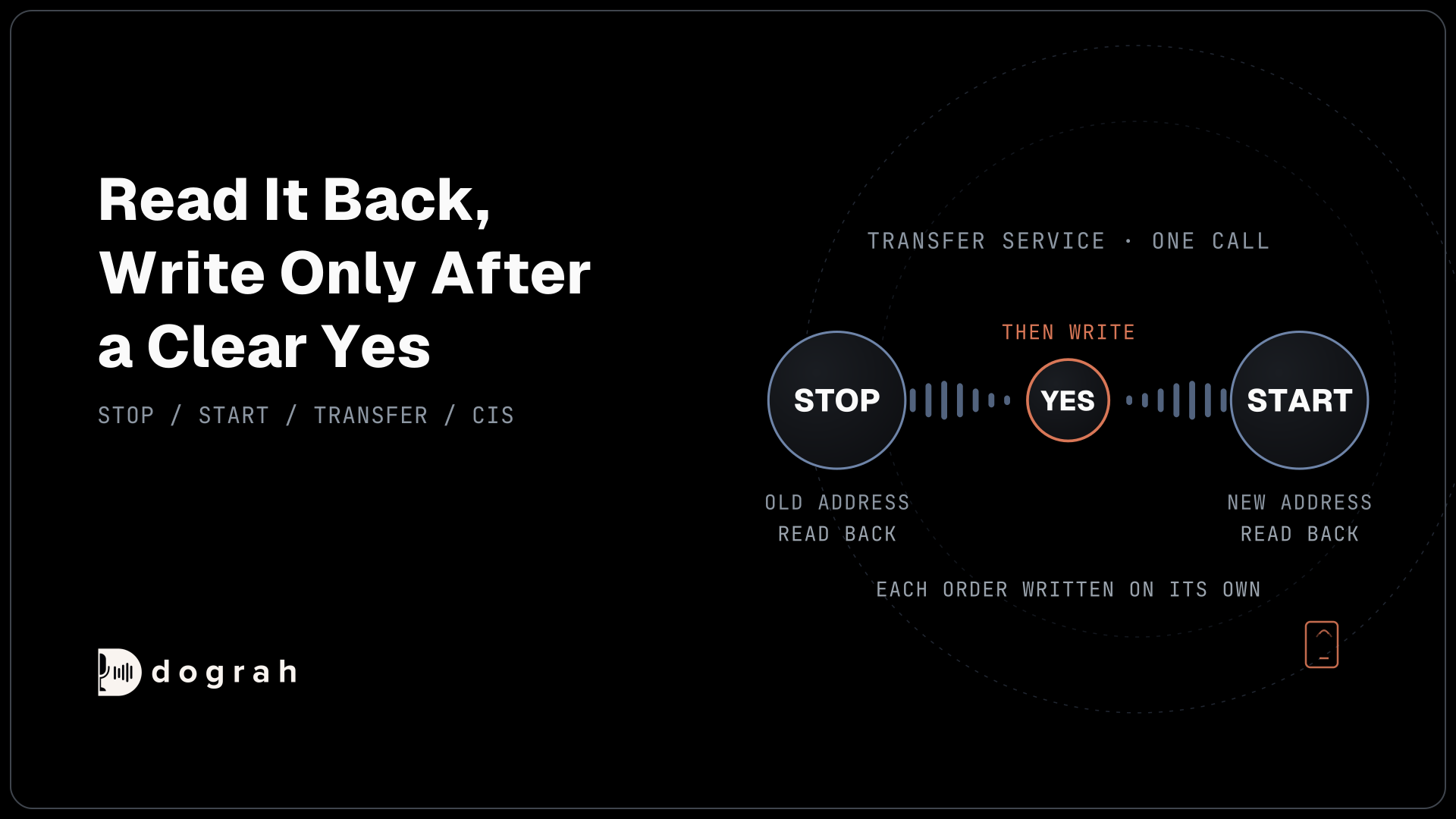
On a yes, the agent reads the change back, and a second HTTP API tool writes it to the BSS. Add a Preset Parameter named workflow_run_id with the value {{initial_context.workflow_run_id}}, so your system can ignore a repeat and the upgrade never applies twice. Dograh sends no texts itself, so your system sends the written confirmation. On a no, the agent thanks the customer and ends the topic. A request to stop calling is written to your system at once.
Broadband sales: say the label out loud
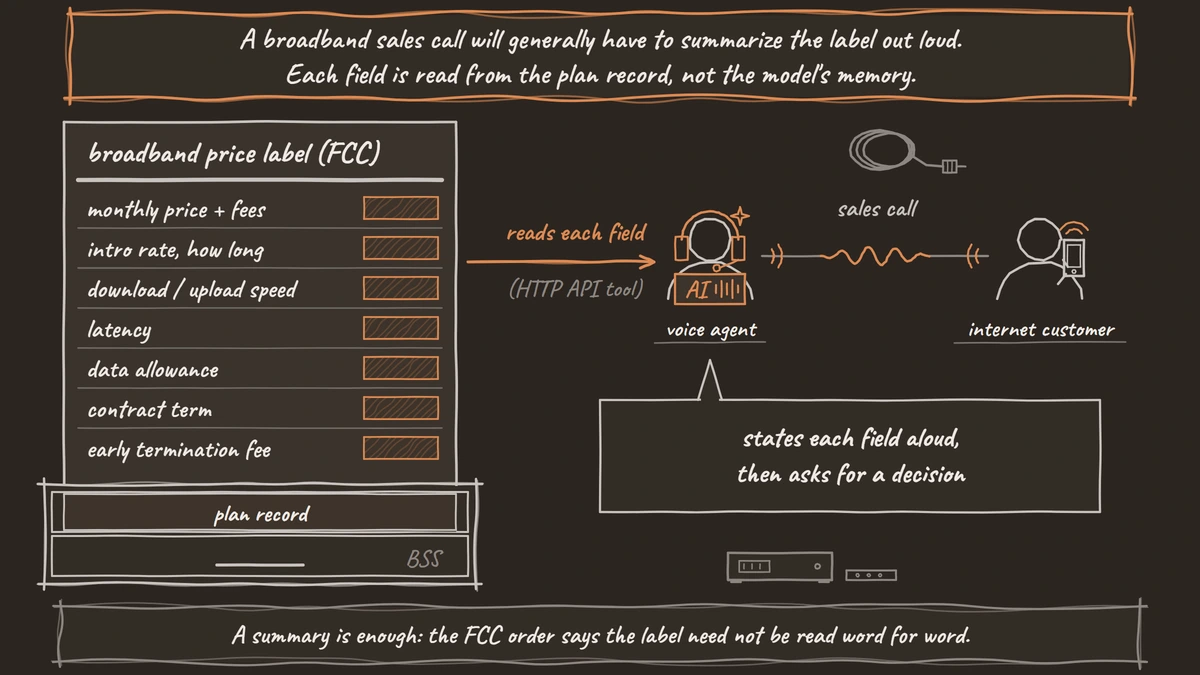
A broadband offer by phone will soon have to state the label's key facts on the call. The FCC adopted its broadband label order on 22 July 2026.
The order says "Provider phone sales representatives must orally summarize the following label fields during the sales interaction". The fields are the monthly price with any monthly fees, including an introductory rate and how long it lasts, typical download and upload speeds, latency, the data allowance, the contract term and any early termination fee. The order adds that "Verbatim recitation of the label is not required to satisfy this obligation."
This part of the rule takes effect only after the Office of Management and Budget completes its review, with the date set by a later FCC notice. Build for it now. The HTTP API tool that reads the offer returns these fields from the plan record, and the prompt tells the agent to state each one before asking for a decision, so no speed or fee comes from the model's memory. Once the rule takes effect, an AI agent selling broadband by phone would generally be held to the same summary.
Join the Dograh Community
Dograh is an OSS alternative to Vapi. Join our Slack community for queries, releases, best practices & community interactions.
The offer on an inbound call
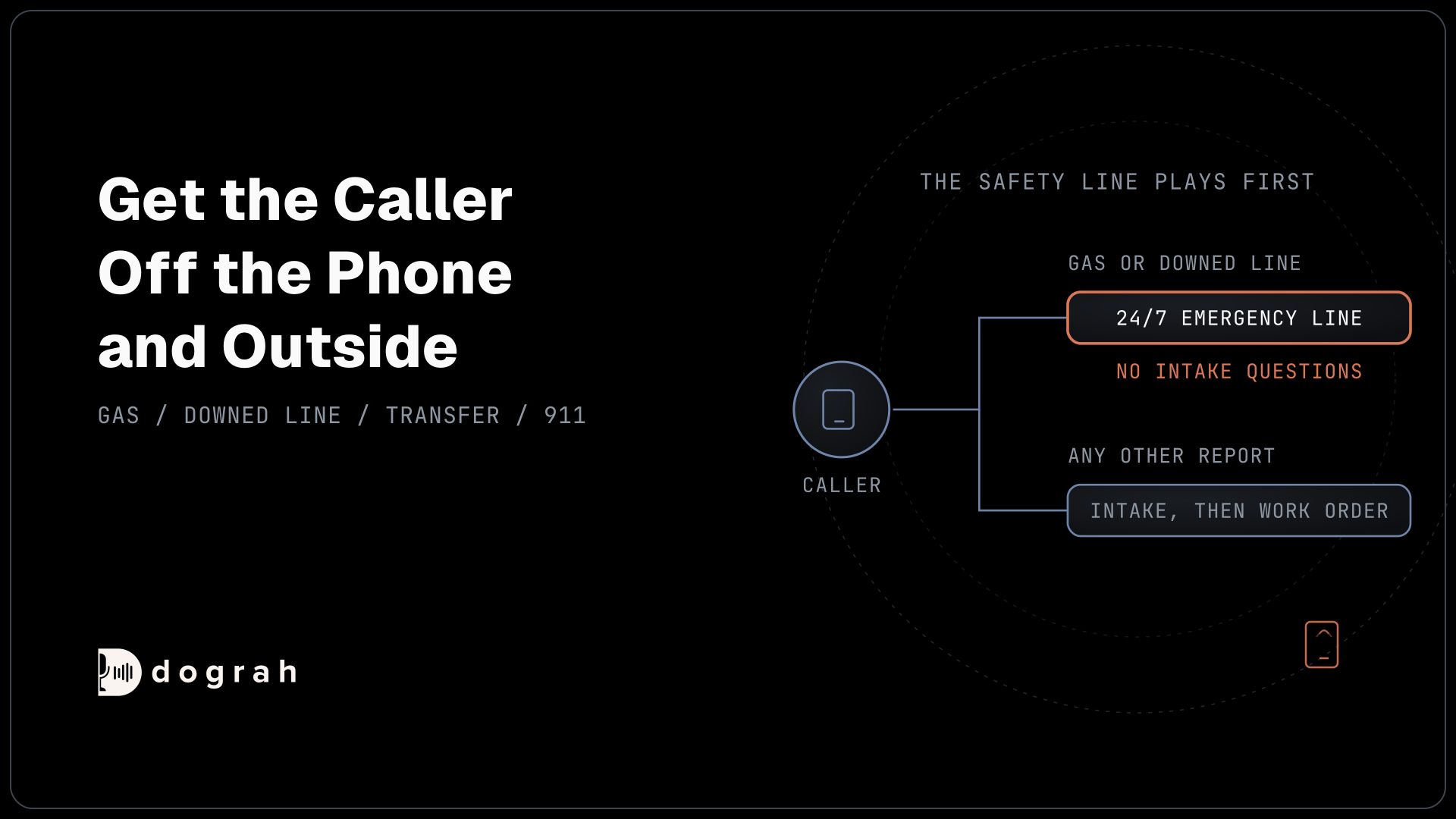
On an inbound call, the offer comes only after the caller's own issue is solved. A customer who rang about a slow line and hears a sales pitch first is a customer you have annoyed.
When the fault is fixed or the bill question answered, the agent can mention one relevant plan, read from the plan record in the same way. The consent rules above are written for calls you place, so an offer on a call the customer placed is a different case, but the CPNI approval for a new category generally still applies. Keep offers out of bill reminders and installation confirmations completely. Those are service calls, and an offer changes the call type.
Contract changes and early termination questions go to a person. Transfer Call works on Twilio only and passes no summary, so the agent writes the customer's request to your system before the transfer. Former customers are a separate call; AI voice agents for win-back in telecom covers them.
Where to start
Start with the inbound offer at the end of solved support calls, then add one outbound list, such as customers whose contract ends next month and who have written consent on file. Test the agent on a real phone line before any customer hears it, and read the first week of transcripts for prices the agent did not get from the plan record.
Once live, run QA on a random 5 to 10% sample of calls. Confirm your own consent and CPNI position with counsel before the first outbound campaign. Self-hosted Dograh has no per-minute platform fee (servers, model keys and phone minutes still cost); Dograh Cloud has a 1¢-a-minute platform fee.
Glossary
- Customer proprietary network information (CPNI)
- What a phone carrier knows about a customer from providing the service, such as the plan and the calls made. FCC rules limit how a carrier may use it to market services the customer does not already buy.
- Prior express written consent
- Under the TCPA, a signed written agreement that lets a business deliver advertisements or telemarketing using an artificial or prerecorded voice, and states that signing is not a condition of purchase. An outbound upgrade call from an AI voice agent generally needs it.
- Categories of service
- The CPNI rules' grouping of telecom services, such as local, long-distance and mobile. Marketing inside a category the customer already buys needs no approval; a new category generally does.
- Broadband label
- The FCC's standard summary of a broadband plan's price, speeds and terms. Under the July 2026 order, phone sales must summarize its key fields aloud once the phone rule takes effect.