
AI voice agents for non-profits take the high-volume donor calls a development team rarely reaches, such as renewal reminders, failed recurring gifts, appeal and pledge reminders, and inbound questions. Each answer comes from the donor CRM. AI-voice calls to mobile numbers need prior consent, and gifts move only through the charity's own donation link, never card details on the call.
Key Takeaways
- A charity calling for itself skips national do-not-call, but mobile numbers still need consent.
- The agent never takes card details. The charity's own system sends the donation link.
- Major gifts and personal thank-yous stay with staff, while the agent takes volume calls.
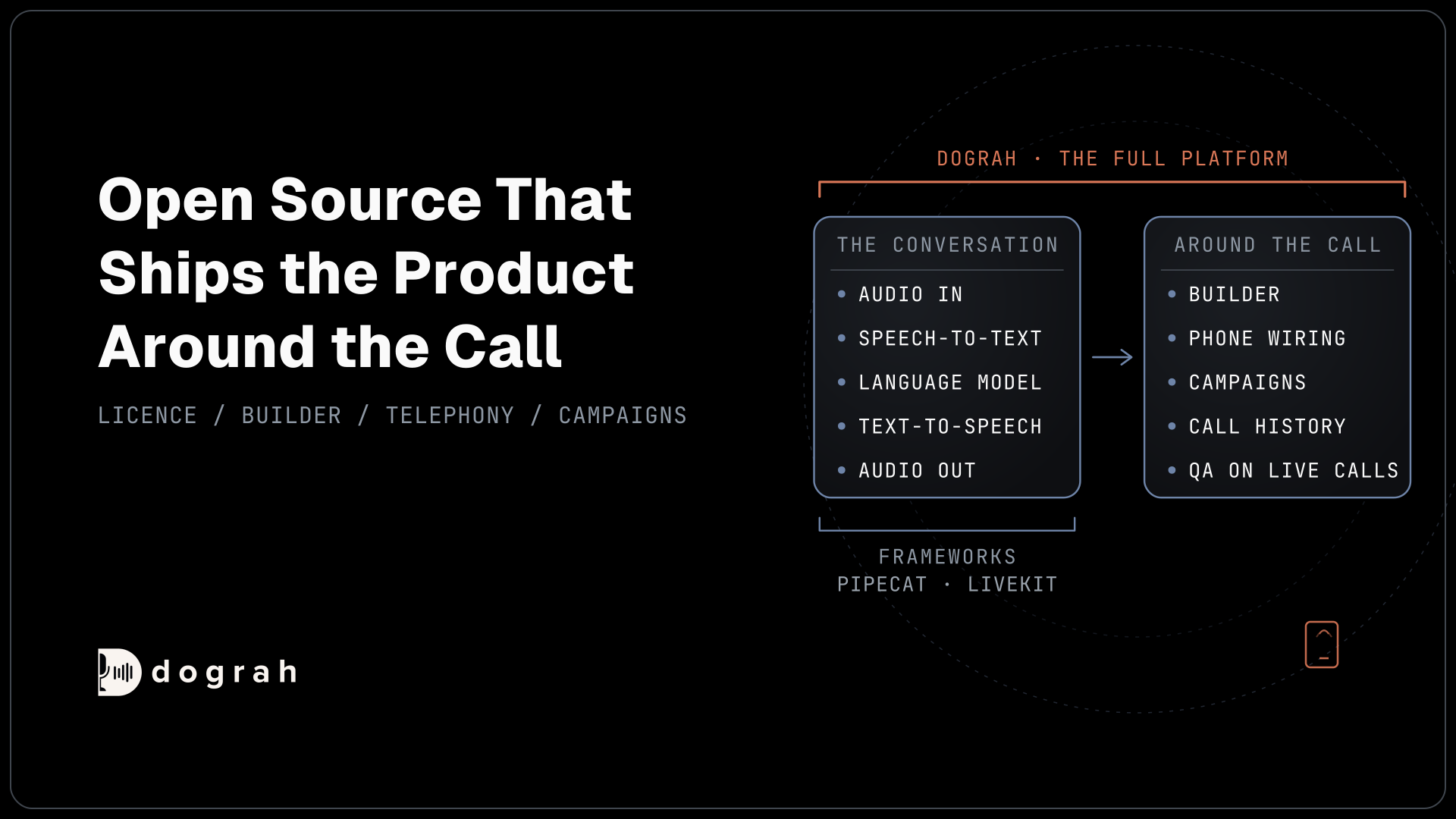
This guide maps a charity's donor calls and the consent rules behind them. It shows how each one runs in Dograh, the open-source AI voice agent platform we build, which reads and writes your donor CRM during the call. You can self-host it or run it on Dograh Cloud.
The calls a charity's phone line handles
A charity's phone work splits into calls a person should make and calls nobody on staff has time for. The second group is large, and it is where an AI voice agent fits.
The giving data shows why. The Fundraising Effectiveness Project's 2025 report found overall donor retention at 43.3%, so more than half of the year's donors did not give again the next year. Donor counts fell 3.6% while dollars rose 5.0%, and the growth came almost entirely from the largest donors. Fewer people are giving, and the many smaller donors are the ones nobody calls.
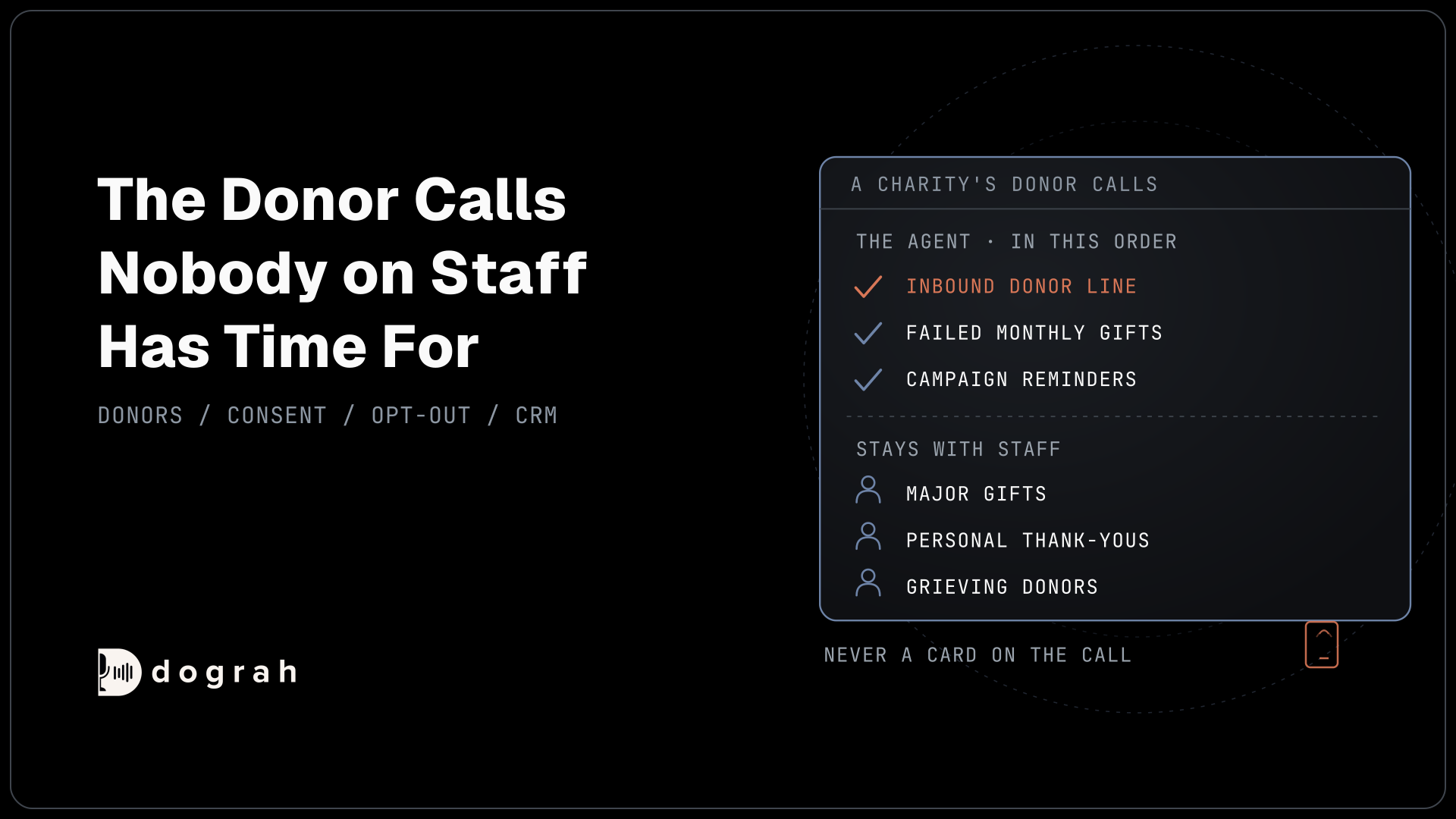
The volume calls fall into four groups. Outbound, there are renewal reminders to donors who have not given this year and calls about a monthly gift whose card failed. Campaigns add their own reminders, such as a year-end appeal or a pledge that is due. Inbound, donors ring with questions about a gift or a receipt.
Every one of these calls depends on the donor's record. Pre-Call Data Fetch loads that record from your donor CRM once the call connects, and the greeting waits until the data is in. It refreshes data for a call that is already happening. Your own list decides whom to call.
During the call, an HTTP API tool reads anything else the agent needs and writes back what the donor said. Each tool waits 5 seconds by default and does not retry. After the call, the Webhook node sends the outcome to the CRM. There is no built-in connector for Salesforce, Blackbaud or any other donor CRM, so each of these points at your CRM's own API.
Who is calling changes the rules
Two federal rules decide most of what a fundraising call may do, and which parts apply depends on who places the call.
A tax-exempt charity calling for itself sits outside the Telemarketing Sales Rule (TSR), the Federal Trade Commission's rule for sales and fundraising calls, as the FTC's guidance on the TSR explains. The Federal Communications Commission (FCC) also leaves a nonprofit's own calls out of its definition of a telephone solicitation, in its rule under the Telephone Consumer Protection Act (TCPA). So the national Do Not Call Registry generally does not reach a charity's own calls.
A for-profit fundraising firm calling on a charity's behalf, often called a telefunder, is different. It falls under the TSR and must name the charity and say the call is asking for a gift. It also keeps a do-not-call list for that charity, though it is exempt from the national registry, and any prerecorded call it makes to a member or past donor needs a keypress or voice opt-out.
Whether an AI voice counts as a prerecorded message under the TSR is not settled, so the careful reading treats it as one and offers the opt-out. Our post on outbound campaigns in BPO covers running calls on a client's behalf.
Consent and opt-outs on every call
Being outside the national registry does not let a charity call anyone it likes. The TCPA's rules for artificial voices still apply, and AI voices count.
In its February 2024 declaratory ruling, the FCC said AI-generated voices are artificial voices under the TCPA. A call to a mobile number with an artificial voice needs the called person's prior express consent, and the rule makes no exception for charities. So in most cases a charity should call a donor's mobile only when its records show the donor agreed to calls at that number.
Home landlines get more room. A tax-exempt nonprofit may make artificial-voice calls to a residential line without consent, but no more than three in any 30 days to that line, and it must honor a request to stop. Each of those calls names the charity at the start and gives a callback number. Within two seconds of the name, it also offers an automated voice or keypress opt-out, and a voicemail must give a toll-free number that reaches that opt-out. A stop request goes on the charity's own do-not-call list, and the rule says to honor it for five years.
In Dograh, the Greeting Text is fixed text spoken word for word as the call connects, so it carries the charity's exact name and a line such as "Say stop at any time and we won't call again." If you want to tell donors they're speaking with an automated assistant, or your location requires it by law, say that there too. When a donor says stop, the prompt tells the agent to write the number to your list and then end the call with the End Call tool. The model follows that instruction, but it is not a hard rule, so review calls where a donor asked to stop.
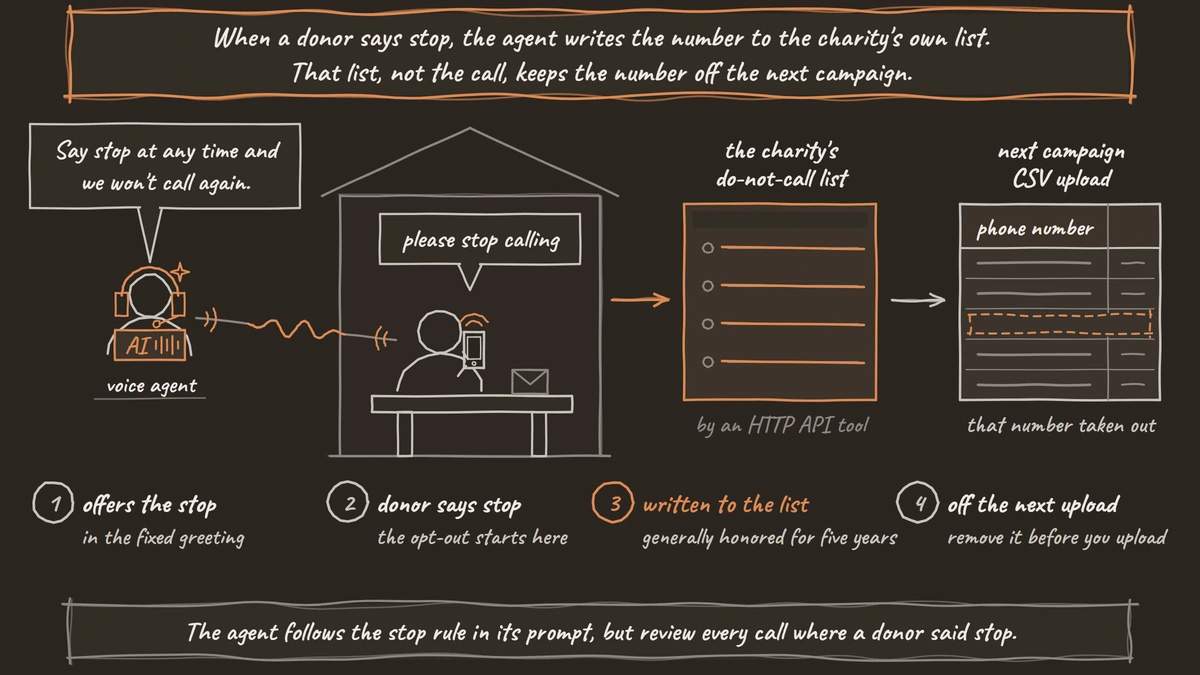
Dograh can tag the finished call do_not_call when "Extract call disposition at the end of the call" is switched on, but that tag never blocks a later call. Campaign contacts come from a CSV you upload, with no screening against any list, and campaigns have no per-contact call cap. Retries run from 0 to 10, 2 by default. So remove opted-out numbers before each upload, and enforce the three-in-30-days limit in your own list, or set retries to 0. A contact cannot be removed from a running campaign. The campaign can only be paused and resumed. Ask counsel whether an agent that understands a spoken "stop" meets the automated opt-out rule.

Open Source Alternative to Vapi / Retell
Self-hosted voice agent platform — no per-minute fees
dograh-hq/dograh
Star on GitHub
Money never moves on the call
The agent never takes a card number or a payment, and that keeps the call simple. Dograh has no keypad (DTMF) tool and no feature for taking payments on a call. When a donor wants to give or update a card, the agent asks the charity's own donation platform or payment provider to send its secure link by text or email. The donor completes the gift on the charity's own page, so no card number is ever spoken on a recorded line. Our post on handling payment-sensitive (PCI) calls explains the risk a spoken card number creates.
The receipt stays with the charity too. The IRS rules on written acknowledgments require one from the charity for any single gift of $250 or more, stating the amount and whether the donor received anything in return. A thank-you call never replaces it, so the donation platform or CRM sends it as it does today.
Renewals, lapsed donors and failed monthly gifts
Renewal calls go to people who already gave, which is where retention is won or lost. Two calls belong here. When a monthly gift fails, the agent verifies the donor, names the failed charge only after the check, and asks the donation platform to send its card-update link. When an annual donor has not renewed, the agent asks whether they would like to give again, records any reason as the donor states it and offers only the options the charity set, such as a smaller amount or a pause.
Neither call pressures the donor, and a "no" is written back to the CRM like any other answer. AI voice agents for donor renewal and lapsed-donor win-back walks through both calls, including which donors stay with a gift officer.
Appeals, pledges and campaign reminders
Campaign calls go to many donors in a short window, which is the load a small phone team cannot carry. A year-end appeal reminder, a pledge payment that is due, a matching-gift deadline and an event update are all short calls to people who already know the charity. The agent names the charity and the reason for the call, reads the donor's own pledge or gift details from the CRM after verifying them, and asks one clear question. A "yes" becomes the charity's donation link and a pledge record in the CRM.
In Dograh, a campaign can split one donor list between up to five agents or agent versions by percentage, so two ways of making the ask can run side by side. The campaign page shows the outcomes for each, and the percentages are approximate. AI voice agents for donation and fundraising outreach covers the campaign call in full.
The inbound donor line
The inbound line takes donors' own questions, and the agent can answer it at any hour. Most questions are routine, such as whether a gift went through, where the receipt is, how to change a monthly amount or how to give by check. Set Pre-Call Data Fetch to "Inbound calls only" so the caller's record loads as the call connects. A phone number finds the record but does not prove who is calling, so the agent asks for an approved check, such as the donor ID printed on past receipts, before it names any gift or amount.
Questions about gifts of stock or donor-advised funds go to staff, because the answers depend on the donor's own finances. Transfer Call works on Twilio, Telnyx, Plivo, Cloudonix and Asterisk ARI. Dograh calls the destination first and connects the donor only when someone answers. On Twilio, it can play a short spoken introduction to both people before connecting them.
No summary goes with the call by default, so the agent writes the question to the CRM first. If nobody answers within the 30-second default, the donor stays with the agent, so have the prompt offer a callback and write the request to the CRM.
What stays with people
Some donor calls should not be automated, and the relationship with the donor decides which ones. Major-gift conversations and personal thank-you calls belong to people. So does any call with a donor who is upset or grieving, such as a question about a gift made in someone's memory. Donors give to people they trust, and a synthetic voice on a personal thank-you works against that.
Set this rule in your list, not in the prompt. Keep donors above a gift size the charity chooses off the agent's call lists, and route calls from their numbers straight to the gift officer. Thank-you calls for small gifts are the charity's choice. If the agent makes them, it says thank you and asks nothing.
Join the Dograh Community
Dograh is an OSS alternative to Vapi. Join our Slack community for queries, releases, best practices & community interactions.
Connecting the donor CRM and its data
Dograh connects to the donor CRM through the CRM's own API, so it works with whichever system the charity already runs.
The connection points are Pre-Call Data Fetch, HTTP API tools, MCP tools, the Webhook node and the API Trigger. Campaign lists come in as a CSV, so export the list from the CRM after your consent and opt-out filters have run. Variable extraction is an AI step that records what the donor said, such as a pledge amount, as the donor stated it. The transcript and recording stay as the exact record.
Donor records carry giving history and home addresses, so count every company that hears the call. Dograh is the orchestration layer that runs the call and its tools, and the speech and language models are a separate layer you choose. Self-hosted, Dograh keeps recordings and transcripts on your own servers. Bringing your own keys (BYOK) changes whose contract covers the models. The audio still reaches those providers, and it stays in-house only when open-weight models run on your servers too. We also have a landing page on a self-hosted donor call agent for charities that applies this setup to renewal and appeal calls.
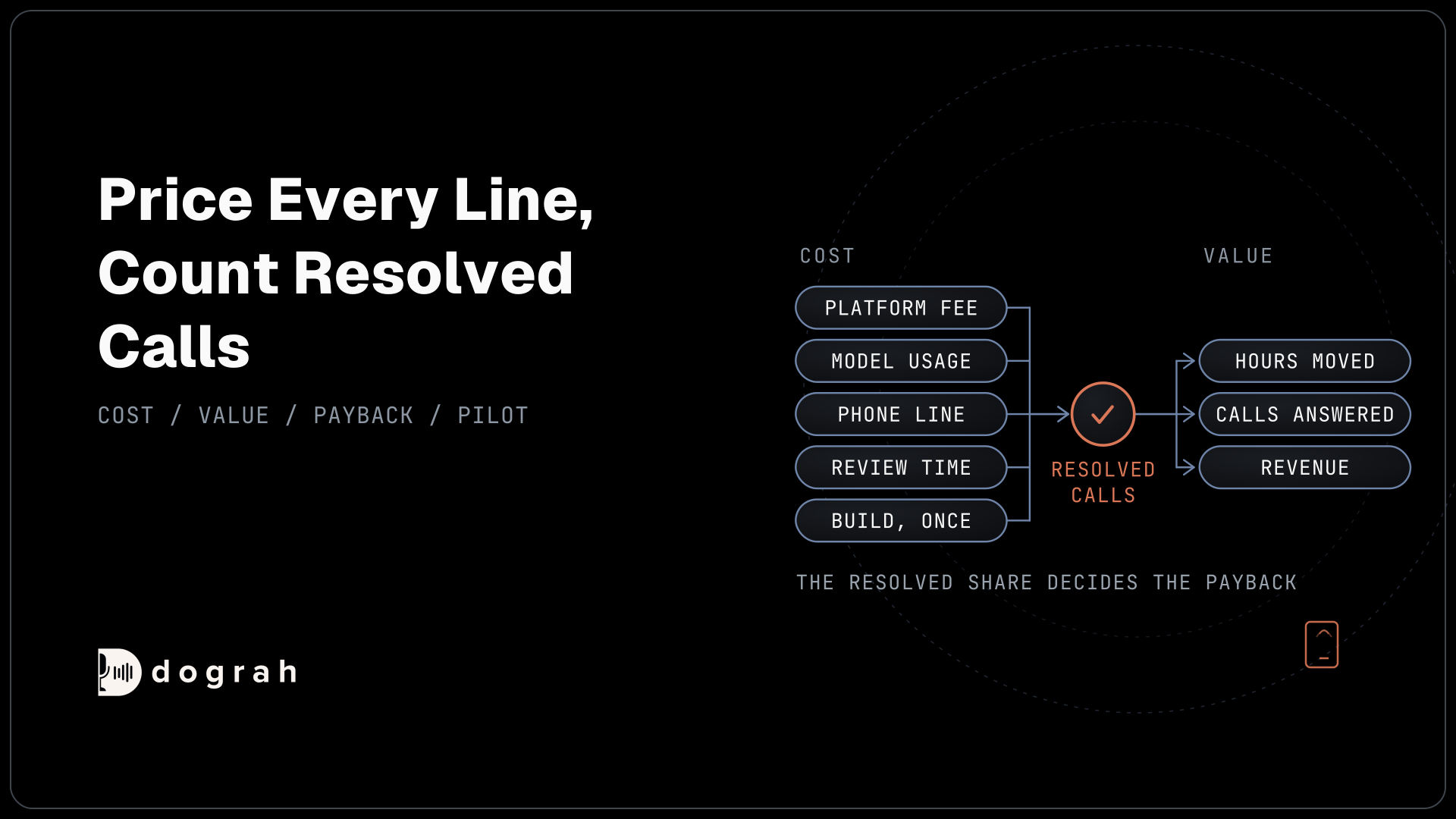
Self-hosted, recording can be switched off only server-wide, and there is no retention setting, so your own policy decides how long calls are kept. Self-hosting has no per-minute platform fee (you still pay for your servers and for model and phone usage), and Dograh Cloud has a 1¢-a-minute platform fee. The Business Case for AI Voice Agents: ROI and Payback shows how to size the return.
Which donor call to automate first
Start with the inbound line, where donors chose to call and the agent mostly reads the record. Failed monthly gifts come next, once your verification check and card-update link are tested. Campaign reminders wait until your consent records and do-not-call list are clean.
Test every agent on a real phone line, because most phone calls reach the agent as 8 kHz audio while a browser test runs at 16 kHz, and transfers only work on phone calls. Once live, run quality assurance (QA) on a random 5 to 10% sample of calls. Dograh's QA scores the agent's conduct at each step of the call, never the donor.
Each call above has its own deep dive:
- AI Voice Agents for Donor Renewal & Lapsed-Donor Win-Back
- AI Voice Agents for Donation & Fundraising Outreach
Glossary
- Telefunder
- A for-profit firm paid to make fundraising calls on a charity's behalf. Unlike a charity calling for itself, it falls under the FTC's Telemarketing Sales Rule. It keeps a do-not-call list for each charity and offers an opt-out in prerecorded calls to past donors.
- Do-not-call list
- The charity's own list of people who asked not to be called. It applies even where the national Do Not Call Registry does not, and a request is honored for five years.
- Prior express consent
- The called person's agreement to receive calls at that number. An AI-voice call to a mobile number needs it, whether or not a charity is calling.
- Monthly gift
- A recurring gift charged to a donor's card each month, from a donor often called a sustainer. A failed card stops the gift without the donor deciding anything, which makes the card-update call one of the most useful calls an agent can make.