
AI voice agents for advisory appointment scheduling book and move client meetings in the calendar of the household's own advisor. They read live free time for the right meeting length from the firm's calendar API and write each booking back with a retry-safe ID. Trade requests and advice questions are never booked. They go to a person.
Key Takeaways
- Book into the household's own advisor's calendar, never the first free slot.
- Meeting type sets length and prep time, held in your scheduling system.
- A trade request heard on a booking call goes to a person, not a note.
This post is part of our guide to AI voice agents for wealth management, where booking comes first. Below, we cover whose calendar each booking uses and what never gets booked. Then we set up the booking call in Dograh, the open-source AI voice agent platform we build.
Book with the household's own advisor
An advisory client books with their own advisor, so the agent's first job is to find out who that advisor is. In a small firm, each advisor keeps a separate calendar, and the Investment Adviser Association's 2026 industry snapshot found that 92.8% of the advisers it counts employed 100 people or fewer in 2025. A booking in the wrong advisor's week is a client meeting with a stranger.
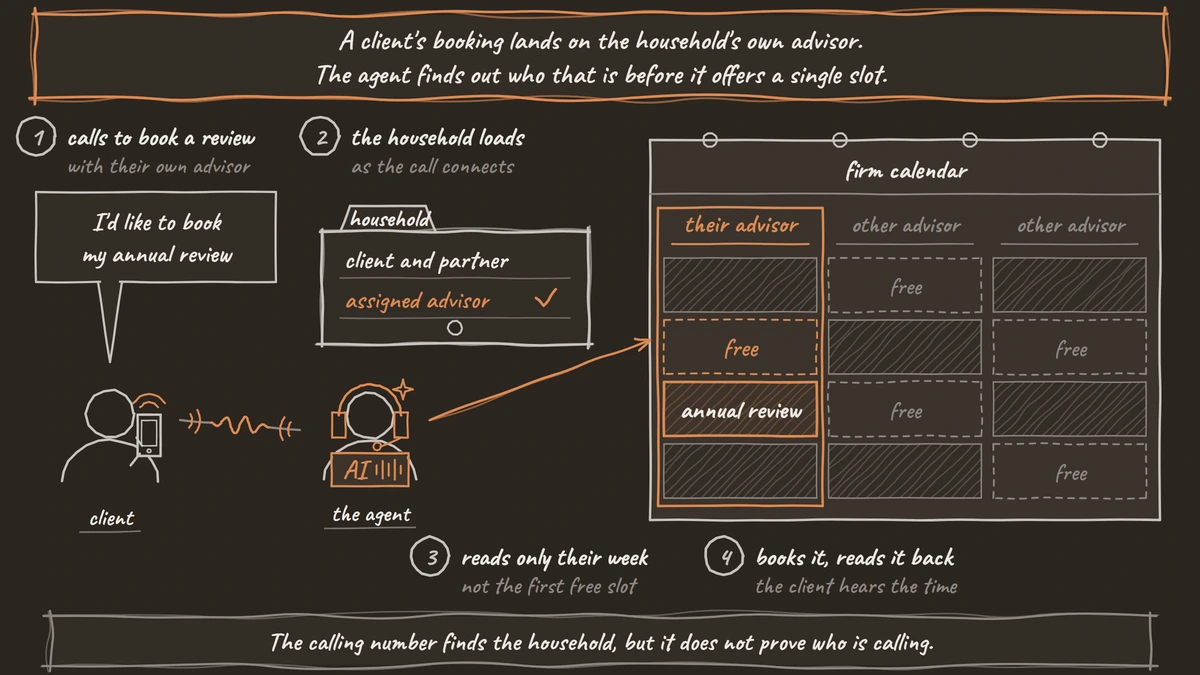
The booking loop itself is the same in any industry: read the free slots, offer a few, write the booking and read it back. AI voice agents for appointment scheduling covers that loop. This post stays with what changes for advisors.
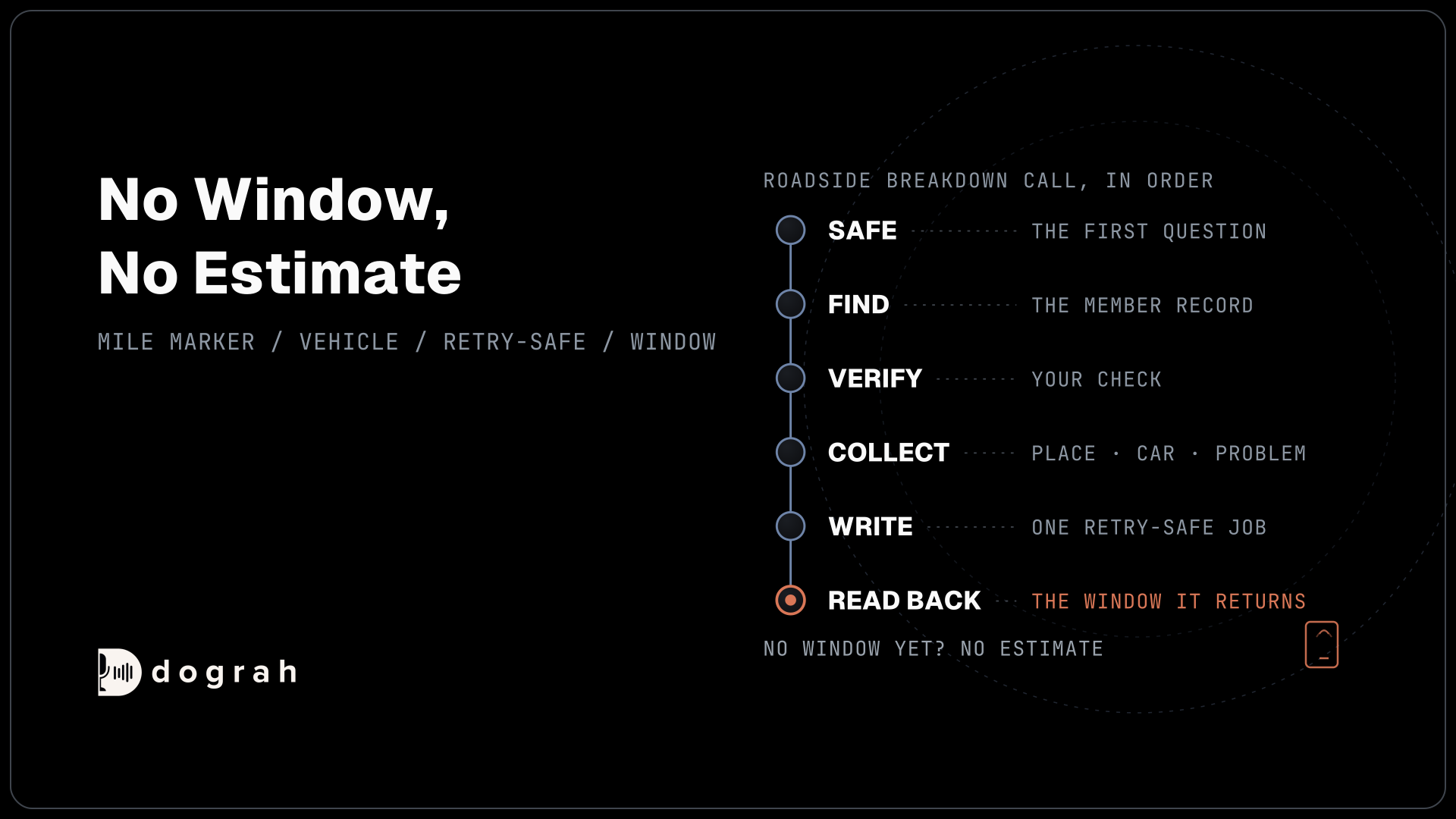
Pre-Call Data Fetch can load the household that matches the calling number as the call connects, including its assigned advisor. A number finds a household, but it does not prove who is calling. So a client asking about an existing meeting passes the firm's own check before the agent reads it out. A new prospect booking a first meeting needs only a name and a phone number.
Then an HTTP API tool asks the calendar for that advisor's free time. On Outlook, Microsoft Graph's free/busy lookup returns free and busy times for several advisors in one request, along with their working hours. Google Calendar and most CRM schedulers have their own version. There is no built-in Outlook or Redtail connector, so the tool points at whichever API your firm already uses.
Meeting types set length and prep time
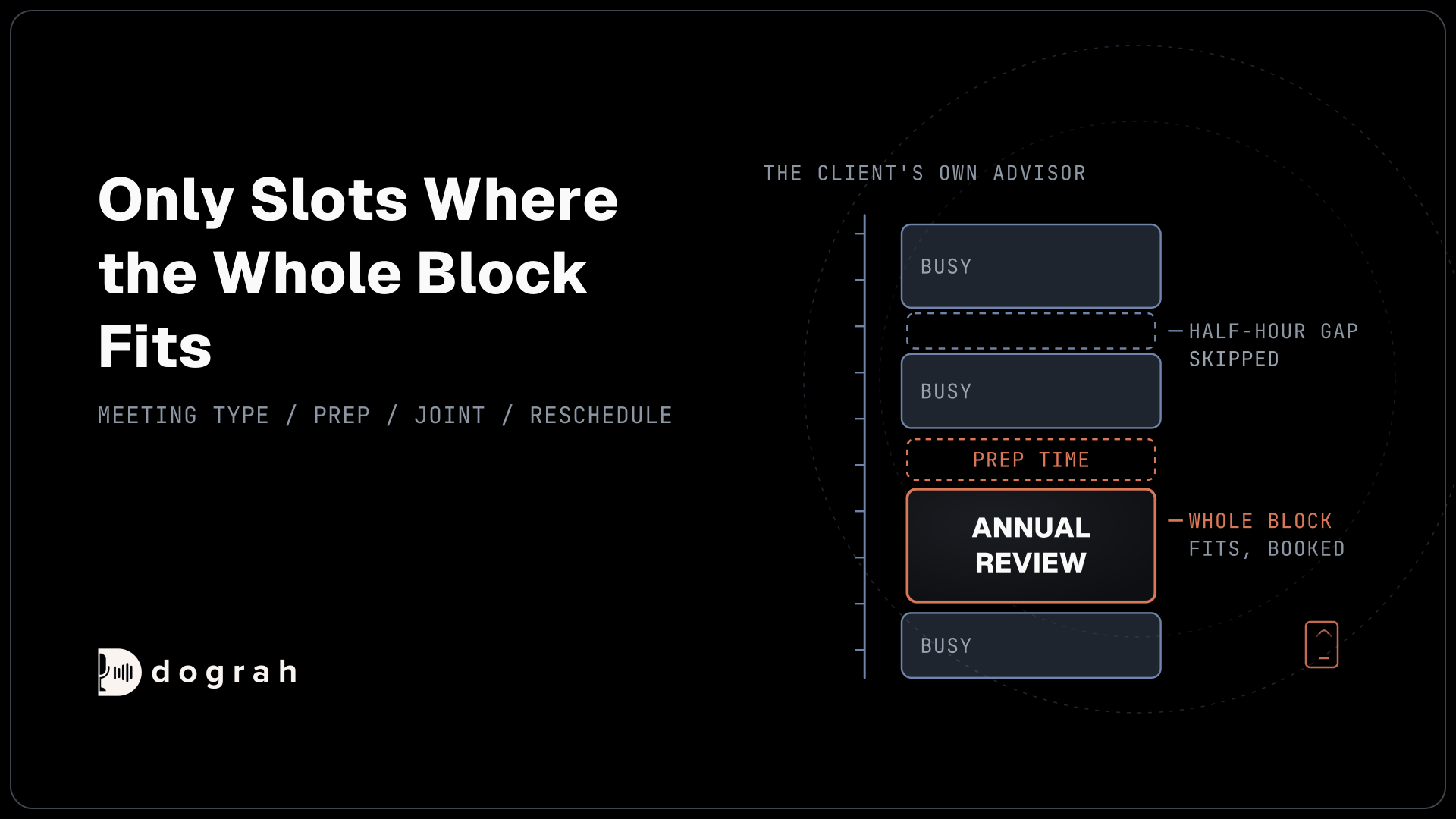
Each meeting type needs its own length, and the calendar should know it before the agent offers a slot. A first discovery meeting might run 30 minutes and an annual review a full hour, each with prep time before it.
Keep the lengths and prep buffers in your scheduling system. The tool sends the meeting type, and the endpoint returns only slots where the whole block fits. If the prompt holds the lengths instead, the model can offer a half-hour gap for an hour-long review, and nothing stops it.
Joint clients book one slot. The prompt tells the agent to ask whether both partners will attend, and to record both names on the booking. If the meeting is in person, it reads back the office address from the calendar entry, and for a video meeting, the firm's own system sends the link.

Open Source Alternative to Vapi / Retell
Self-hosted voice agent platform — no per-minute fees
dograh-hq/dograh
Star on GitHub
Reschedules and confirmation calls
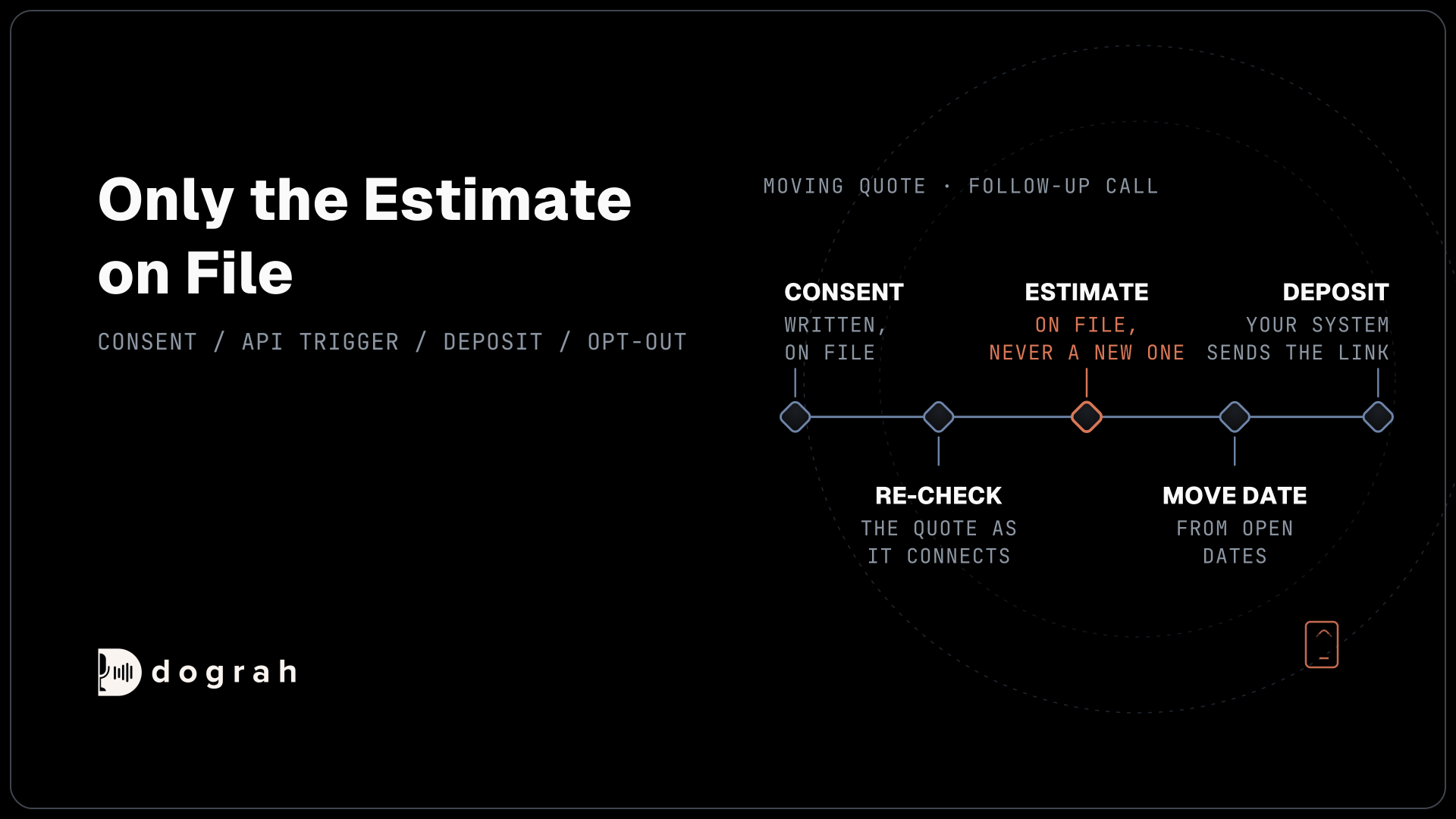
A reschedule runs the same loop, but only after the check, because a meeting time is a personal detail. The agent finds the meeting, offers new slots for the same advisor and meeting type, writes the change and reads it back. A cancel is written to your system the same way.
A booking can arrive twice when a request repeats. Add a Preset Parameter named workflow_run_id, with the value {{initial_context.workflow_run_id}}, to the booking tool. Dograh adds no idempotency header of its own, so your system uses that ID to ignore a second copy of the same booking. An HTTP API tool also does not retry by itself. It waits 5 seconds by default, then hands an error to the agent, so tell the agent in the prompt to say the booking did not go through and offer a callback.
Confirmation calls work best for meetings the client has not confirmed by text or email. Dograh sends no texts itself. During a call, an HTTP API tool can ask your messaging provider to send the confirmation. A campaign's calling hours run in one time zone, so split clients by time zone and always set the hours, because a campaign with none set can call at any time. An AI-voice call to a client's mobile needs their prior consent, and AI voice agents for client review reminders explains where that line sits. Voicemail handling is off by default. If you set it to leave a message, the message names the firm and a callback number, and nothing about the meeting.
What a booking call never books
A booking call books meetings and nothing else. Clients often mix a money request into a scheduling call: "and sell my tech fund while you're at it", or "should I move to cash before we meet?" Those go to a person at once.
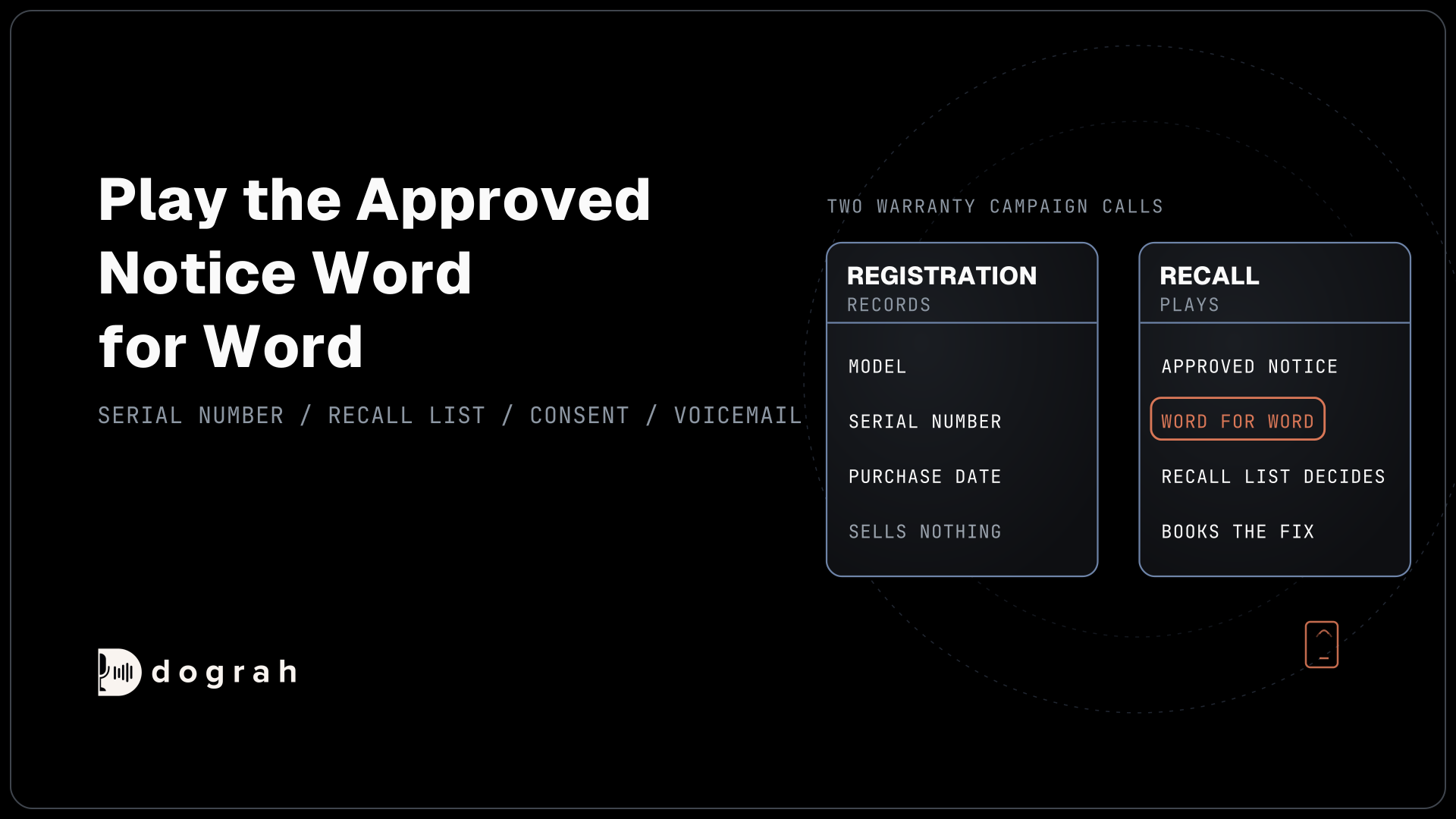
The handover plays as fixed words. A pathway with the condition "advice or trade question" carries Transition Speech such as "I can't take trade instructions or give investment advice. I'll pass this to your advisor now." The agent then writes the request to the CRM through an HTTP API tool, and Transfer Call reaches the advisor on Twilio, Telnyx, Plivo, Cloudonix or Asterisk ARI. Dograh calls the destination first and connects the caller only when someone answers. On Twilio, it can play a short spoken introduction to both people.
The request never goes into a meeting note. Advisers keep written communications about advice, money and orders under the SEC's books and records rule. A trade request typed into a meeting note becomes a written record about an order that nobody acts on until the meeting. At a broker-dealer, FINRA's supervision rule also has a registered principal review written correspondence, so the confirmations your own system sends after the call fall into that review too. Treat this as general information and confirm your firm's position with counsel.
Join the Dograh Community
Dograh is an OSS alternative to Vapi. Join our Slack community for queries, releases, best practices & community interactions.
Setting up the booking call in Dograh
The booking call is one agent with a short path. The Start Call node's Greeting Text names the firm. If you want to tell callers they're speaking with an automated assistant, or your location requires it by law, write that there too. Set Pre-Call Data Fetch to "Inbound calls only" so the household and its advisor load as the call connects.
The booking step holds two HTTP API tools, one that reads the advisor's free slots for a meeting type and one that writes the booking with workflow_run_id. Our post on booking meetings mid-call with Calendly shows the same two-tool pattern against Calendly's API. Add the "advice or trade question" pathway with its Transition Speech, and the Transfer Call tool with Dynamic HTTP Resolver so it returns the household's advisor.
Last, add a QA node with a System Prompt that flags any call where holdings, products, markets or a trade came up. Test every path on a real phone line, because browser test calls cannot transfer.
Glossary
- Household
- The firm's record that groups a client, their partner and their accounts under one assigned advisor. The agent books against the household, so joint clients land on the same advisor's calendar.
- Free/busy lookup
- A calendar API call that returns when each person is free or busy, without the meeting details. It lets the agent offer real slots for one advisor without reading anyone's appointments.
- Retry-safe booking
- A booking request that carries a unique call ID, so the calendar system can ignore a second copy of the same request. In Dograh, that ID is the workflow_run_id Preset Parameter.
- Pre-Call Data Fetch
- A Dograh setting that loads the record matching the calling number as the call connects, with the household's advisor. The number finds a household but does not prove who is calling, so the firm's check comes first.