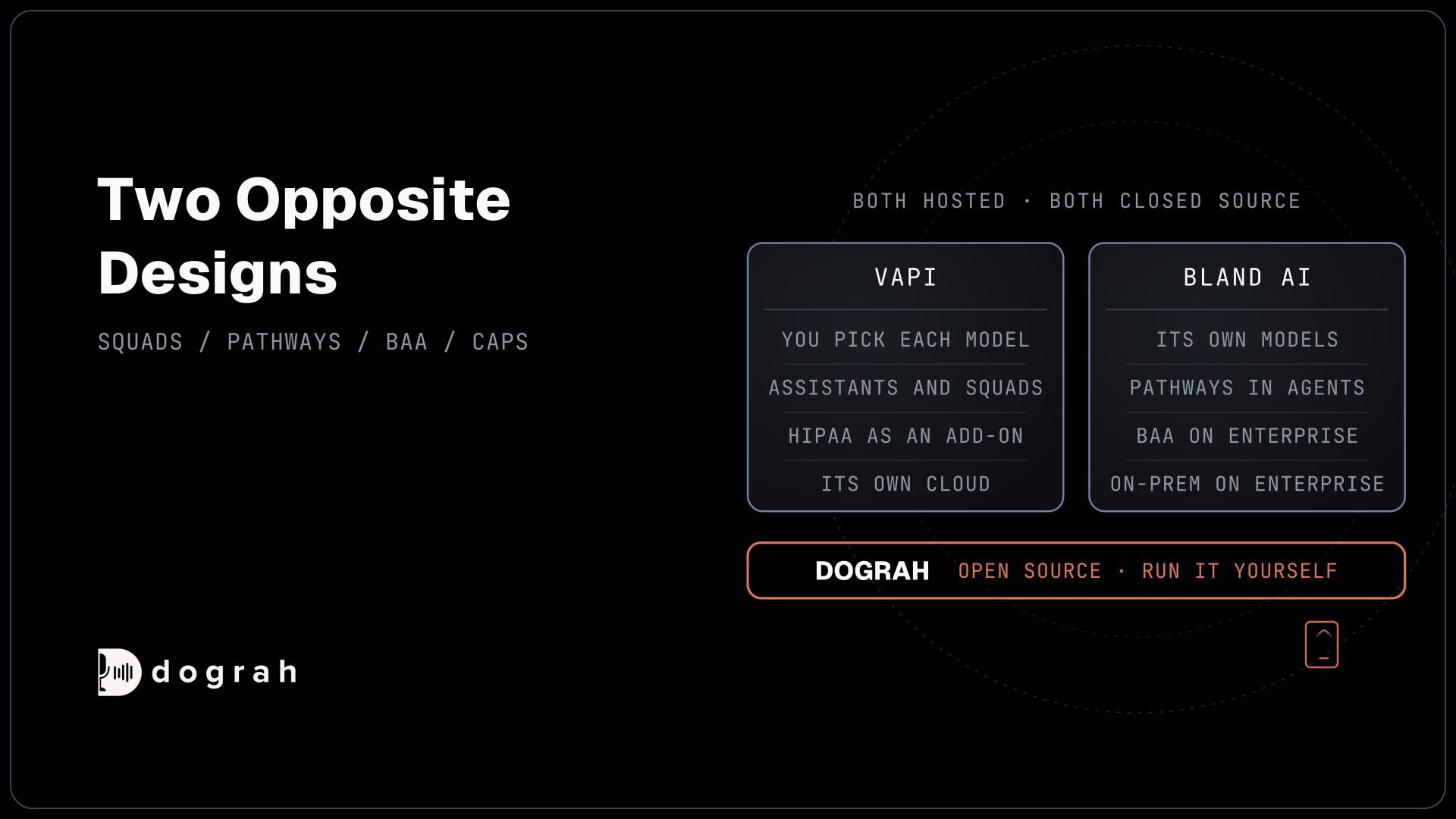

Vapi and Bland AI are both hosted, closed-source voice agent platforms with opposite designs. Vapi charges $0.05 a minute for hosting and lets you pick and pay for each model; Bland's $0.14 or $0.12 rate covers its own models. For code you can run yourself, there is Dograh, an open-source, self-hostable voice agent platform.
Key Takeaways
- Vapi lets you pick every model; Bland's self-serve plans run only its own.
- Vapi sells HIPAA as a $2,000 monthly add-on; Bland keeps its BAA for Enterprise.
- If you need on-prem without an Enterprise contract, self-host Dograh, which is open source.
This post is part of our guide to Bland AI alternatives. The guide's section "Hosted alternatives to Bland AI" gives Vapi a short section; this post sets the two hosted platforms against each other on every point that changes a buying decision.
Two opposite designs
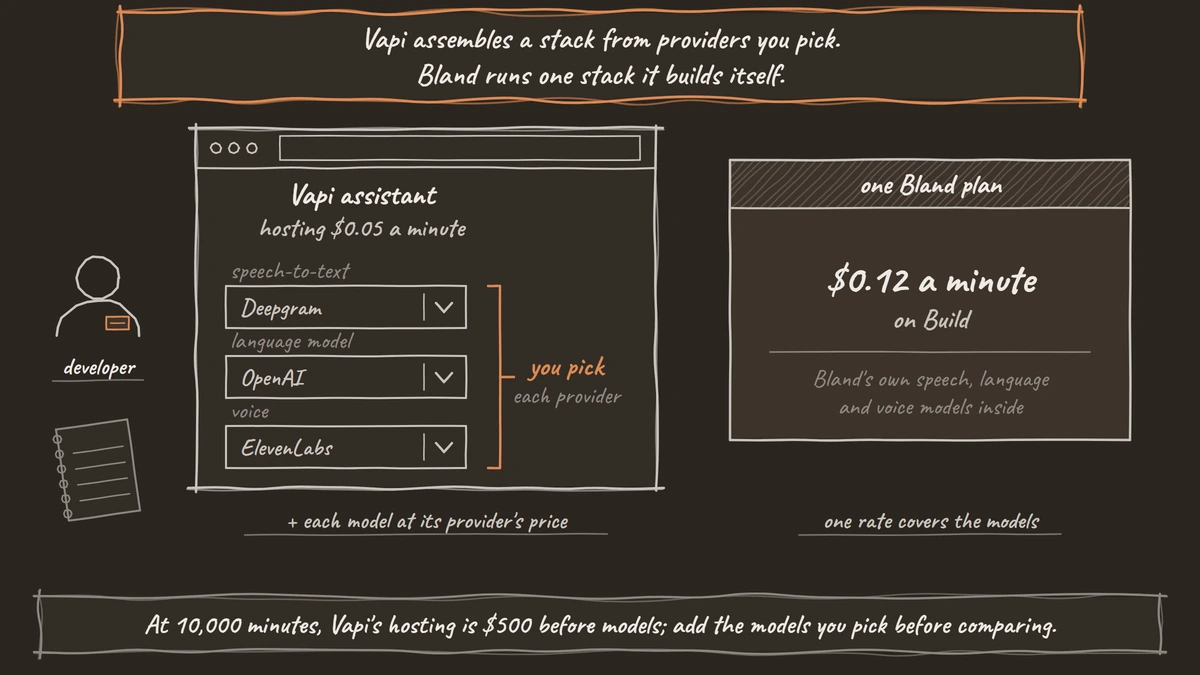
Vapi assembles a stack from providers you pick, while Bland runs one stack it builds itself. Almost every difference below follows from that.
| Row | Vapi | Bland AI |
|---|---|---|
| A minute of calling | $0.05 for hosting, plus speech-to-text, model and voice at each provider's price. But the total moves with every provider you pick | One rate that includes Bland's own models: $0.14 on Start, $0.12 on Build. But phone time and outbound attempt minimums sit on top |
| Monthly packages | None needed; Core $29/mo; Pro 10% of hosting with a $999/mo minimum; Premier custom | Start $0; Build $299/mo; Enterprise custom. Scale ($499/mo at $0.11) is on Bland's billing page |
| Models | Any supported provider, your own keys, a custom large language model (LLM), or OpenAI's realtime speech-to-speech models | Bland's own speech, language and voice models. But on Bland's self-serve plans you cannot choose another provider |
| Builder | Assistants and Squads, in the dashboard or by API. But the visual Workflows builder stopped running on 19 August 2026 | Bland Agents, the successor to Conversational Pathways, with each call drawn as a pathway of nodes inside an agent, and Norm, which builds from plain language. But production agents must move to Bland Agents by 15 November 2026, and Norm is billed by tokens |
| Calls at once | 4 with no package, 10 on Core, 30 on Pro; extra lines $10/mo each | 10 on Start, 50 on Build, 100 on Scale. But daily caps of 100, 2,000 and 5,000 calls apply, and calls over a cap are rejected |
| Phone | Vapi numbers included by package (1, 5 or 10), your own carrier, SIP at no transport fee from Vapi | Numbers at $15/mo in the US and Canada, or your own Twilio account. But SIP needs an entitlement that Bland support switches on for Enterprise organisations |
| HIPAA | A $2,000/mo add-on with a business associate agreement (BAA), on any package | BAA on Enterprise only |
| Private hosting | Published plans run on Vapi's own cloud | Your virtual private cloud (VPC), on-prem GPU clusters or air-gapped, on Enterprise |
| Certificates listed | SOC 2 Type II, HIPAA, GDPR | SOC 2 Type II, HIPAA, GDPR, PCI DSS, ISO 27001, FedRAMP 20x Class A |
Working out a monthly bill
Vapi's platform line is small and its model lines are yours to choose; Bland's single line is larger because the models are inside it.
On Vapi, 10,000 minutes a month means $500 of hosting, plus the speech-to-text, language model and voice you pick, plus a package if you need more than 4 calls at once ($29 for Core). Vapi's own calculator puts 1,000 minutes with Deepgram, an OpenAI model and an ElevenLabs voice at $82 to $129 a month, depending on the model and voice. Phone time is billed by your carrier; on Twilio's US price list that is $0.014 a minute for outbound calls and $0.0085 inbound on a local number.
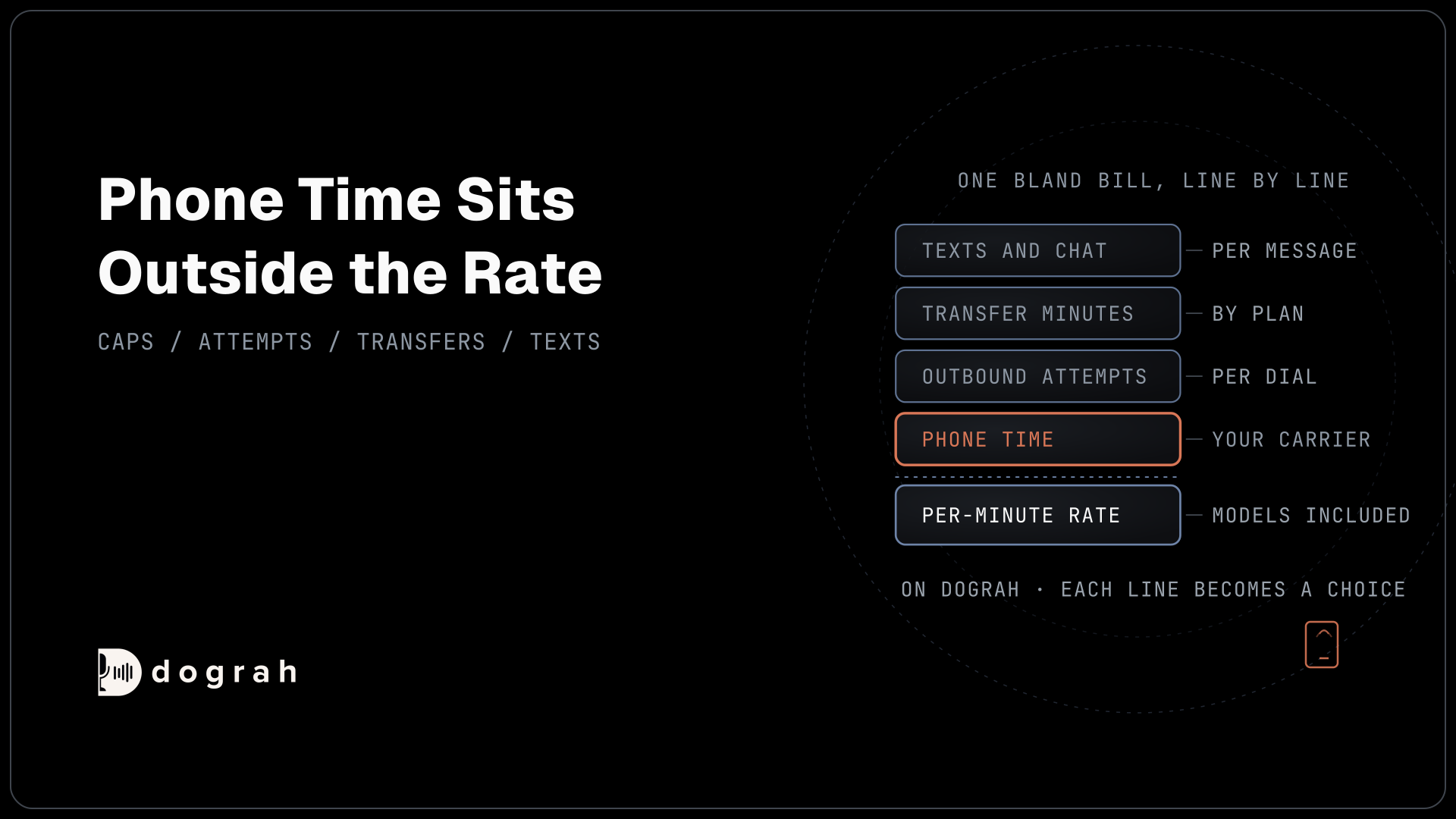
On Bland, by our arithmetic from its list prices, 10,000 minutes costs $1,499 on Build ($299 plus $0.12 a minute), with the models included. Start would come to $1,400, but its cap of 100 calls a day means 10,000 minutes only fits if calls average more than three minutes. Phone time sits on top, and on Bland's own telephony each outbound attempt and each failed call carries a $0.015 minimum. Time after a transfer to a person costs $0.05, $0.04 or $0.03 a minute by plan on a Bland number, and nothing on your own Twilio account.
Neither total is "cheaper" until you fix the models. A small, cheap model on Vapi can land well under Bland's rate, and a premium voice can land over it. Our breakdowns of Vapi pricing and Bland AI pricing price every line.
Model choice and speech-to-speech
Model choice is the clearest split: on Vapi it is yours, and on Bland it is Bland's.
Vapi treats every layer as interchangeable. You add provider keys or point to a custom LLM by URL. You can also skip the separate layers and use OpenAI's realtime speech-to-speech models, which take audio in and send audio out with no separate transcriber. That lets you swap a model when a better or cheaper one appears, and it makes you responsible for testing each combination.
Bland says it is the only voice AI that runs entirely on its own models, built and run by one team. You get one contract and one team to call when a model misbehaves, and no third-party AI provider hears the call. In exchange, on Bland's self-serve plans you cannot move to another provider's model, and a voice cloned on Bland stays on Bland. Our post on cascade vs speech-to-speech explains when a single speech-to-speech model helps and when separate layers work better.
Building and changing an agent
Both platforms build agents from linked steps, but only Bland still draws them on a visual canvas.
Vapi builds with Assistants, single agents set up in the dashboard or by API, and Squads, groups of assistants that hand a call between them. Its visual Workflows builder was retired on 18 August 2026, and existing workflows stopped running the next day, with Squads as the recommended replacement. Testing and call simulation are included on every Vapi plan.
Bland's original builder, Conversational Pathways, is a node editor: each node handles one part of the call, labelled edges decide where it goes next, and a Global Node can be reached from anywhere. In September 2026 Bland replaced it with Bland Agents, where each call is still drawn as a pathway of nodes inside an agent, and every production agent must move to the new architecture by 15 November 2026. Agents add environments, so a change reaches live calls only when you promote that version to production. For outbound lists, Bland runs batch calls from a file, and Vapi runs outbound campaigns.

Open Source Alternative to Vapi / Retell
Self-hosted voice agent platform — no per-minute fees
dograh-hq/dograh
Star on GitHub
HIPAA, private hosting and certificates
Vapi sells HIPAA on any package for a monthly fee, while Bland keeps its BAA and private hosting for Enterprise contracts.
Vapi's HIPAA add-on costs $2,000 a month and includes its business associate agreement, the contract HIPAA requires before a vendor handles patient data. Vapi's FAQ lists SOC 2 Type II, HIPAA and GDPR. Its published plans all run on Vapi's own cloud.
Bland lists SOC 2 Type II, HIPAA, GDPR, PCI DSS and ISO 27001, and FedRAMP 20x Class A, which it says it achieved on 25 August 2026. Its BAA, single sign-on and data residency sit in the Enterprise column, and so does private hosting, from your own VPC on AWS, Google Cloud or Azure to an air-gapped install on your own hardware. Bland can also pin every leg of a call to one region, so EU calls stay on EU GPUs.
Generally, whichever vendor signs, a BAA hands it obligations while your own HIPAA duties stay with you; confirm your position with counsel.
Picking between them
Pick Vapi if you need to choose the model or voice vendor, or want HIPAA without an Enterprise contract. Pick Bland if you want one rate that covers the models, or need a private deployment written into an Enterprise contract.
High-volume outbound teams should check Bland's caps before its rate: Start allows 100 calls a day and Build 2,000. Vapi's limits are concurrency, set by package and raised with $10 lines. Teams already on Bland have to move each production agent to Bland Agents by 15 November 2026 anyway, which makes the rebuild a natural point to compare. Teams weighing a third hosted option can read Retell AI vs Bland AI and Vapi vs Retell AI.
Run the same call script on both over a real phone line before you sign. Most phone calls still reach the agent as 8 kHz audio, while a browser demo runs at 16 kHz, so a demo that sounds sharp can mishear callers on the phone.
Where an open-source platform fits
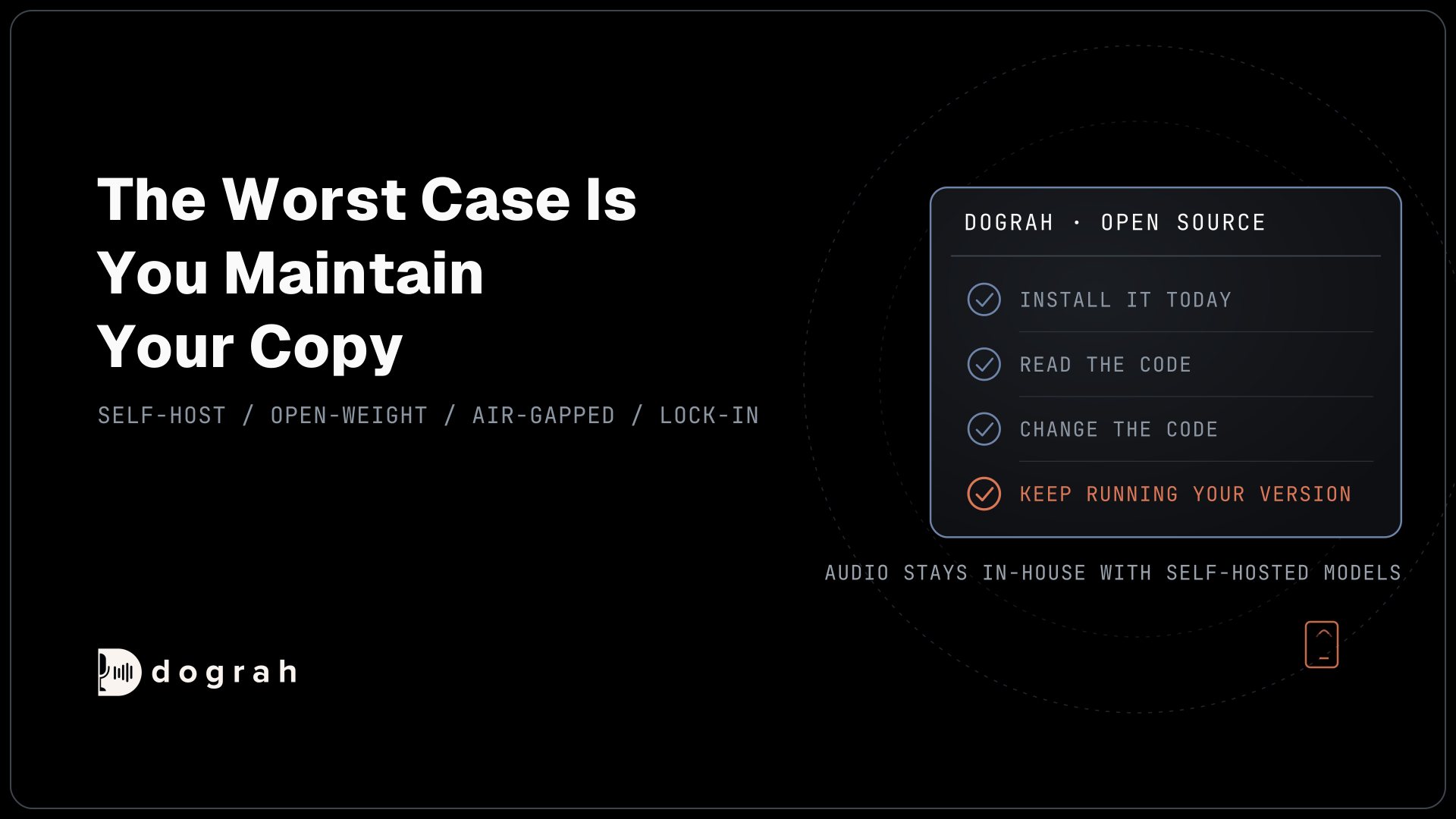
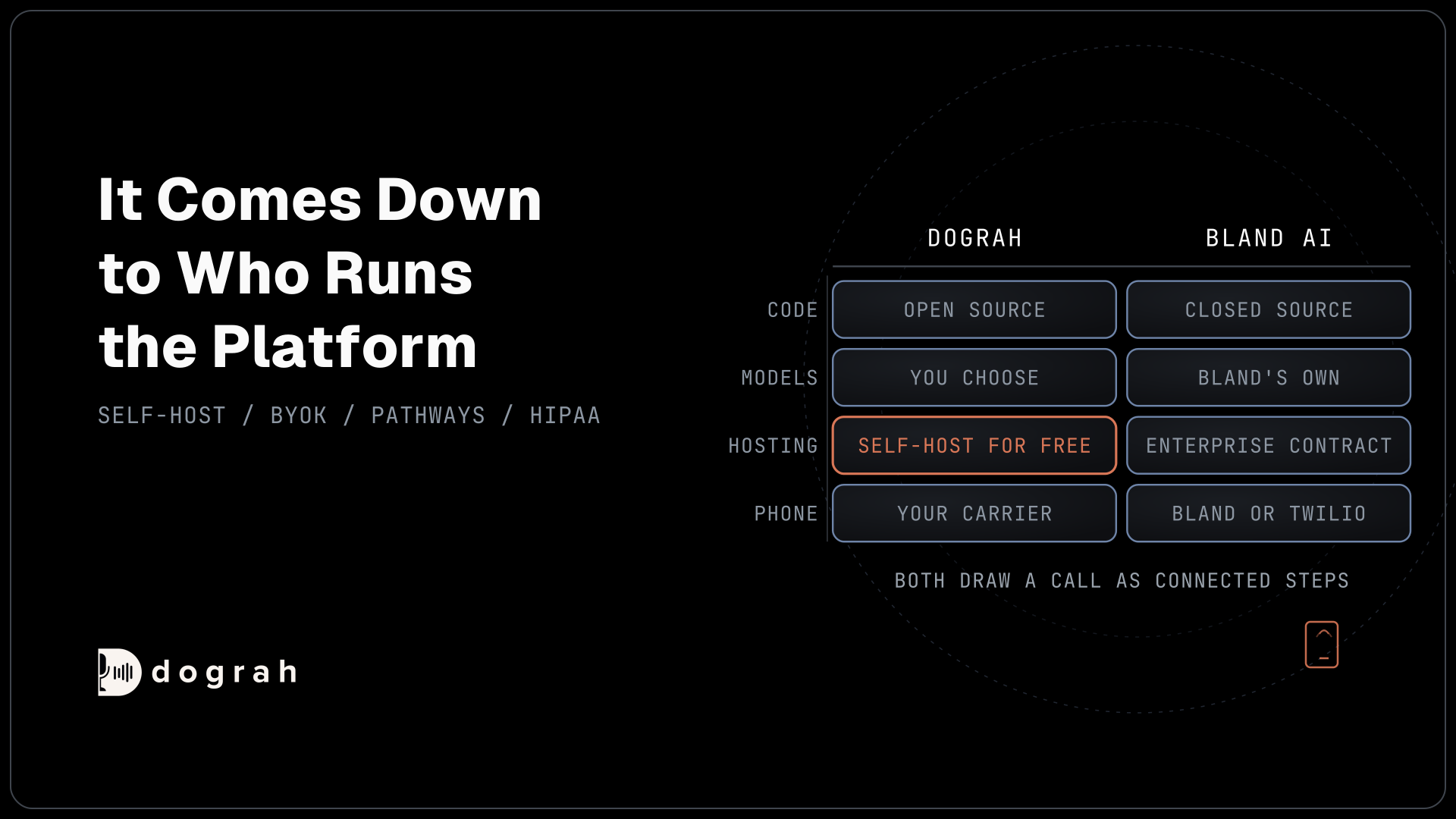
Both are hosted and closed source. Vapi's published plans run on its own cloud, and Bland offers VPC, on-prem and air-gapped setups on Enterprise contracts while the software stays closed. Neither gives you code you can run without a contract, and that is the gap Dograh fills for teams that want neither hosted platform.
| Question | Vapi | Bland AI | Dograh |
|---|---|---|---|
| Open source | No | No | Yes, BSD-2-Clause |
| Run it on your own servers | Published plans run on Vapi's cloud | On Enterprise only | Yes, self-host for free |
| Choose the models | Yes | Not on self-serve plans | Yes, including open-weight models you host |
| Platform fee | $0.05/min hosting | Included in $0.11 to $0.14/min | Self-hosted: none |
Dograh is open source under BSD-2-Clause, and its GitHub repository holds the whole platform. Its visual workflow builder joins nodes with pathways, each with a written condition the AI reads to pick its route, so a team used to Bland's pathways will find it familiar. A QA node scores each step of a finished call, Campaigns run outbound lists, and an AI assistant can build agents through Dograh's MCP (Model Context Protocol) server.
Like Vapi, you choose every model: Dograh's own, any supported provider on your own key, or open-weight models you host. Your numbers stay with your carrier, such as Twilio, Vonage, Plivo or Telnyx, or your own SIP trunk through Dograh Managed SIP on Dograh Cloud. Call audio stays on your own servers only when you self-host Dograh and the models too.
For patient calls, run Dograh self-hosted. Generally, no BAA with Dograh is needed because Dograh never sees the data, while model providers may need their own BAA when they handle patient data and the carrier may need one depending on what it stores; confirm your position with counsel.
Self-hosted Dograh has no per-minute platform fee (servers, model keys and phone minutes still cost); Dograh Cloud has a 1¢-a-minute platform fee and includes 10 concurrent calls. The limits are worth knowing: self-hosting means your team runs the servers, Transfer Call works on Twilio only and passes no summary, and there is no one-click Bland import, so a pathway is rebuilt in Dograh's own nodes-and-edges format.
Dograh is the strongest fit when you want Vapi's model choice and Bland's private hosting without an Enterprise contract, because the code is yours to run. To try it, self-host it from GitHub with Docker Compose, or start on Dograh Cloud.
Join the Dograh Community
Dograh is an OSS alternative to Vapi. Join our Slack community for queries, releases, best practices & community interactions.
Glossary
- Squads
- Vapi's way of building a call from several assistants that hand the conversation between them. Vapi recommends it in place of Workflows, which stopped running in August 2026.
- Conversational Pathways
- Bland's original visual call builder, where each node handles one part of the call and labelled lines decide where it goes next. Since September 2026 a pathway sits inside a Bland Agent, and production pathways must move to Agents by 15 November 2026.
- Speech-to-speech model
- A single model that takes the caller's audio in and returns spoken audio, with no separate transcriber or voice step. Vapi supports OpenAI's realtime models of this kind.
- Daily cap
- The most calls a Bland plan can place in a day: 100 on Start, 2,000 on Build and 5,000 on Scale. Calls over the cap are rejected.