
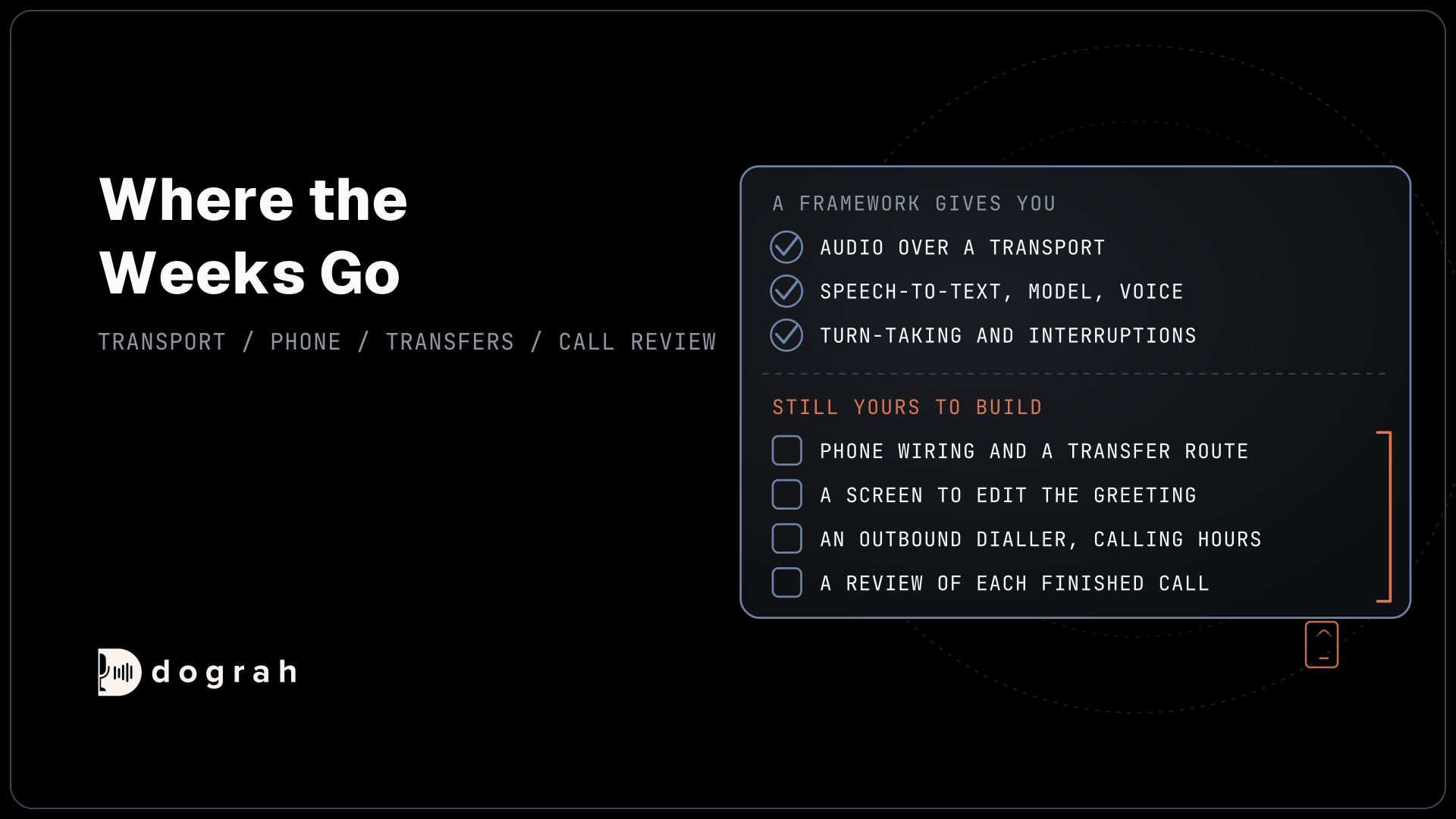
Open-Source Voice AI Frameworks Compared: Pipecat, LiveKit, TEN
Open-source voice AI frameworks compared: Pipecat, LiveKit Agents, TEN Framework, Vocode and Dograh on transport, phone calls and transfers, licence and the work you still do yourself.
Read the full guide →Deep Dives in This Series
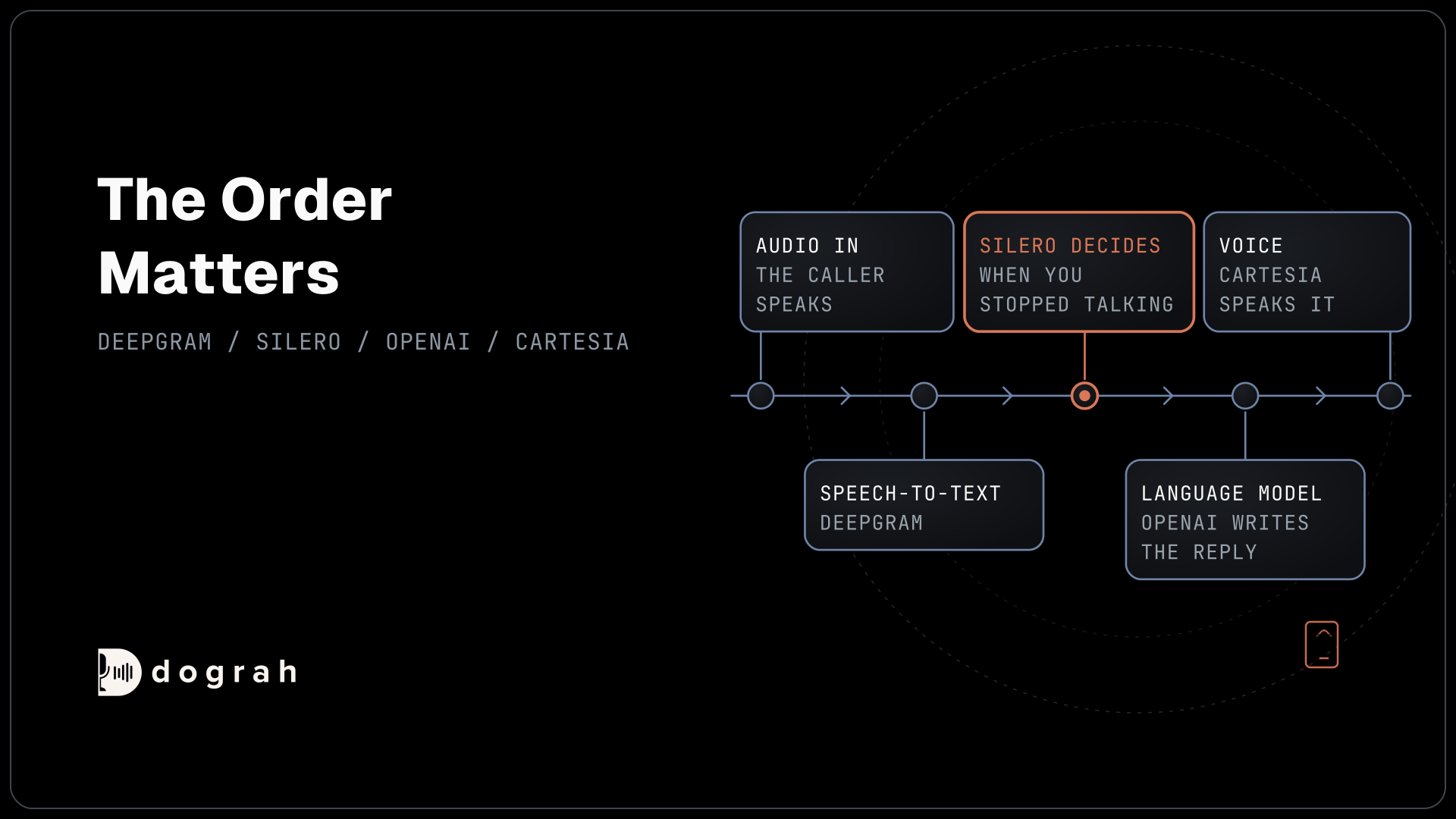
Pipecat Tutorial: From First Pipeline to a Phone Call
A Pipecat tutorial with working code: scaffold the quickstart, read the pipeline, add Twilio's WebSocket transport at 8 kHz, answer and place real phone calls, then see what a production phone agent still needs.
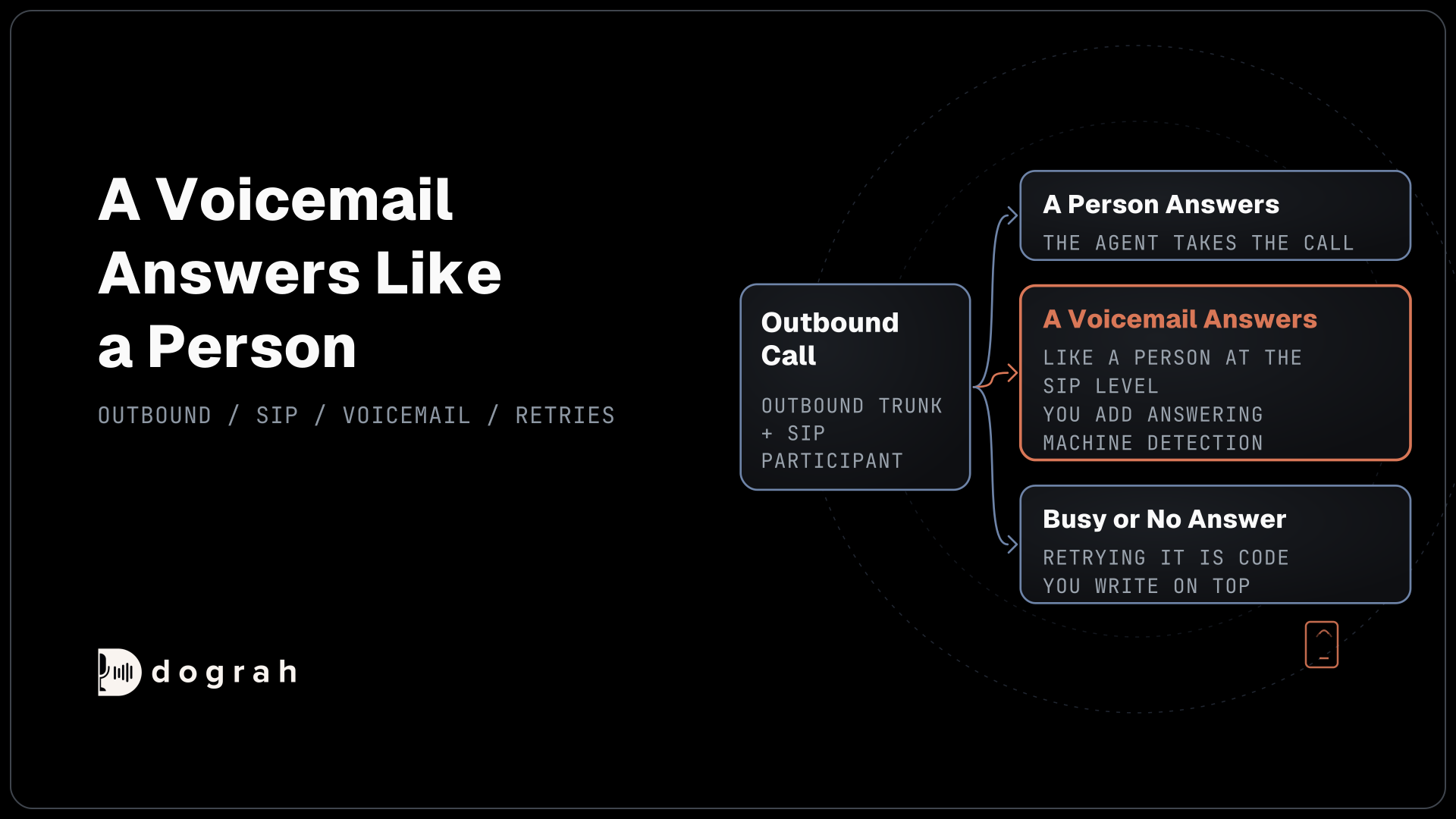
LiveKit Agents Tutorial: Build and Deploy a Voice Agent
A LiveKit Agents tutorial with working code: install the CLI, create an agent from the Python starter, talk to it, deploy it to LiveKit Cloud, connect a phone number with an inbound trunk and dispatch rule, then add the ops pieces yourself.
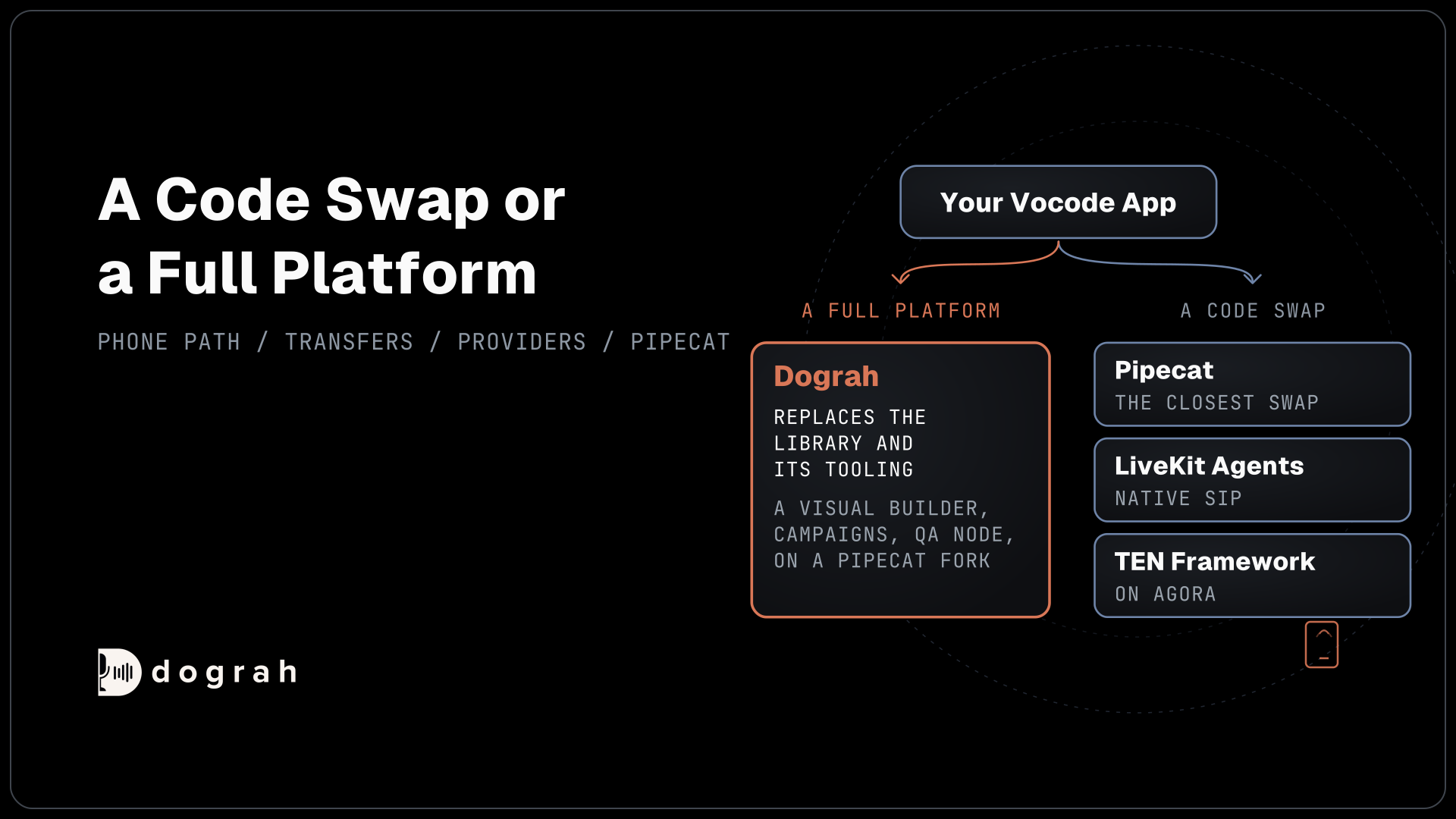
Vocode Alternatives: Open-Source Frameworks and a Full Platform
Vocode alternatives compared: what a Vocode codebase needs from a replacement, Pipecat, LiveKit Agents, TEN Framework and Bolna compared, and Dograh as the full platform with a visual workflow builder.
Claude Code for Voice Agents: LiveKit vs Pipecat vs MCP
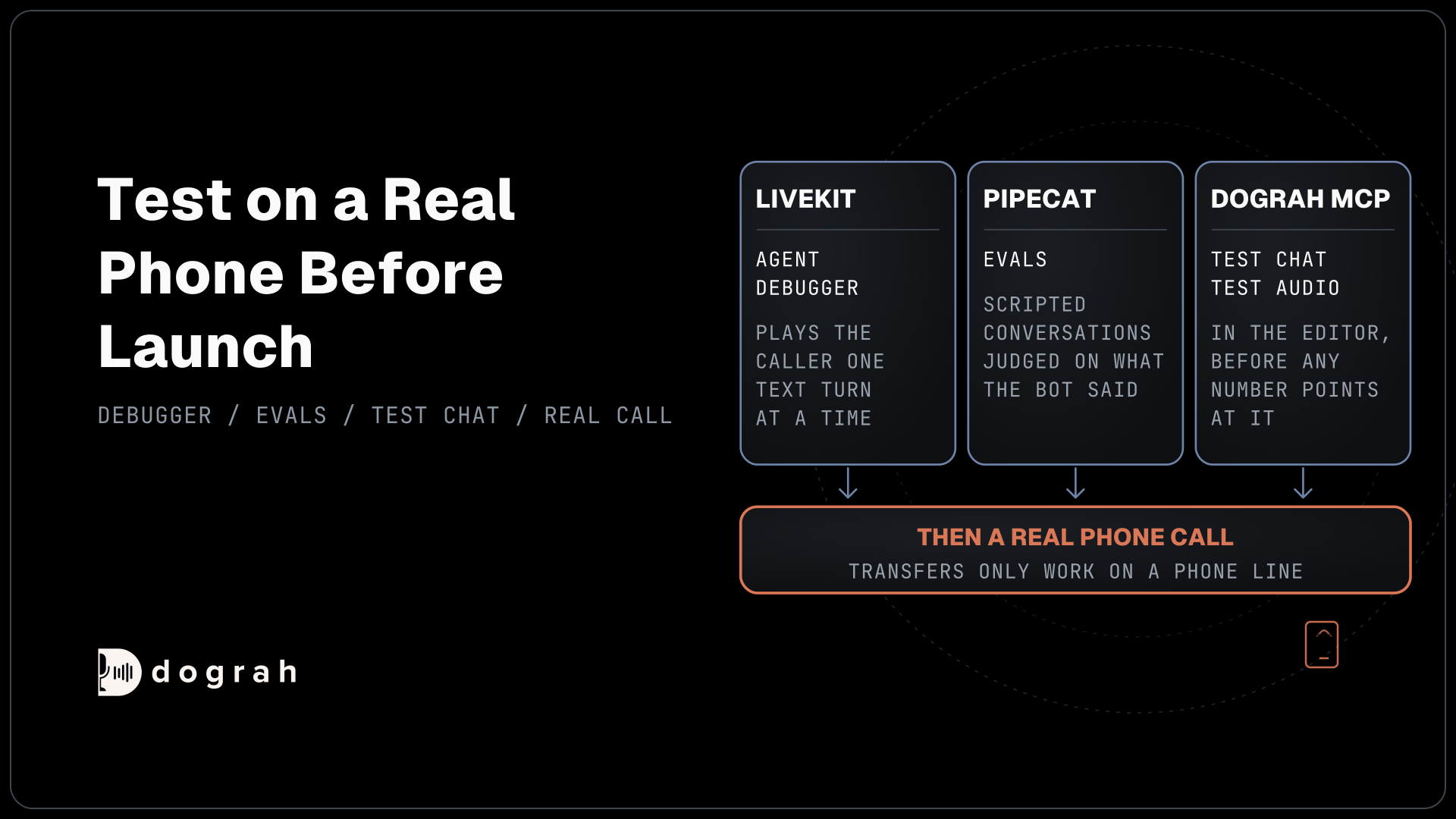
Claude Code for voice agents, compared three ways: the same phone agent brief on LiveKit Agents, on Pipecat and through Dograh's MCP server, with what Claude Code writes and what each route leaves you to finish.