
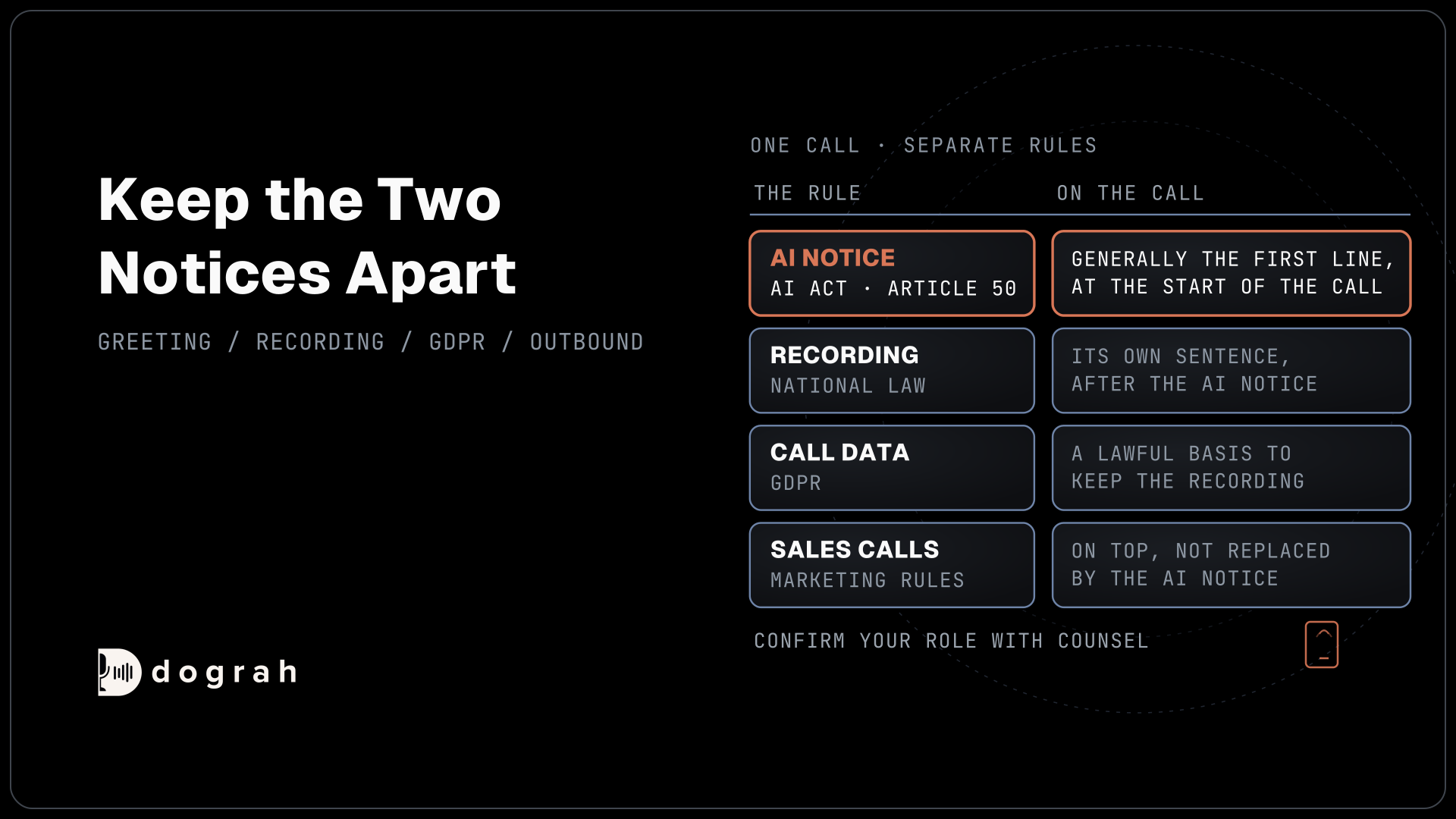
EU AI Act for Voice Agents: What Changes in 2026
What the EU AI Act asks of a phone agent from 2 August 2026: the spoken AI notice under Article 50, who carries it, the narrow obvious exception, recording consent as a separate step, what the AI Omnibus changed and running the agent on EU servers.
Read the full guide →Deep Dives in This Series
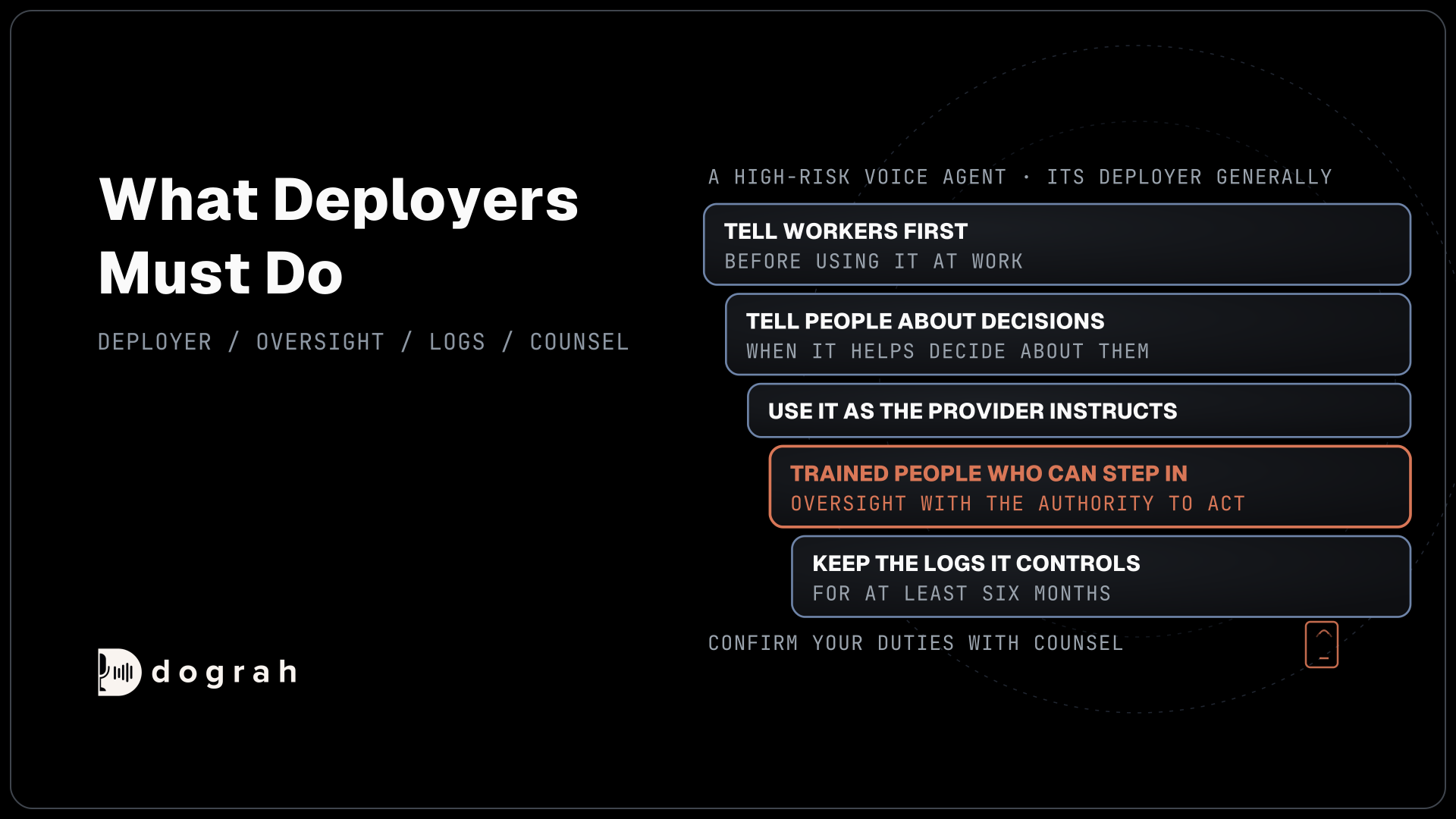
EU AI Act High-Risk Rules for Voice Agents in 2026
Which voice-agent uses fall on the EU AI Act's high-risk list, from credit and insurance calls to hiring screens and emergency lines, which usually do not, the narrow way out and what deployers must do from 2 December 2027.
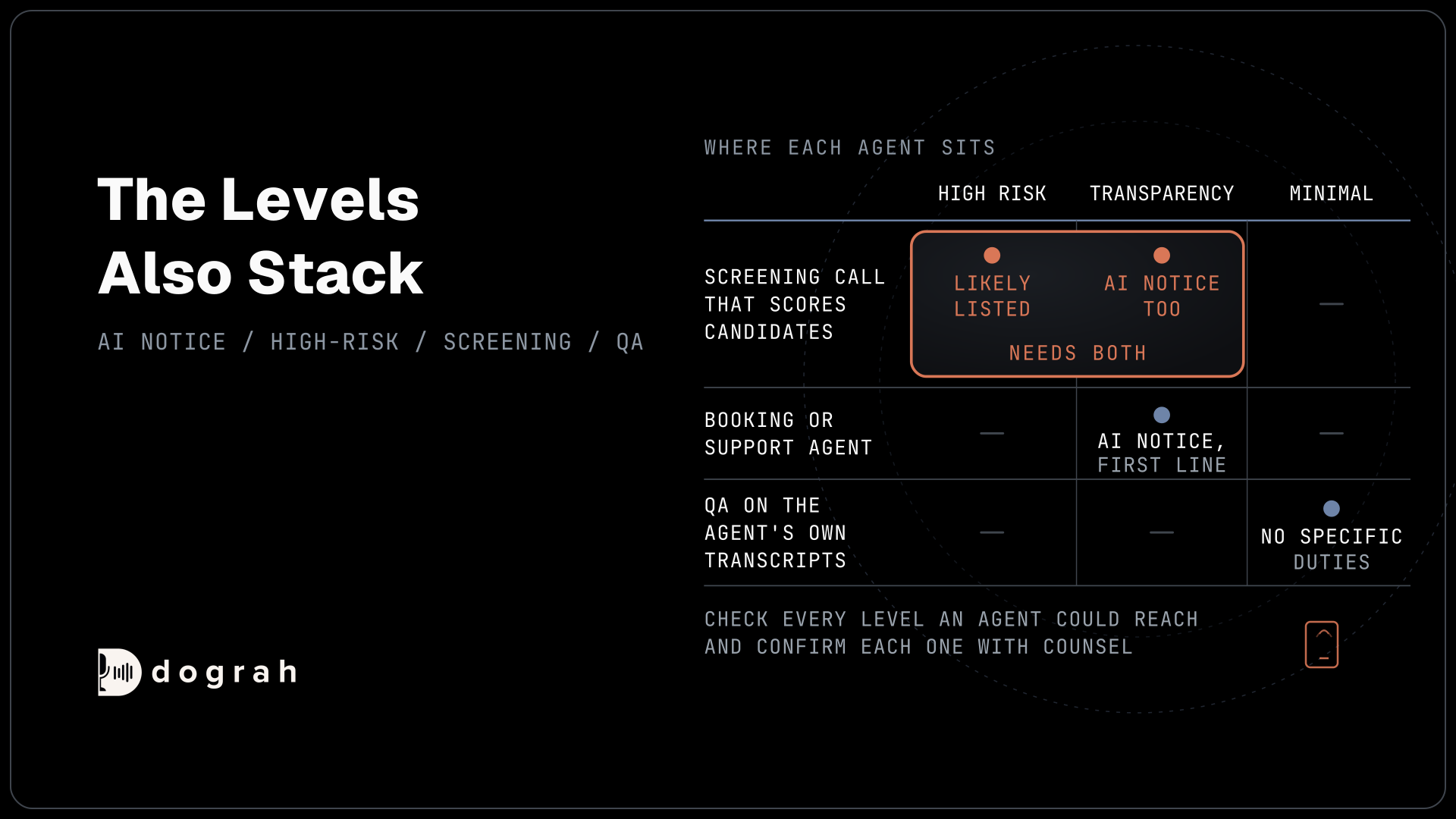
EU AI Act Risk Categories Explained for Voice AI in 2026
The EU AI Act's four risk levels for voice AI are banned, high-risk, transparency and minimal risk. Each gets a phone-agent example, plus the call-centre emotion rule and the AI notice every voice agent needs.
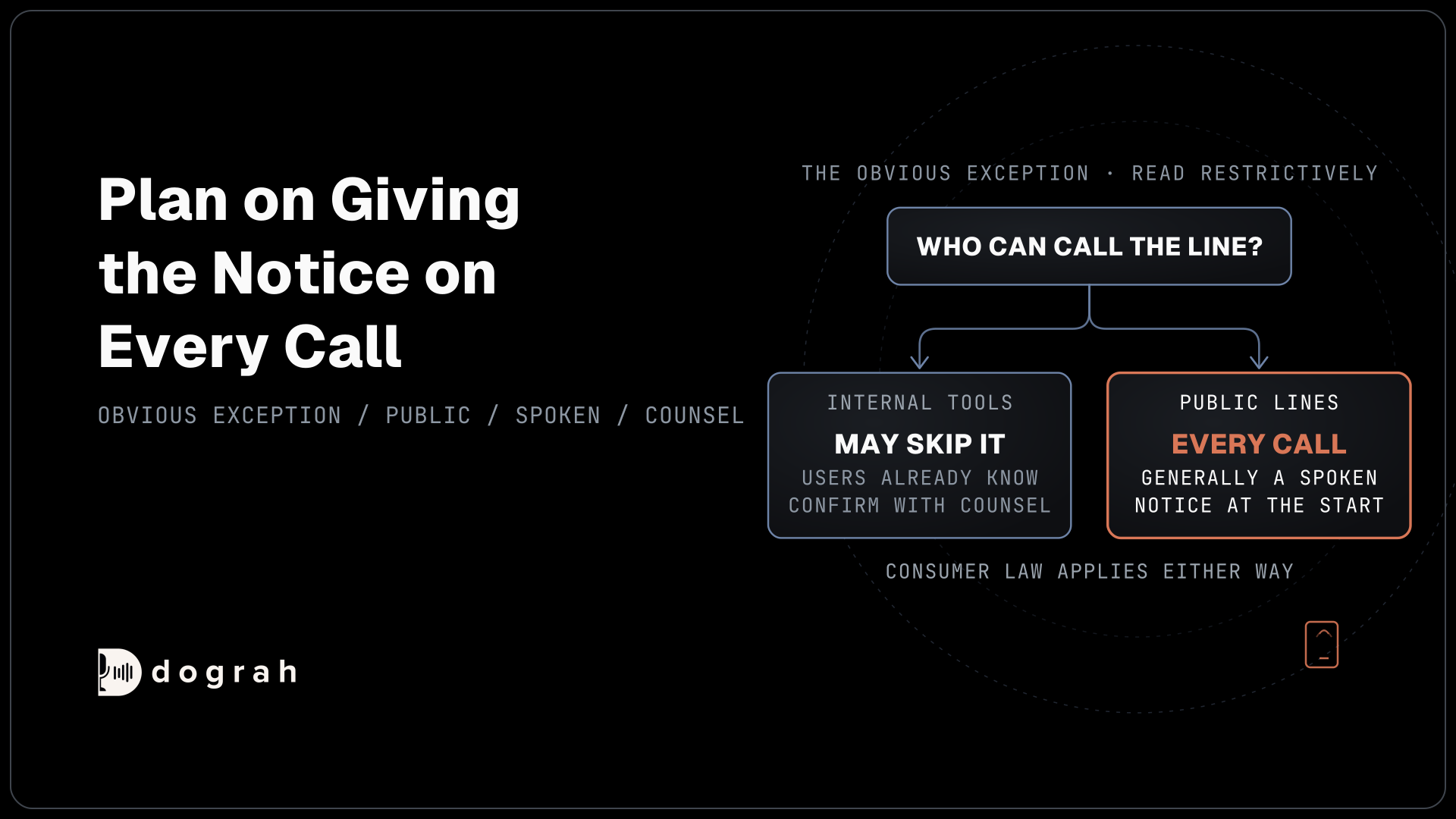
EU AI Act Article 50: What a Voice Agent Must Tell Callers
Article 50 of the EU AI Act in plain words for phone agents: tell callers they are talking to an AI at the start of the call, what the Commission's guidelines ask on the phone, when the obvious exception fails, four sample opening lines and how to make the notice play in full.
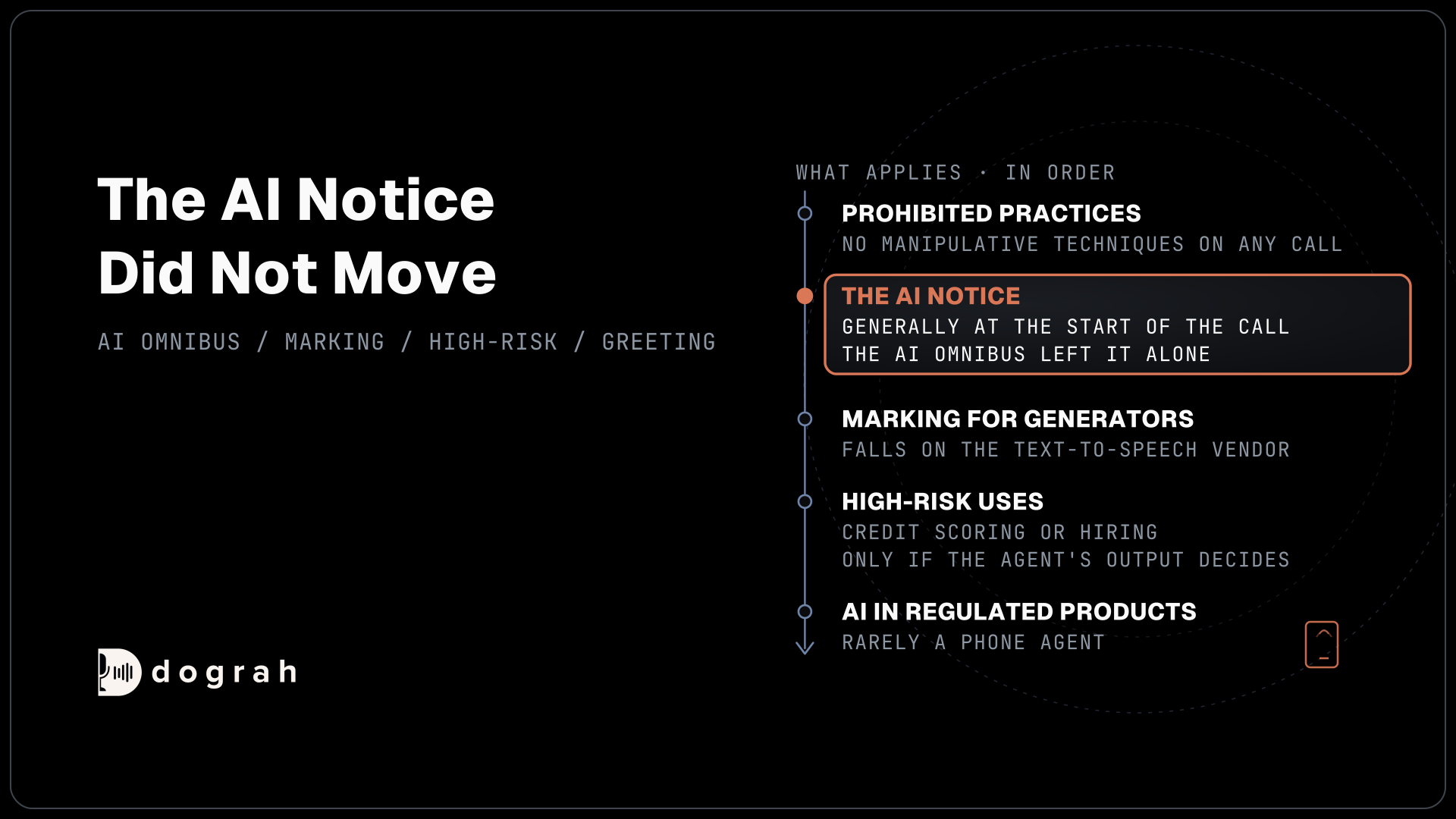
EU AI Act Timeline: What Applies From August 2026
Every EU AI Act application date in one table, from the 2025 bans to the 2030 public-authority deadline, what the AI Omnibus moved, and what the 2 August 2026 AI notice means for a phone agent.