
Synthflow is a closed-source, hosted voice agent platform with a visual Flow Designer and many tested phone integrations. Its engineers help launch your agents, but it is sold only as an annual Enterprise agreement, with no trial. Dograh, the open-source AI voice agent platform we build, is the alternative you can self-host or run on Dograh Cloud.
Key Takeaways
- Synthflow sells one annual Enterprise agreement, with no trial or per-minute rate.
- Its tested phone integrations and hands-on launch help are real strengths.
- Check model choice, exports and the HIPAA Setting before you sign.
A fair review of Synthflow starts with how you buy it, because the contract decides who can even try the product. We cover its strengths, its limits, the pros and cons side by side and who it suits, then where an open-source platform fits, with Dograh as the example.
How Synthflow is built and sold
Synthflow is a closed-source platform for building voice agents, and it runs them on its own cloud. Each agent is built in one of two modes. The Prompt Builder lets a single prompt define the agent, and the Flow Designer is a visual canvas of nodes and branches for structured, multi-step calls. You choose one mode per agent and cannot mix them, so switching later means rebuilding the agent. Agents can take inbound calls, place outbound calls or sit on a website as a voice widget. Flow Designer nodes cover the usual jobs of a phone call, such as Branch for routing on conditions, Trigger Subflow for handing part of the call to a sub-agent and coming back, Call Transfer and Real-Time Booking.
The buying model shapes the review more than any feature. Synthflow starts every new deployment on an Enterprise contract, sold as an annual agreement and scoped to your call volume, phone setup, integrations, security needs and launch support. There is no free plan, no trial and no rate by the minute, so the price arrives as a quote. Our breakdown of Synthflow pricing walks through what that contract covers.
Agencies, BPOs and software platforms can also get white-label inside the same agreement. Each client then gets its own workspace under the partner's brand and domain.
What Synthflow does well
The contract buys hands-on help, and for many teams that is the main reason to sign. Where the agreement includes launch support, Synthflow's forward-deployed engineers implement, test and launch the agents with your team. A company without voice AI engineers gets a working agent without hiring any, and the support terms are written into the agreement.
Phone coverage is the second strength. Synthflow sorts carriers into tiers. Tier 1 covers native integrations it tests and supports, including Twilio, Telnyx, RingCentral RingCX, Vonage, 8x8, Zoom and Five9. Tier 2 lists Dialpad, 3CX, Aircall, Genesys Cloud and Talkdesk, which customers run but Synthflow does not regression-test, and any other standard SIP system can connect. Synthflow also sells numbers in the US, Canada and Australia.
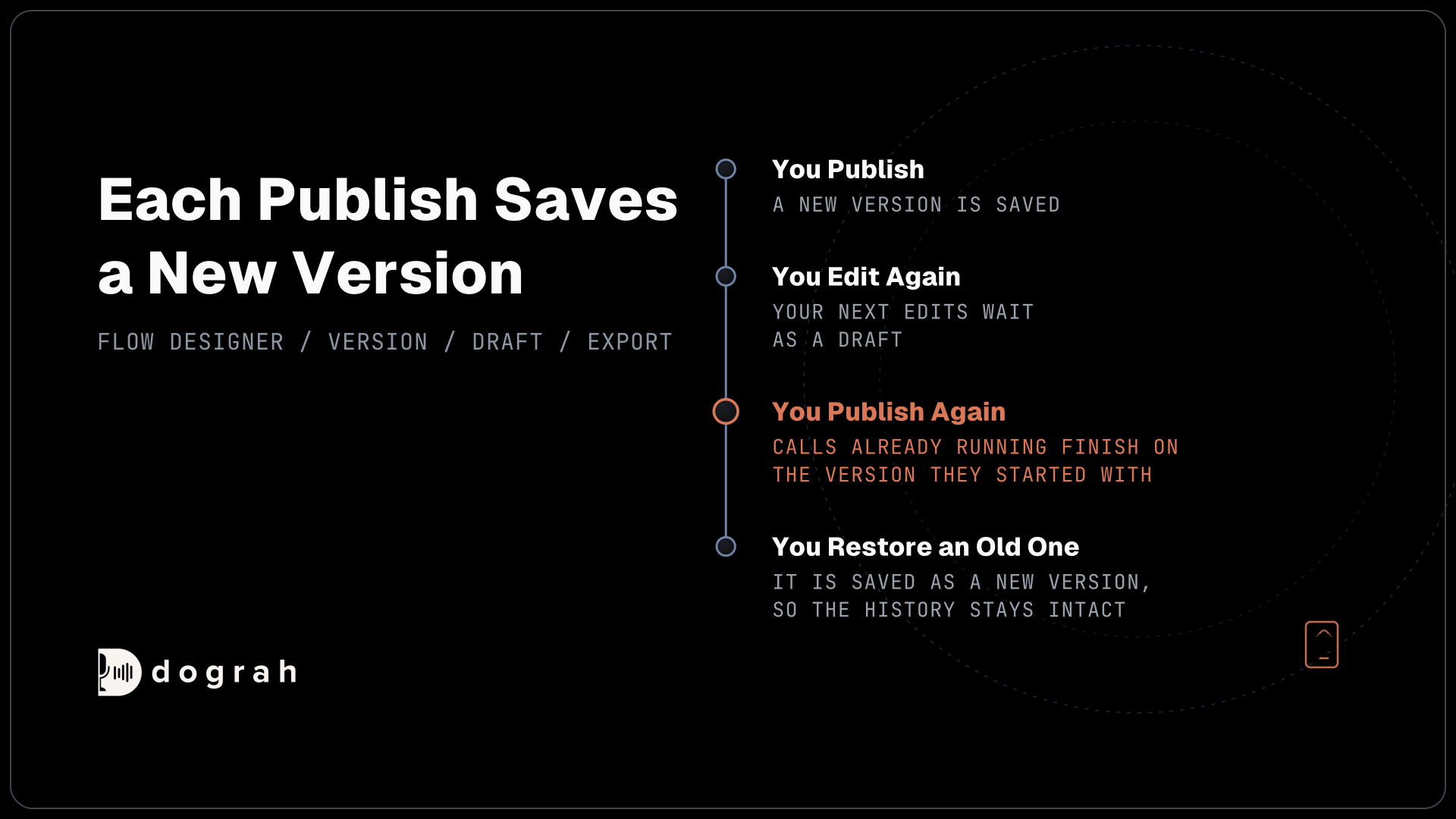
Changes are handled with care. Synthflow saves a new version every time you publish, and calls already running finish on the version they started with while your next edits wait as a draft. Restoring an old version creates a new one, so the history stays intact.
Data controls are solid too. Synthflow runs single-region clusters in the US and the EU that keep all data and processing inside that region, and it is retiring an older Global cluster whose live calls could be processed in either. A 30-day auto-delete switch removes transcripts, recordings and caller IDs, and PII redaction strips sensitive details from new transcripts. Its trust centre lists SOC 2 Type 2, ISO/IEC 27001, GDPR and PCI DSS v4.0.1.
Where Synthflow falls short
The first limit is getting started. With no trial and an annual agreement, you cannot build a test agent on your own account and call it before you sign. A small pilot carries the same contract shape as a large rollout.
Model choice is narrower than the long list suggests. Synthflow's model settings offer GPT models from GPT-4o to GPT-6-Luna plus its own Synthflow LLM, and GPT and other third-party models are only available on Enterprise plans. Since every new deal is Enterprise, that comes down to what your contract enables. The only bring-your-own option is an OpenAI key, and that setting appears only once BYOK access is switched on for your account. For calls in languages other than English, Synthflow recommends its own speech-to-text across the 34 entries on its language list.
Leaving takes work. Export to JSON saves an agent version's settings, but exports leave out actions and knowledge bases, so those are rebuilt by hand. The code is closed and runs only on Synthflow's cloud, so you choose a US or EU region, never your own servers.
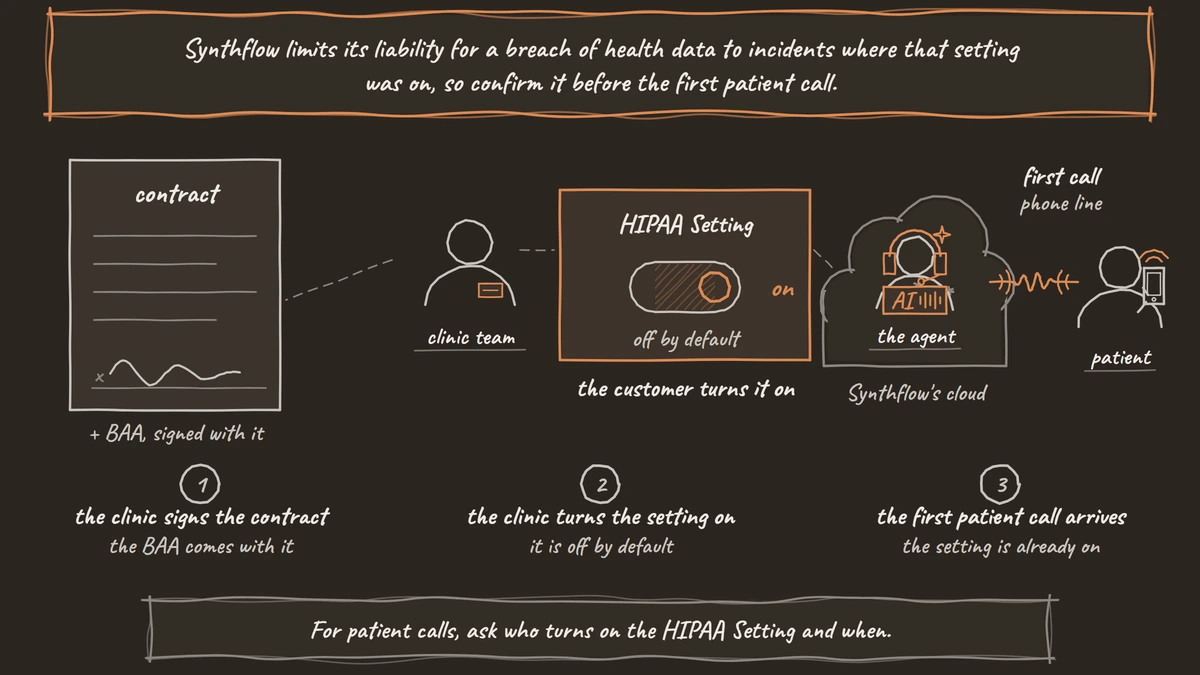
The Health Insurance Portability and Accountability Act (HIPAA) needs care here. The trust centre lists HIPAA as self-attested. Under Synthflow's BAA terms, the business associate agreement (BAA) is signed with the contract, but the HIPAA Setting is off by default, and the customer alone is responsible for turning it on. Synthflow limits its liability for a breach of health data to incidents where that setting was on, so confirm it before the first patient call.

Open Source Alternative to Vapi / Retell
Self-hosted voice agent platform — no per-minute fees
dograh-hq/dograh
Star on GitHub
Synthflow pros and cons at a glance
The table puts the main points beside Dograh, the open-source option most teams weigh against a contract. Most rows come down to how much of the stack you control, from where the agent runs to what leaves with you when you go.
| Area | Synthflow | Dograh |
|---|---|---|
| How you buy | Annual Enterprise agreement, quoted by sales | Self-hosted under BSD 2-Clause with no platform fee, or Dograh Cloud at a 1¢/min platform fee |
| Trying it first | No free plan or trial | Self-host today, or start on Dograh Cloud with credits from $5 |
| Where it runs | Synthflow's cloud, in a US or EU cluster | Your own servers or Dograh Cloud |
| Models | GPT models and Synthflow LLM, plus an OpenAI key once BYOK access is enabled | Dograh's models, your own keys for any supported provider, or open-weight models you host |
| Building the agent | Prompt Builder or Flow Designer, with forward-deployed engineers in the agreement | Visual workflow builder, built by your team or by an AI assistant through the MCP server |
| Phone | Tested native integrations, standard SIP, numbers in the US, Canada and Australia | Your own carrier, such as Twilio, Telnyx, Plivo, Vonage, Cloudonix or Asterisk ARI |
| Moving away | JSON export without actions or knowledge bases | Open code, with agents stored in your own database when self-hosted |
| HIPAA | Self-attested, BAA at signing, HIPAA Setting off by default | Self-host it, so no BAA with Dograh is needed |
Who Synthflow suits
Synthflow fits a company that wants a vendor to deliver the agent. If you want someone to scope, build and launch it under one contract, with engineers on the project and support terms in writing, that is exactly what it sells. It also suits contact centres already running Five9, RingCentral RingCX or Genesys Cloud, and BPOs that want each client under their own brand.
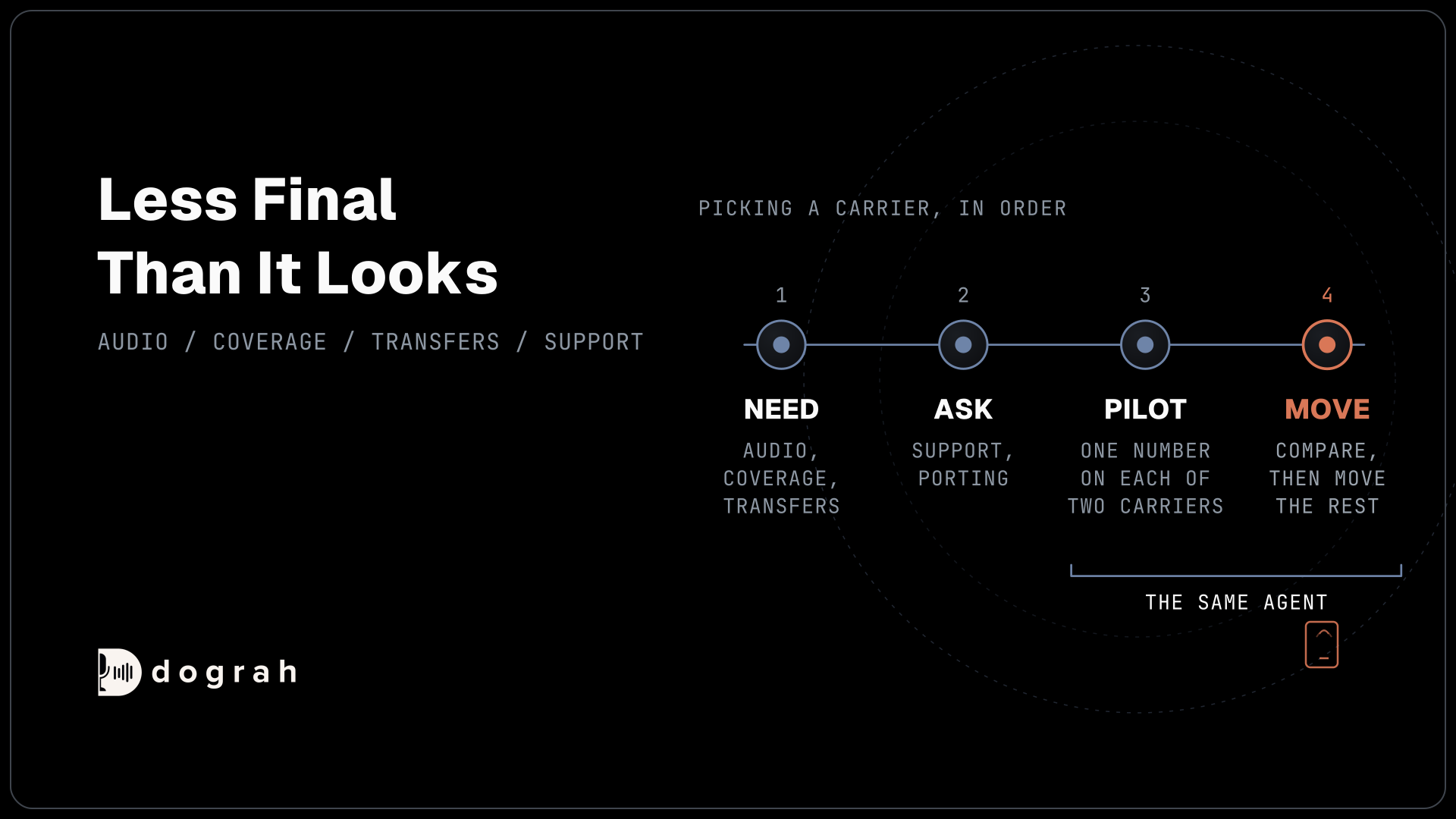
If Synthflow is on your shortlist, take a few questions to the sales call. Ask which models your agreement enables and whether BYOK access will be switched on for your account. Ask whether launch support, and with it the forward-deployed engineers, is in your scope. For patient calls, ask who turns on the HIPAA Setting and when. Then ask how you would move your agents, actions and knowledge bases if you leave at renewal.
It fits less well if you want to test before you buy, pick your own speech and language models, or keep calls on your own servers. Teams in that position usually compare hosted and open options side by side, and our guide to Synthflow alternatives covers both.
Join the Dograh Community
Dograh is an OSS alternative to Vapi. Join our Slack community for queries, releases, best practices & community interactions.
Where an open-source platform fits instead
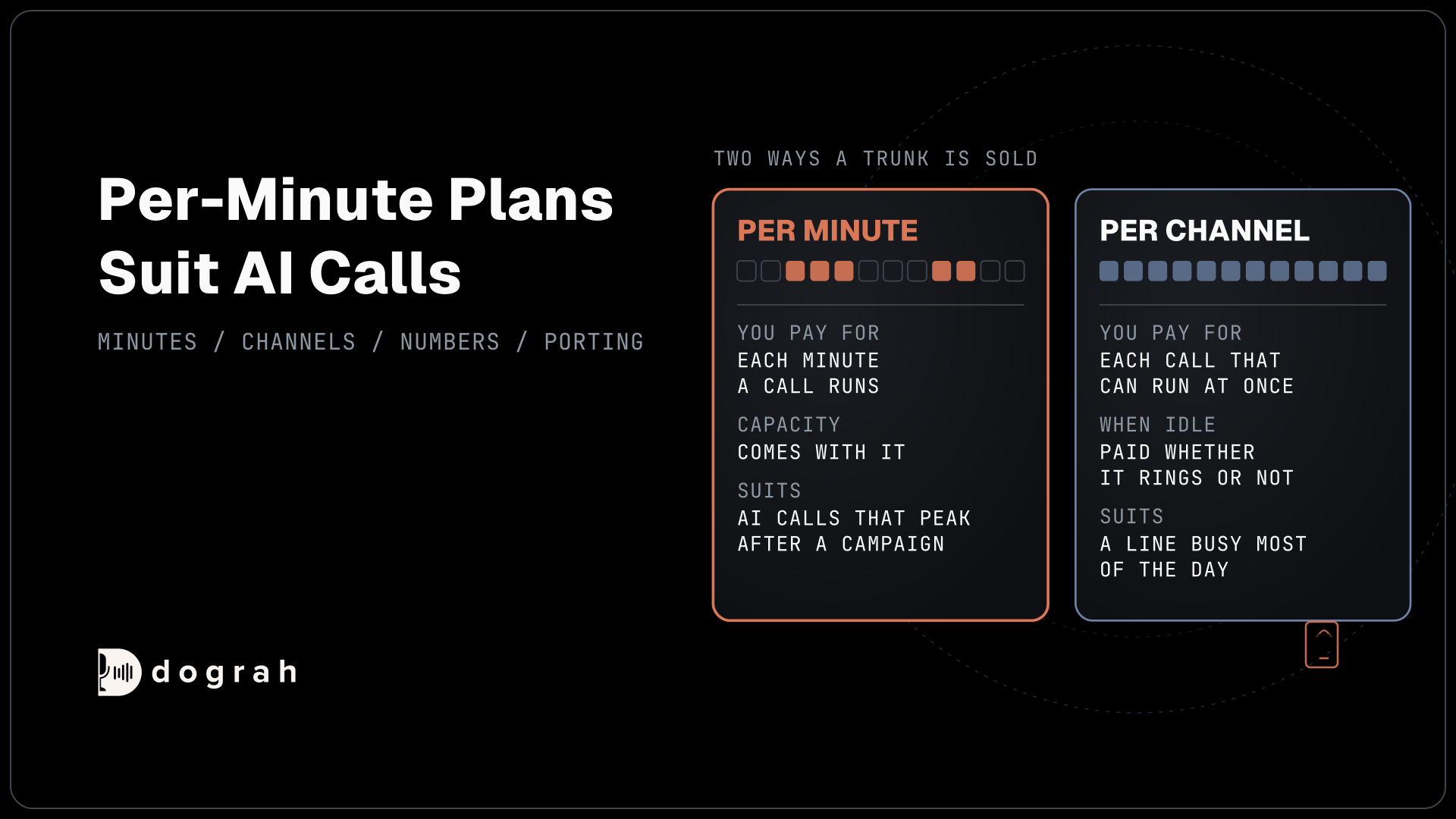
An open-source platform fits when you want the code and the servers to be yours. The one we build is licensed under BSD 2-Clause, and you can self-host it with Docker Compose or run it in our managed cloud, with no annual agreement to start. Self-hosted Dograh has no per-minute platform fee, but servers, model keys and phone minutes still cost money. Dograh Cloud charges a 1¢-a-minute platform fee.
The model layer is where it differs most from Synthflow. Dograh is the orchestration layer that runs the call flow, tools and telephony. The speech and language models are a separate layer, where you pick Dograh's own models, your own keys for any supported provider, or open-weight models on your own servers. With your own keys the audio still reaches each provider, so call audio stays in-house only when the models run on your servers too.
A team used to the Flow Designer gets a visual workflow builder of nodes and pathways, and agents keep a version history. Every call has a full trace for debugging, and built-in QA scores each step of the call after it ends. Pre-recorded clips can play for the lines an agent says most, with TTS as the fallback for everything else.
The trade is ownership. Self-hosting puts uptime and upgrades in your team's hands, and your team builds the agents. Dograh's MCP server lets an AI assistant create and edit agents, which speeds up rebuilding a set of Synthflow flows. Our Dograh vs Synthflow comparison goes row by row through price, models, carriers and HIPAA.
Start by writing down what you need the vendor to do. If the answer is build and launch the agent for you, take Synthflow's quote. If it is keep the models and the servers, run a pilot on an open platform first.
Glossary
- Flow Designer
- Synthflow's visual call builder, where nodes handle each part of the call and branches decide where it goes next. Each Synthflow agent uses either the Flow Designer or a single prompt, never both.
- Forward-deployed engineers
- Vendor engineers assigned to your project who build, test and launch the agent with your team. Synthflow includes them where its Enterprise agreement covers launch support.
- HIPAA Setting
- Synthflow's workspace switch for handling protected health information. It is off by default, the customer is responsible for turning it on, and Synthflow's breach liability applies only while it is on.
- Bring your own key (BYOK)
- Using your own account with a model provider instead of the platform's. On Synthflow the only option is an OpenAI key, once BYOK access is enabled. You hold the contract, but the call audio still reaches the provider.