
The best SIP trunk providers for AI voice agents are Twilio, Telnyx and Plivo for most teams, Vonage when 16 kHz audio matters, and Exotel or Vobiz for calls in India. Any other carrier works through a SIP domain. Dograh, the open-source AI voice agent platform we build, connects to all of them, self-hosted or on Dograh Cloud.
Key Takeaways
- Twilio, Telnyx and Plivo connect directly and support call transfers.
- Vonage is the only phone provider here that sends 16 kHz audio.
- Any other carrier's trunk connects through Managed SIP or Asterisk ARI.
This post is part of our guide to SIP trunk providers, where every route into Dograh sits in one table. Here we narrow that to a short list judged on what AI calls need, with a verdict for each provider and how it connects to your agent.
What AI calls need from a trunk
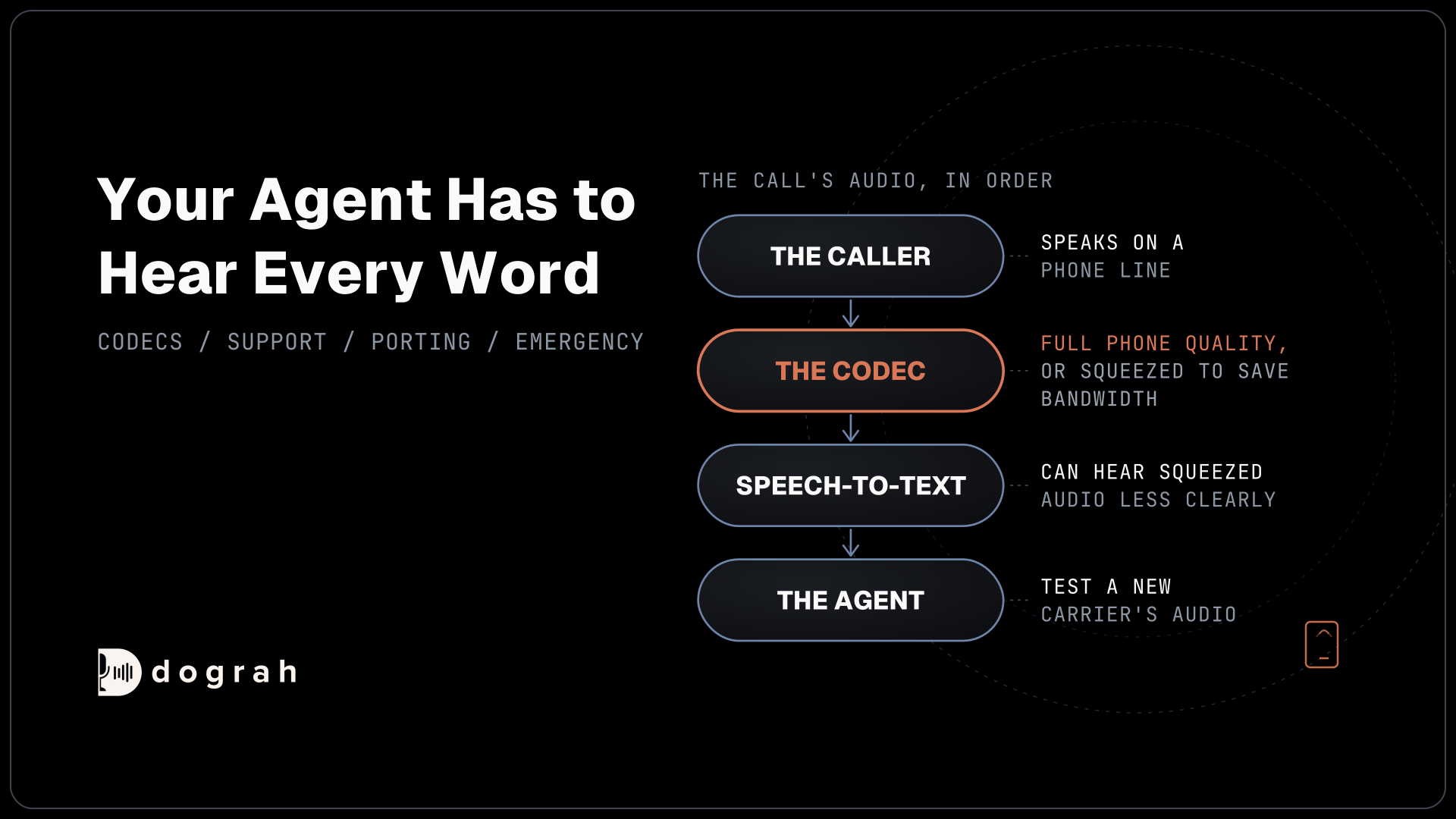
An AI agent needs five things from a carrier, and the per-minute rate is not one of the first two. The first is audio the speech-to-text step can hear. Most trunks carry G.711, and Twilio's trunk codecs make PCMU and PCMA generally available while Opus goes through sales. Most phone calls still reach the agent as 8 kHz audio, while a browser demo runs at 16 kHz.
The second is coverage, meaning numbers in your callers' countries of the type they expect, local, toll-free or mobile. The third is setup, and how much SIP work stands between you and a first call. The fourth is transfers. In Dograh, Transfer Call dials a person while the caller hears hold music and connects them once someone answers, and it runs only on some carriers.
The fifth is support, which no rate card settles. Ask each carrier for its support hours and how it handles a failed route at 2 a.m. before you send live traffic.
The short list at a glance
The table gives the verdict, the audio and the route into Dograh for each provider. US rates are each carrier's own published trunk rates for local numbers.
| Provider | Best for | Audio into the agent | Connects to Dograh | Transfer Call | US rates, inbound / outbound |
|---|---|---|---|---|---|
| Twilio | Teams already on Twilio, and the spoken transfer introduction | 8 kHz | Direct, or its Elastic SIP trunk through Managed SIP | Yes | $0.0034 / $0.0100 a minute on the trunk |
| Telnyx | Wide inbound number coverage at low per-minute rates | 8 kHz | Direct | Yes | from $0.0032 / from $0.005 |
| Plivo | Low US inbound rates and 6-second billing | 8 kHz | Direct | Yes | $0.0028 / from $0.0046 |
| Vonage | Wideband 16 kHz audio | 16 kHz | Direct | No | Ask Vonage |
| Exotel | Calls in India | 8 kHz | Direct | No | Ask Exotel |
| Vobiz | Calls in India, with US numbers too | 8 kHz | Direct | No | $0.0055 / $0.0046 |
| Any other carrier | Keeping the carrier you already pay | 8 kHz | Managed SIP or Asterisk ARI | Yes | Your carrier's rates |
Twilio, Telnyx and Plivo
These three cover most teams. Each connects to Dograh directly and supports Transfer Call, and each includes trunk encryption at no charge.
Twilio
Twilio is the pick for teams that already run numbers, compliance records and billing in a Twilio account. Its Elastic SIP trunk lists unlimited call concurrency as included, and Twilio's SIP trunking prices are $0.0034 a minute inbound to a local number and $0.0100 outbound. It also connects as a provider account, and on that account Dograh can play a short spoken introduction to both people before a transfer connects, which no other carrier here offers.
Telnyx
Telnyx is the pick for inbound reach and per-minute price. It sells inbound numbers in more than 130 countries and territories and holds carrier licences in more than 30. Telnyx's SIP trunking prices start from $0.0032 inbound and $0.005 outbound, with concurrency and secure trunking free. Its rates are "from" figures that move by destination, so price your own call mix. Our Twilio vs Telnyx post compares the two line by line.
Plivo
Plivo is the pick for a low US inbound rate and short billing steps. Plivo's US SIP trunking prices are $0.0028 a minute inbound, from $0.0046 outbound and $0.50 a month for a local number, billed in 6-second steps. It sells local, mobile and toll-free numbers in more than 50 countries.
Plivo and Telnyx are close on US rates, so the choice often comes down to coverage in your other countries. For the side-by-side detail, see Twilio vs Plivo and Telnyx vs Plivo.

Open Source Alternative to Vapi / Retell
Self-hosted voice agent platform — no per-minute fees
dograh-hq/dograh
Star on GitHub
Vonage, Exotel and Vobiz
These three connect to Dograh directly and suit agents that finish every call themselves, since Transfer Call runs on the other routes. Vonage is the one to test if audio quality is your main worry, since it is the only phone provider in this list that sends the agent 16 kHz audio, the same rate as a browser call.
Exotel and Vobiz suit teams calling in India. Both send 8 kHz audio. Vobiz's prices also list US numbers, at $0.0046 a minute outbound and $0.0055 inbound to a local number, with a $1.00 monthly number fee and a one-time setup fee equal to one month. If your agent needs to hand Indian callers to staff, use a carrier's trunk through the India region of Managed SIP instead, where Transfer Call works.
Your own carrier through Managed SIP or ARI
Carriers that are not on the short list still work, and so does the carrier you already pay. Bandwidth, DIDWW, SIP.US, IDT or any other carrier's SIP trunk reaches an agent through Dograh Managed SIP, a SIP domain every organization gets, in Global, India and UAE regions. You point the trunk at the inbound hostname, allow Dograh's outbound IP address on the trunk and add your numbers with a default caller ID.
If an office runs its own Asterisk PBX, Asterisk ARI connects it, so the PBX keeps its trunks and passes chosen calls to an agent. Both routes support Transfer Call and both send 8 kHz audio.
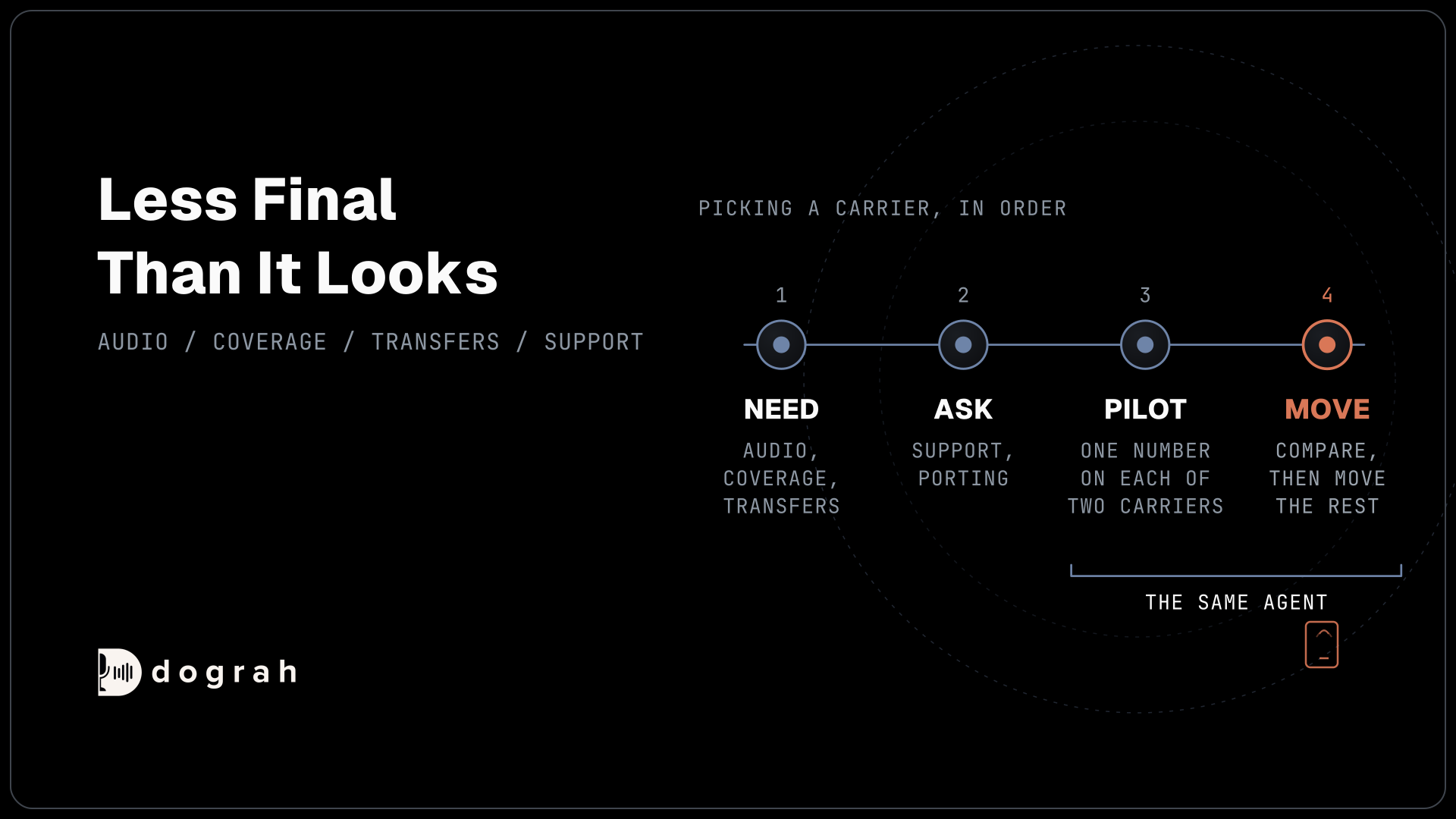
This is also why the choice is less final than it looks. One organization can hold several phone configurations, so you can run one number on each of two carriers against the same agent, compare the calls and the bills, then move the rest.
Questions to ask before you pick
Put four questions to each carrier before you send live traffic. Ask for its support hours and how fast it answers a failed route. Ask how many new calls per second it allows, since an outbound campaign starts many calls at once. Ask what an emergency address costs per number and how porting works if you leave.
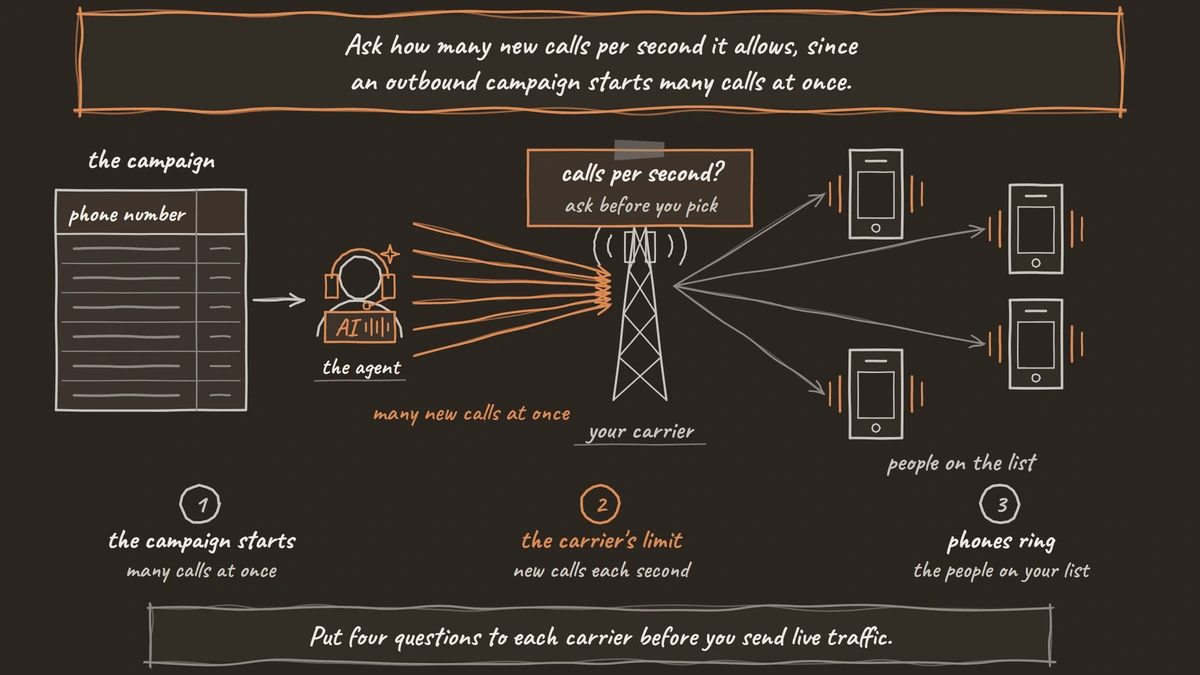
Then run a pilot. Call from a mobile and a landline on each carrier, transfer one call to a colleague and listen to the agent on the handset. Our list of what to check before you switch goes deeper on codecs, fees and porting.
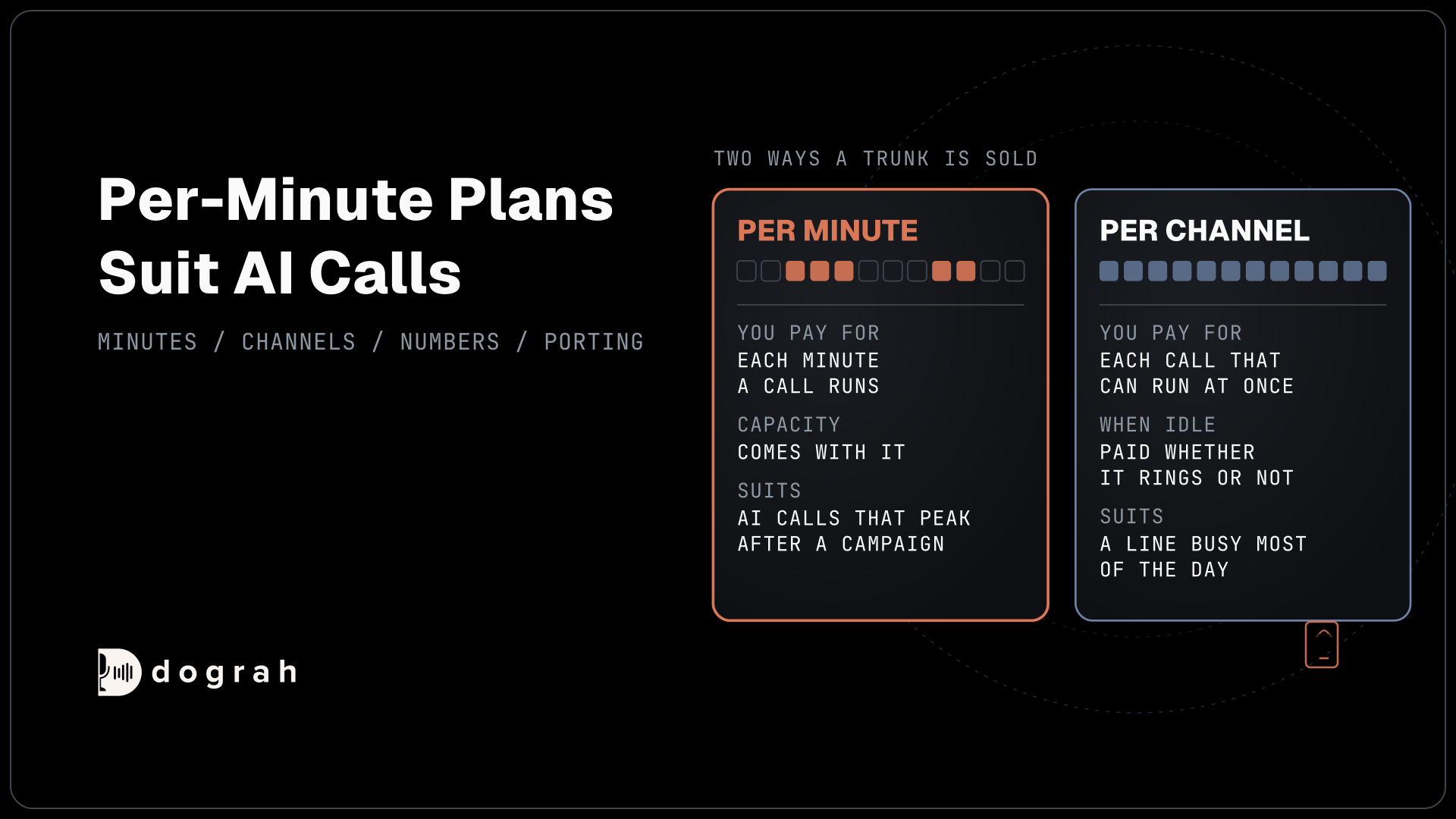
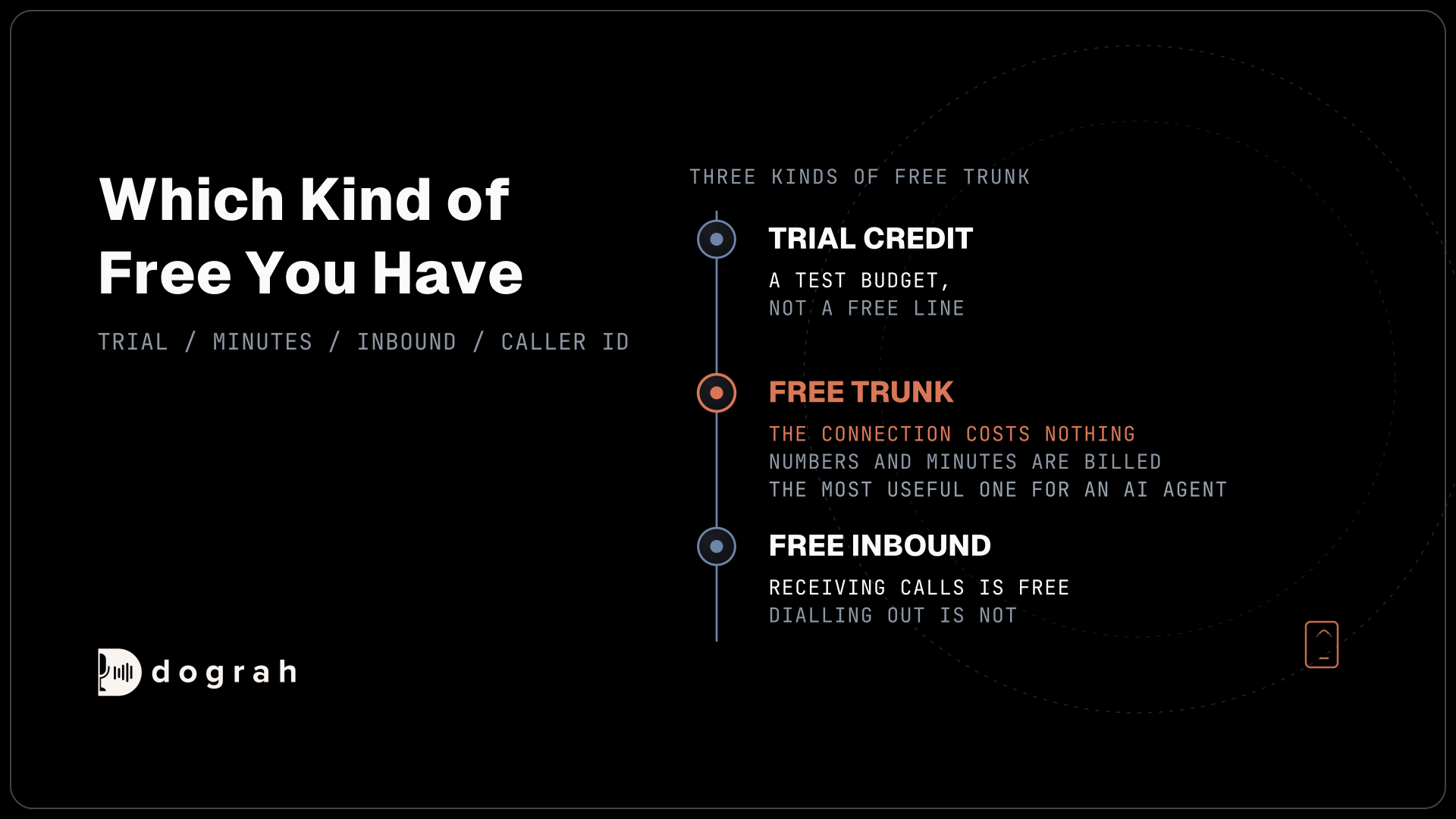
The platform cost stays the same whichever carrier wins. Self-hosted Dograh has no per-minute platform fee, but servers, model keys and phone minutes still cost money. Dograh Cloud charges a 1¢-a-minute platform fee. The carrier bills its minutes and numbers to you directly.
Join the Dograh Community
Dograh is an OSS alternative to Vapi. Join our Slack community for queries, releases, best practices & community interactions.
Glossary
- Provider account
- A carrier account Dograh connects to with the carrier's own credentials, with no SIP setup on your side. Twilio, Telnyx, Plivo, Vonage, Exotel and Vobiz connect this way.
- Managed SIP
- The SIP domain every Dograh organization gets for connecting any carrier's trunk, in Global, India and UAE regions. Calls from Dograh are identified by source IP, so the carrier must allow Dograh's outbound IP address.
- Secure trunking
- Encryption on a trunk, TLS for the call setup and SRTP for the audio. Twilio, Telnyx and Plivo include it at no charge. Once it is on, Twilio rejects every unencrypted call, so keep it off on a Twilio trunk that Dograh's outbound calls use.
- 16 kHz audio
- Audio measured at twice the rate of a normal phone call. Most phone calls reach an agent at 8 kHz and a browser call at 16 kHz, and Vonage is the only carrier in this list that sends 16 kHz into Dograh.