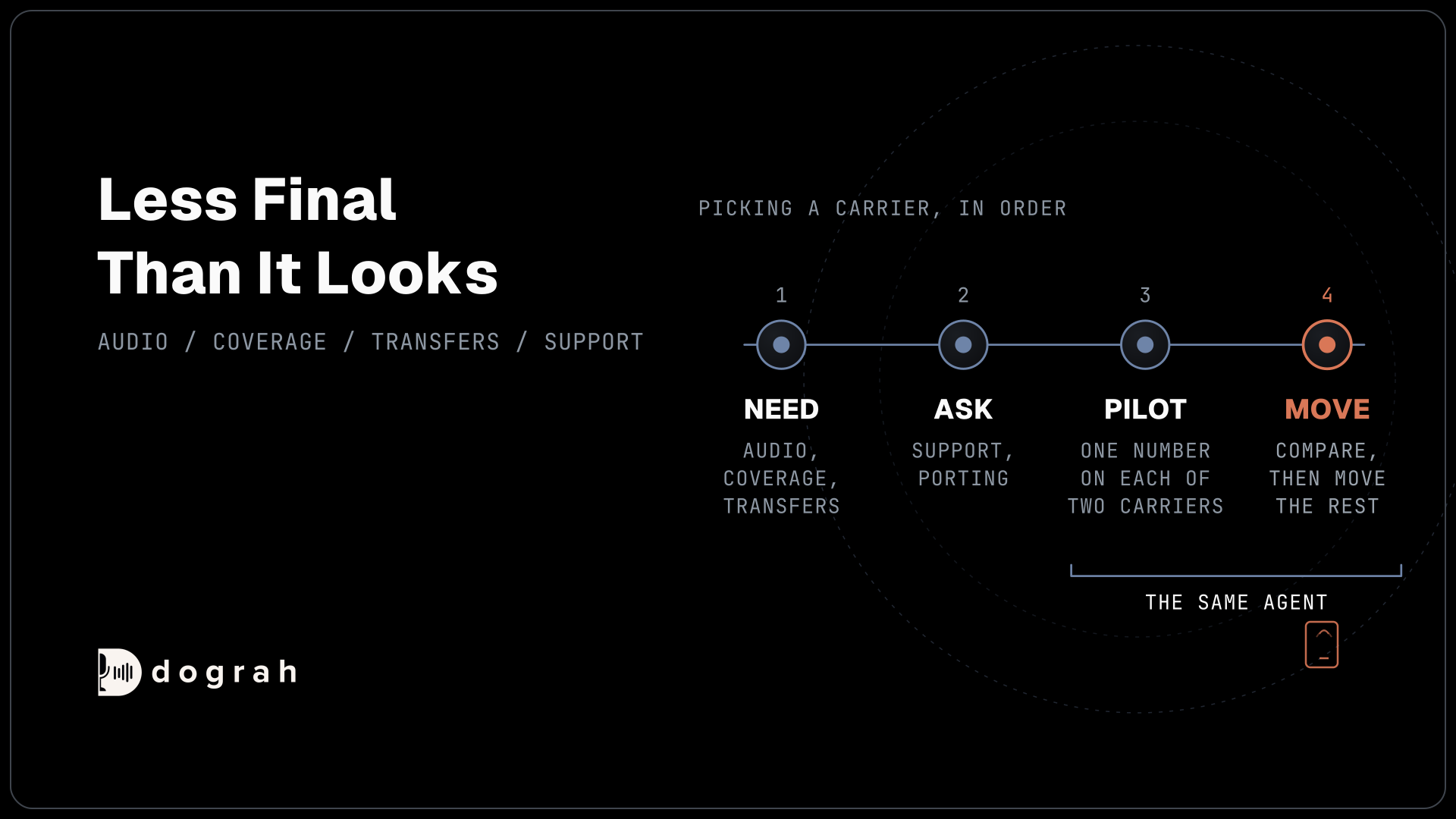

Before you move to a low-cost SIP trunk provider, check its codecs and call quality, coverage in your regions, support hours, number porting, emergency calling and the fees under the per-minute rate. Dograh, the open-source AI voice agent platform we build, keeps the agent the same when the carrier changes, self-hosted or on Dograh Cloud.
Key Takeaways
- A lower rate can mean compressed codecs that speech-to-text hears less clearly.
- A simple number port must finish within one business day.
- In Dograh, a new carrier is a new trunk, not a new agent.
This post is part of our guide to SIP trunk providers, where the rate is one line of several on a trunk bill. Here we go through the checks before moving to a lower-priced carrier, item by item, then how the move itself works in Dograh.
Call quality and codecs
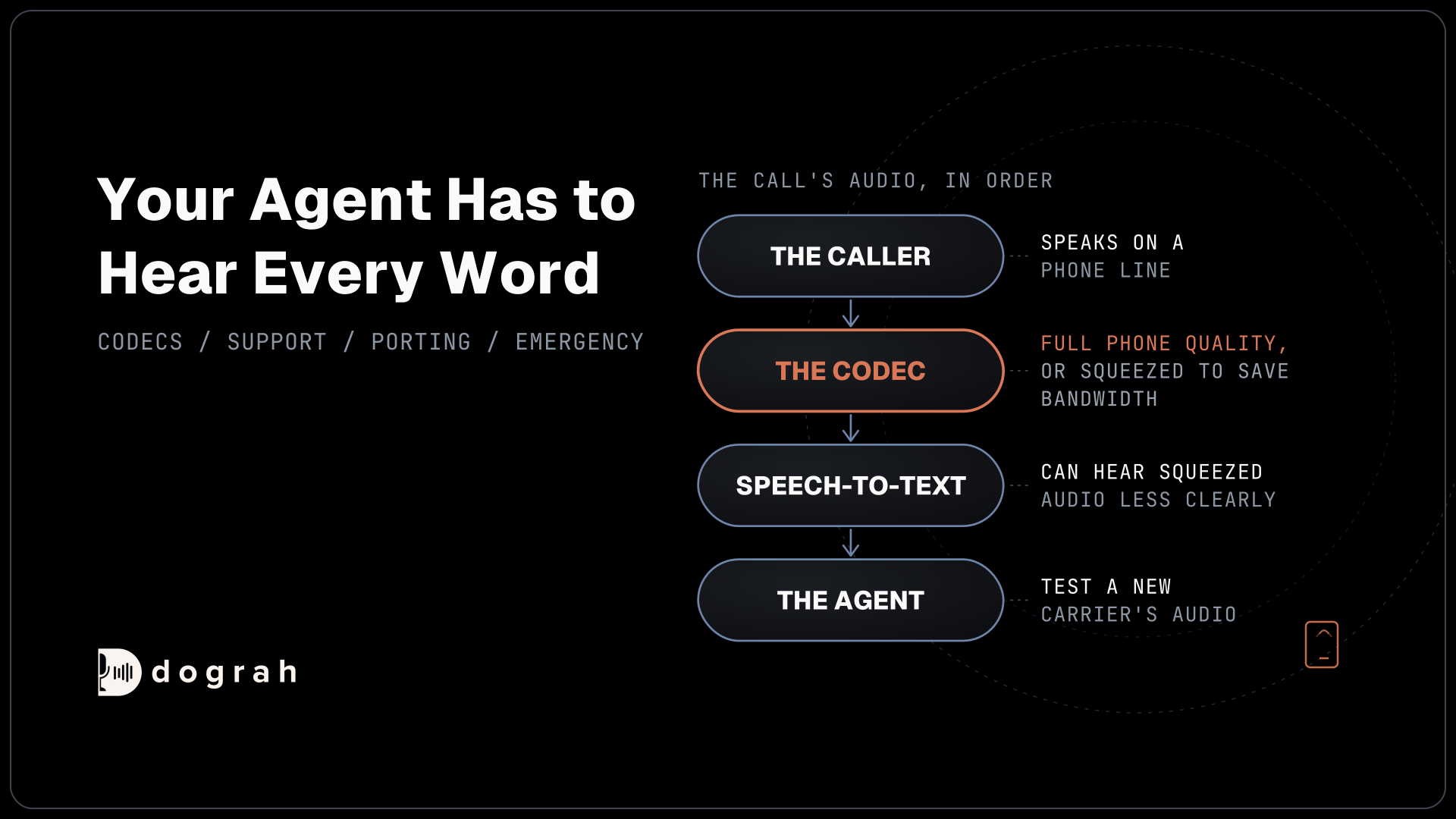
Check what the carrier does to the audio before you look at the price, because your agent has to hear every word. Most trunks carry G.711, sent as PCMU or PCMA, at full phone quality. Twilio's trunk codec list makes those two generally available and puts G.729, Opus and AMR-NB behind its sales team.
G.729 squeezes the audio to save bandwidth, and that compression can hurt speech recognition more than the 8 kHz phone rate itself. How much depends on the speech-to-text model and the phone path, so test the new carrier's audio on your own model before you move. Ask which codec it uses on each route, and whether it falls back to a compressed one when a route is busy.
Plan the bandwidth too. Twilio sizes a trunk at 100 kbps per call at peak, so 20 calls at once need about 2 Mbps. And check encryption, TLS for the call setup and SRTP for the audio. Twilio, Telnyx and Plivo include it at no charge, so a carrier that charges extra for it is a warning sign. The one exception is a Twilio trunk carrying outbound calls from Dograh Managed SIP, where Twilio's Secure Trunking stays off because that leg does not run TLS.
Regions and support hours
Coverage comes next. The carrier must sell numbers in the countries your callers are in, of the type they expect, and carry calls to the places your agent dials. If you use Dograh Managed SIP, pick the region closest to the new carrier, Global, India or UAE, so the call takes the shortest path.
Support hours are the item buyers check last and need first. Ask each carrier when its support desk is open, how it reports a failed route and how fast it answers at night or at the weekend, since an AI agent takes calls at all hours. Ask how many new calls per second the trunk accepts, which matters when an outbound campaign starts.
If a provider account with its own numbers would be simpler than a trunk, our Telephony 101 for voice AI explains when each one fits.
Number porting
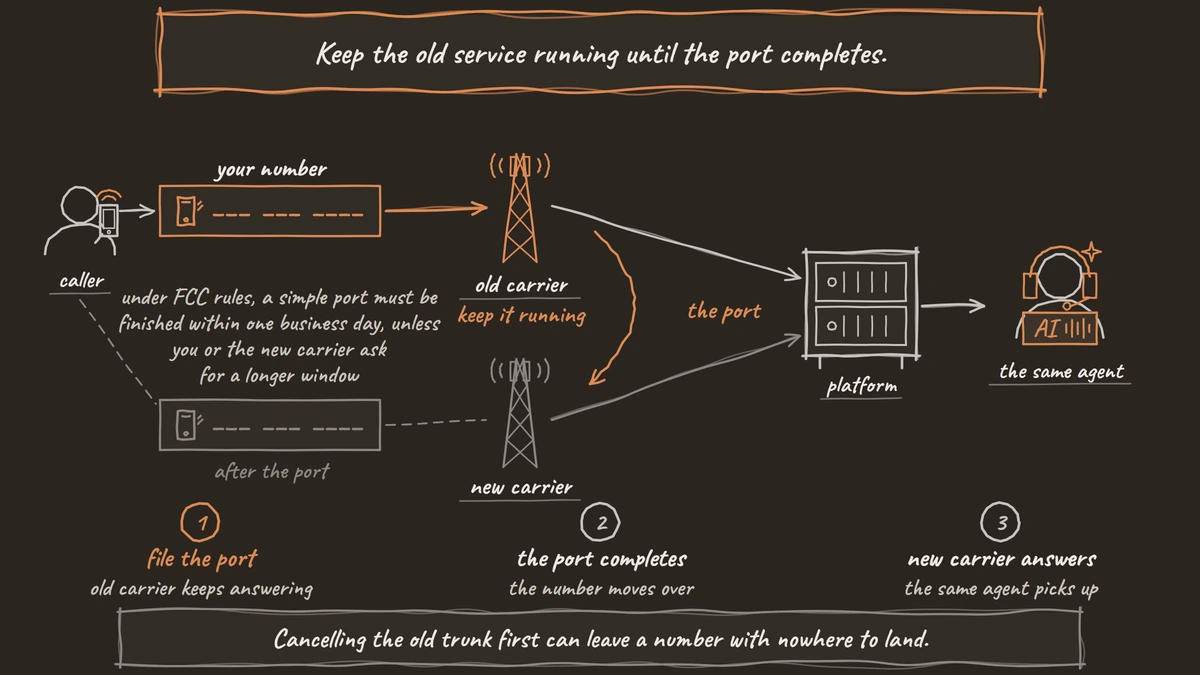
Porting is how your existing numbers move to the new carrier, and the rule on timing is short. Under the Federal Communications Commission's (FCC) number porting rules, a simple port must be finished within one business day, unless you or the new carrier ask for a longer window. A port with many numbers or special features may not count as simple, so ask the new carrier how it will classify yours.
Keep the old service running until the port completes. Cancelling the old trunk first can leave a number with nowhere to land. The large carriers print no porting fee next to their trunk rates, so ask the new carrier for any charge in writing before you file the request.

Open Source Alternative to Vapi / Retell
Self-hosted voice agent platform — no per-minute fees
dograh-hq/dograh
Star on GitHub
Emergency calling
Emergency calling is where a lower-priced carrier can cost you most, because the duty comes from law. Under the FCC's 911 rules, an internet phone provider must send every 911 call to the right emergency centre with the caller's number and location, and must tell customers plainly when 911 may not work or may be limited. Kari's Law Act of 2017 and the RAY BAUM'S Act of 2018 add rules for office phone systems. Anyone must be able to dial 911 directly, with no prefix such as 9, the system should alert someone on site where it can, and the call must carry a dispatchable location, one responders can act on.
Ask the new carrier how it handles 911 on your numbers and what it charges. Twilio charges $0.75 a month per number for an emergency address and $75 for a 911 call from a number with none, and Telnyx's SIP trunking prices list emergency calling at $1.50 a month per number. A carrier with no emergency address option is generally not one to put real callers on, and it is worth confirming your own duties with counsel before the move.
Fees under the per-minute rate
The fees under the rate decide whether a lower rate really saves money. Plivo charges $0.005 for each caller-name (CNAM) lookup and bills US calls in 6-second steps. Telnyx adds surcharges when calls per second go above set levels, and its Growth plan carries a $2,000 monthly minimum spend. Vobiz charges a one-time setup fee equal to one month's number rental.
US carriers also add a regulatory recovery line, because they pay into the Universal Service Fund on their interstate and international revenue. USAC's contribution factor is reset by the FCC every quarter, and it reached 42% in late 2026, applied to the carrier's revenue, not your bill. Ask each carrier what the line came to on a typical customer's last invoice.
To compare whole bills instead of rates, our post on SIP trunk pricing prices one month of AI calls on three carriers, fees included.
Moving the trunk in Dograh
In Dograh, a new carrier is a new trunk, and the agent does not change. On Dograh Managed SIP, you add a second outbound trunk for the new carrier next to the old one, which also gives you a failover while you test. Each trunk keeps its own region and lists the numbers that dial out over it.
Three carrier-side checks come with it. Outbound calls from Dograh are identified by source IP, so the new carrier must accept calls from an allowed IP address. Every outbound call needs a caller ID the carrier owns, or the carrier rejects it. And each moved number needs its Inbound workflow set to the agent that should answer.
Check transfers if the new carrier is a direct provider instead of a trunk. Transfer Call works on Twilio, Telnyx, Plivo, any trunk through Cloudonix and Asterisk ARI, so keep the agent's handoffs on one of those routes. Everything else carries over, and the prompts, the call traces and the QA scores stay with the agent.
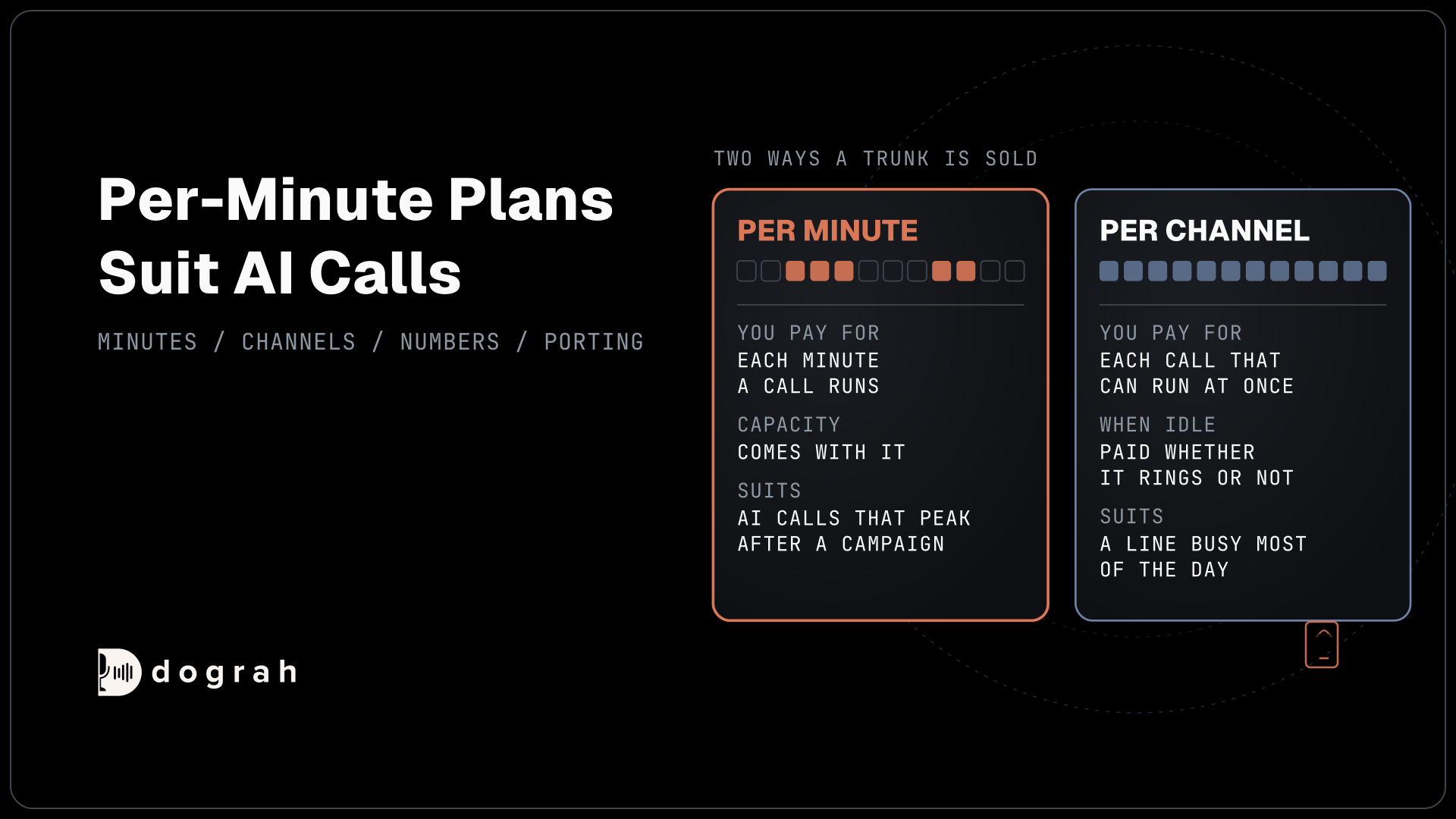
The platform line does not move either. Self-hosted Dograh has no per-minute platform fee, but servers, model keys and phone minutes still cost money. Dograh Cloud charges a 1¢-a-minute platform fee. For a short list of carriers worth moving to, see the best SIP trunk providers for AI voice agents.
Join the Dograh Community
Dograh is an OSS alternative to Vapi. Join our Slack community for queries, releases, best practices & community interactions.
Glossary
- G.729
- A phone codec that compresses audio to use less bandwidth than G.711. Twilio offers it only through sales on its trunks, and the compression can make speech-to-text less accurate, so test it on your own model.
- Simple port
- A number transfer between carriers with no special features or complex account changes. FCC rules require it to finish within one business day unless the customer or new carrier asks for longer.
- Dispatchable location
- A location emergency responders can act on, such as a street address with a floor or room. FCC rules require office phone systems to send one with every 911 call.
- CNAM lookup
- A query that finds the caller name for an incoming number. Some carriers charge for each lookup, Plivo $0.005, so it is one of the small fees under the per-minute rate.