
Open-source Plivo alternatives are divided into agent layers that run on any carrier and phone systems you run on your own trunk. For teams that want to own the agent, Dograh, the open-source AI voice agent platform, runs on Plivo itself, on your servers or Dograh Cloud. Asterisk and FreeSWITCH are the phone systems, and both still need a carrier.
Key Takeaways
- No open-source project replaces Plivo's phone network, so a carrier always stays.
- Dograh replaces Plivo AI Agents while your Plivo numbers keep working.
- Asterisk and FreeSWITCH replace call control, yet still need a SIP trunk.
Plivo is a carrier with an AI Agents add-on, and open source can replace the agent and call control, never the phone line. We compare the options in one table, show how Dograh runs the agent on Plivo numbers, then we talk about what self-hosting takes and how to move.
Open-source Plivo alternatives in one table
Plivo does two jobs for a voice agent, and each open option takes over part of one. Plivo carries the call on its network, and Plivo's AI Agents run the conversation on top as closed code in Plivo's cloud, with only the Plivo CLI published as open source.
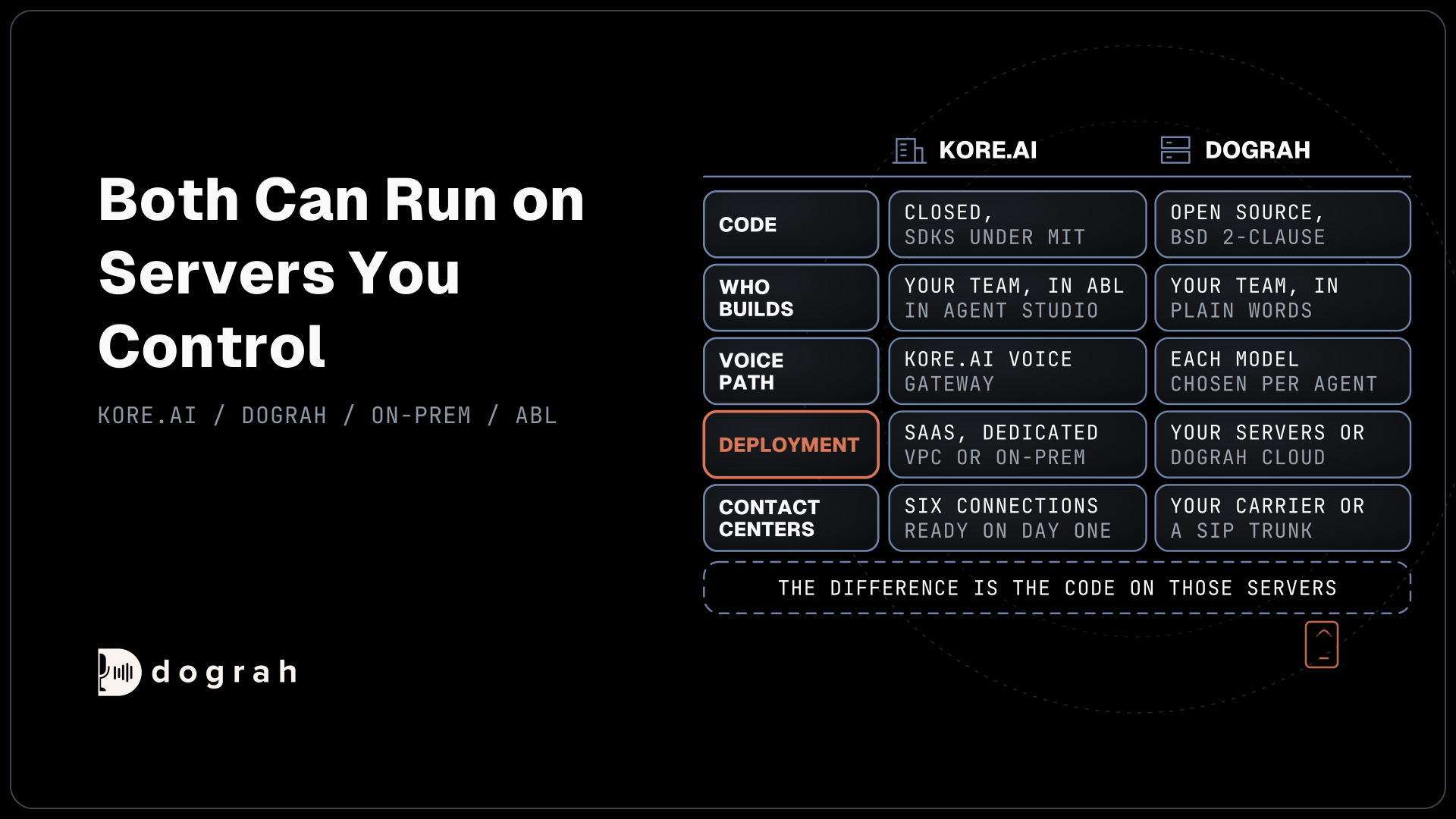
| Option | License | What it replaces | Carrier still needed | Where it runs | Transfer to a person | What your team builds |
|---|---|---|---|---|---|---|
| Plivo (baseline) | Closed. Only the Plivo CLI is open source | Nothing, it is the carrier and the agent | It is the carrier | Plivo's cloud | Transfer to Human included | The agent, in AI Agent Studio or in code |
| Dograh | BSD 2-Clause | Plivo AI Agents | Yes. Plivo, Twilio, Telnyx, Vonage, Exotel, Vobiz, Cloudonix or Asterisk ARI | Your own servers, on-prem on Enterprise, or Dograh Cloud | Transfer Call on Plivo, Twilio, Telnyx, Cloudonix and Asterisk ARI | Nothing to code. Agent Builder or the canvas |
| Pipecat and LiveKit Agents | BSD-2-Clause and Apache-2.0 | Plivo AI Agents | Yes | Your own servers, or each project's hosted cloud | Depends on the phone route your team builds | The agent in code, plus the product around it |
| Asterisk and FreeSWITCH | GPL v2 and MPL 1.1 | Plivo's call control and number routing | Yes, a SIP trunk | Your own servers | In your dialplan | The switch, its dialplan and the trunk setup |
Read the "carrier still needed" column first. Every open row still rents numbers and minutes from a licensed carrier, and only Dograh arrives as a working product, with the builder and phone connections already in place.
Dograh: an open agent layer that runs on Plivo
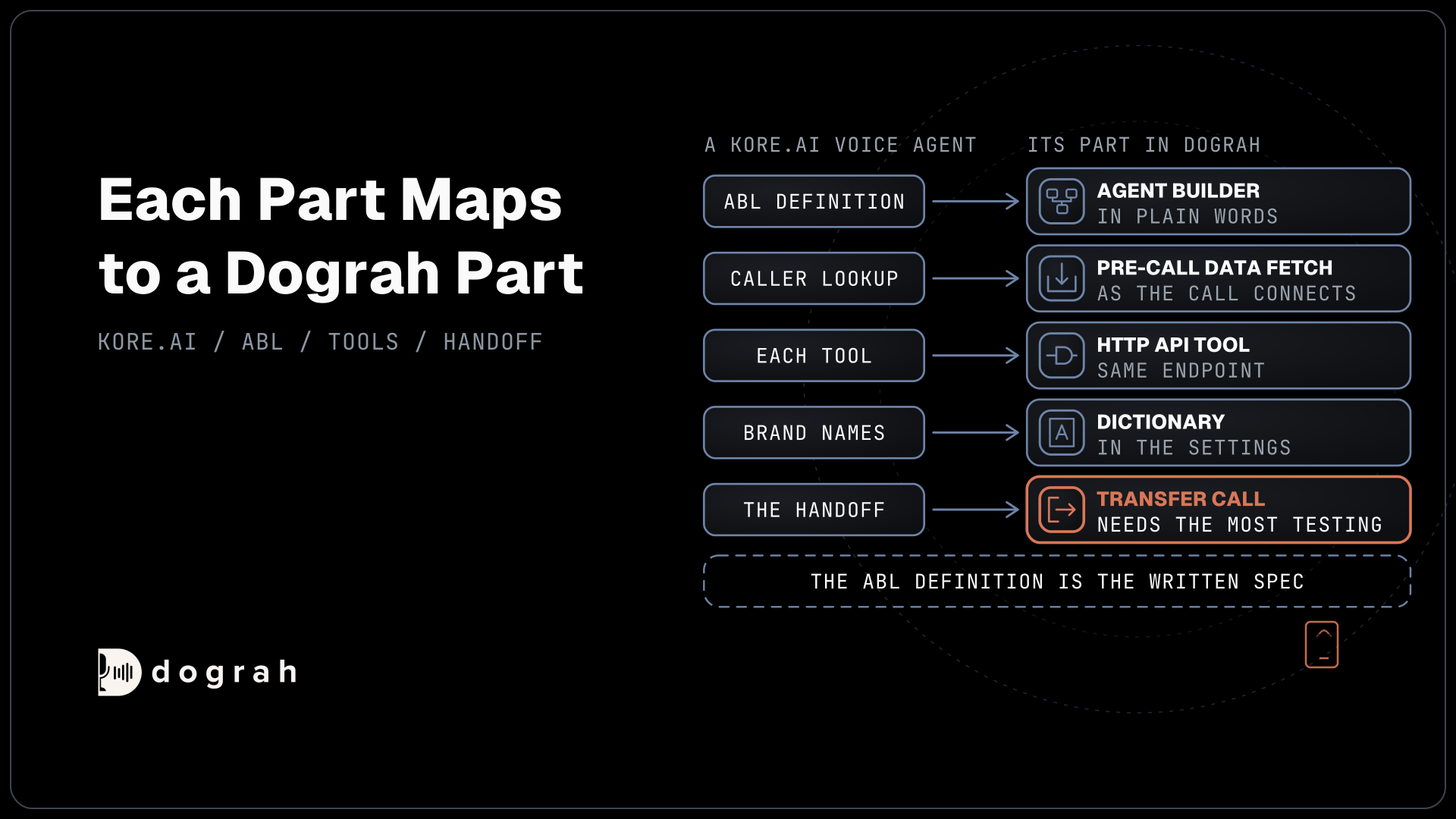
Dograh replaces the part of Plivo that runs the conversation, and Plivo keeps carrying the call. The whole platform sits in its GitHub repository under the BSD 2-Clause license, from the Agent Builder to the phone connections. It sells no phone numbers or minutes, so your Plivo account keeps the numbers and the bill. New agents start in the Agent Builder, where you describe the agent and approve the "Your agent requirements" card before it builds, with a canvas for hand edits.
Connecting Plivo takes your Auth ID and Auth Token under Telephony in the sidebar, and each number then points at an agent through its Inbound workflow, as the Plivo setup steps show. The same agent can answer a Twilio or Telnyx number on the same day. When a caller wants a person, Dograh calls the destination first and connects the caller only when someone answers, and a busy, unanswered or failed attempt hands the call back to the agent.
As the orchestration layer, Dograh runs the call flow, tools and telephony, and the speech and language models sit in a separate layer you choose for each agent. Pick its own models, your provider keys or open-weight models on your own machines. Bring your own key (BYOK) moves the contract to you while the audio still reaches that provider, so the audio stays inside your network only when the models run there too. Plivo AI Agents, by contrast, runs every call through Plivo's cloud.
Hosting choices set the cost. Running Dograh yourself means no per-minute platform fee. You still pay for servers, model keys and phone minutes, and your team looks after the database and upgrades. A self-hosted install runs 10 calls at once by default, a limit you can raise. Support comes from the open-source community, and Enterprise adds custom SLAs. If you would rather not host it, Dograh Cloud runs it for a 1 cent a minute platform fee and includes 10 calls at once, with more on request. Our head-to-head with Plivo sets the two agent layers next to each other.

Open Source Alternative to Vapi / Retell
Self-hosted voice agent platform — no per-minute fees
dograh-hq/dograh
Star on GitHub
Open frameworks: Pipecat and LiveKit Agents
Pipecat and LiveKit Agents replace the same agent layer, as code your developers write. Pipecat is a BSD-2-Clause Python framework maintained by Daily and the community, and Dograh itself runs on a fork of it. LiveKit Agents is Apache-2.0 and runs agents on LiveKit's media server, with SIP trunks for phone calls.
Both can run on Plivo numbers, and the phone route decides what you get. Pipecat's telephony guide lists Plivo among its WebSocket providers and says those routes carry no transfers or reconnects, so a call that needs a person moves to SIP or Daily's phone service. Either framework is a sound base, but a production phone agent still needs an editor, outbound lists, call history, QA and a deployment your team builds. Our comparison of open-source voice AI frameworks covers each one in depth.
Open phone systems, and why a carrier always stays
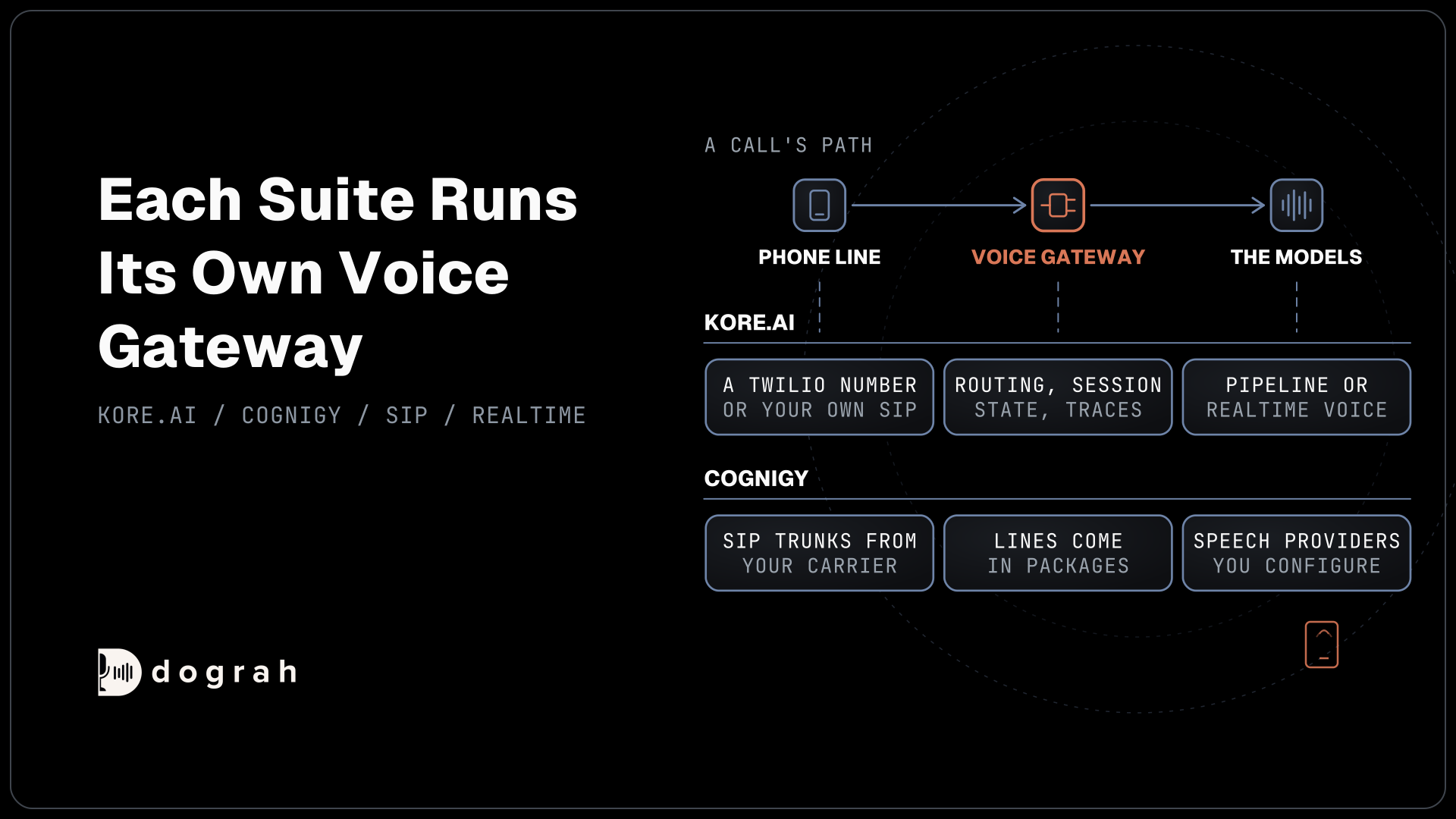
Asterisk and FreeSWITCH replace the other half of Plivo, the programmable voice your app drives through Plivo's API. Both are mature open-source switches, Asterisk under GPL v2 and FreeSWITCH under MPL 1.1, and both route calls and run IVR menus, with transfers handled in a dialplan you write. Neither one reaches the public phone network by itself. That still takes a SIP trunk and numbers from a licensed carrier, which can be Plivo's own SIP trunking or anyone else's.
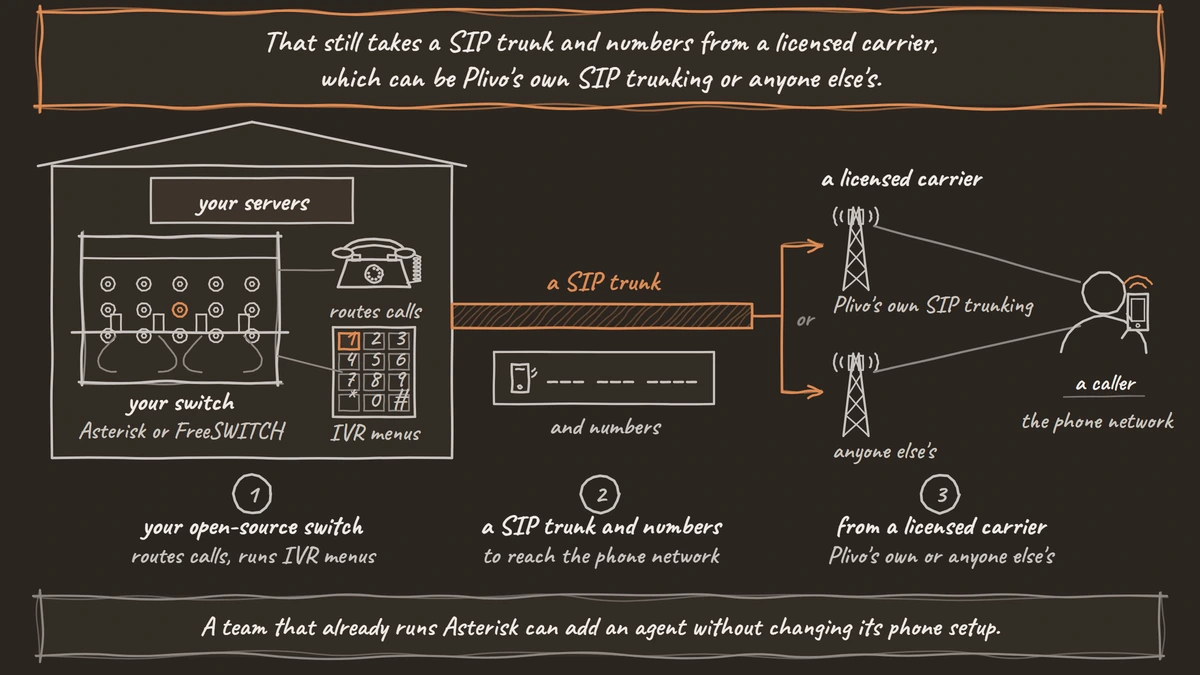
A team that already runs Asterisk can add an agent without changing its phone setup. A self-hosted Dograh install connects to an existing Asterisk PBX through the Asterisk REST Interface (ARI), the PBX keeps its trunks and extensions, and Transfer Call works on that route.
Plivo itself began as open source. Its 2011 launch post called the Plivo framework a free alternative to Twilio, built on FreeSWITCH, and the framework's repository was last updated in April 2017. It is history now, and the point still stands. Open code can run every layer above the network, while the numbers and the connection to the phone network always come from a carrier, whether you keep Plivo or move.
What running it yourself takes
Open code means your team runs the platform, so plan the jobs before the first call. Dograh starts with one Docker Compose file on a server with at least 8 GB of RAM and 4 vCPUs, and no GPU unless that server also hosts the models. Plivo has to reach the install over the public internet, so give it a domain with TLS before you point a number at it.
After launch the work is steady and predictable. Back up the Postgres database that holds runs and transcripts, keep the storage for recordings sized and protected, apply each new image as releases come out, and watch the call traces for slow turns. A self-hosted install runs 10 calls at once by default, so raise that limit before a busy campaign, and check that your Plivo plan allows the same number of calls.
Indian domestic calls add one hosting rule. Plivo's guide to calling in India says the platform running the agent must handle call media on infrastructure in India, so for Indian domestic calls, run Dograh on servers in India and confirm with counsel that your setup meets the rule before launch.
Join the Dograh Community
Dograh is an OSS alternative to Vapi. Join our Slack community for queries, releases, best practices & community interactions.
When staying on Plivo makes sense
Plivo AI Agents suits teams that want the carrier to run everything. Its AI Agent Studio builds a flow from a plain-English description, and simulation testing, Transfer to Human and a knowledge base come inside its per-minute rate. You get one vendor and one bill for the phone line and the agent, plus WhatsApp and chat from the same account. Model choice is open there as well, since the studio takes your own language, speech and voice providers, along with OpenAI Realtime and Gemini Live.
If nobody on your team wants to run a server, apply upgrades or own a database, that trade is worth a lot. Our breakdown of Plivo pricing covers what the AI Agents rate and the telephony lines add up to. Staying also makes sense when the current agent works well and no rule asks for the call data to sit on your own servers.
What moving off Plivo takes
Most teams keep Plivo as the carrier and swap only the agent, which keeps the move small. Your numbers stay in your Plivo account, so callers dial the same numbers and nothing is ported. Write down the current agent's prompts, tools and handoff rules first, since they become the spec for the rebuild.
Then add a Plivo configuration in Dograh, build the agent in the Agent Builder, and point one number's Inbound workflow at it while the rest stay on Plivo AI Agents. A browser test call cannot run a transfer, so try each one over a real phone call. Move the next number only after the first has handled a week of calls without surprises.
Call history needs a plan too. Pull the call logs and recordings you want to keep from your Plivo account before the old agent goes quiet. On the new side, each call keeps its transcript and recording, and a Webhook node can push each call's results to your own systems when it ends.
If you also want to leave Plivo as the carrier, the agent does not change, because each number points at its agent on its own. Our guide to Plivo alternatives compares the carriers and covers moving numbers.
Picking your Plivo alternative
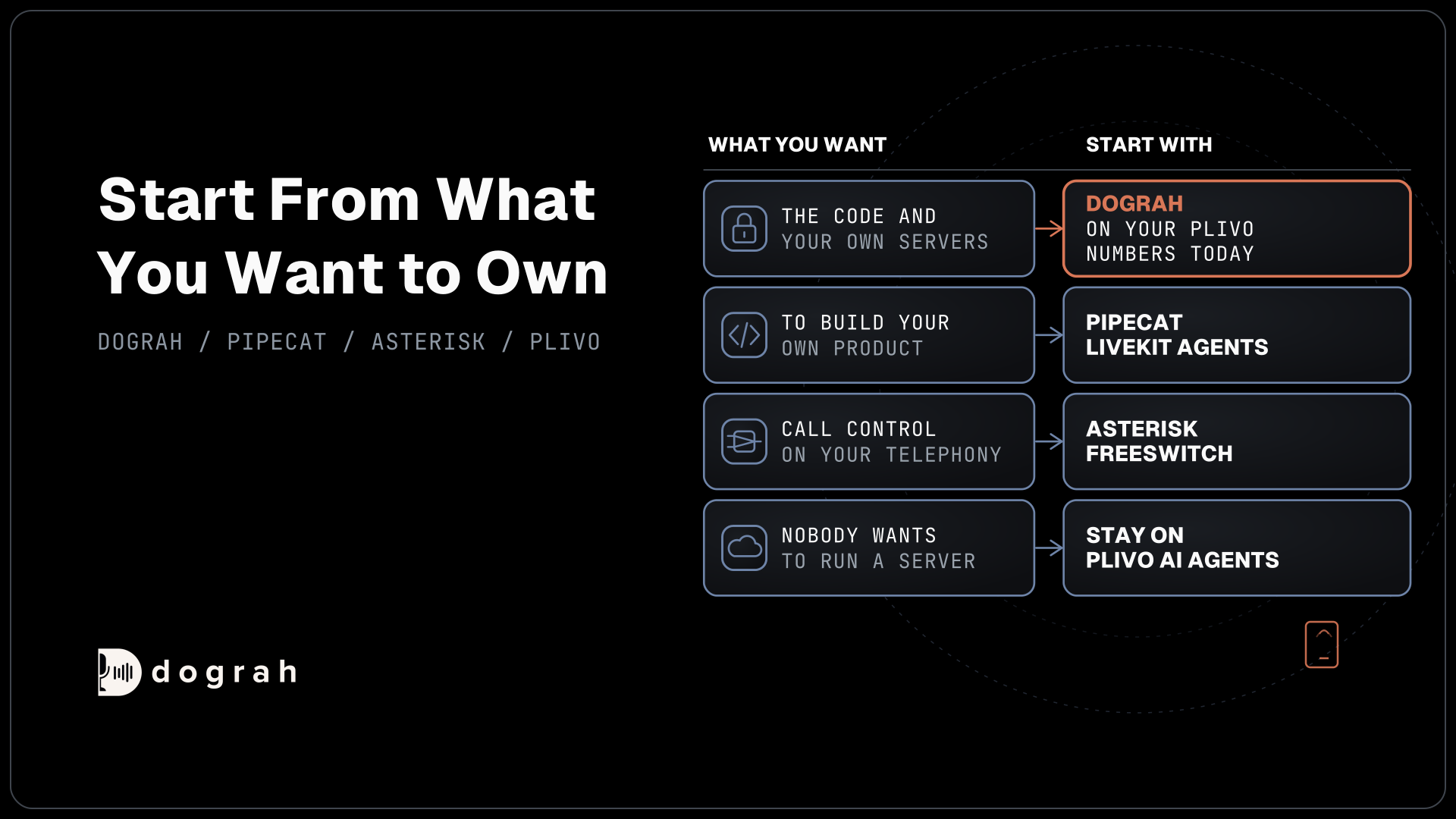
Start from what you want to own. If the answer is the code, your own servers or on-prem inside your network, start with Dograh, which runs on your Plivo numbers today and on whichever carrier comes next, with Enterprise behind it for on-prem. If your developers want to build their own product, Pipecat and LiveKit Agents are solid bases.
If you already run telephony, Asterisk or FreeSWITCH can take over call control while a carrier's trunk keeps the line. And if nobody wants servers, staying on Plivo AI Agents is a fair choice. Whichever way you lean, run one real call flow on a single Plivo number before you move the rest.
Glossary
- Agent layer
- The software that listens to the caller, runs the language model and tools, and speaks the reply. Plivo AI Agents and Dograh both sit here, on top of the carrier.
- SIP trunk
- A connection from a carrier that carries calls between your phone system and the public phone network. Asterisk and FreeSWITCH need one to reach real phone numbers.
- Asterisk REST Interface (ARI)
- Asterisk's API for handing calls to an outside application. A self-hosted Dograh install uses it to answer calls from an existing Asterisk PBX.
- Bring your own key (BYOK)
- Plugging your own model provider account into the platform. The contract and bill are yours, though call audio still reaches that provider.