
Dograh vs Plivo compares two layers of a phone agent. Plivo is a carrier that sells numbers and minutes, with an AI Agents add-on at $0.03 a minute plus telephony. Dograh, an open-source AI voice agent platform, is the agent layer for teams that want to own it, and it runs on Plivo numbers.
Key Takeaways
- Plivo bills its minutes and numbers whichever agent runs on the call.
- Plivo's AI Agents cost $0.03 a minute, with telephony billed separately.
- Plivo's own agents suit teams happy with a hosted agent on US or Indian numbers.
Plivo carries the call and can also run the agent, while Dograh is an open-source platform for building and running the agent itself. The two also work together, since Dograh can run on Plivo numbers. This post sets them side by side so you can see who builds the agent, where call data sits and what each one bills. The last section covers when Dograh fits.
Dograh vs Plivo at a glance
Plivo and Dograh meet at one point, the agent that talks to the caller, and the rest of each product sits on a different layer. Each row below compares Plivo's AI Agents and the carrier around them with Dograh on the same question.
| Row | Plivo | Dograh |
|---|---|---|
| What it is | A carrier with an AI Agents add-on | The agent layer, which runs on a carrier |
| Code | Closed. Only the Plivo CLI is open source | Open source under BSD 2-Clause |
| Who builds the agent | Your team, in AI Agent Studio or in code | Your team, in the Agent Builder or on the canvas |
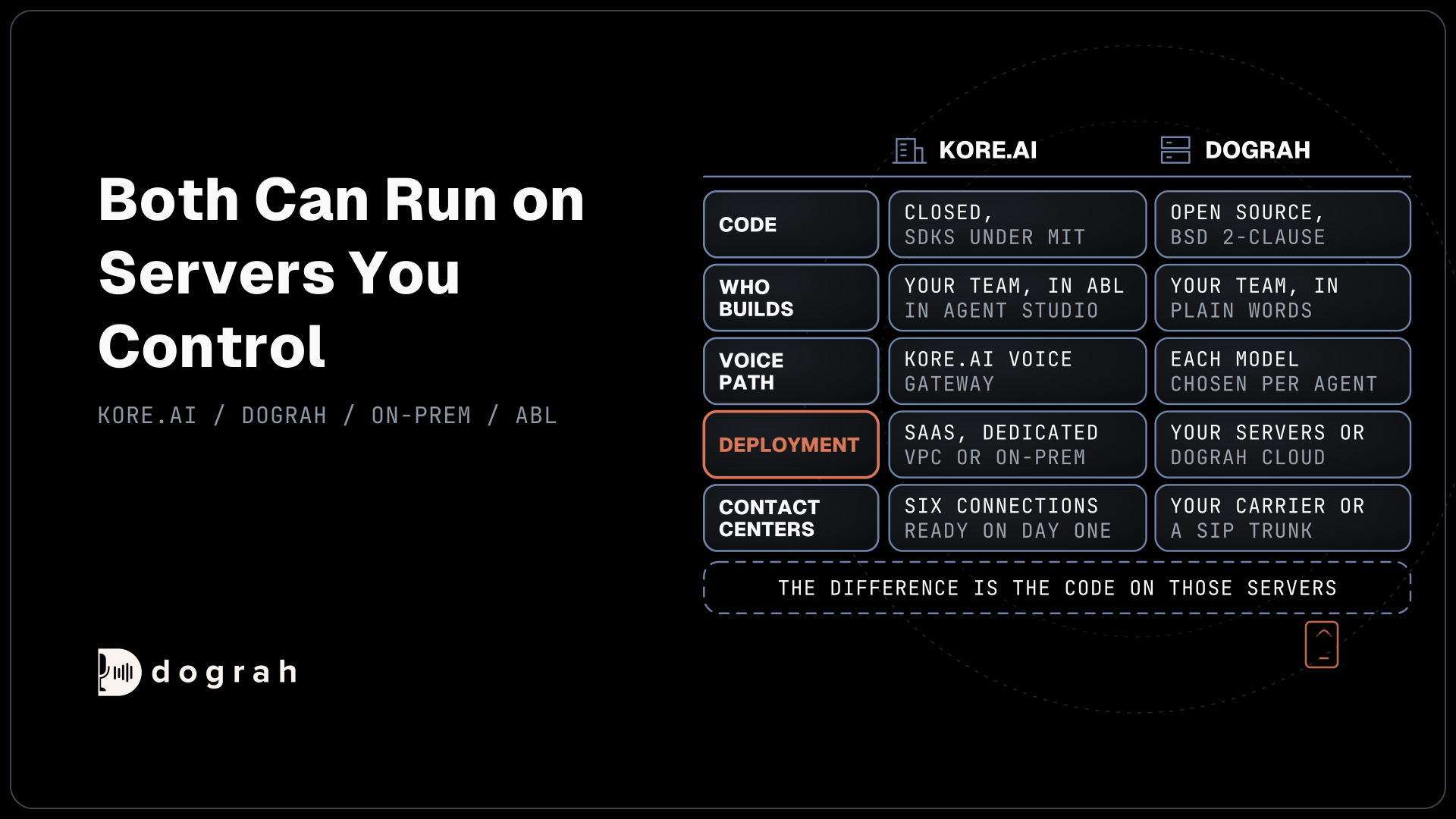
| Where it runs | Plivo's cloud | Your servers, Dograh Cloud, or on-prem on Enterprise |
| Call data | Plivo's cloud, in the data region set for your account | Your own database and storage when self-hosted |
| What it bills | Minutes and numbers, plus $0.03 a minute for AI Agents | Self-hosted, no per-minute platform fee. Dograh Cloud, 1¢/min platform fee |
| Phone numbers | Sells numbers, US and India on self-serve | Uses your numbers on Plivo, Twilio, Telnyx, Vonage, Exotel, Vobiz, Cloudonix and Asterisk ARI |
| Transfer to a person | Transfer to Human, included | Transfer Call on Plivo, Twilio, Telnyx, Cloudonix and Asterisk ARI |
| Models | Plivo's managed stack, or your own LLM, STT and TTS | Dograh's models, your own keys, or open-weight models you host |
| Texts and chat | Voice, SMS, WhatsApp and chat agents | Voice calls and a web widget. Texts go through your own provider |
| Compliance papers | BAA, HIPAA and SSO on Enterprise | No BAA with Dograh needed when self-hosted. SSO on Enterprise |
| Calls at once on self-serve | 50 on Pay as you go | 10 on Cloud pay as you go, 10 by default self-hosted and adjustable |
Who builds the agent
On both products your own team builds the agent, and the tools differ more than the idea. Plivo's AI Agents offer two paths. Developers use streaming APIs, SDKs and the Plivo CLI, or bring a framework such as Pipecat or LiveKit, while others describe the agent in plain English in AI Agent Studio and Vibe Agent builds the flow.
Plivo then tests and ships the agent from the browser. Simulation Testing is included in the per-minute rate, and the studio can put one agent on voice, chat, SMS and WhatsApp at once. Models are open to choice there, with Plivo's own speech models or your own providers, and OpenAI Realtime and Gemini Live for speech-to-speech.
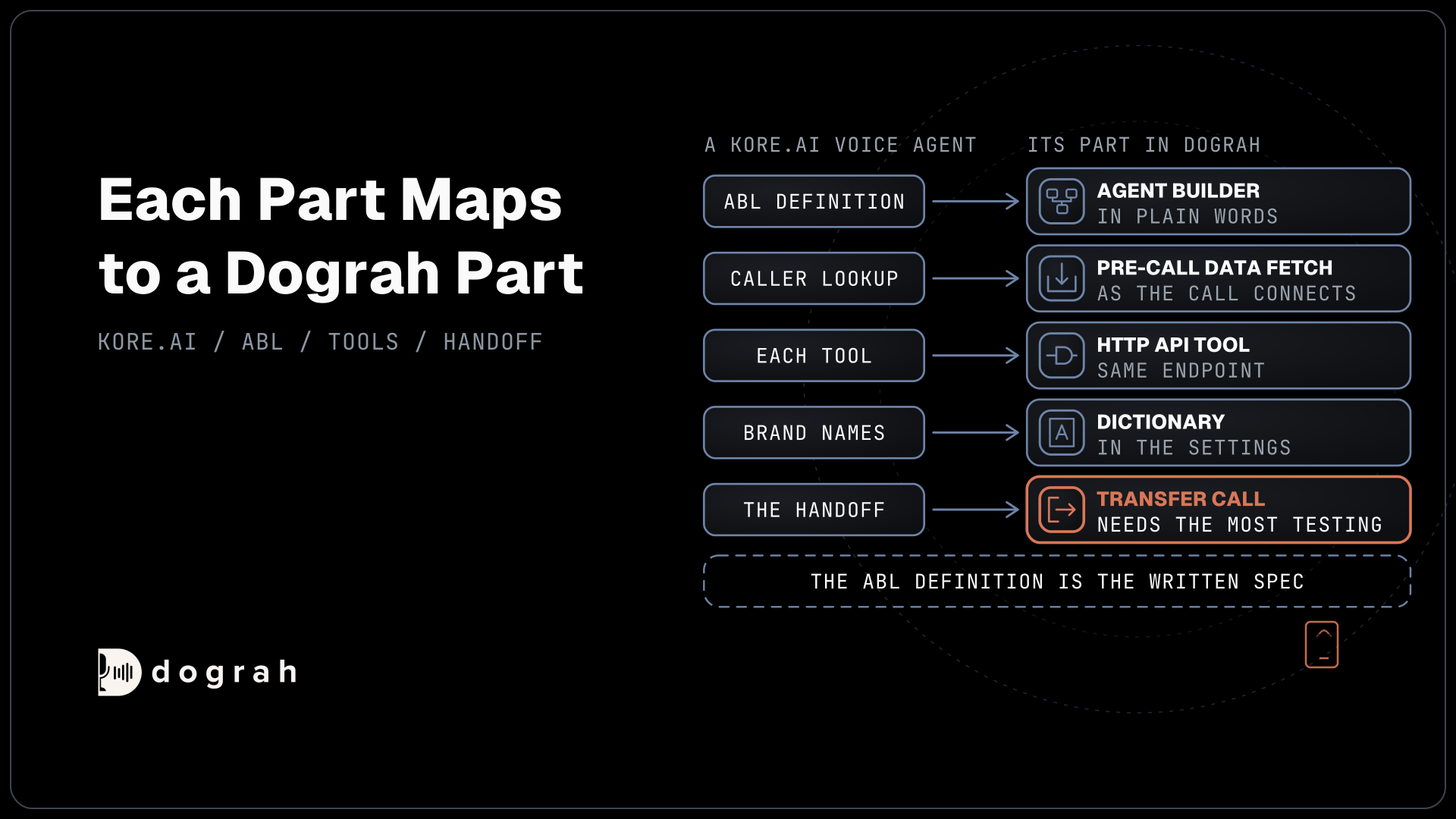
In Dograh you start on the "Create an agent" page, describe the agent in plain words, approve the "Your agent requirements" card and let the Agent Builder build it. The editor's tabs are Builder, Canvas, Model, Variables and Settings, so you can keep chatting changes or edit the canvas by hand, and edits stay in a draft until you publish. An MCP server lets an AI assistant create and edit agents too.
The difference that lasts is the code. Dograh's whole platform sits in its GitHub repository under the BSD 2-Clause license, so your team can read it, change it and run it, while Plivo's agent platform is closed apart from the CLI.

Open Source Alternative to Vapi / Retell
Self-hosted voice agent platform — no per-minute fees
dograh-hq/dograh
Star on GitHub
Where each one runs and where call data sits
Plivo runs its agents in its own cloud, and your account's data region decides where call data is handled. The region is chosen at signup and cannot be changed later. Plivo's agent pages describe the product and its models, so ask Plivo where transcripts and recordings from AI Agents are stored and for how long.
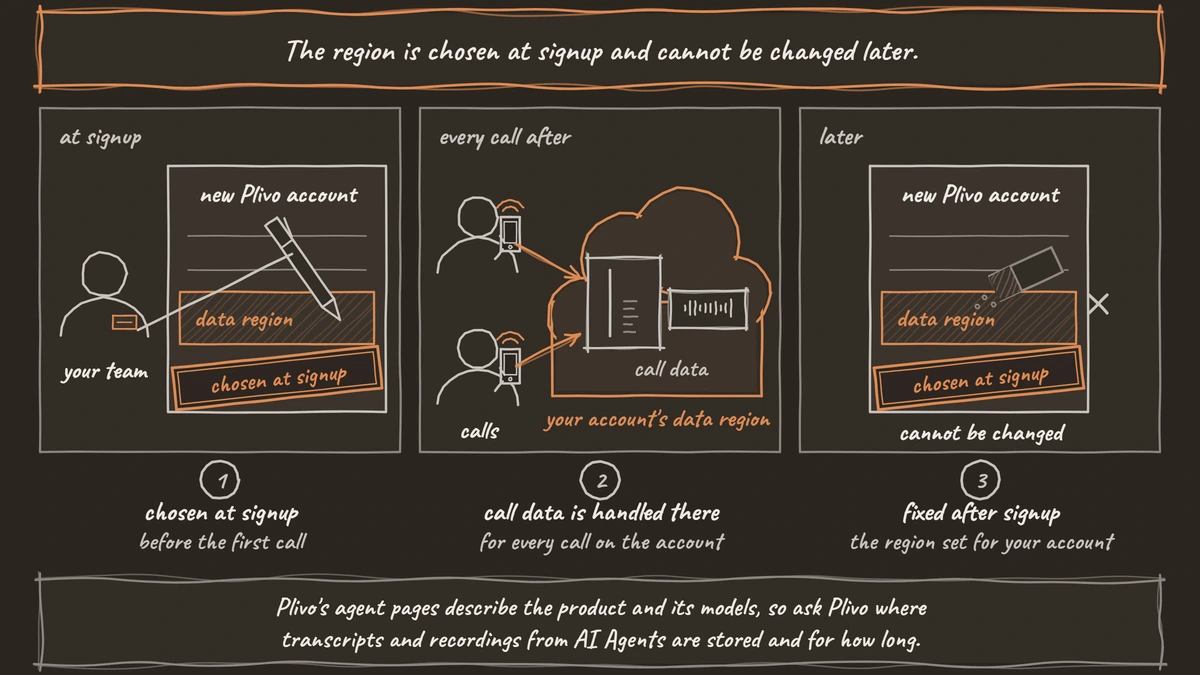
India shows how much the hosting choice matters. Plivo's guide to calling in India says Indian domestic calls need an account in the India region and an agent platform that terminates SIP and media on infrastructure in India. For Indian domestic calls, run Dograh on servers in India, and confirm the setup with counsel before you launch.
Dograh runs where you put it. You can self-host it with Docker Compose on your own servers, use Dograh Cloud, or take on-prem and private-cloud deployment on the Enterprise plan. Self-hosted, recordings and transcripts sit in your own database and storage.
Models are the second half of the data question. Dograh is the orchestration layer that runs the call flow, tools and telephony, and you choose the speech and language models for each agent. Bringing your own key (BYOK) moves the model contract to you while the audio still reaches that provider, and the audio stays inside your network only when open-weight models run on your servers too.
What each one bills
Plivo bills two things, the carrier lines and, if you use it, the agent. The carrier lines are minutes by direction and number type plus monthly number rental, and Plivo's pricing page lists AI Agents at $0.03 a minute excluding telephony, covering voice models, transcription and orchestration. Pay as you go covers the US and India up to $2,500 a month, and Enterprise starts at $1,000 a month.
The Plivo lines stay the same whichever agent answers, so the comparison is only the agent line. Running Dograh yourself means no per-minute platform fee. You still pay for servers, model keys and phone minutes, and your team looks after the database and upgrades. Support comes from the open-source community, and Enterprise adds custom SLAs. If you would rather not host it, Dograh Cloud runs it for a 1 cent a minute platform fee, and your model keys bill on their own accounts either way.
On a month of 8,000 minutes, Plivo's AI Agents add $240 and Dograh Cloud adds $80, each on top of the same $57.50 Plivo carrier line. Our breakdown of Plivo pricing prices every line of that month.
Transfers, texts and channels
Both products hand a caller to a person, and they do it in different ways. Transfer to Human is included in Plivo's AI Agents rate. In Dograh, Transfer Call works on Plivo, as on Twilio, Telnyx, Cloudonix and Asterisk ARI, and Dograh calls the destination first and connects the caller only when someone answers. A no-answer, busy or failed attempt comes back to the agent and the call continues.
Channels are where Plivo reaches further. Plivo's agents can answer SMS, WhatsApp and chat from the same studio as voice. Dograh agents take phone and browser calls and can sit on a website widget, and callers answer by voice, while texts go out through your own provider via an HTTP API tool. That provider can be Plivo, whose Enterprise plan includes SMS and WhatsApp.
Join the Dograh Community
Dograh is an OSS alternative to Vapi. Join our Slack community for queries, releases, best practices & community interactions.
Running Dograh on Plivo numbers
The two products combine on one Plivo account, which is the most common way teams use them together. Under Telephony in the sidebar, Add configuration takes your Plivo Auth ID and Auth Token, and an optional Application ID, which Dograh creates for you when you leave it blank, as the Plivo setup guide shows.
Each number is then added with Add phone number and pointed at an agent through its Inbound workflow, and Dograh checks that your Plivo account owns the number before it saves it. Calls stream as 8 kHz audio over Plivo's audio stream, so Plivo bills the same Voice API rates it always does.
Because the agent sits above the carrier, it survives a carrier change. The same agent can answer a Plivo number and a Twilio number on the same day. Our guide to Plivo alternatives covers when another carrier fits better.
Where Plivo wins
Plivo is the stronger pick for a team that wants one vendor for everything on the call. The phone line and the agent come on one bill from one company, and there are no servers to run. The no-code studio with Vibe Agent, Simulation Testing, Transfer to Human and the knowledge base all come inside the $0.03 rate.
It also reaches further on its own. One agent can answer voice, SMS, WhatsApp and chat, Pay as you go allows 50 calls at once, and Enterprise adds a BAA from the same company that carries the call. Plivo states voice-to-voice latency under 500 ms for its full stack, so test that figure on your own calls.
Plivo's own agents are enough for a team already on Plivo numbers in the US or India that wants a hosted agent and is fine with Plivo holding the call data. If nobody on the team wants to own a server, that trade is worth a lot.
When Dograh fits
Dograh fits when you want to own the agent layer. That means open code you can audit and change, running on your own servers or on-prem, keeping recordings and transcripts in your own storage, and choosing any model, including open-weight models on your machines.
It also fits a team that wants the agent to outlive its carrier, since the same agent runs on Plivo today and on Twilio, Telnyx or your own Asterisk tomorrow. Our post on the open-source alternative to Plivo covers the self-hosting work and the move.
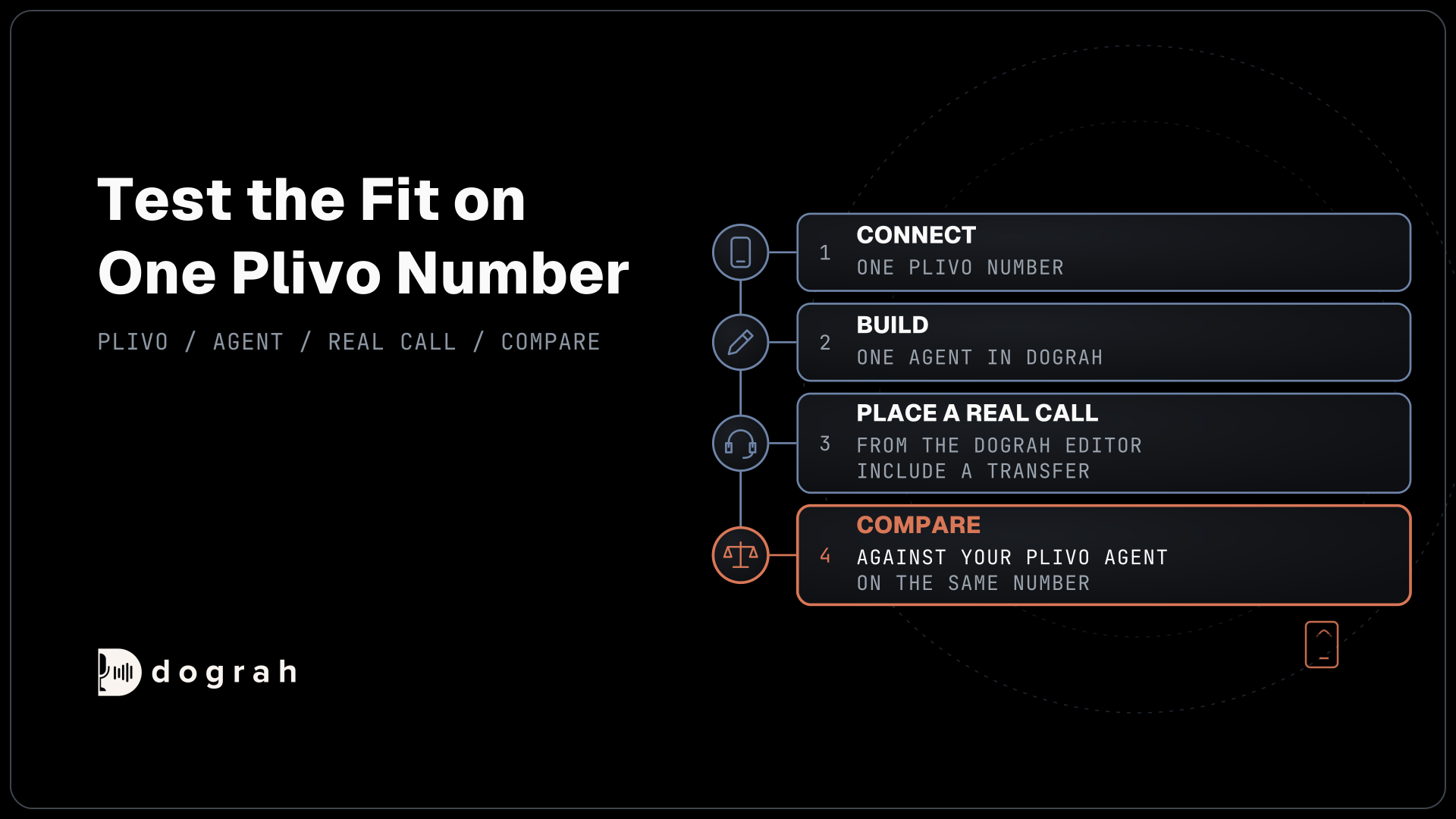
To test the fit, connect one Plivo number, build one agent and place a real call with the editor's Phone Call button. Include a transfer in that test, since browser test calls cannot run one, and then compare the call against your Plivo agent on the same number.
Glossary
- Agent layer
- The software that runs the conversation on a call, from listening and replying to calling tools and transferring. Dograh is an agent layer, and Plivo sells one as AI Agents.
- Carrier
- The company that provides phone numbers and connects calls to the phone network. Plivo is a carrier, and an agent layer runs on top of one.
- Data region
- The location where a Plivo account's data is handled, chosen at signup and fixed after. Indian domestic calls need an account in the India region.
- Bring your own key (BYOK)
- Using your own account with a model provider inside a platform. It moves the contract to you, while the call audio still reaches that provider.