
Open-source LiveKit alternatives are divided into another framework you still build on and an open-source platform that ships the phone product. Dograh is that platform, with the builder, telephony, call history and QA in one install you self-host or run on Dograh Cloud. Pipecat is the closest framework swap for teams that want to keep writing code.
Key Takeaways
- LiveKit Agents is Apache-2.0, but its turn detector has its own license.
- Self-hosted LiveKit for phones adds a SIP service, Redis, TURN and agent servers.
- Dograh ships call history, campaigns and QA inside one Docker Compose install.
LiveKit Agents is already open source, so the useful question is what you run and write around it for phone calls. We set the options in one table, show what Dograh ships, compare the two self-hosted install lists, then the licenses, when LiveKit fits better and what moving takes.
What LiveKit already gives you as open source
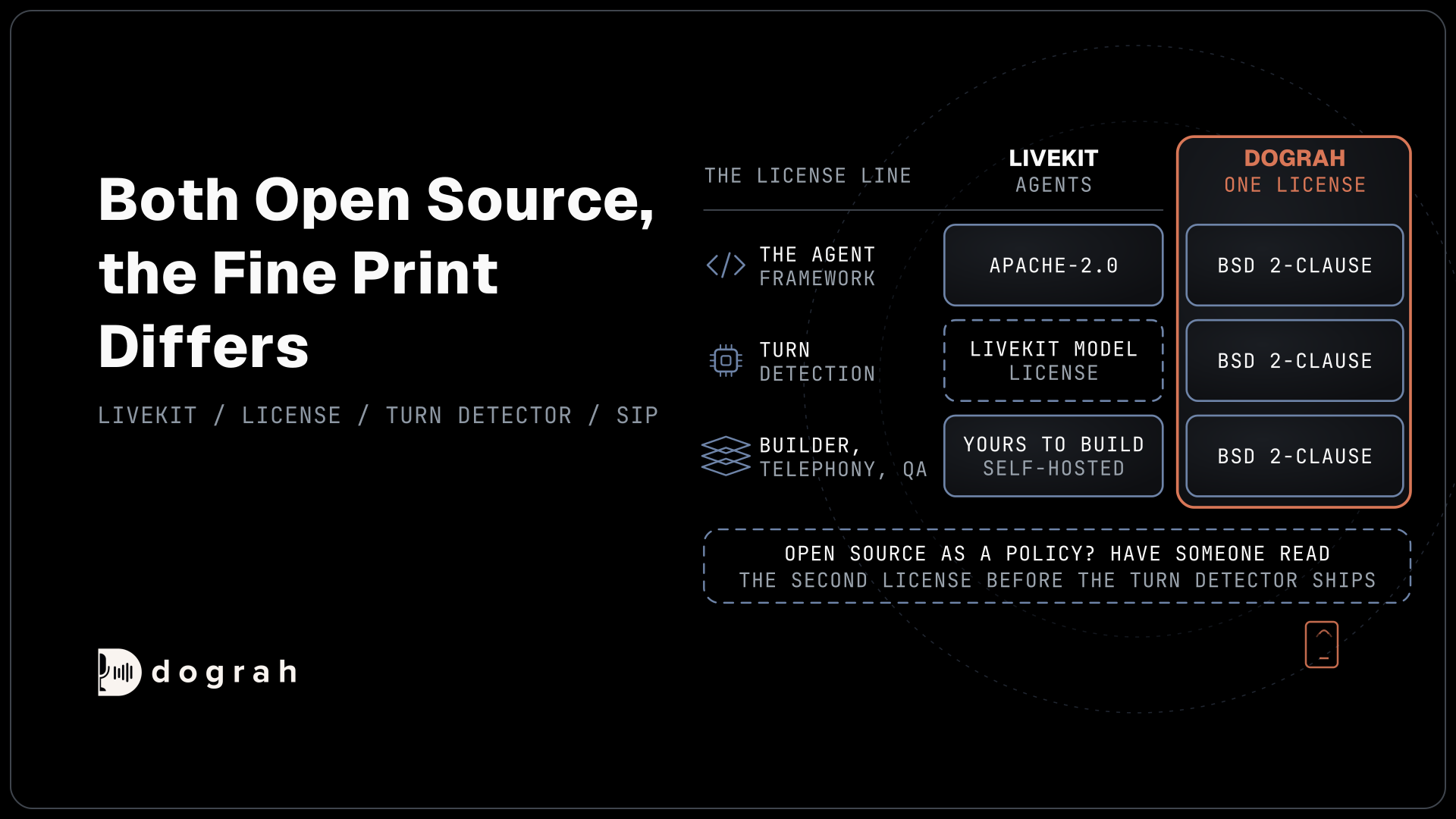
LiveKit is open at the core. In its own words, "The LiveKit Agents framework and LiveKit media server are both completely open source", and both run on your own servers. The framework is Apache-2.0, and its turn detection models ship under a separate LiveKit Model License.
What it gives you is code to build an agent with. A phone team needs more than that before the first real call, such as a way to wire the phone line and somewhere to keep each call's transcript and recording. It also needs outbound lists with calling hours and retries, a screen where non-developers change prompts, and QA on live calls. On self-hosted LiveKit those are yours to build, and LiveKit Cloud's phone numbers, Inference and Agent Builder do not come with the self-hosted install.
So switching to another framework moves the same gap to a new codebase. Our guide to LiveKit alternatives covers hosted routes too. This post stays with open source and asks what each install actually contains.
LiveKit and the open-source options
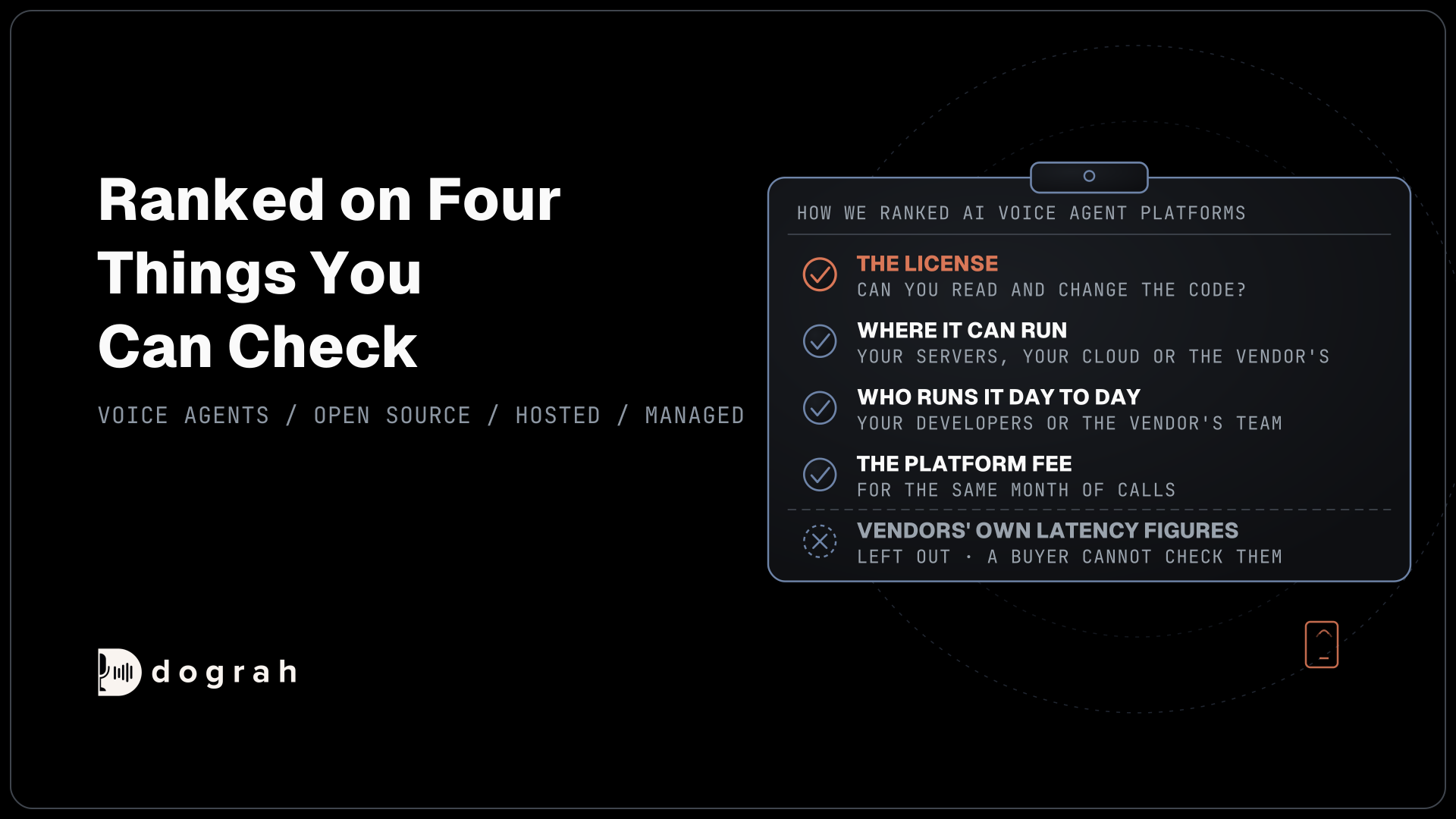
Both open-source routes start from free code, and they end in different places. LiveKit Agents is the baseline row, Dograh is the platform and Pipecat is the other framework.
| Option | What it is | License | Phone calls when self-hosted | Builder and call review |
|---|---|---|---|---|
| LiveKit Agents (baseline) | Agent framework on the LiveKit media server | Apache-2.0, turn detector under the LiveKit Model License | Native SIP through a separate SIP service you run, with your own carrier | Code. Agent Builder, transcripts and traces live on LiveKit Cloud |
| Dograh | Open-source AI voice agent platform on a Pipecat fork | BSD 2-Clause, one license for the whole codebase | Eight built-in carriers or your own SIP trunk, Transfer Call on five | Agent Builder and visual canvas, call history, Campaigns and per-step QA in the install |
| Pipecat | Python framework from Daily | BSD-2-Clause | Carrier serializers, or Daily PSTN and SIP routes for transfers | Code. The product layer is yours to build |
Dograh, the phone product on open code
Dograh is the open-source route that ships the product around the agent. It runs on a fork of Pipecat under the BSD 2-Clause license, and everything below is in the same code you self-host.
Building starts in the Agent Builder. You describe the agent in plain words, the builder may ask a few questions, and a "Your agent requirements" card lists what it will collect and the rules it will follow before you press "Approve & build". "Test agent" publishes version 1, and later edits in the Builder tab save as a draft until you publish. A self-hosted install needs a Dograh Service Key for the Agent Builder, and the visual canvas works either way for edits by hand.
Phone calls run through your own carrier account. The built-in telephony providers are Twilio, Vonage, Plivo, Telnyx, Exotel, Vobiz, Cloudonix and Asterisk ARI, or you bring your own SIP trunk. Transfer Call, which passes a caller to a person, is supported on Twilio, Telnyx, Plivo, Cloudonix and Asterisk ARI. The destination is called first, and the caller is connected only after someone picks up. When no one answers, the line is busy or the transfer fails, the agent keeps the caller and the conversation goes on.
Outbound lists are Campaigns, with a CSV upload, calling hours by weekday and automatic retries for busy and unanswered numbers. Every call keeps its transcript and recording, completed runs download as a CSV report, and View Trace opens the call's trace in Langfuse with the speech-to-text, AI and voice time for each turn.
Quality checks run after each call. The QA node scores every step of test and live calls separately, with a sample rate you choose. Models come from Dograh, from any supported provider on your own keys, or from a local model behind an OpenAI-compatible endpoint. An MCP server lets coding agents such as Claude Code create and edit agents, so developers who like code still have a route in.
There is no per-minute platform fee when you self-host, though your servers, model keys and phone minutes still cost money. Dograh Cloud, the managed version, has a 1¢-a-minute platform fee. Self-hosted, it runs 10 calls at once by default and one setting raises that. Enterprise adds on-prem deployment, and our comparison of Dograh vs LiveKit goes through the two feature by feature.
Two self-hosted install lists side by side
The clearest way to compare two open-source projects is to list what you run on your own servers for one phone call. The rows follow the call, from the carrier to the review after it ends.
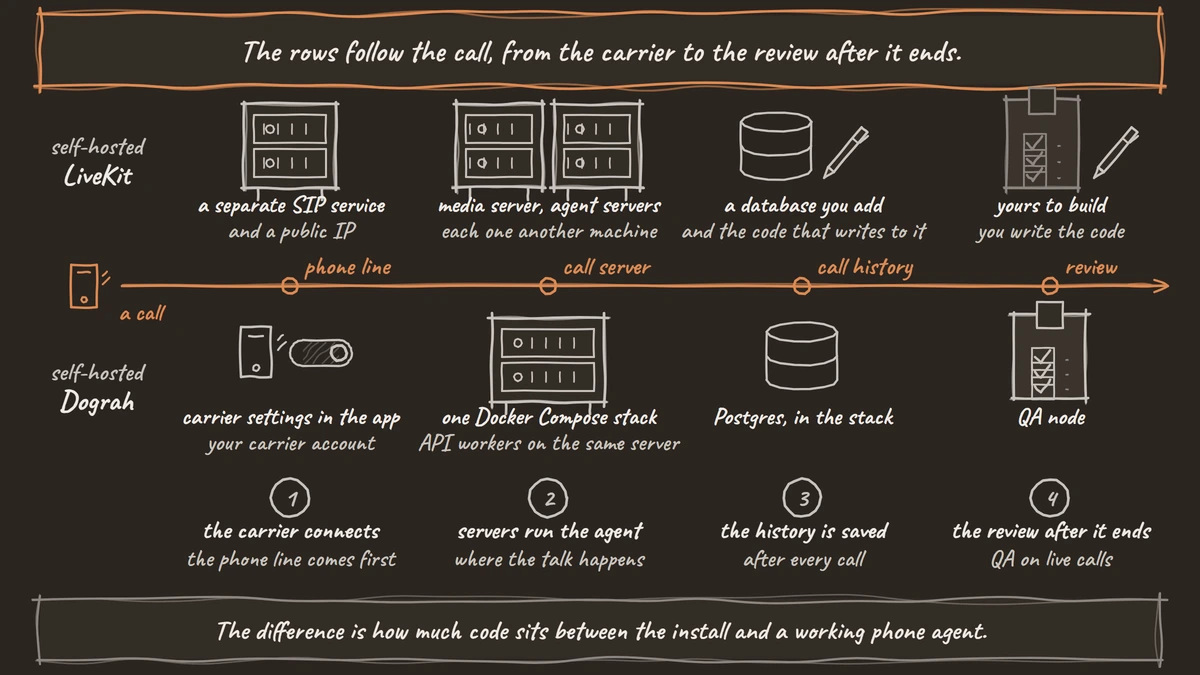
| Part | Self-hosted LiveKit | Self-hosted Dograh |
|---|---|---|
| Call server | LiveKit media server, with a domain, SSL and a TURN server for strict firewalls | API and UI behind nginx, with coturn for TURN, in one Docker Compose stack |
| Phone line | A separate SIP service, ports 5060 and 10000-20000 open, a public IP, your carrier | Carrier settings inside the app, your carrier account or SIP trunk |
| Shared state | Redis | Redis, in the same stack |
| Agent processes | Agent servers, 4 cores and 8 GB each as a start, 10 to 25 calls per server | API workers on a server with at least 8 GB of RAM and 4 vCPUs, 10 calls by default |
| Call history | A database and storage you add, and the code that writes to them | Postgres and MinIO object storage, in the stack |
| Editing agents | Your code, Agent Builder stays on LiveKit Cloud | Agent Builder with a Service Key, visual canvas always |
| Outbound lists | Code you write against the SIP API, with your own hours and retries | Campaigns |
| QA on live calls | Yours to build | QA node |
The LiveKit column comes from LiveKit's own docs. Its self-hosted SIP server says "Both SIP signaling port (5060) and media port range (10000-20000) must be accessible from the Internet". The sizing comes from LiveKit's deployment guide, which adds that noise cancellation and the turn detector need more CPU and memory.
Dograh's Docker install runs on one fresh server with Docker Compose. It needs ports 80 and 443 for the app, and 3478, 5349 and a UDP range from 49152 to 49200 for browser audio. A setup script fetches the images and a certificate and starts the stack.
Scaling looks different too. LiveKit grows by adding agent servers, each one another machine to deploy and watch. Dograh first adds API workers on the same server, and its scaling guide suggests about one worker per available vCPU.
Running either one is still work. With Dograh, the server, the database and every upgrade are your team's job, with community support on the open-source version and custom SLAs on Enterprise. The difference is how much code sits between the install and a working phone agent.

Open Source Alternative to Vapi / Retell
Self-hosted voice agent platform — no per-minute fees
dograh-hq/dograh
Star on GitHub
The license line
Both projects are open source, and the fine print differs. The LiveKit Agents repository says "The Agents framework is licensed under Apache-2.0", while its turn detection models are licensed separately under the LiveKit Model License. If open source is a policy rather than a preference at your company, have someone read that second license before the turn detector ships.
Dograh's whole codebase sits under one BSD 2-Clause license, including its turn handling, which uses a transcription-based check or the open Smart Turn model. One license is easier to clear with a legal team, and it covers the builder, the telephony code and QA as well as the agent itself.
When staying on LiveKit makes sense
LiveKit is the better fit in several honest cases. If your agent lives inside a web or mobile app, joins video calls or shares a room with several people, its media server and client SDKs are built for exactly that, and a phone-first platform is not.
It also suits developers who want everything in code. LiveKit Agents ships a test framework with LLM judges, handoffs written in code can go further than a canvas, and changes run through pull requests and CI. Teams adding voice to a TypeScript web app may want something lighter still, a small open library that talks to the browser over a WebSocket.
If the pain is running servers, LiveKit Cloud solves that without a switch, from a free Build plan up to Scale. And if you want a different framework rather than a platform, Pipecat is the natural swap, as our LiveKit vs Pipecat comparison shows.
What moving off LiveKit takes
A move from LiveKit to Dograh is mostly a translation, and the parts map one to one. Your prompts carry over as they are. Each Python tool function becomes an HTTP API tool that calls the same endpoint, or an MCP tool if the function already sits behind an MCP server. Handoffs between agents become steps on the canvas or a Transfer to Agent tool.
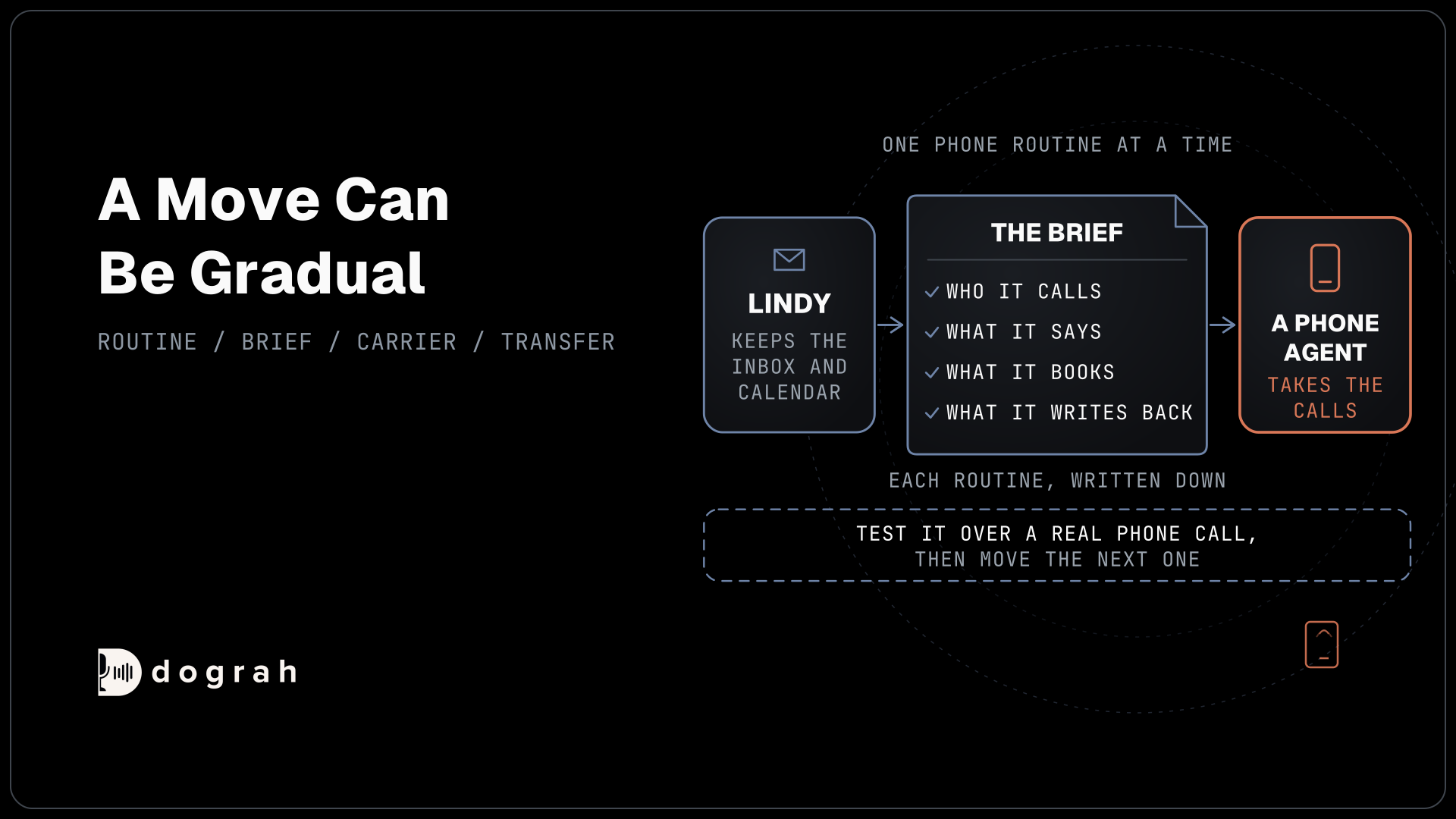
The phone line moves next. Point your SIP trunk or carrier number at Dograh instead of the LiveKit SIP service, one number at a time, and keep LiveKit answering the rest until each rebuilt agent passes its test calls. Outbound lists that lived in your own code become Campaigns from a CSV.
Tests change shape. LiveKit's tests run before release, while Dograh's QA node grades calls after they happen, so keep a set of scripted test calls for each change and turn QA up to every call for the first weeks. Test transfers over a real phone call, because a browser test call cannot transfer. If you are still weighing a hosted product, our comparison of Retell AI vs LiveKit covers that side.
Join the Dograh Community
Dograh is an OSS alternative to Vapi. Join our Slack community for queries, releases, best practices & community interactions.
Picking your LiveKit alternative
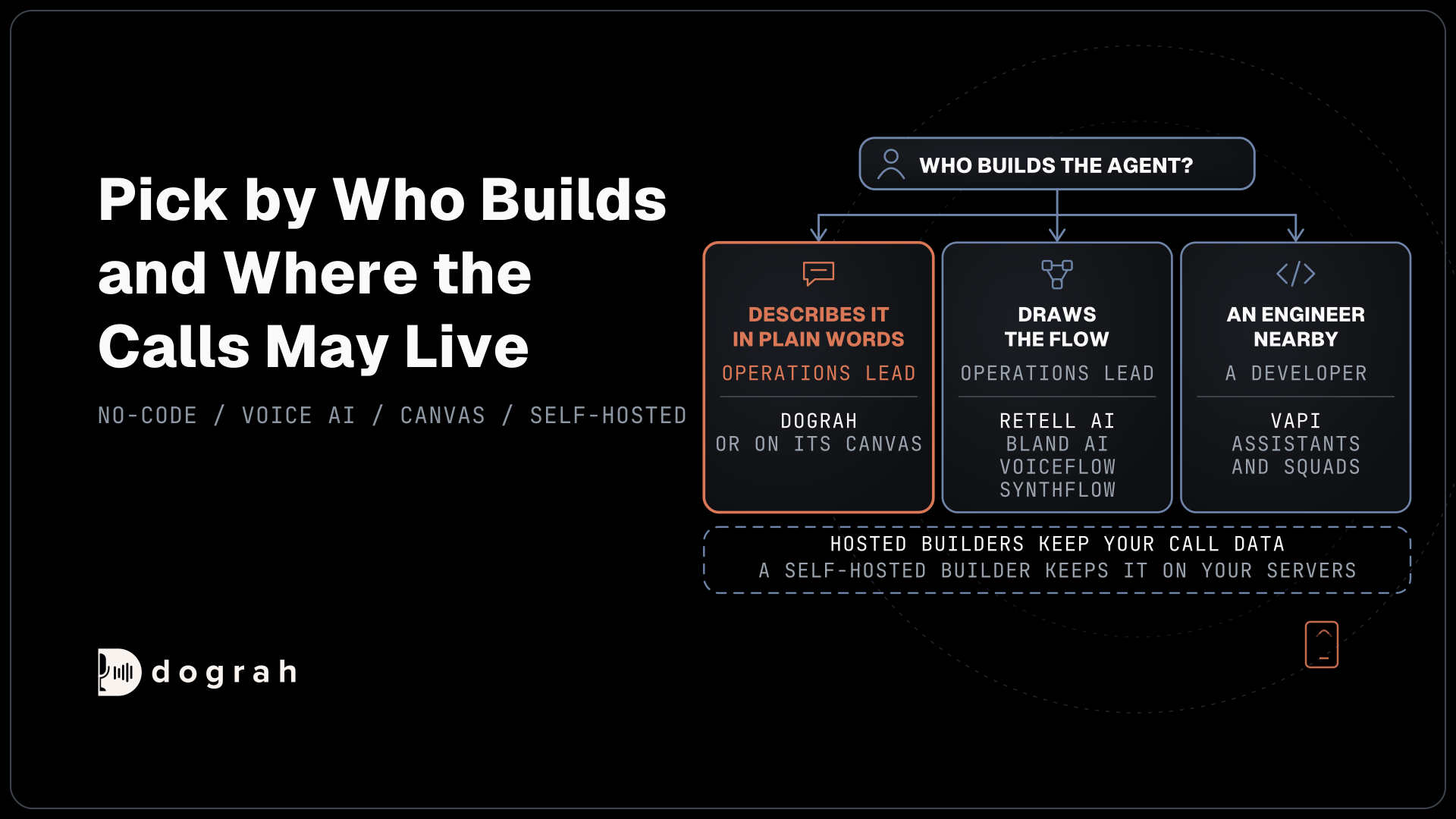
If you want open source and a phone product you do not have to build, start with Dograh, self-hosted or on Dograh Cloud, with on-prem deployment on Enterprise. If your team wants to keep writing the agent in code, move to Pipecat and keep the work in Python. If your agent lives in an app or a video room, stay on LiveKit, and move to LiveKit Cloud if servers are what hurts.
Glossary
- SIP service
- The part of a self-hosted LiveKit install that connects phone calls to the media server. It runs separately, needs port 5060 and a media port range open to the internet, and talks to your carrier.
- TURN server
- A relay that carries audio for browsers and devices behind strict firewalls. Self-hosted LiveKit needs one with its own domain, and Dograh's install includes coturn for the same job.
- Agent server
- A machine that runs LiveKit agent processes. LiveKit suggests 4 cores and 8 GB per server as a start, handling 10 to 25 calls at once.
- Model license
- The terms that cover a trained model's weights, which can differ from the code's license. LiveKit's turn detection models use the LiveKit Model License, while the Agents framework is Apache-2.0.