
Observe.AI alternatives are divided into other contact center suites, voice agent platforms for automated calls, and a split that keeps Observe.AI for human agents. Dograh is the open-source AI voice agent platform for the automated calls, self-hosted or on Dograh Cloud. Cresta, Balto and NICE CXone are suites, and Retell AI and Vapi are hosted platforms.
Key Takeaways
- Observe.AI scores AI and human calls in one place, and suites keep that job.
- Its only public price is a 12-month AWS Marketplace contract.
- Moving just the automated calls leaves your human scorecards where they are.
Observe.AI began as quality and coaching software for human agents and added voice agents later, so leaving it starts with which job you want to replace. We sort the options by that job in one table, then cover Dograh for automated calls, the suites, hosted platforms and when staying wins.
What Observe.AI sells, and why teams look elsewhere
Observe.AI sells two kinds of software under one name, and most buyers came for the second. On Observe.AI's site, the first kind is AI agents that handle conversations on their own, sold as Voice AI and Chat AI. The second helps the people in a contact center. A companion Agent gives live agents real-time assist, while Insight and Performance analyze conversations and run coaching programs. Observe.AI sums up both halves in one line, "Every conversation, AI and human, is evaluated."
The Voice AI agent "authenticates the caller, looks up records, and completes actions in your systems", with "12+ action types". It also redacts personal, card and health details from transcripts in real time, and it hands callers to a person when they need one.
The reasons teams look elsewhere are mostly about buying and hosting. Pricing goes through a demo request, and the one public figure is Observe.AI's AWS Marketplace listing for VoiceAI Agents. It sells a 12-month contract priced on two contract dimensions, "Minutes per Month" at $4.80 and "Number of Interactions" at $12.00, each per unit for 12 months, with no refunds during an active subscription. The code is closed, and the platform runs in Observe.AI's cloud with data stored in the US, Canada, the EU or Australia.
Observe.AI alternatives in one table
Each alternative covers a different part of what Observe.AI does, so the table starts with the job. Observe.AI is the first row, and every price is the vendor's own public figure.
| Option | Job it covers | Code | Public price |
|---|---|---|---|
| Observe.AI (baseline) | Voice AI and Chat AI agents, plus live assist, QA and coaching for people | Closed | 12-month AWS Marketplace contract, $4.80 per "Minutes per Month" unit or $12.00 per "Number of Interactions" unit |
| Dograh | Automated inbound and outbound calls, with QA on the agent's own calls | Open source, BSD 2-Clause | Self-hosted, no per-minute platform fee. Dograh Cloud, 1¢-a-minute platform fee. Models and phone extra |
| Cresta | AI Agent plus live assist, coaching and quality management | Closed | $150,000 a year for up to 100,000 Agent Assist calls on AWS Marketplace |
| Balto | Live assist, QA, coaching and the Togo voice agent | Closed | Balto Plus per seat and Togo by the minute, both through sales |
| NICE CXone | Full contact center suite with AI agents | Closed | $110 to $249 per agent a month |
| Level AI, CallMiner, Verint | QA and analytics for human calls | Closed | Through sales |
| Retell AI | Automated calls on a hosted platform | Closed | $0.055 a minute for voice infrastructure, models and phone extra |
| Vapi | Automated calls on a hosted developer platform | Closed | $0.05 a minute for hosting, models and phone extra |
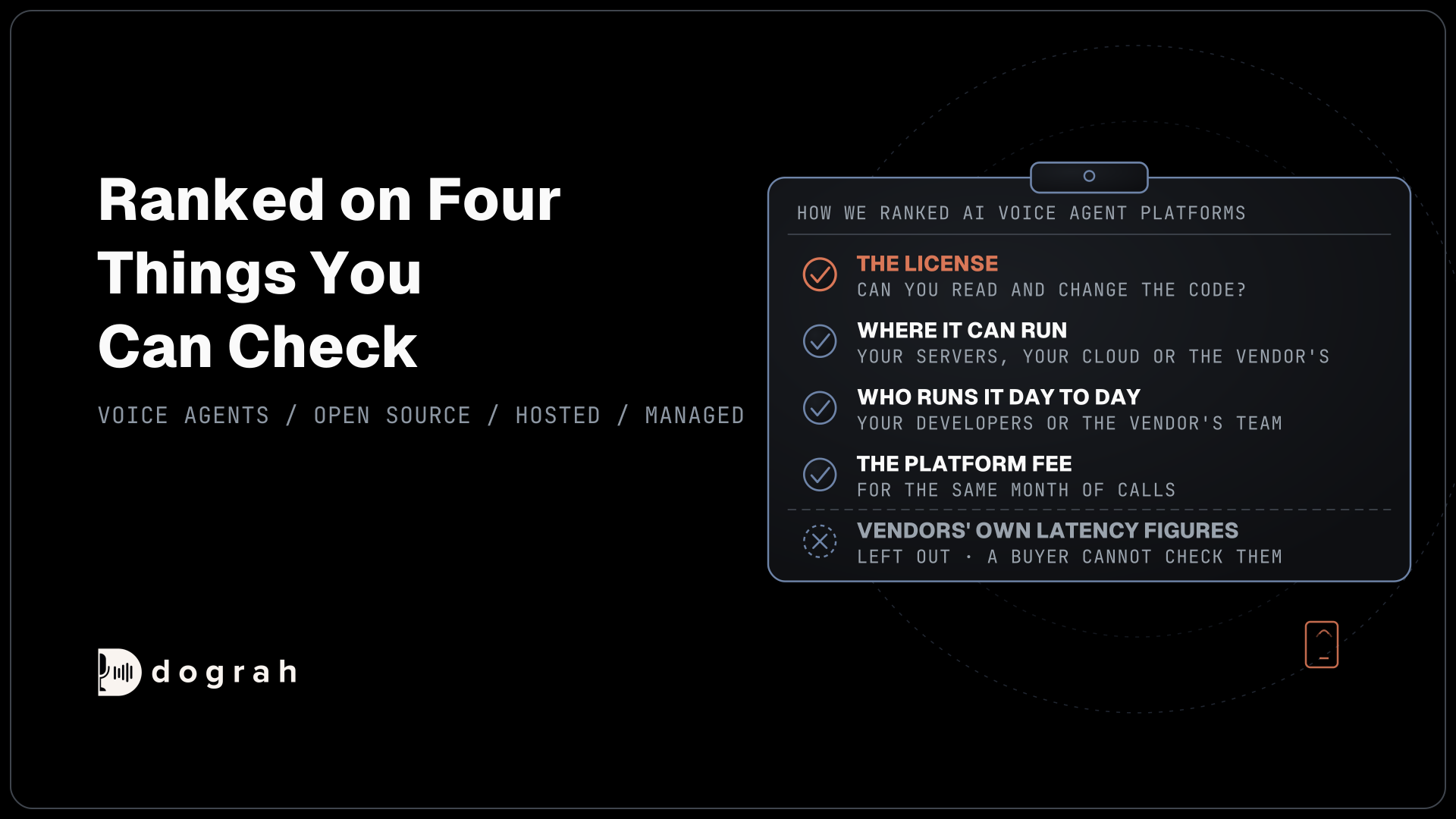
The suites cover the human side Observe.AI is known for, and the platforms cover the automated calls. Dograh is the only row with code you can read and run on your own servers, which matters most when call data has to stay inside your network.
Dograh for the automated calls
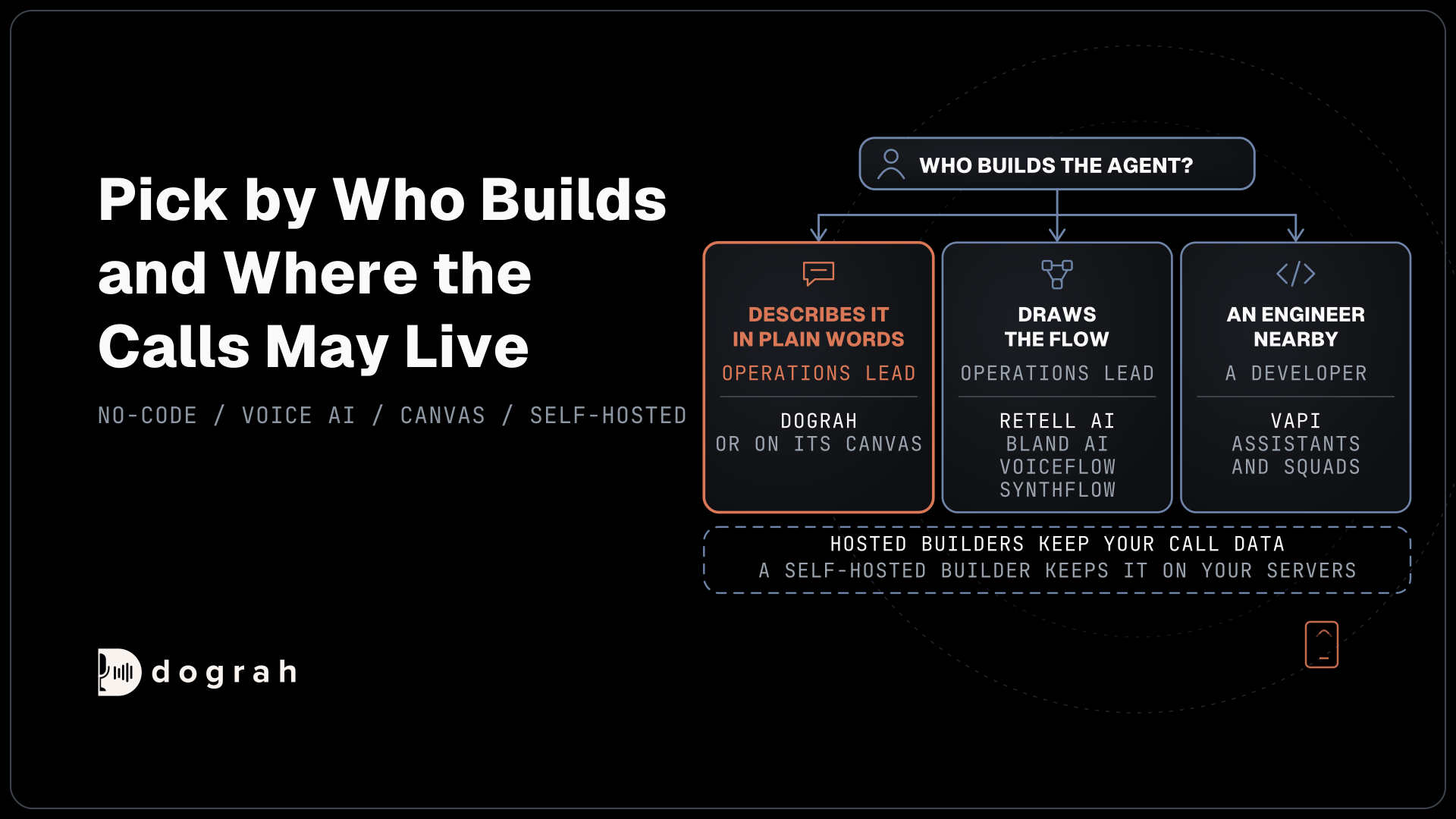
Dograh takes over the part of Observe.AI that answers and places calls on its own. It runs on a fork of Pipecat and is released under the BSD 2-Clause license, so the whole platform is code you can audit. A new agent starts in the Agent Builder, where you describe the call in plain words, approve a short list of requirements and test what it builds. The visual canvas stays open for hand edits.
During a call, the agent works in your systems through an HTTP API tool for any endpoint you own, or an MCP tool for a Model Context Protocol server. That covers the lookups and updates Observe.AI counts as action types, such as checking an order or moving an appointment. Campaigns dial outbound lists within the calling hours you set, and busy or unanswered numbers get automatic retries.
Handing a caller to a person works through Transfer Call on Twilio, Telnyx, Plivo, Cloudonix and Asterisk ARI. Dograh rings the person first and puts the caller through only once that call is answered. If nobody picks up, the call comes back to the agent and carries on. No summary travels with the transfer by default, so the agent writes the caller's details to your system before it hands over.
Quality checks cover the agent's own calls. The QA step reviews each call after it ends and scores every step separately, on test calls and live ones, and you set the share of calls it samples. Scorecards for human agents stay with whichever suite grades them today.
Hosting is where the change is biggest. Self-hosted, call recordings and transcripts land in storage and a database on your own servers. Dograh is the orchestration layer that runs the call flow, tools and telephony, and the speech and language models are a separate layer you choose, from Dograh's own models to your provider keys or open-weight models you host. Only local models keep the audio inside your network, because with your own key it still reaches that provider.
Running it on your own servers carries no per-minute platform fee, though servers, model keys and phone minutes still cost money. Dograh Cloud charges a 1¢-a-minute platform fee. A self-hosted install runs 10 calls at once by default and one setting raises that, Cloud's pay as you go plan includes 10, and Enterprise adds on-prem deployment inside your own network.
Owning the platform also means owning its upkeep. Your team keeps the server, the database and each upgrade running, with community support on the open-source version and custom SLAs on Enterprise. If you plan to keep Observe.AI for your people and move only these calls, our guide to the open-source alternative to Observe.AI covers that setup in depth.
Contact center suites: Cresta, Balto, NICE CXone
Suites are the like-for-like swap when the human side is what you are buying. They help people during calls and grade their work afterwards, and most now sell an AI agent as well.
Cresta covers both jobs, with an AI Agent beside Agentic Assist, Coach and Quality Management. Its one public price is $150,000 a year for up to 100,000 Agent Assist calls on AWS Marketplace. Our post on the open-source alternative to Cresta shows how a contact center can split those two jobs.
Balto sells one plan, Balto Plus, priced per seat through its sales team. The plan covers agent assist, QA that can "Auto-score 100% of interactions", coaching, insights and notes. Its voice agent, Togo, is "priced by the minute rather than per seat".
NICE CXone is a full contact center platform, with seats from $110 to $249 per agent a month and AI agents on top, as our roundup of NICE CXone AI alternatives explains. Level AI, CallMiner and Verint are QA and analytics suites for human calls, each sold through sales. Every suite here is closed source, so moving between them swaps one contract for another.

Open Source Alternative to Vapi / Retell
Self-hosted voice agent platform — no per-minute fees
dograh-hq/dograh
Star on GitHub
Hosted platforms for the automated calls
If only Observe.AI's Voice AI is leaving, a hosted voice agent platform is the other route. These run the call in the vendor's cloud and bill by the minute instead of by seat or contract unit.
Retell AI charges $0.055 a minute for voice infrastructure, with the language model, voice and phone billed on top, and Retell puts the all-in total at $0.07 to $0.31 a minute. Every account includes 20 calls at once. Vapi charges $0.05 a minute for hosting, also before models and phone, and sells HIPAA as a $2,000 a month add-on.
Both are closed source and both run only as a service. They leave your human-side tools alone, so whatever scores your people today keeps doing it. The difference from Dograh is where the platform lives and who can read its code.
The split: keep Observe.AI for people
Plenty of contact centers will not replace Observe.AI at all, only its automated calls. The open agent answers first and finishes what it can. Every other call transfers to the human queue, where Observe.AI keeps scoring and coaching people the way it does now.
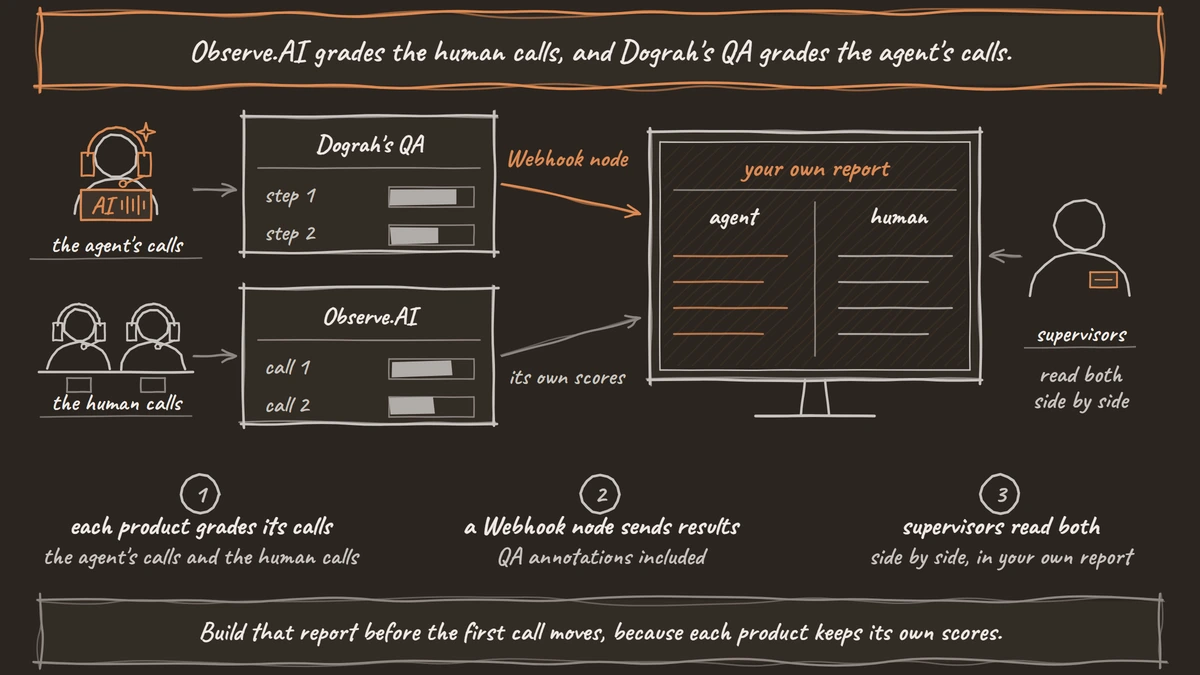
The cost of the split is a second set of scores. Observe.AI grades the human calls, and Dograh's QA grades the agent's calls. A Webhook node can send each finished call's results, QA annotations included, to your own reporting, so supervisors read both side by side. Build that report before the first call moves, because each product keeps its own scores. Our guide to automated QA for voice agents shows how to read the agent's side.
When staying on Observe.AI makes sense
Observe.AI still fits a contact center whose main need is the human side. If supervisors want one scorecard over AI and human calls, with coaching built on it, one vendor for both is the reason to keep it.
Its data controls are real too. Voice AI redacts PII, PCI and PHI in transcripts in real time, and Observe.AI's security commitments cover data stored in your region, configurable retention, models that are "Inference-only. Never shared across customers" and your own keys for the models you run. A team with no wish to run servers gets all of it as a service.
What moving off Observe.AI takes
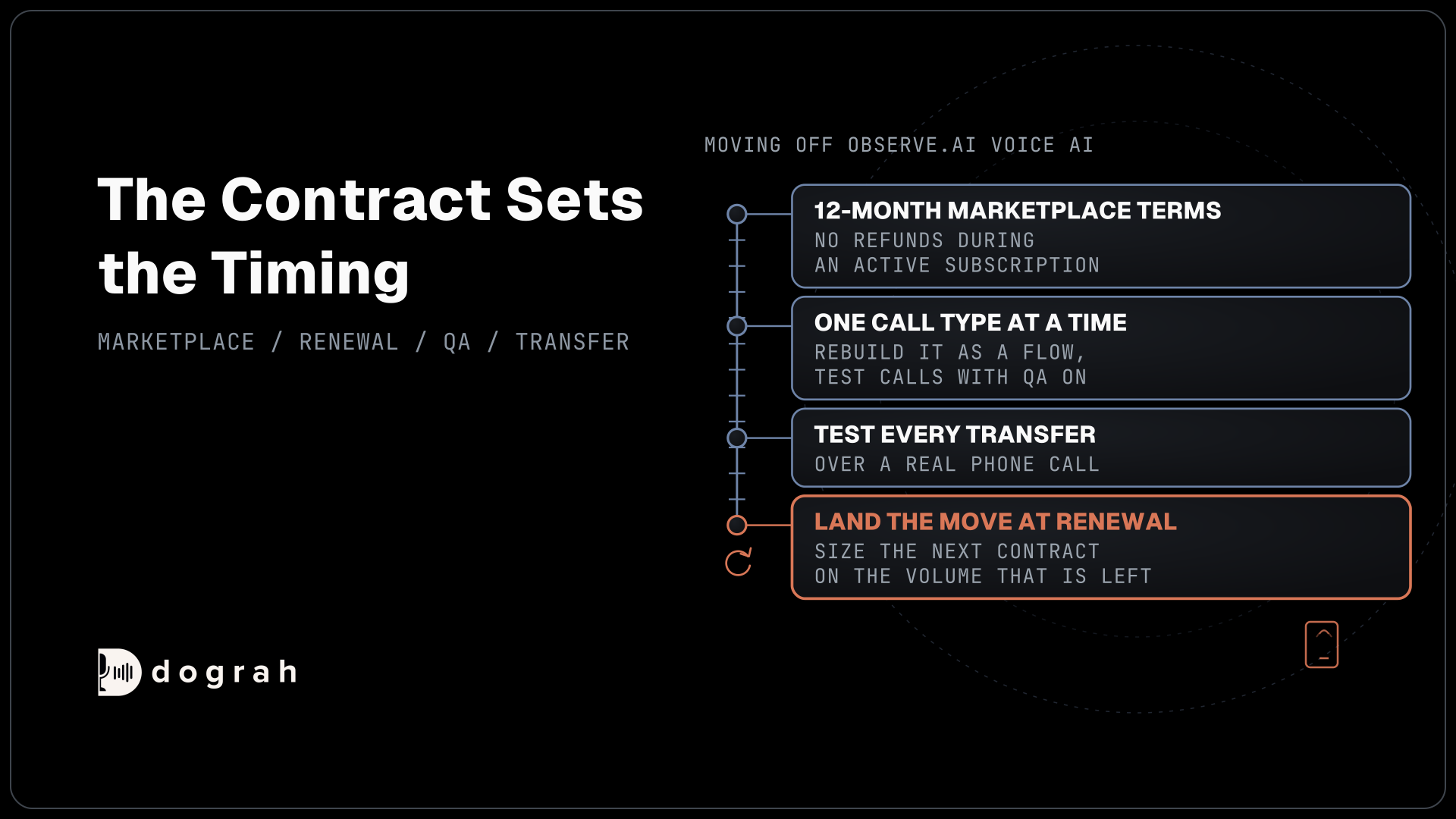
The contract sets the timing. The Marketplace listing sells VoiceAI on 12-month terms with no refunds during an active subscription, so plan the move to land at renewal and size the next contract on the volume that is left.
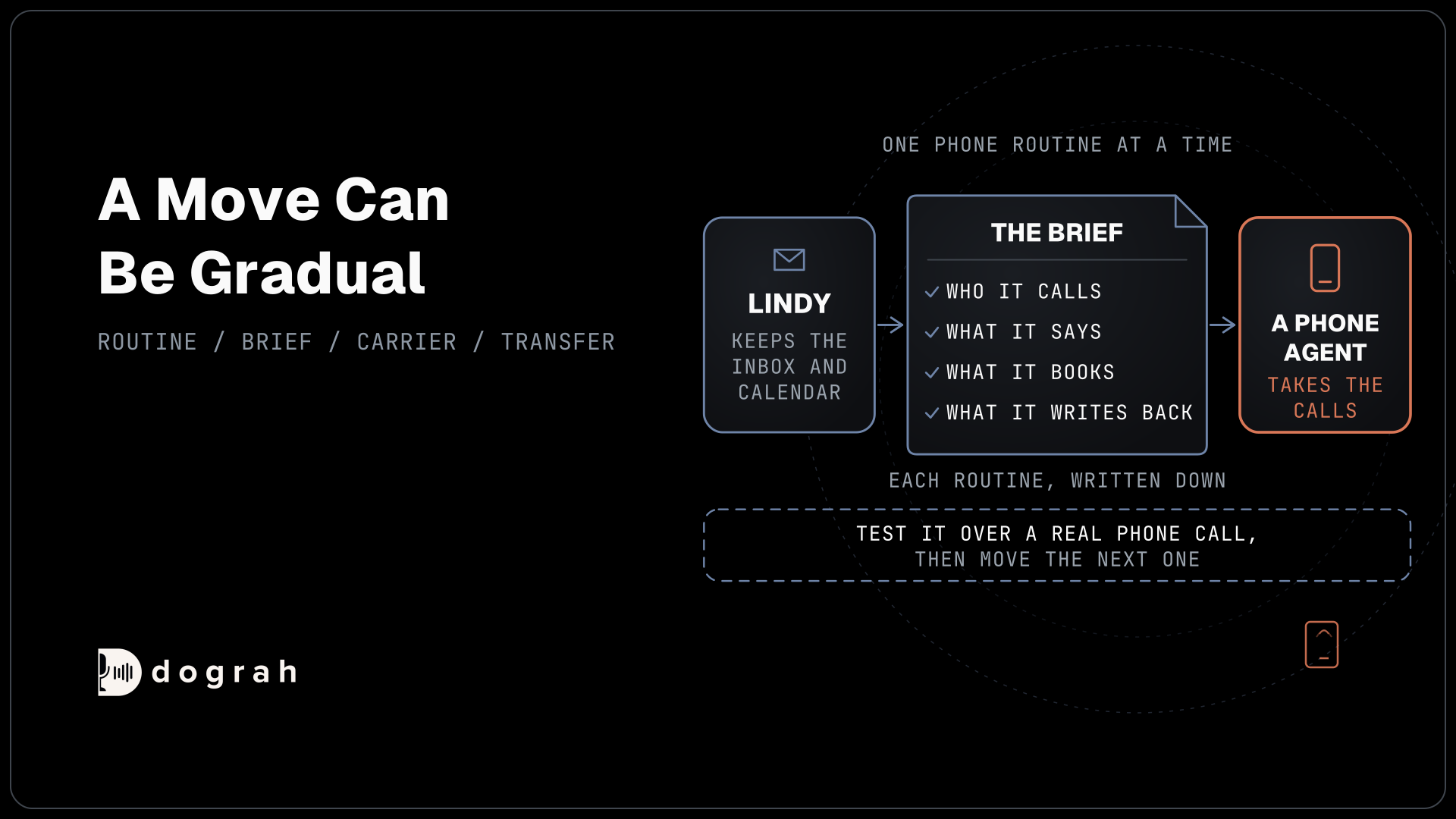
Then move one call type at a time. Rebuild it as a flow, connect the tools it needs and run test calls with QA on. Test every transfer over a real phone call, because a browser test call cannot transfer. If calls arrive on a Twilio number, saving an inbound workflow on it in Dograh switches the number over at once, so copy its Twilio settings first.
Start where the calls look alike. Order status and appointment changes repeat with the same few questions, and a handful of tools covers them. Billing disputes turn on judgment, and they can stay with your people while the agent proves itself on the easy calls.
Join the Dograh Community
Dograh is an OSS alternative to Vapi. Join our Slack community for queries, releases, best practices & community interactions.
Picking your Observe.AI alternative
If you need open code, on-prem hosting or call data on your own servers, start with Dograh for the automated calls, self-hosted or on Dograh Cloud. If the human side is what you buy, compare Cresta, Balto and NICE CXone on assist and coaching, priced on your seat count. If you want a hosted platform for the calls and accept per-minute billing, Retell AI and Vapi are the usual shortlist. And if your supervisors rely on Observe.AI's scorecards, keep them for people and move only the calls an agent can finish alone.
Glossary
- Conversation intelligence
- Software that transcribes and analyzes recorded conversations to find topics, outcomes and compliance issues across a contact center. Observe.AI, CallMiner and Level AI sell it mainly for human-handled calls.
- Real-time assist
- Guidance shown on a human agent's screen while a call is live, such as the next step or an answer from the knowledge base. Observe.AI sells it as its companion Agent.
- Contract dimension
- The unit an AWS Marketplace listing is priced by. Observe.AI's VoiceAI listing has two, minutes per month and number of interactions, each priced for a 12-month term.
- Agent Builder
- Dograh's way to create an agent by describing the call in plain words. It may ask a few questions, shows the agent's requirements for approval and then builds the agent for you to test.