
Kokoro vs Orpheus is a choice between a light, accurate voice and an expressive, heavy one. In our September 2026 benchmark, Kokoro (82M) scored 0.61 and Orpheus (3B) 0.54 on reading tricky text aloud, and Orpheus used about 18x more compute per clip. Orpheus adds emotion tags and cloning, and it needs a GPU.
Key Takeaways
- Kokoro scored 0.61 to Orpheus's 0.54 in our test, at a fraction of the compute.
- Orpheus reads dates and phone numbers better, while Kokoro wins prices, times and addresses.
- Orpheus is built on Llama 3.2, so Meta's license terms come with it.
Kokoro and Orpheus are the two open voices most teams try first for a self-hosted agent, and they sit at opposite ends on size and style. This post uses our own benchmark to show which one reads your kind of text better and what hardware each needs. The last section shows how Dograh runs either one on your servers.
Kokoro vs Orpheus in one table
Both are open-weight text-to-speech models you can run on your own machines, and both carry the Apache-2.0 license on their model cards. Past that, they differ on almost every point a phone agent cares about.
| Kokoro | Orpheus | |
|---|---|---|
| Size | 82M parameters | 3B parameters |
| License | Apache-2.0 | Apache-2.0 on the card, plus Llama 3.2 terms |
| Access | Open download | Gated, accept the conditions first |
| Languages and voices | 8 languages, 54 voices | English, 8 voices, plus research models in 7 more languages |
| Emotion control | None | Tags such as laugh and sigh |
| Cloning | Voice mixing only | By prompting the base model with sample clips |
| Our benchmark score | 0.61 | 0.54 |
| Compute per clip in our test | 0.31 s | 5.50 s |
| First audio, as each project states it | About 300 ms on GPU (Kokoro-FastAPI) | About 200 ms streaming (Canopy Labs) |
| Hardware for live calls | A modest GPU, CPU for trials | A large GPU, such as half an H100 in Baseten's setup |
The score and compute rows come from one test we ran ourselves, and the speed row is each project's own claim, so read them separately.
What our benchmark measured
Our TTS verbalization benchmark tests whether a voice says the right words when the text is hard to read aloud. We ran it in September 2026 on 1,080 sentences full of numbers, dates, codes and abbreviations, across seven open models hosted on Replicate. Two independent speech recognizers transcribed every clip, and each clip scored on whether the spoken words matched what a person would say.
Kokoro scored 0.61, with a 95% interval of 0.58 to 0.64, and Orpheus scored 0.54, with an interval of 0.51 to 0.57. The intervals do not overlap, so the gap is real on this test. On a phone call these misreads carry a cost, because a caller who hears the wrong price, time or order code either corrects the agent or leaves with the wrong answer. Kokoro also used a median of 0.31 seconds of billed compute per clip against 5.50 seconds for Orpheus, about 18 times less.
The test has limits worth stating once. It is English only, it ran on hosted builds rather than your own GPU, and it scores the words, not warmth or emotion. Our guide to open-source TTS models sets both against the other five models in the run.
Which text each one reads better
The overall score hides a useful split. Broken down by the kind of text, each model wins a different part of a typical call.
| Text type | Kokoro | Orpheus |
|---|---|---|
| Phone numbers | 0.42 | 0.60 |
| Dates | 0.10 | 0.20 |
| Sports scores | 0.53 | 0.78 |
| Currency | 0.97 | 0.88 |
| Decimals | 0.90 | 0.50 |
| Times | 0.72 | 0.64 |
| Addresses | 0.55 | 0.24 |
| Product and vehicle codes | 0.95 | 0.72 |
| Abbreviations | 0.85 | 0.69 |
Orpheus wins the two read-backs that confirm a booking, dates and phone numbers, though both models score low on dates. Kokoro wins most of what a sales or support call reads aloud, such as prices, times, addresses and order codes. Whichever you pick, write dates and phone numbers out in words in the agent's replies, because neither model reads them reliably from digits.

Open Source Alternative to Vapi / Retell
Self-hosted voice agent platform — no per-minute fees
dograh-hq/dograh
Star on GitHub
Voice, emotion and cloning
Orpheus is the more expressive of the two, and that is its real strength. The Orpheus model card and its repository describe an English finetune with eight voices and tags such as laugh, sigh and gasp that the model performs in the middle of a sentence. Cloning works by prompting the pretrained model with a few pairs of text and matching speech, and Canopy Labs notes it was not trained for that, so more samples give a steadier voice. Our guide to Orpheus for voice agents covers how the tags behave in a prompt.
Kokoro takes a plainer route. Its 54 voices are fixed, there are no emotion tags, and the closest thing to a custom voice is mixing two of its voices into a blend. A speed setting lets you slow a voice down, which often helps it sound less rushed on a phone line. For most support and sales calls a calm, clear voice is what callers expect, so the missing tags rarely hurt.
Some reviewers rate Orpheus well ahead on how human it sounds, and on emotional speech that view is fair. Our benchmark does not measure warmth, and no independent listener vote compares the two, since Artificial Analysis's blind-vote board lists Kokoro and not Orpheus. If tone matters most, play both on your own script.
Speed and hardware
Kokoro is small enough to run almost anywhere. The maintainer of Kokoro-FastAPI, a popular server for it, reports about 300 ms to first audio on a GPU and about 3.5 seconds on an older Intel i7 CPU. That makes a CPU fine for trying voices and a modest GPU the right choice for live calls, where a caller notices every pause.
Orpheus needs serious hardware. Canopy Labs states about 200 ms of streaming latency, measured on its own setup. Baseten's write-up says its first build served 7 real-time streams on half of an H100 GPU, rising to 16 after tuning with TensorRT-LLM, and those figures come from a company that sells Orpheus hosting.
For a team counting servers, the gap compounds. In our test Orpheus used about 18 times the compute per clip, so the same number of calls at once needs far more GPU time. Measure your own first-audio time and calls per GPU before you plan capacity, because both depend on your hardware and settings.
Whichever model you run, keep it loaded and send it a short warm-up request when the server starts. The first request after a cold start loads the weights and can take seconds, which a caller hears as dead air on the first call of the day.
Licenses and languages
Kokoro's model card lists Apache-2.0 weights built on the StyleTTS2 architecture, with no gating and no other model's terms attached. Its v1.0 release covers 8 languages, so pages that call it English-only are out of date. Its voices are grouped by language, so pick a voice made for the caller's language rather than an English voice reading another one.
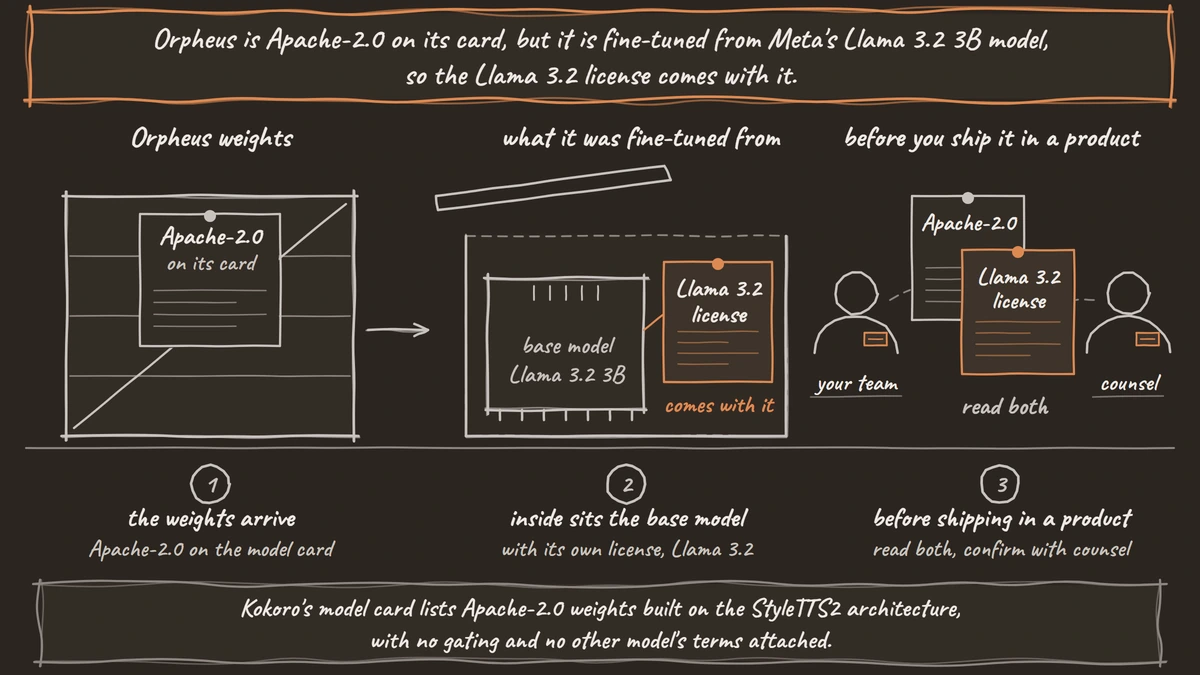
Orpheus is Apache-2.0 on its card, but it is fine-tuned from Meta's Llama 3.2 3B model, so the Llama 3.2 license comes with it. That license asks anyone who distributes a model built from Llama to display "Built with Llama" and to start the model's name with "Llama", and it needs a separate license from Meta above 700 million monthly active users. Read both licenses before you ship Orpheus weights inside a product, and confirm with counsel how they apply to your use.
Orpheus's main finetune is English. In April 2025 Canopy Labs released research-preview models for French, German, Korean, Mandarin, Hindi, Spanish and Italian. We have not tested those models, so treat them as previews and check each language on real calls.
Which one to run
Start with Kokoro for most phone agents. It reads prices, times, addresses and codes well, it runs on modest hardware, its license is plain, and it covers more languages in its main release. Its weak spots, dates and phone numbers, are easy to work around by writing them out in words.
Pick Orpheus when expression is the product, such as a character voice, a coaching call or any agent where a laugh or a sigh changes how the caller feels, and when you have the GPU budget to match. Plan for the Llama license and for the work of serving a 3B model in real time. Our Kokoro TTS review covers Kokoro's voices and setup in more depth.
Settle it with a short test of your own. Take twenty lines from your real scripts, with prices, dates, phone numbers and addresses in them, have both models read them, and play the results over a real phone line to two or three people who did not write the scripts. Count the misreads and ask which voice they would rather hear again.
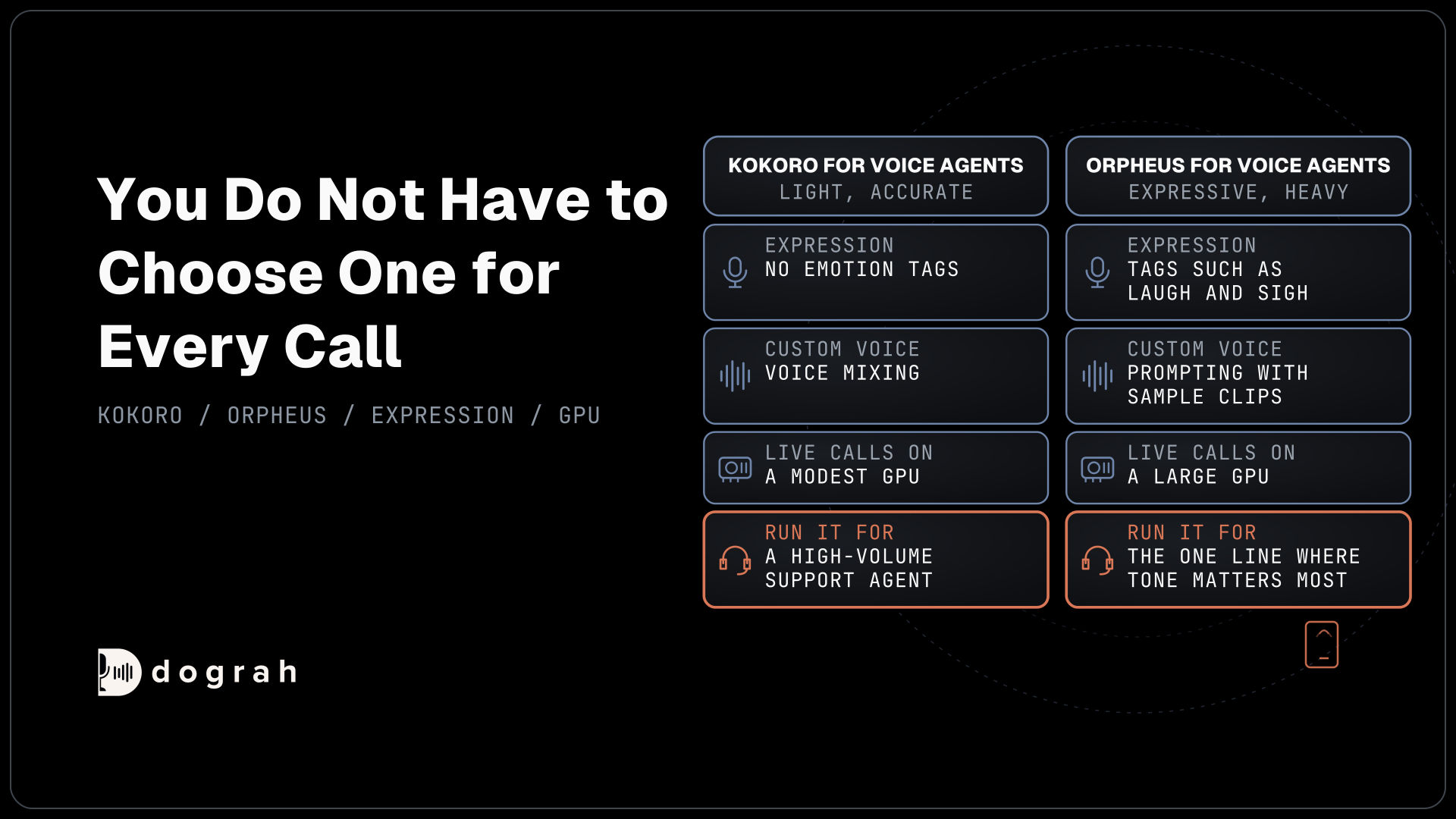
You do not have to choose one for every call. A team can run Kokoro on its high-volume support agent and keep Orpheus for the one line where tone matters most.
Join the Dograh Community
Dograh is an OSS alternative to Vapi. Join our Slack community for queries, releases, best practices & community interactions.
Where Dograh fits
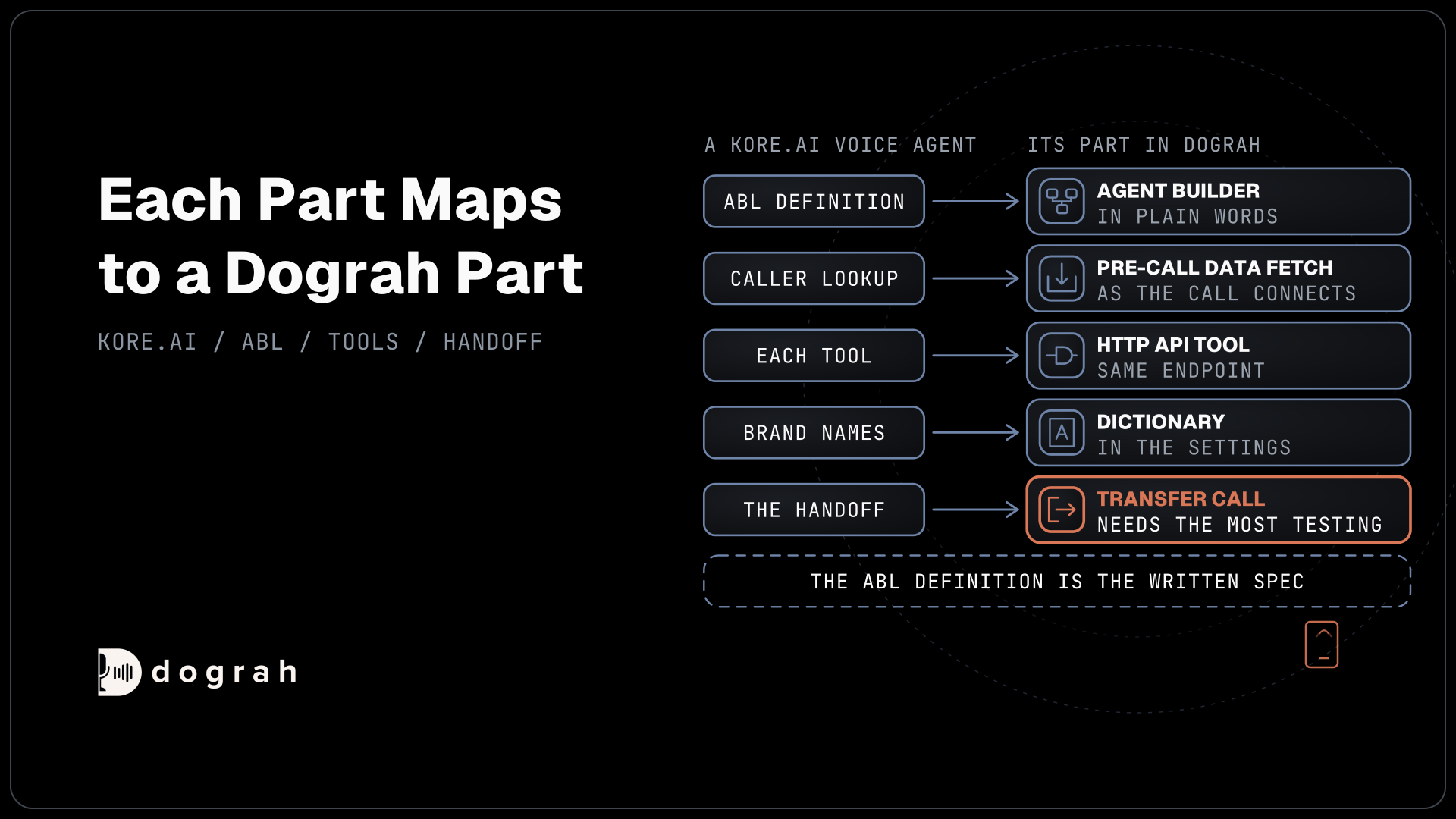
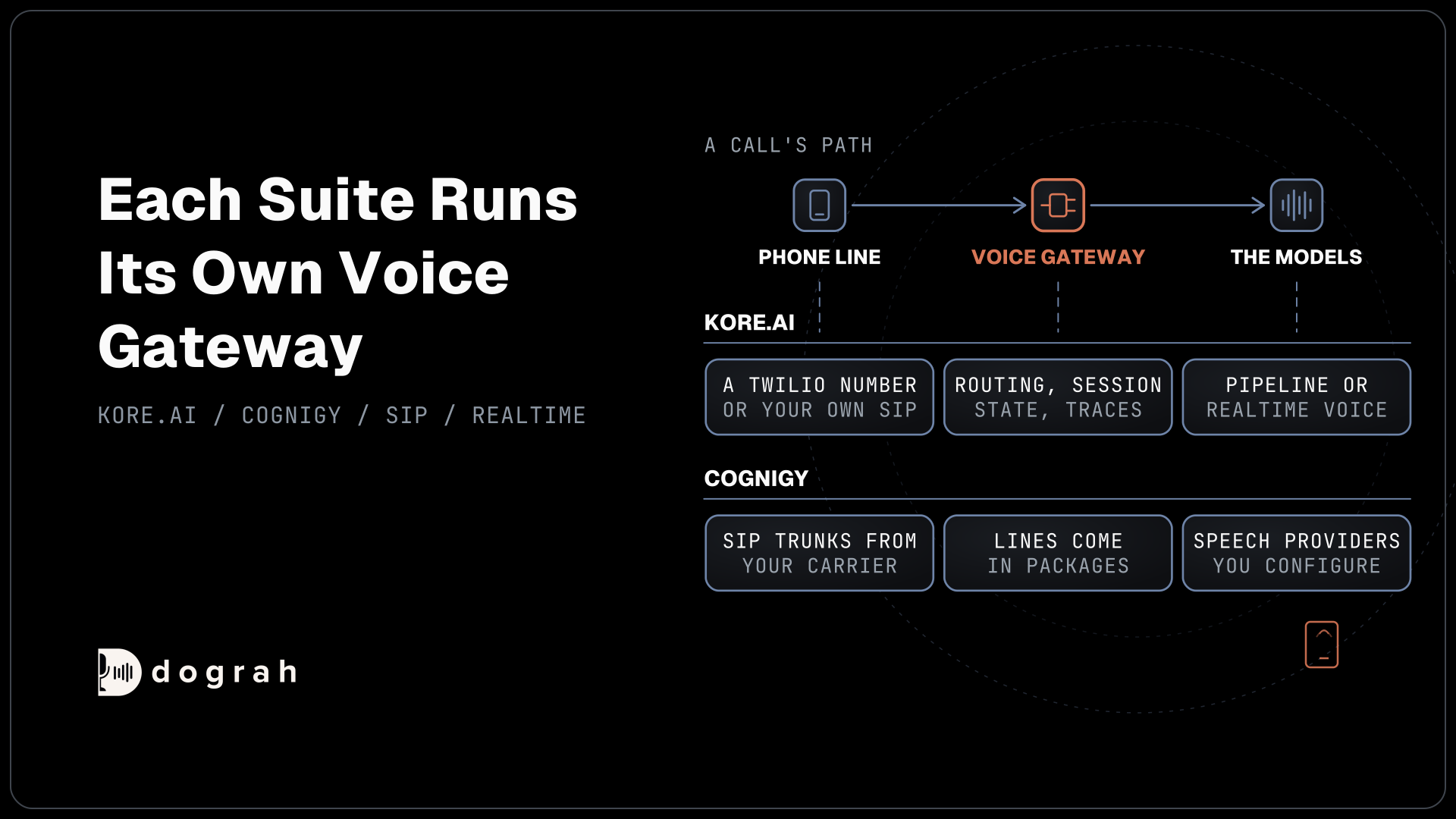
Dograh, the open-source AI voice agent platform, runs the call flow, tools and telephony, and the voice is a separate layer you choose for each agent. Open voices plug in through Local Models (Speaches) in the voice settings, where the model starts as kokoro and the base URL points at any OpenAI-compatible speech server, such as Kokoro-FastAPI or Speaches. Kokoro works there out of the box.
Orpheus takes one more step. The platform asks the voice server for raw PCM audio at 24 kHz, and the best-known community server for Orpheus, Orpheus-FastAPI, returns WAV files, so it does not fit as it stands. Use or write a server that returns raw 24 kHz PCM, then test it on a real call. Because voices are chosen per agent, the Kokoro and Orpheus split above takes no extra work, and each call's trace shows how long the voice took on every turn.
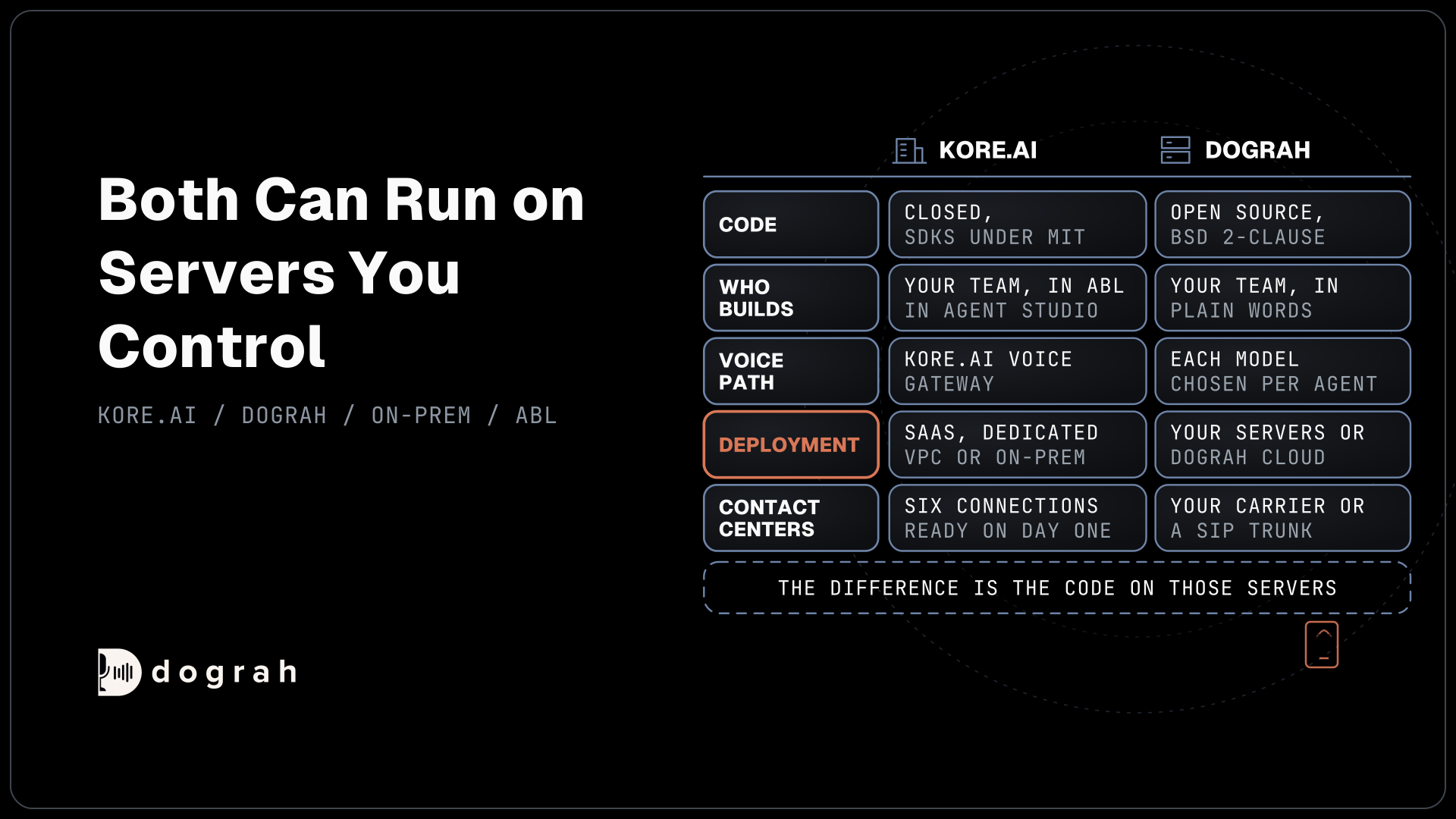
It runs on your own servers or on a hosted cloud, and for local voices, running it yourself keeps the text and audio on your own machines. Running Dograh yourself means no per-minute platform fee. You still pay for servers, model keys and phone minutes, and your team looks after the database and upgrades. The Docker install needs a server with at least 8 GB of RAM and 4 vCPUs, plus a GPU wherever the voice model runs. Support comes from the open-source community, and Enterprise adds custom SLAs. If you would rather not host it, Dograh Cloud runs it for a 1 cent a minute platform fee.
Glossary
- Verbalization
- Turning written forms such as $4.50, 3/14 or Dr. into the words a person would say. Our benchmark scores how often a voice gets this right.
- Emotion tag
- A marker in the text, such as a laugh or sigh tag, that tells an expressive voice like Orpheus to perform that sound mid-sentence.
- Voice mixing
- Blending two of Kokoro's fixed voices into a new one. It is the closest Kokoro gets to a custom voice, since it takes no reference clip.
- Finetune
- A model trained further from another model's weights. Orpheus is a finetune of Llama 3.2 3B, so the Llama license terms reach it.