
Cloudonix is a SIP and call-control layer that connects phone lines to AI voice agents. It sells no numbers or minutes, so you bring a carrier or SIP trunk, and it prices plans by sessions and concurrent calls. Dograh, the open-source AI voice agent platform we build, connects to it as a phone provider, self-hosted or on Dograh Cloud.
Key Takeaways
- Cloudonix sells no numbers or minutes, so budget a carrier on top.
- Paid plans run $69 to $299 a month, priced by sessions and concurrent calls.
- On Dograh Cloud, Managed SIP runs on Cloudonix with no Cloudonix plan needed.
Cloudonix comes up when you look for a way to connect your own phone lines to an AI agent. Below, we cover what it is, its plans, setup with Dograh, transfers, who it suits and what to ask Cloudonix, then where it fits beside our other phone options.
What Cloudonix is
Cloudonix is a SIP and call-control layer that sits between your carrier and your voice agent platform. Cloudonix's site calls it the telephony orchestration platform built for voice AI, and says it supports any SIP number or carrier. Its products include elastic SIP trunking, programmable transfers and a no-code Call Flow Builder.
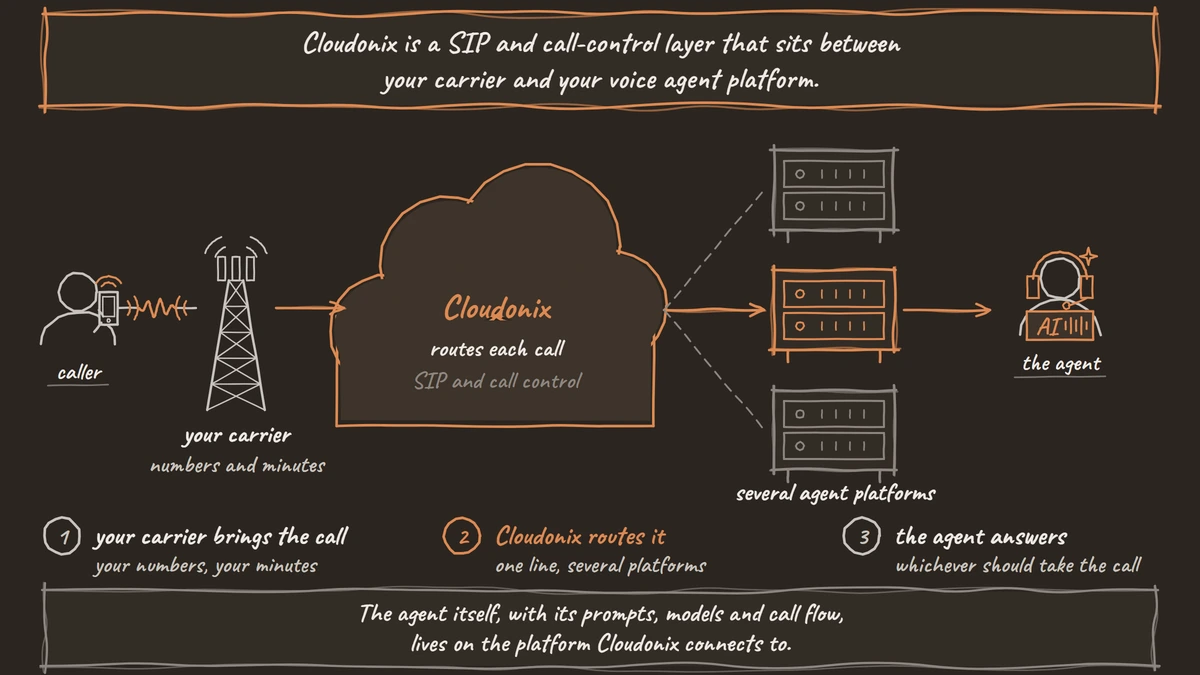
For developers, a Cloudonix voice application is written in CXML, its XML markup for call logic, and driven through a REST API and SDKs, all covered in the Cloudonix developer docs. Its Dial verb can send one phone system's calls to several AI voice agent providers, and its site names more than 30 agent platforms it connects to. That routing is the main reason to use it, because your existing lines reach whichever agent should take the call.
The agent itself, with its prompts, models and call flow, lives on the platform Cloudonix connects to. One disclosure before the details: Dograh's Managed SIP runs on Cloudonix, and Cloudonix lists Dograh as a premium integration.
You bring the numbers and the minutes
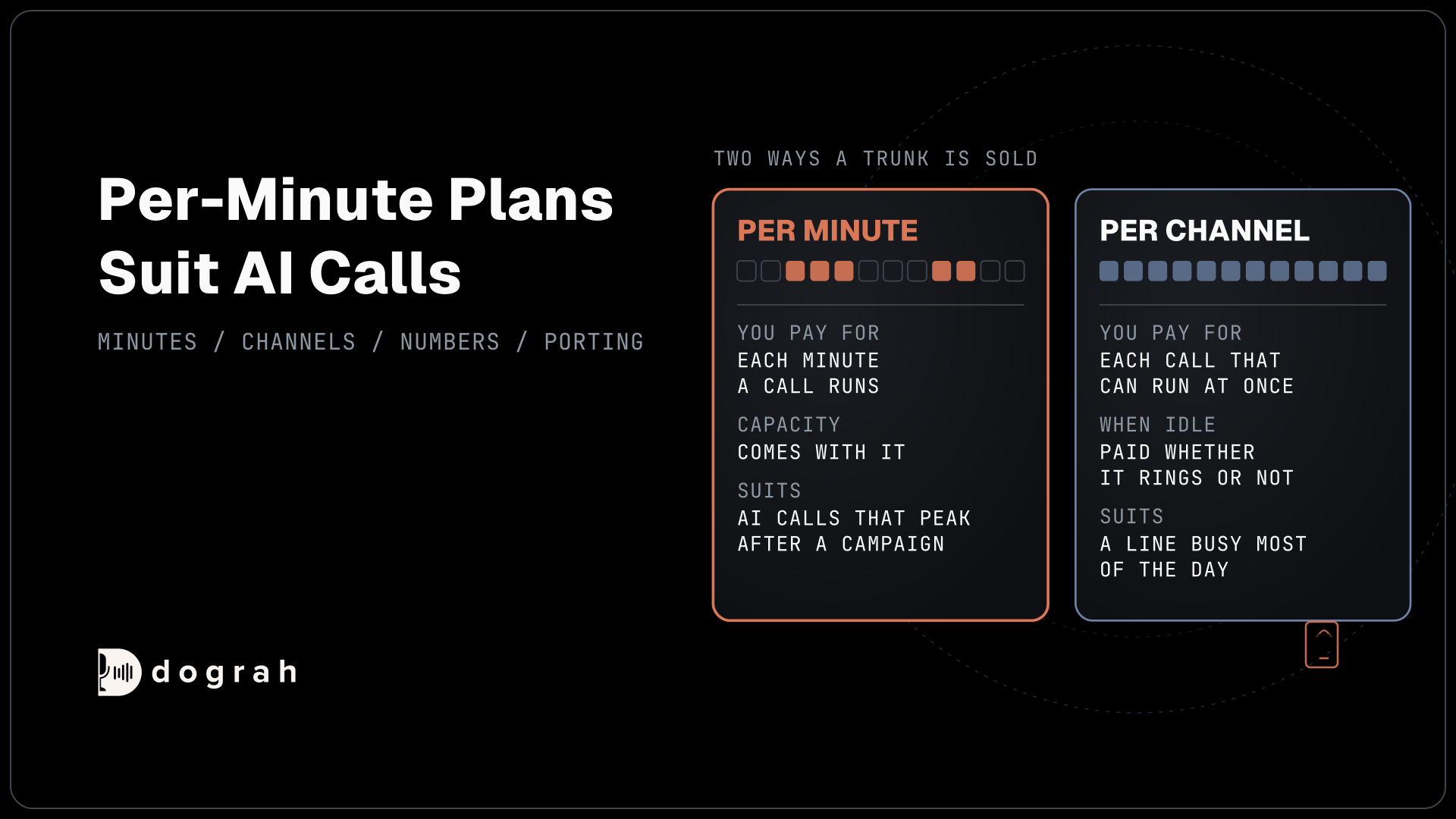
Cloudonix does not supply phone numbers or call minutes. Its plans charge for sessions, concurrent calls and AI services. The numbers and the per-minute charges come from a carrier or SIP trunk you already have or open separately.
So a working setup has at least three bills. The carrier bills the numbers and the minutes. Cloudonix bills its plan. The agent platform bills its own fee, plus the speech and language models behind the agent. Budget all three before you compare Cloudonix with a carrier account that sells numbers and minutes together.
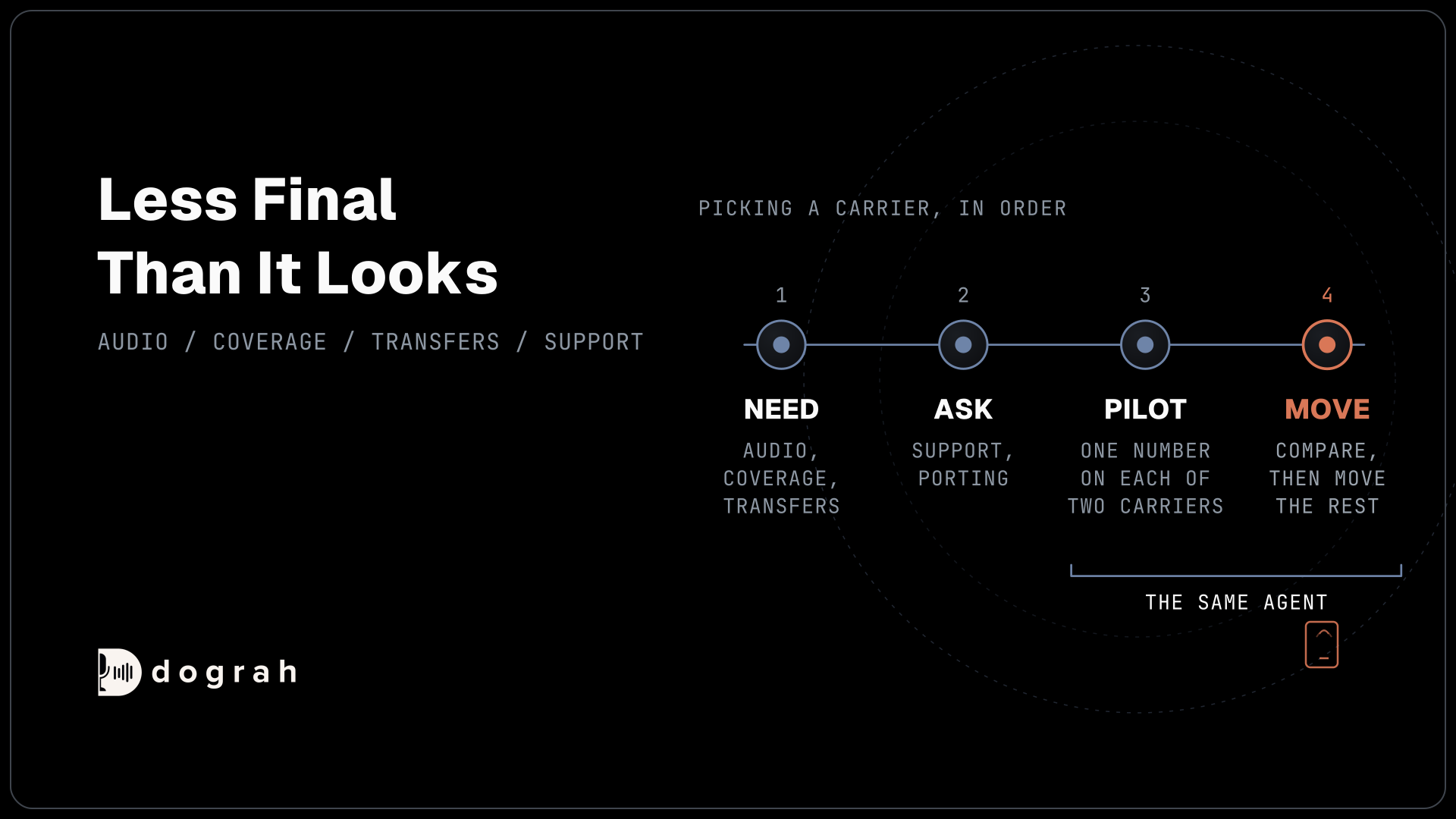
If you have no carrier yet, the shortest path is an account at a carrier that sells numbers and minutes together. Our Telephony 101 for voice AI explains carriers, SIP trunks and how a number reaches an agent.
Cloudonix pricing, plan by plan
Cloudonix prices five plans by sessions a month and calls at once, with lower monthly prices when billed annually. Here are Cloudonix's plans:
| Plan | Monthly | Per month, billed annually | Sessions a month | Active calls |
|---|---|---|---|---|
| Forever Free | $0 | $0 | 500 | 2 |
| Starter | $69 | $55 | 10,000 | 5 |
| Professional | $119 | $95 | 25,000 | 10 |
| Growth | $189 | $152 | 50,000 | 10 |
| Agency | $299 | $239 | 150,000 | 10 |
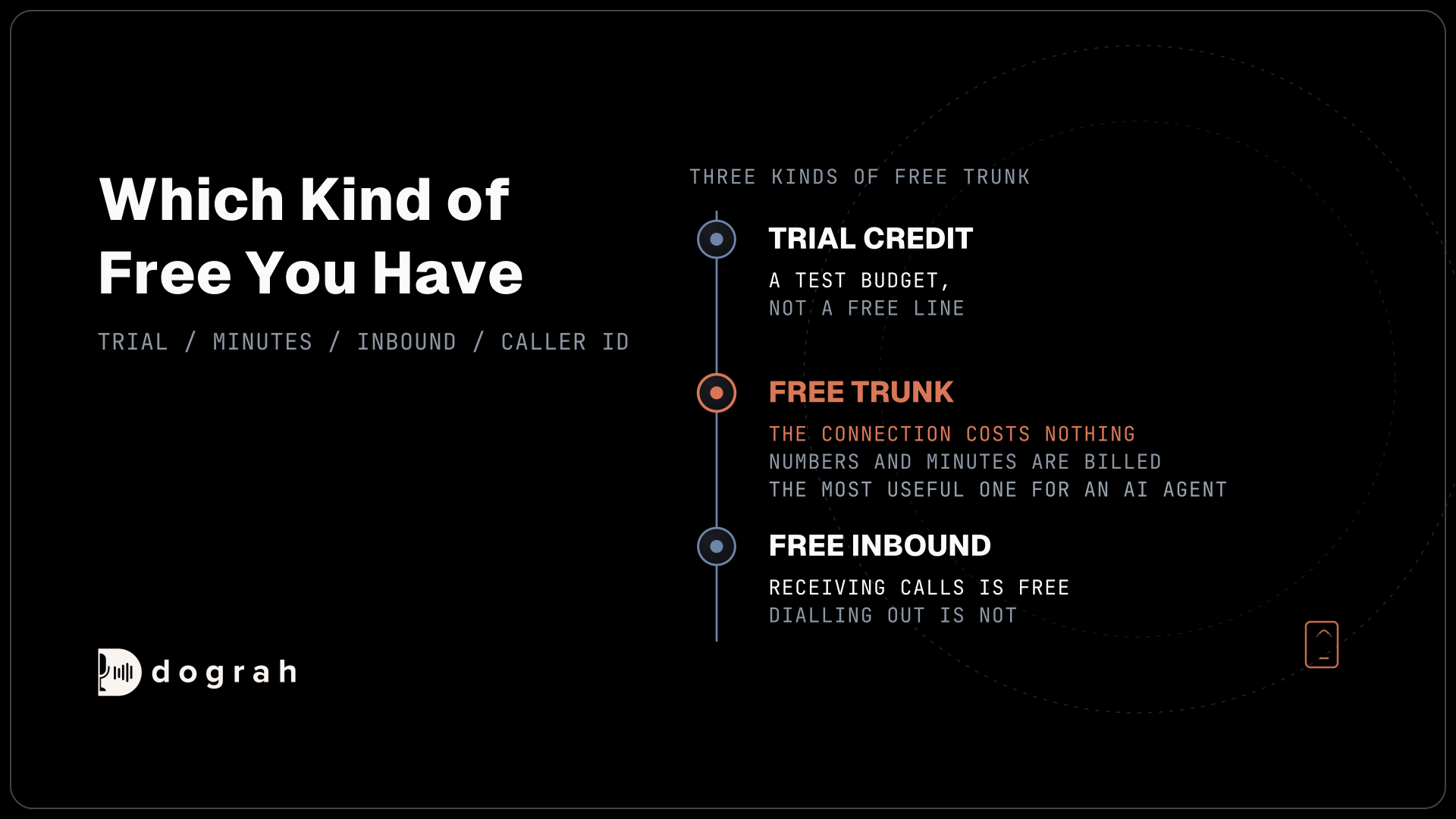
Every paid plan includes every feature, 180 minutes of AI services (speech-to-text, voice and language model), unlimited domains, 200 connected SIP devices, and the SDKs and APIs. The free plan has no overage and runs standard speech models only, with no language model.
Overage is priced in blocks. Extra AI services cost $18 per 180 minutes, extra sessions $79 per 25,000, and extra calls at once $120 per 10 channels. Going over your call limit without upgrading costs $0.50 per channel per day. At the end of each billing cycle Cloudonix reviews the sessions used, the most calls at once on any day and the AI minutes, and payments are not refundable.
Plans from Professional up all allow 10 calls at once, so sessions decide which of those three you need.

Open Source Alternative to Vapi / Retell
Self-hosted voice agent platform — no per-minute fees
dograh-hq/dograh
Star on GitHub
Setting up Cloudonix with Dograh
There are two ways to connect Cloudonix, and the first needs no Cloudonix account. On Dograh Cloud, every organization has a telephony configuration called Dograh Cloudonix SIP. We own that Cloudonix domain, so there is no Cloudonix account to open and nothing to pay on the Cloudonix side.
With Dograh Managed SIP, you bring a SIP trunk from your carrier, or your own phone system, and the numbers on it. Pick the region closest to your carrier (Global, India or UAE), point your numbers at the inbound hostname, and allow Dograh's outbound IP address on your trunk. Then add each number and mark a default caller ID, since Cloudonix rejects an outbound call without one, and set each number's Inbound workflow to the agent that should answer.
The second way uses your own Cloudonix account, on the Cloud or a self-hosted install. In the Cloudonix setup guide, you enter your Bearer Token, which is the domain's API key, and your Domain ID. The Application Name is optional, because Dograh creates the voice application for you when you save. You still link your numbers to that application in the Cloudonix cockpit and set up an inbound trunk with your voice provider.
Pick the first way if you only need your trunk connected to Dograh. Pick the second if you also use Cloudonix's own call flows or CXML applications, or run Dograh on your own servers.
Transfers and call audio
Transfer Call works on Cloudonix, so an agent can hand a caller to a person. Dograh rings the destination first and brings the caller in only once someone picks up. If nobody answers, the line is busy, the call fails or it times out, the agent gets transfer_failed and the call carries on with the agent.
Audio arrives at the agent as 8 kHz phone audio, while a browser test call runs at 16 kHz. Speech-to-text often hears the phone version less clearly, so test every agent over a real phone call through Cloudonix before a client's callers reach it.
Join the Dograh Community
Dograh is an OSS alternative to Vapi. Join our Slack community for queries, releases, best practices & community interactions.
Who Cloudonix suits
Cloudonix suits teams that already have a carrier or a phone system and want those lines to reach one or more AI agents. A contact center with an existing trunk, a business with its own phone system or an agency routing many clients' lines fits that description, and the Agency plan's unlimited domains point the same way.
It suits less well a team with no phone lines yet, since it still needs a carrier for numbers and minutes. That team gets numbers and minutes from one account at a carrier such as Telnyx, which our post on Telnyx voice AI pricing prices line by line.
On Dograh Cloud, a team with its own trunk already has a Cloudonix layer through Managed SIP. A Cloudonix plan of your own pays off when you want Cloudonix's call-flow tools, its CXML applications, or one set of lines shared across several agent platforms. For a receptionist on lines you already run, see our page on an AI receptionist on your own phone lines.
What to ask Cloudonix before you sign up
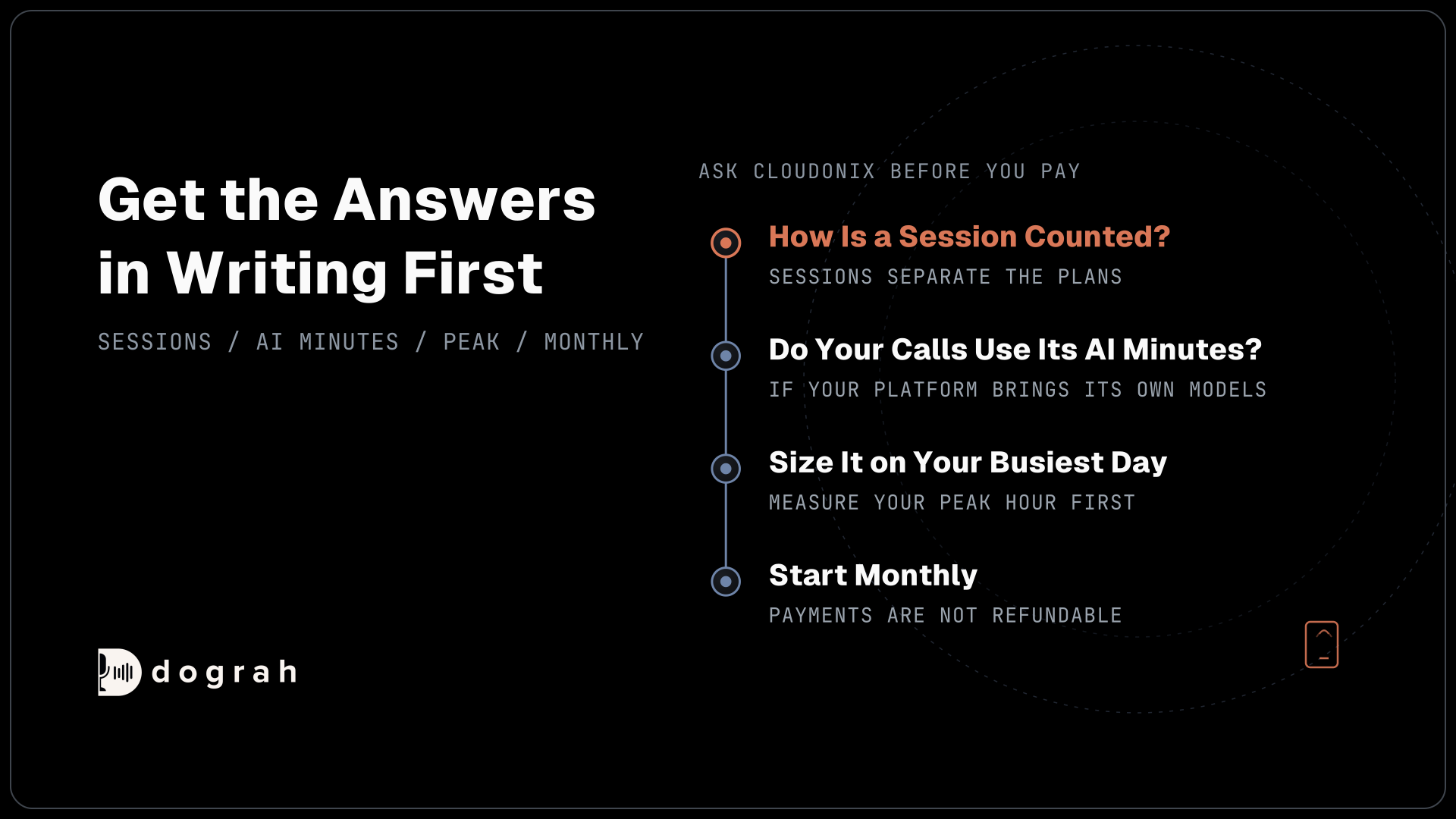
A few answers decide whether a plan fits your traffic, so get them in writing before you pay. Start with the session. Ask how Cloudonix counts one for your calls, whether per call, per call leg or another unit, because sessions are what separate the Professional, Growth and Agency plans.
Next, ask about the AI minutes. Every paid plan bundles 180 minutes of Cloudonix's own speech and language services. If your agent platform brings its own models, as Dograh does with your keys or its managed models, ask whether your calls draw on those minutes at all, so you never budget for AI overage you will not use.
Then size the plan on your busiest day. The billing review looks at the most calls running at once on any day, so one campaign spike can push you into extra channels at $120 per 10, or $0.50 per channel per day if you do not upgrade. Measure your peak hour first.
Last, start monthly. Payments are not refundable, and billing annually saves $14 a month on Starter ($69 against $55) and $60 a month on Agency ($299 against $239), a saving worth taking once a month of real traffic proves the plan.
Cloudonix and Dograh's other phone options
Dograh connects to Cloudonix and to several other phone options, and each changes who bills what. The table shows what you bring for each option, who bills the minutes and whether Transfer Call works.
| Option | What you bring | Who bills the minutes | Transfer Call | Extra plan |
|---|---|---|---|---|
| Your own Cloudonix account | A carrier or SIP trunk and its numbers | Your carrier | Yes | Cloudonix, free to $299 a month |
| Dograh Managed SIP (Dograh Cloud) | A SIP trunk or phone system and its numbers | Your carrier | Yes | None on the Cloudonix side |
| Twilio or Telnyx account | Nothing, numbers are bought there | Twilio or Telnyx | Yes | None |
| Asterisk ARI (self-hosted Dograh) | Your Asterisk server and trunk | Your carrier | Yes | None |
The agent platform is its own line in every row. Self-hosted Dograh has no per-minute platform fee, but servers, model keys and phone minutes still cost money. Dograh Cloud charges a 1¢-a-minute platform fee. The models bill at each provider's own rates, as our breakdown of what an AI voice agent costs per minute shows.
Glossary
- SIP trunk
- A connection that carries phone calls over the internet between a carrier and your phone system or platform. Cloudonix and Dograh Managed SIP both expect you to bring one, with numbers on it.
- DID
- Direct inward dialing number, a phone number your carrier routes to you. Cloudonix calls them DNIDs, and each one must be linked to the voice application that answers it.
- CXML
- Cloudonix's XML markup for voice applications. It tells Cloudonix what to do with a call, such as dial a SIP destination or stream the audio to an agent.
- Concurrent calls
- How many calls run at the same moment. Cloudonix plans allow 2 to 10, with more sold in blocks of 10, and Dograh Cloud pay as you go includes 10.