
The best conversational AI tools for business sort by job. Dograh, the open-source AI voice agent platform we build, leads for phone calls, and you can self-host it or run it on Dograh Cloud. Vapi, Retell AI and PolyAI handle calls, Intercom Fin and Voiceflow cover support chat, Lindy covers internal work and Amazon Lex runs inside contact-center suites.
Key Takeaways
- Sort tools by the job first, then compare prices inside each group.
- Phone calls bring 8 kHz audio and tight reply times, so voice tools differ.
- Fin bills per outcome, Lindy per credit, and most voice platforms per minute.
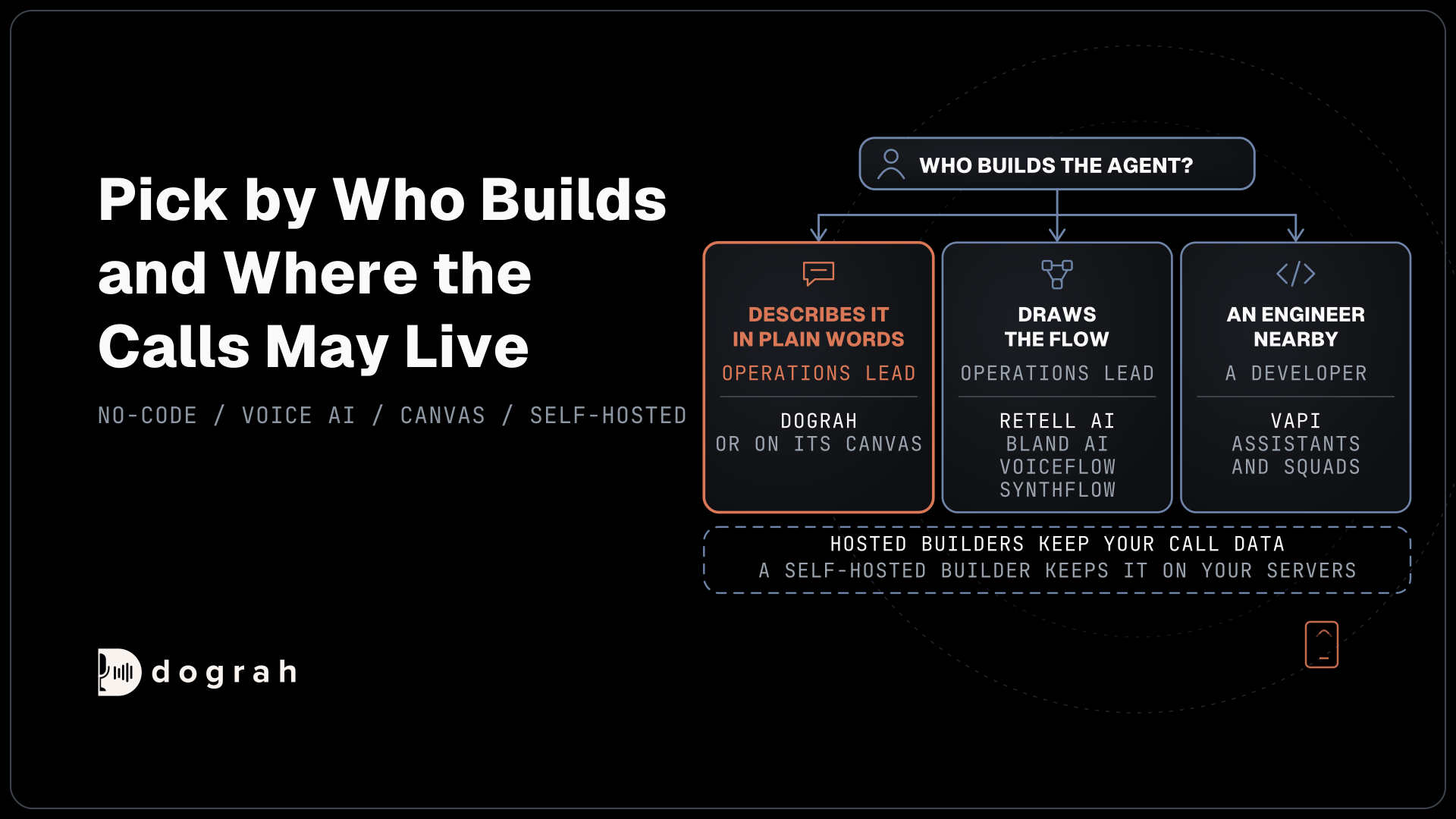
Conversational AI covers chat widgets, phone agents, workplace assistants and contact-center bots, and one ranking cannot compare them. We group the tools by job, explain why phone calls need their own stack, then cover each group in turn, opening the voice group with open-source Dograh.
The tools grouped by job
Each tool below is built for one main job, and its price model follows from that job. A support chat tool bills for each conversation it resolves, while most voice platforms bill by the minute and leave the models and the phone line as separate lines.
| Tool | Main job | How you pay | Where it runs | Code |
|---|---|---|---|---|
| Dograh | Phone calls | No per-minute platform fee self-hosted, 1¢/min platform fee on Dograh Cloud | Your servers, Dograh Cloud, or on-prem on Enterprise | Open source, BSD 2-Clause |
| Vapi | Phone calls | $0.05 a minute hosting, models and phone billed apart | Vapi's cloud | Closed |
| Retell AI | Phone calls | $0.055 a minute voice infrastructure, $0.07 to $0.31 all-in | Retell's cloud | Closed |
| PolyAI | Phone calls | Self-serve plans from $49 a month for 250 minutes | PolyAI's cloud | Closed |
| ElevenLabs Agents | Voice agents on phone and web | $0.08 per minute past the plan, language model extra | ElevenLabs' cloud | Closed |
| Intercom Fin | Support chat and messaging | $0.99 per outcome | Intercom's cloud | Closed |
| Voiceflow | Chat, phone and SMS agents | Plan fee, seats and credits | Voiceflow's cloud | Closed |
| Rasa | Chat assistants built by engineers | Free Developer Edition license, paid Rasa Pro above it | Your servers or private cloud | Rasa Pro proprietary |
| Lindy | Internal assistant | Team from $49.99 a month for 5,000 credits | Lindy's cloud | Closed |
| Amazon Lex | Bots inside Amazon Connect | Per request, on your AWS bill | AWS | Closed |
Why phone calls need their own tools
A phone agent works with less than a chat assistant, which is why tools built for chat often struggle once they answer calls. Most phone calls still reach the agent as 8 kHz narrowband audio, while a browser demo runs at 16 kHz, so names and account numbers are easier to mishear on a real line. Callers also expect a reply almost at once.
In our experience, a voice reply feels natural when the whole round trip stays under about 800 milliseconds, and speech-to-text is usually the slowest stage, more often than the language model. That is why the voice group below holds platforms built around telephony and turn-taking. Our guide to conversational AI on a phone call covers interruptions, short spoken answers and handover in more depth.
Phone calls: Dograh, the open-source option
Dograh leads the voice group because it is the one full platform here whose code is open, under the BSD 2-Clause license. You can run it with Docker on your own servers, use Dograh Cloud, or take on-prem or private-cloud deployment on the Enterprise plan. Our list of the best open-source voice AI platforms compares it with Pipecat, LiveKit Agents and smaller open projects, license by license.
You create an agent by describing it on the "Create an agent" page. The Agent Builder may ask a few questions, then shows a "Your agent requirements" card with "Approve & build", builds the agent for review, and "Test agent" publishes version 1. On Cloud, its use is billed in Dograh credits. A self-hosted install needs a Dograh Service Key in Model Configurations to use it, or your team builds on the canvas by hand.
Calls run on Twilio, Vonage, Plivo, Telnyx, Exotel, Vobiz, Cloudonix, or an Asterisk PBX through ARI. You pick every model under the agent, with your own keys for providers such as Deepgram or ElevenLabs, or open models running on your own hardware. Pre-recorded clips can play the most common lines in a real human voice, with text-to-speech covering everything else.
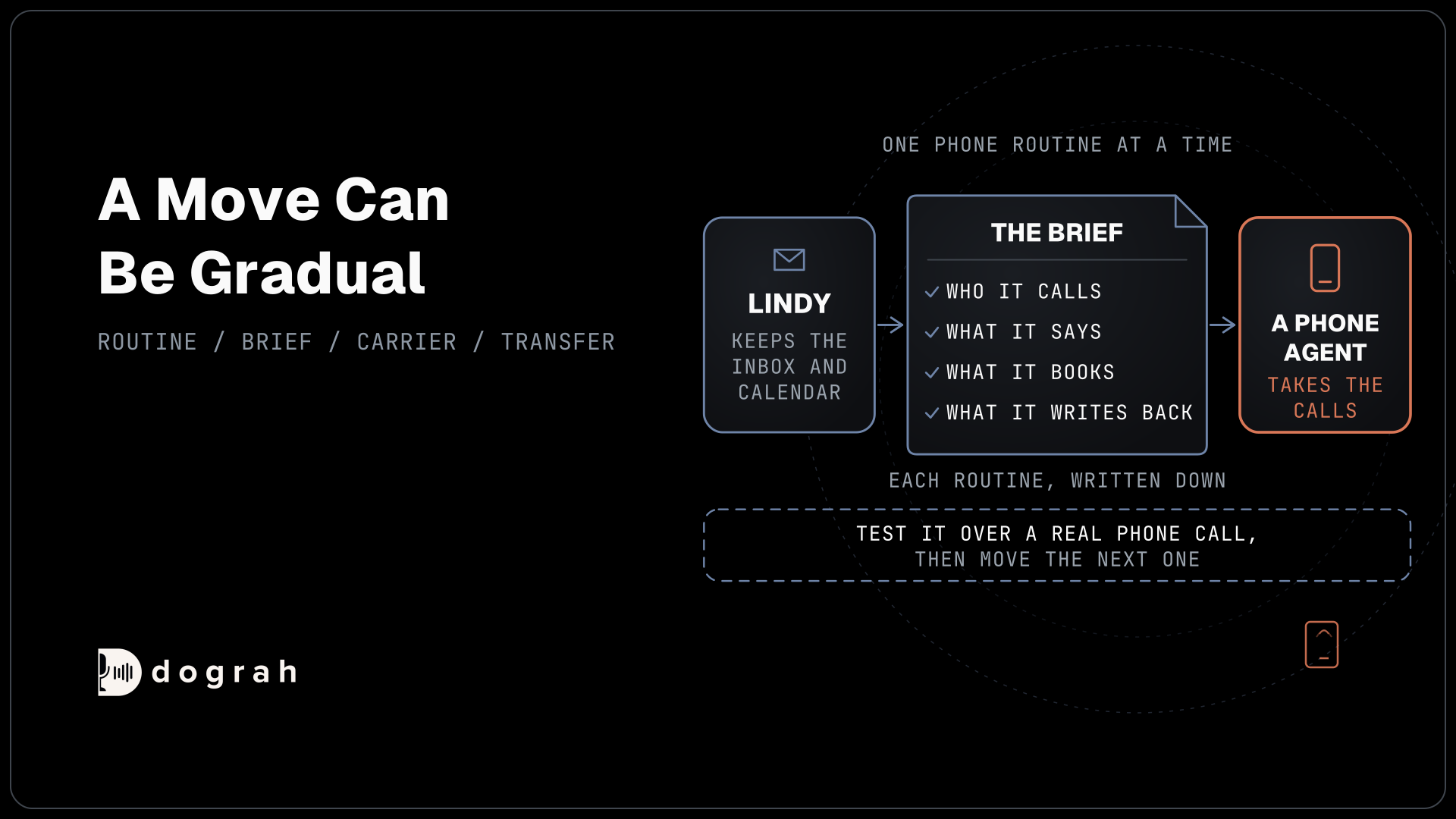
When a caller needs a person, Transfer Call works on Twilio, Telnyx, Plivo, Cloudonix and Asterisk ARI. Dograh calls the destination first and connects the caller only when someone answers. After the call, the QA step scores each step of test and live calls, on whatever share of calls you choose to sample.
On cost, running Dograh yourself means no per-minute platform fee, although servers, model keys and phone minutes still cost money. On Dograh Cloud, a 1¢-a-minute platform fee sits beside your model and carrier costs.
Self-hosting also hands your team the server, the database and every upgrade. The open-source edition is supported by the community in Dograh's Slack, and the Enterprise plan adds a dedicated account manager and custom SLAs.

Open Source Alternative to Vapi / Retell
Self-hosted voice agent platform — no per-minute fees
dograh-hq/dograh
Star on GitHub
Hosted voice platforms and how they bill
The hosted voice platforms run your calls on their own cloud with closed code, and each one prices the minute differently. Vapi charges $0.05 a minute for hosting, with the models and the phone minutes passed through at cost. Retell AI charges $0.055 a minute for its voice infrastructure, and complete agents run $0.07 to $0.31 a minute depending on the models.
PolyAI now sells self-serve plans, starting with Essentials at $49 a month for 250 minutes. ElevenLabs Agents bills $0.08 for each minute past the plan, with the language model billed on top. Our comparison of conversational AI platforms for phone calls sets these side by side with what each price leaves out.
Support chat: Fin, Voiceflow and Rasa
Support chat tools answer customers in a website widget, by email or in messaging apps, and most of them charge by results or usage. Intercom's Fin uses per-outcome pricing at $0.99 an outcome. It works with Intercom's own helpdesk or with another one, where a minimum of 50 outcomes a month applies, and covers tickets, email, live chat, WhatsApp and SMS. Fin Voice is offered to select customers through sales.
Voiceflow fits a team that wants one agent across chat, phone and SMS. Its credit-based billing combines a plan fee, seats and numbers, and credits, and a phone minute costs 10 credits, or $0.05 on self-serve plans. The monthly credit allotment resets each billing cycle, and without auto top-ups a zero balance can interrupt your agents mid-month.
Rasa suits a company with its own engineers that wants the assistant on its own servers. The free Developer Edition allows one bot per company with up to 1,000 external or 100 internal conversations a month, locally or in production. Larger use moves to Rasa Pro, self-managed on-prem or in a private cloud, and voice comes through an AudioCodes connector sold as an extra. The older Rasa Open Source project is in maintenance mode.
Internal assistants: Lindy and Moveworks
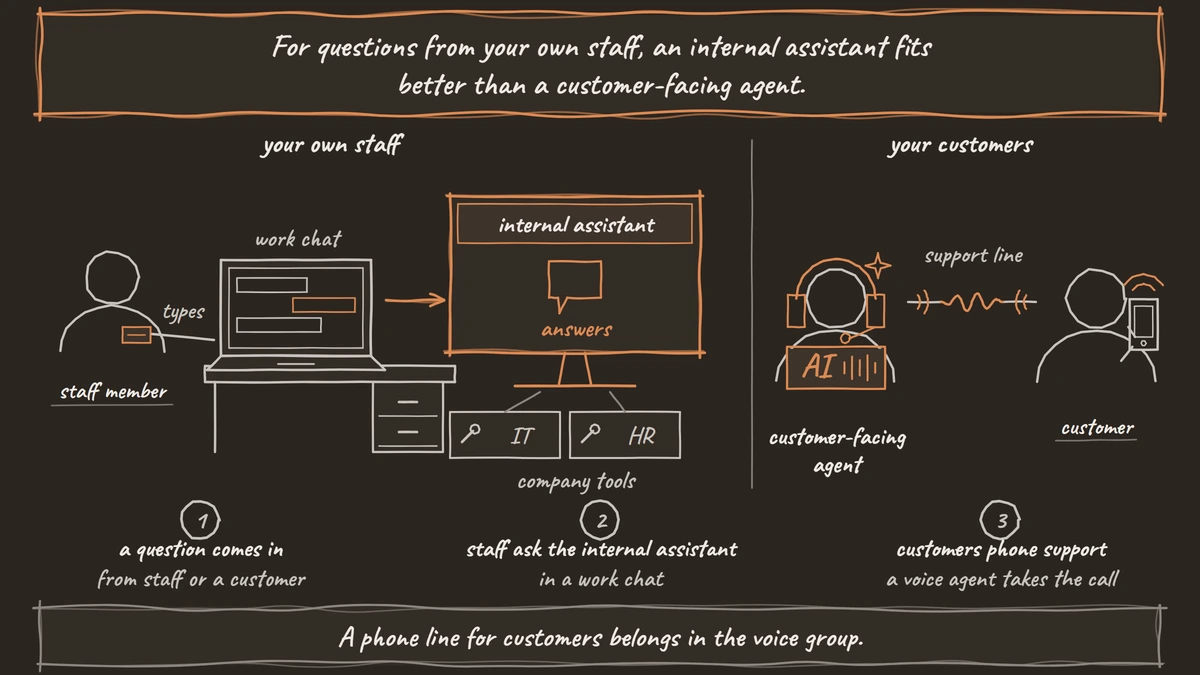
Internal assistants work for your own staff, so they answer questions and take actions inside company tools. Lindy sells AI agents for everyday work on per-user plans, with Team from $49.99 a month for 5,000 credits and top-ups at $10 per 1,000. Its phone calls cost from 25 credits a minute, which at $0.01 a credit on base plans works out to $0.25 a minute, and a number adds its own monthly fee. Lindy lists SOC 2 Type II and GDPR, with HIPAA and a business associate agreement on Enterprise.
Moveworks, now part of ServiceNow, is an AI assistant for the whole workforce. Staff reach it through chat, web, intranet portals and mobile, across IT, HR, finance and other teams. It suits a large company that wants one assistant over many business apps, while a phone line for customers belongs in the voice group.
Join the Dograh Community
Dograh is an OSS alternative to Vapi. Join our Slack community for queries, releases, best practices & community interactions.
Contact-center bots inside a suite
Contact-center bots live inside a suite you already pay for. Amazon Lex runs inside Amazon Connect and bills per request, and NiCE CXone and Genesys Cloud add their own AI agents to seat-based suites. They suit a large team that wants the bot in the same routing and reporting as its human agents. The trade is lock-in, since the bot's flows live inside the suite. Our guide to NiCE CXone AI alternatives covers when to swap only the AI layer.
AI is already common on the analysis side of these teams. In a OnePoll survey for Puzzel, 78% of 1,505 contact center professionals and CX leaders in the UK, the Netherlands, Sweden, Norway and Denmark said they use AI to analyze customer interactions.
Picking a conversational AI tool by job
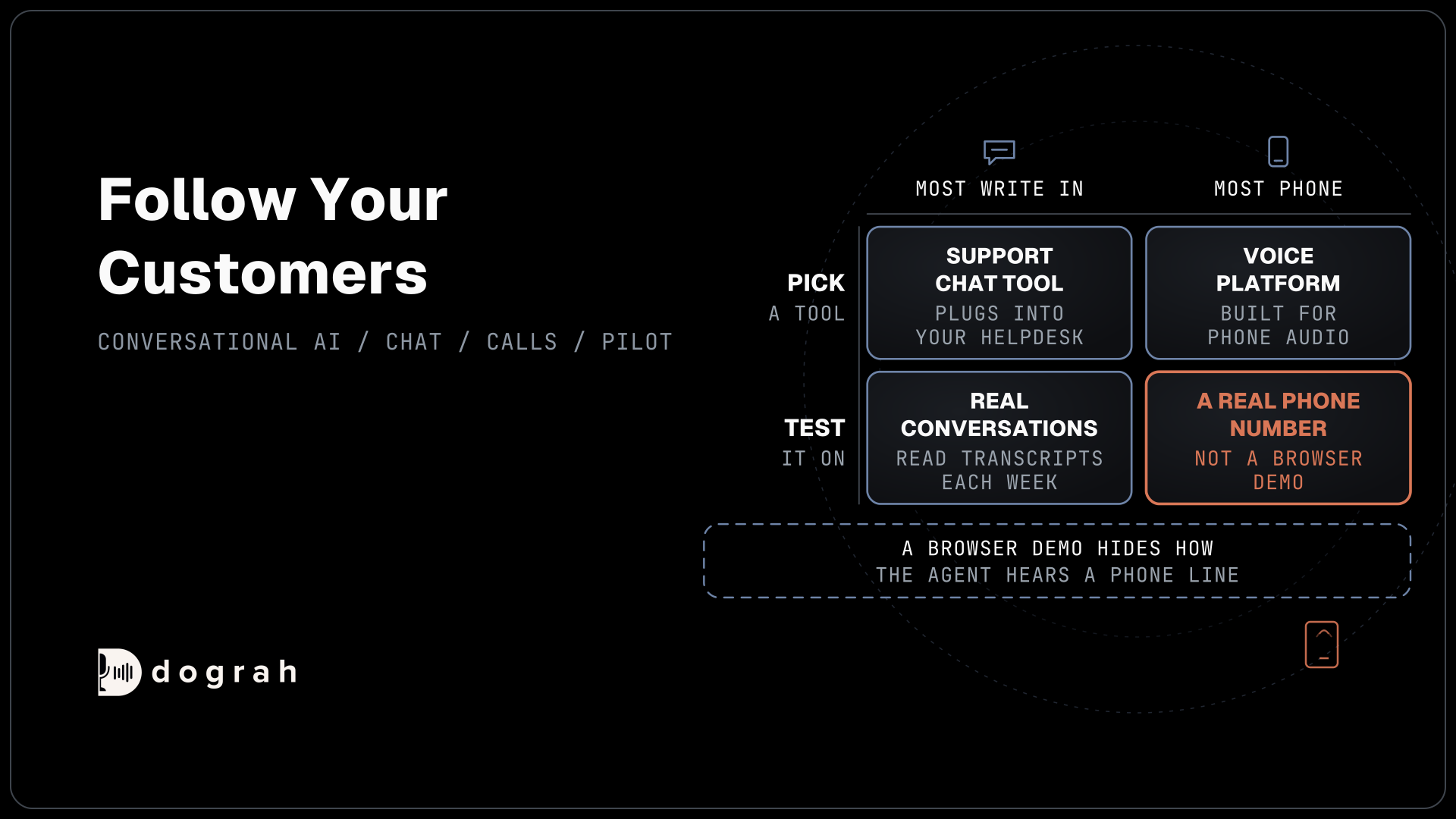
If most customers write to you, start with a support chat tool that plugs into your helpdesk, and price it per resolved conversation. If most of them phone, pick a voice platform and test it on a real phone number before you compare minute rates, because a browser demo hides how the agent hears a phone line.
Where the calls and their data have to stay on your own servers, Dograh is the open-source pick, on your hardware or on-prem through Enterprise. In healthcare and finance, compliance rules often keep call data away from third-party services. Teams that would rather have a vendor run everything can choose among the hosted voice platforms.
For questions from your own staff, an internal assistant fits better than a customer-facing agent. And if your human agents already work inside a contact-center suite, its built-in bot may be the shortest path, as long as you accept that the flows stay there.
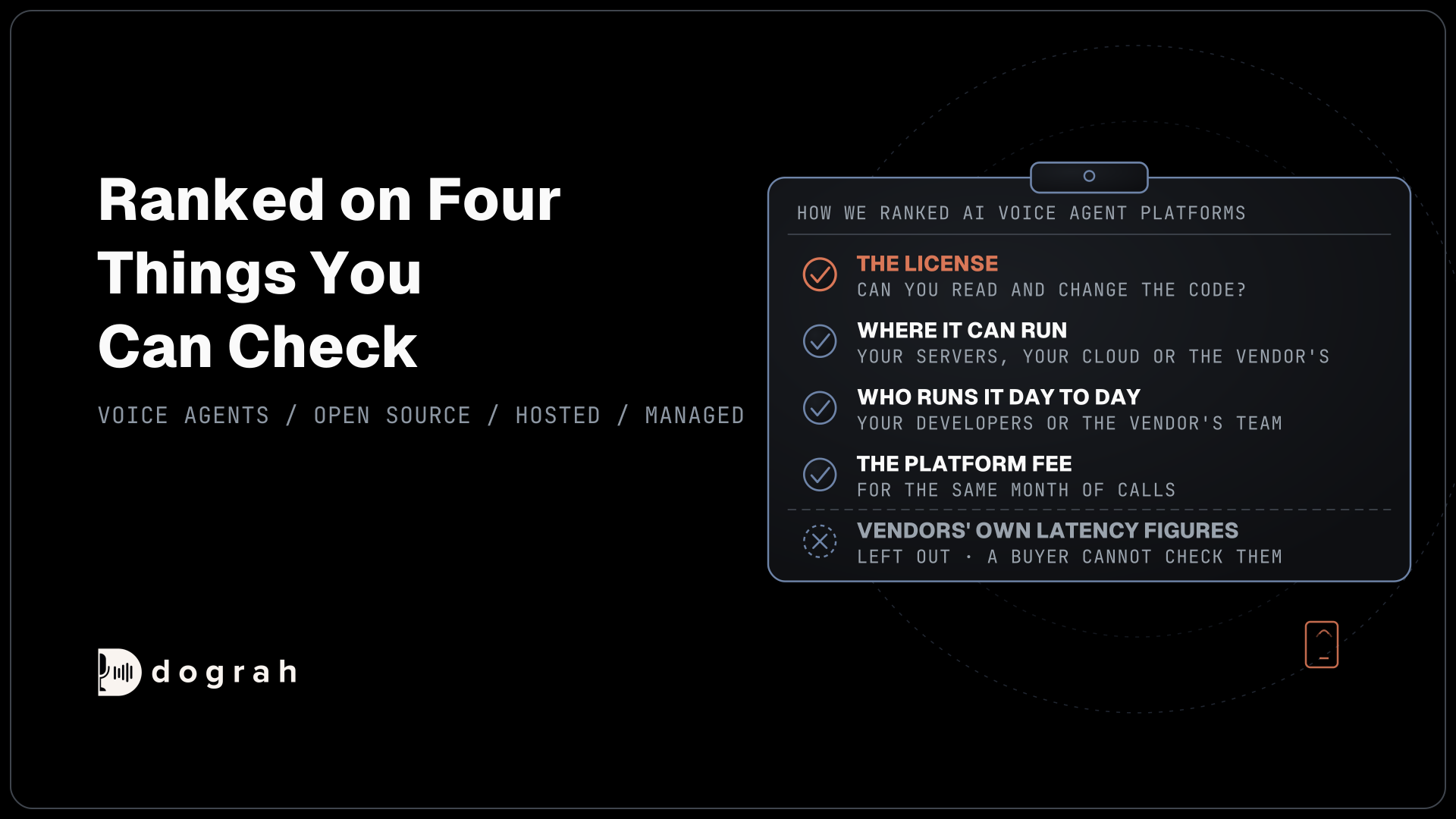
Whichever group you choose, pilot the tool on real conversations before you sign for a year. Read a sample of transcripts each week, note where the tool gave up or gave a wrong answer, and compare that list across the tools on your shortlist rather than the vendors' own resolution figures.
Glossary
- Per-outcome pricing
- Billing for each conversation the AI resolves or each result it reaches, instead of by the minute or the seat. Intercom's Fin charges $0.99 an outcome.
- Narrowband audio
- Phone audio sampled at 8 kHz, which drops the high sounds that tell letters such as s and f apart. Most phone calls still reach a voice agent this way, while a browser demo runs at 16 kHz.
- Credit-based billing
- A plan that sells a pool of credits and deducts them for each action, message or call minute. Voiceflow charges 10 credits for a phone minute, and Lindy from 25.
- Agent Builder
- Dograh's way to create an agent by describing it. It may ask a few questions, shows the requirements for approval, then builds the agent for review.