
Air AI no longer sells AI voice agents on its own site, where air.ai now shows an unrelated defense software product. The FTC sued Air AI and its owners in August 2025 and announced a proposed settlement in March 2026. For code you can read, Dograh, the open-source AI voice agent platform, runs self-hosted or on Dograh Cloud.
Key Takeaways
- Air AI's old site shows no voice product, price or sign-up today.
- The FTC alleged false earnings claims and refund promises it rarely honored.
- The proposed settlement bans marketing business opportunities and still awaits the court.
A search for an Air AI review now leads to a vendor that no longer sells. We cover what its old site shows, what the FTC alleged and which rules it named, the proposed settlement, warning signs for any voice AI purchase, and the options left, Dograh among them.
What Air AI's own site shows today
Air AI's voice agent product is no longer on its own website. The address air.ai now opens a defense software site titled "Air | Enterprise Readiness", with a demo request form and a press room of defense news. The old pricing page returns an error, and nowhere on the site can you find a voice agent, a price or a sign-up.
So there is nothing to review in the usual sense. Per-minute rates and license fees quoted for Air AI around the web come from other companies' write-ups. While it operated, Air AI was closed and hosted, with no code you could read or run yourself. The most reliable record of how it sold is the case the Federal Trade Commission (FTC) brought against it.
That record describes two kinds of buyer. Some paid for access to use the AI agents in their own business. Others paid more for a license to resell the agents to their own clients, the model an agency would recognize. The FTC also lists Scale 13 as a name Air AI did business under. Both groups were sold on growth, and the case turns on what they were told about it.
What the FTC alleged in its complaint
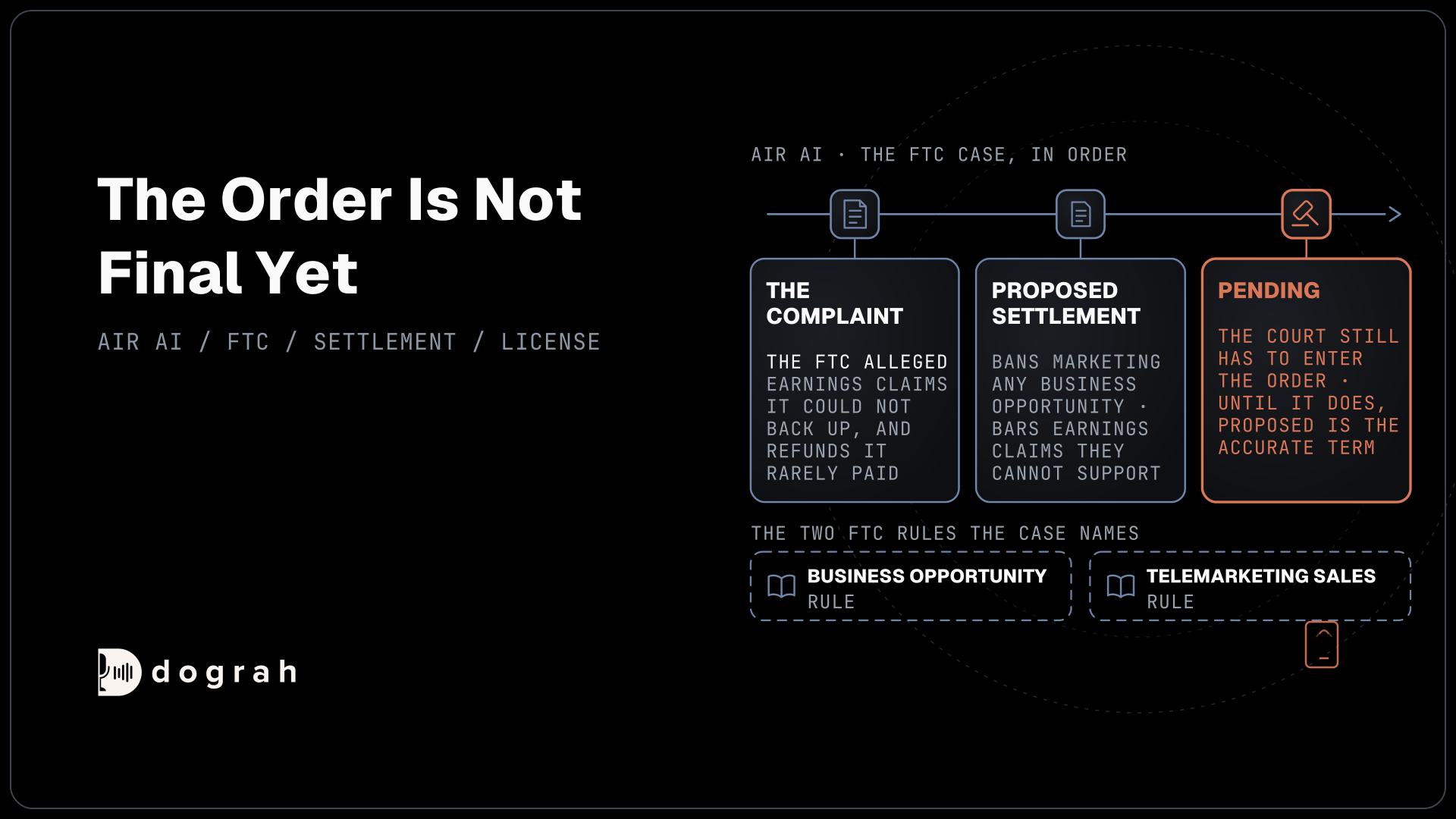
The FTC's case is about how Air AI sold, more than how its calls sounded. In August 2025, the FTC sued Air AI Technologies, five related companies and its owners in federal court in Arizona. The agency alleged that Air AI marketed its conversational AI as able to replace human customer service representatives, made earnings claims it could not back up, and promised refunds it rarely paid. It said some buyers lost as much as $250,000.
The complaint adds the scale. It alleges that the defendants took roughly $19 million from consumers over only a few years. Access to the product sold for $15,000 to $30,000, and licenses to resell it for $25,000 to $100,000. One license holder, the complaint says, found that the AI test agent would not stick to the script.
These are the FTC's allegations, and this post describes them that way throughout. Where the case stands today is in the settlement section below.
The two FTC rules the case names
The FTC named two of its own rules, and both reach well beyond Air AI. The Business Opportunity Rule covers anyone selling a business opportunity, such as a license to resell a product to clients. Before the sale, the seller must give the buyer a disclosure document. If the seller makes any claim about what the buyer can earn, it must also give a written earnings claim statement that backs the claim up.
The Telemarketing Sales Rule covers sales made over the phone, and it bars sellers from misrepresenting what they sell on those calls. The first rule protects the buyer of the opportunity, so an agency paying to resell AI calling to its clients is the kind of buyer it was written for. If you paid for an Air AI license, or are weighing a similar offer now, confirm your own position with counsel.

Open Source Alternative to Vapi / Retell
Self-hosted voice agent platform — no per-minute fees
dograh-hq/dograh
Star on GitHub
What the proposed settlement says
In March 2026, the FTC announced a proposed settlement with Air AI and its owners. The proposed order bans them from selling or marketing any business opportunity. It also bars misrepresentations in telemarketing or in selling any goods or services, along with earnings claims they cannot support.
The money terms are far smaller than the losses alleged. The order sets an $18 million judgment, largely suspended because the defendants cannot pay it, and the operators pay $50,000 for consumer relief. The Commission voted 2-0 to file it.
The order is not final yet. The FTC's case page lists the matter as pending, with the stipulated order and an unopposed motion to enter it filed on the same day, so the court still has to enter the order. Until it does, "proposed settlement" is the accurate term.
Warning signs for any voice AI purchase
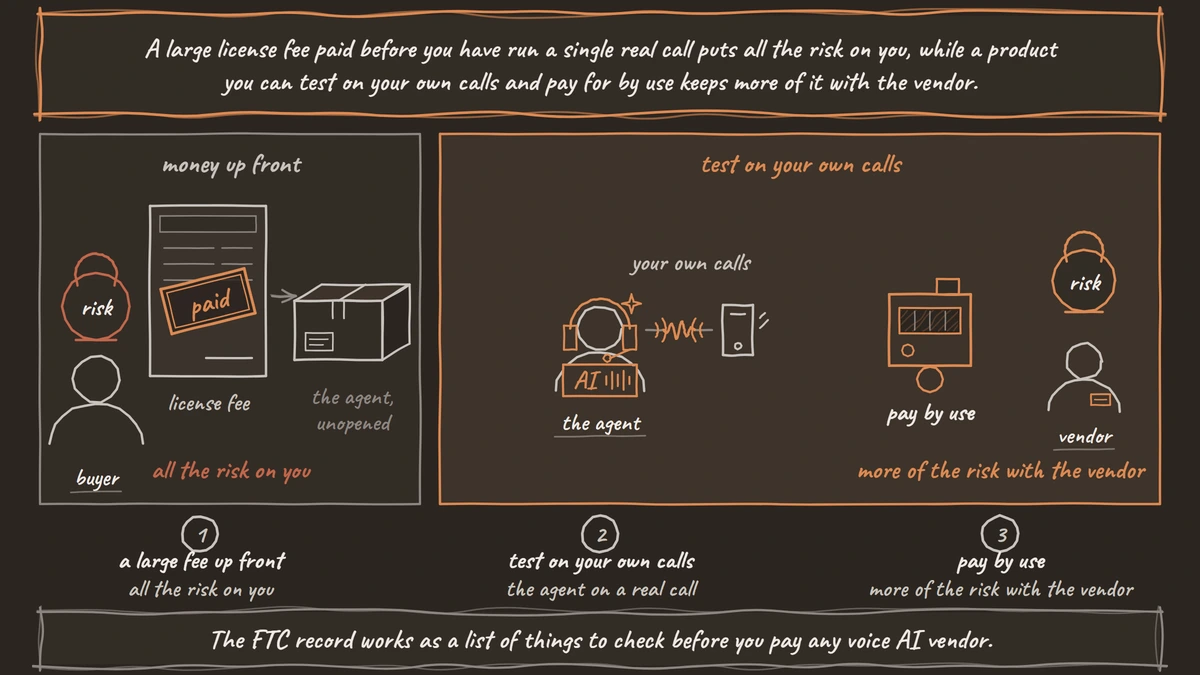
The FTC record works as a list of things to check before you pay any voice AI vendor. The first is money up front. A large license fee paid before you have run a single real call puts all the risk on you, while a product you can test on your own calls and pay for by use keeps more of it with the vendor.
The second is an earnings promise. If a seller tells you how much you will make reselling AI calls, ask for the written statement behind that figure, since a business opportunity seller that makes an earnings claim owes you one. A refund guarantee is the third sign, and it is only as good as its written terms, so get the process on paper, including who decides and how long a refund takes.
The fourth is a demo that never meets your script, which is what the license holder in the complaint ran into. Run test calls with your own script, over a real phone line, before you sign. Most phone calls still reach the agent as 8 kHz audio, while a browser demo runs at 16 kHz, so a demo can sound better than live calls will.
The last is a promise to replace your staff. Plan for a person to take the calls the agent cannot finish, and check how the product hands those calls over. Our voice AI platform buyer's checklist turns checks like these into RFP questions.
Join the Dograh Community
Dograh is an OSS alternative to Vapi. Join our Slack community for queries, releases, best practices & community interactions.
Options for teams that wanted Air AI
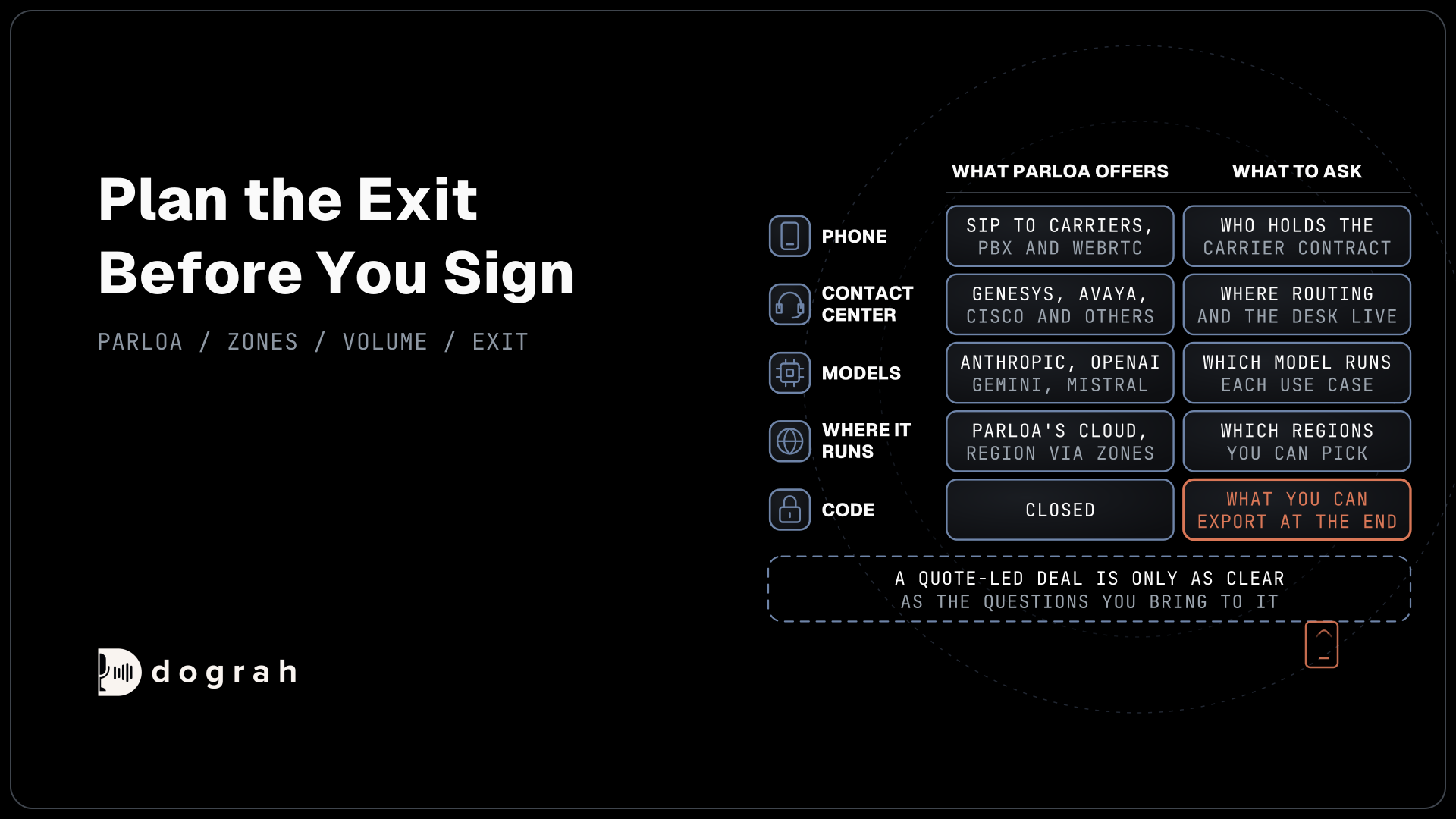
Air AI sold AI phone agents for sales and customer service calls, so the options sit in the same places. Hosted voice agent platforms run the agent for you and usually charge by the minute. AI dialers keep a rep on every call and use AI to dial and route. Open-source platforms let you read the code and run the agent on your own servers.
Whichever route you take, the checks above apply, and the earnings and refund questions matter most if you plan to resell to clients. With a hosted platform, ask for the per-minute rate in writing and what happens to your agents and call history if you leave. With an open-source platform, ask who runs the servers and who you call when something breaks, since the answer is often your own team. Our list of the best AI cold calling software compares hosted platforms and dialers for outbound sales.
Where Dograh fits
Dograh suits a buyer who wants to see what a product does before paying for it. As the open-source AI voice agent platform we build, it publishes its code under the BSD 2-Clause license on GitHub, so your engineers can read how calls, tools and call data are handled instead of taking a sales claim on trust. There is no license to buy up front. Running Dograh on your own servers carries no per-minute platform fee, though you still pay for those servers, your model keys and your phone minutes. Dograh Cloud adds a 1¢-a-minute platform fee.
You can hear the agent before anything goes live. Browser test calls run from the editor, and the QA step scores each step of a test call on its own, so weak spots show up before a customer hears them. Each call's trace then shows the speech-to-text, AI and voice time for every turn. New agents start in the Agent Builder. On the "Create an agent" page you describe what the agent should do, answer a few questions, and approve its requirements before it builds, then "Test agent" publishes version 1. On Cloud the builder is billed in credits, and a self-hosted install needs a Dograh Service Key for it, or you build on the canvas.
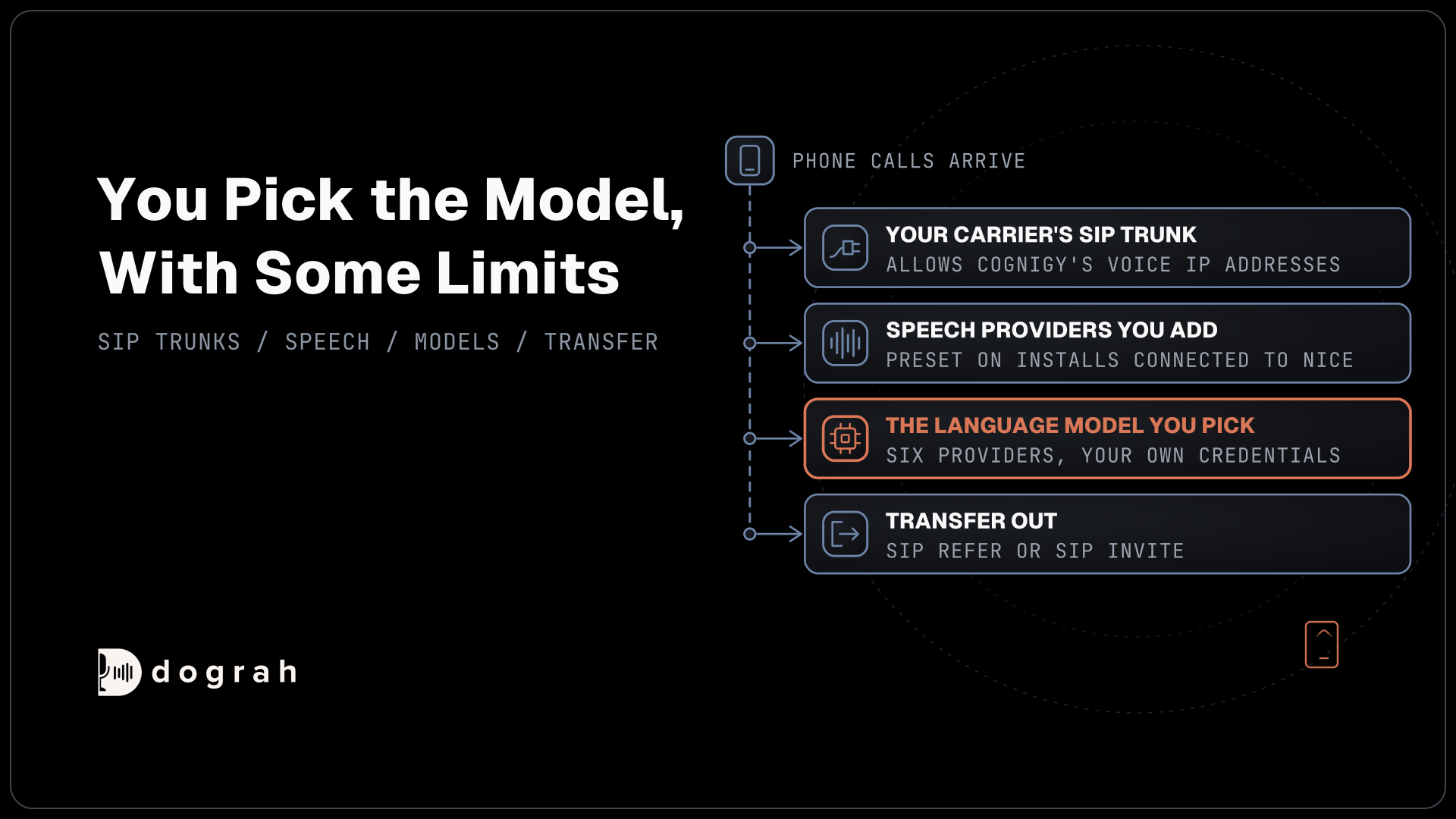
Plan for people on the calls that need them. Transfer Call rings the person first and joins the caller only once someone picks up. A busy line, no answer or a failed attempt sends the call back to the agent, and the conversation carries on.
Self-hosting also makes the upkeep yours. Your team looks after the server, the database and each upgrade. Support on the open-source version comes from the community on Slack and GitHub, and Enterprise plans add custom SLAs. Our guide to open-source voice AI agents covers that choice in more depth.
Glossary
- Business opportunity
- Under the FTC's Business Opportunity Rule, a paid offer to start a business in which the seller says it will help, for example by supplying customers or accounts. A license to resell AI calling to clients can fall under it.
- Earnings claim statement
- A written statement a business opportunity seller must give the buyer when it claims what the buyer can earn. It sets out the claim and what backs it up.
- Stipulated order
- An order both sides agree to and file with the court. It takes effect once the court enters it, which is why the Air AI order is still described as a proposed settlement.
- Telemarketing Sales Rule
- The FTC rule for sales made over the phone. It bars sellers from misrepresenting what they sell on those calls, and the Air AI case names it alongside the Business Opportunity Rule.