
AI voice agents for renewals in telecom call customers near the end of their contract, verify them, then repeat the end date, the price after and the best offers your system returns. In the UK the written notice goes first. Any offer needs written consent for an AI-voice call, and US offers outside current services need CPNI approval.
Key Takeaways
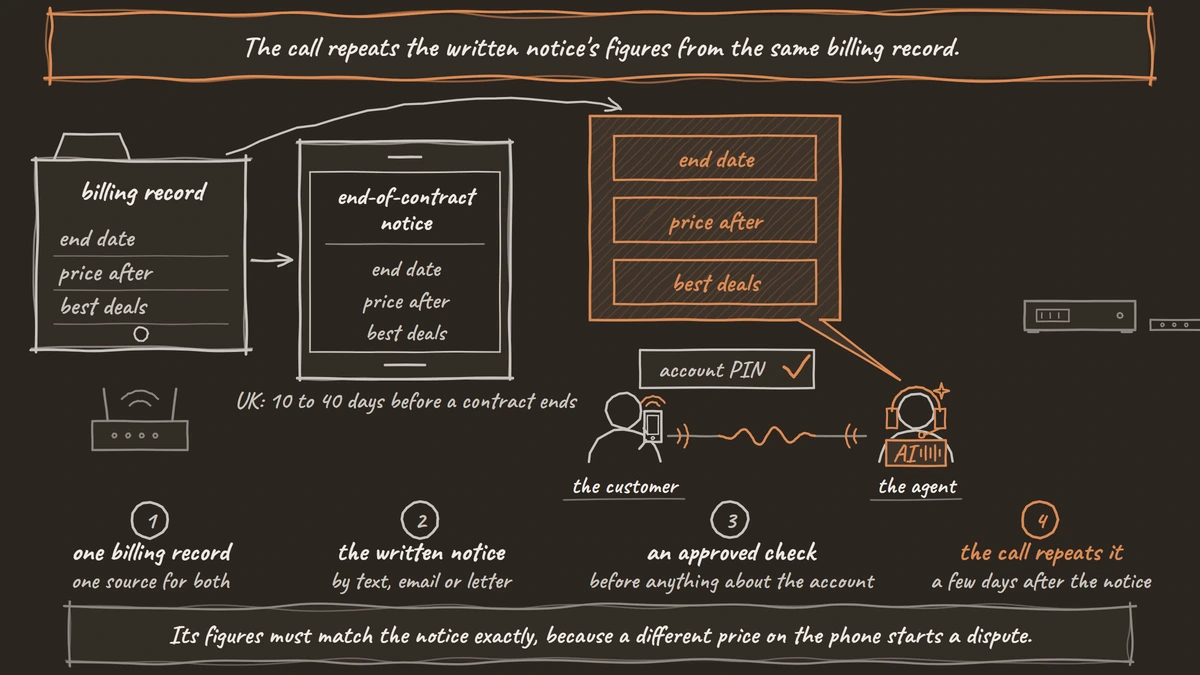
- The call repeats the written notice's figures from the same billing record.
- Offers come only from your offer system, never from the agent's prompt.
- A cross-category offer in the US waits for the customer's CPNI approval.
In the UK, the renewal call can't come first, because the written end-of-contract notice has to. We cover the contract-end window, US consent and customer data rules, offers from your own system and where each answer goes in Dograh. For the wider picture, see our guide to membership renewal calls.
The contract-end window
The renewal call happens in a short window before the contract ends, and in the UK a written notice must come first. The call repeats that notice and helps the customer act on it.
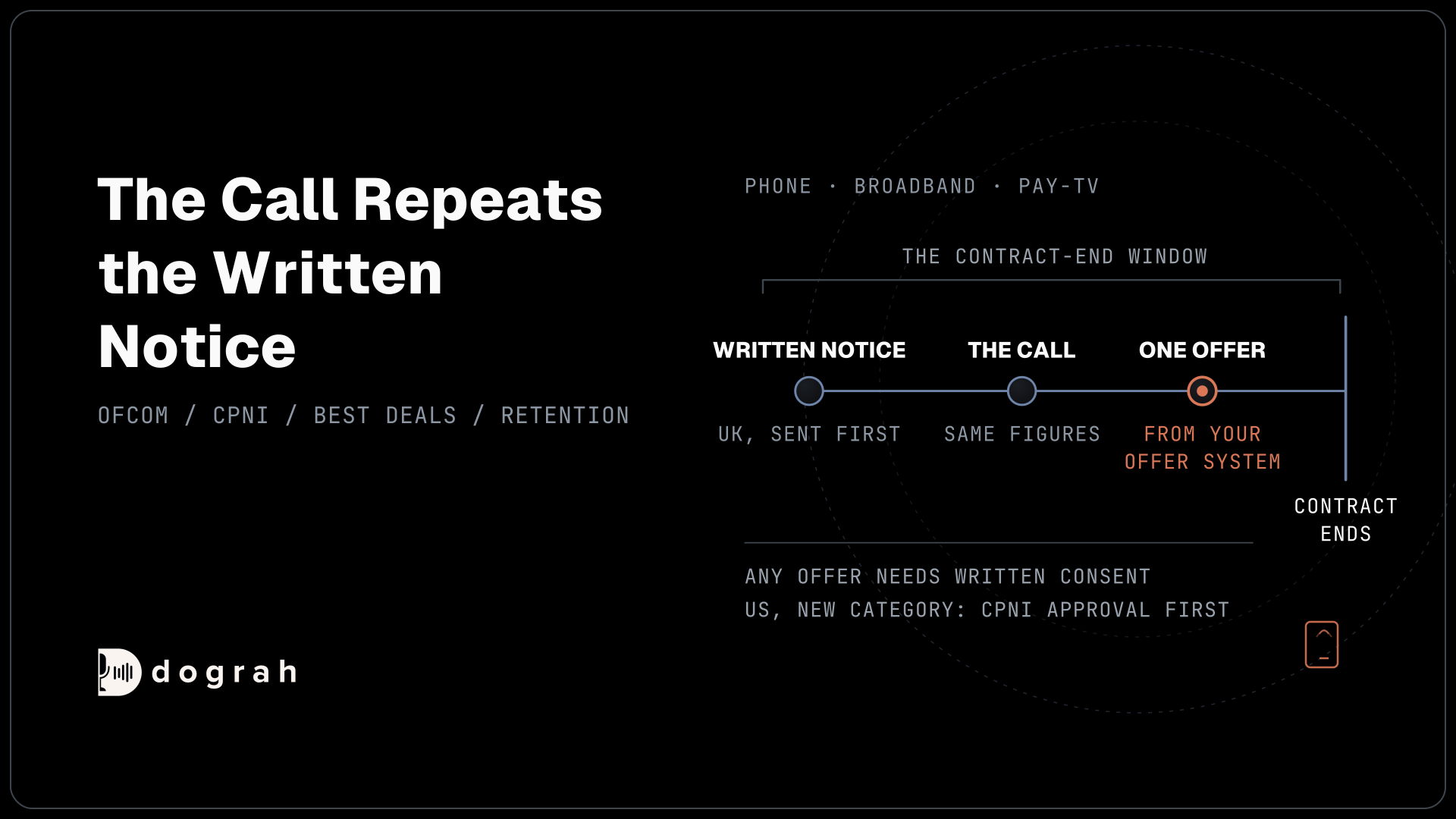
Ofcom's end-of-contract rules require phone, broadband and pay-TV providers to send an end-of-contract notification between 10 and 40 days before the contract ends, by text, email or letter. The notice gives the end date, what the customer pays now and will pay after, any notice period, and the provider's best current deals, including those for new customers. Customers already out of contract get a reminder of the best deals each year.
So in the UK the call is optional and comes after the notice. Its figures must match the notice exactly, because a different price on the phone starts a dispute. Read both from the same billing record, and time the campaign so the call lands a few days after the notice went out.
In the US, the rules that matter most for this call decide who may hear an offer at all.
Consent and customer data in the US
A notice-only call and an offer call need different consent, and an offer that crosses into a new service needs one more approval. Check both before the list is built.
The FCC's 2024 ruling on AI-generated voices means a carrier's AI agent is making artificial-voice calls under the Telephone Consumer Protection Act (TCPA). A call that only states the end date and the price after is generally informational and needs prior express consent. Offer a new plan or a lower price and the FCC's calling rules treat it as telemarketing, which needs prior express written consent.
Customer data adds a second check. Under the FCC's CPNI rule, a carrier can use customer proprietary network information, such as plan and usage, to market services in the categories the customer already buys. To market a different category, it needs the customer's approval first. A better mobile plan for a mobile customer can draw on usage data, while home broadband pitched to a mobile-only customer waits for CPNI approval. Keep both flags in your own system, and confirm your setup with counsel before the first offer call.
Offers come from your offer system
Every offer the agent mentions comes from your own system at the moment the call connects. The agent never builds a deal from its prompt.
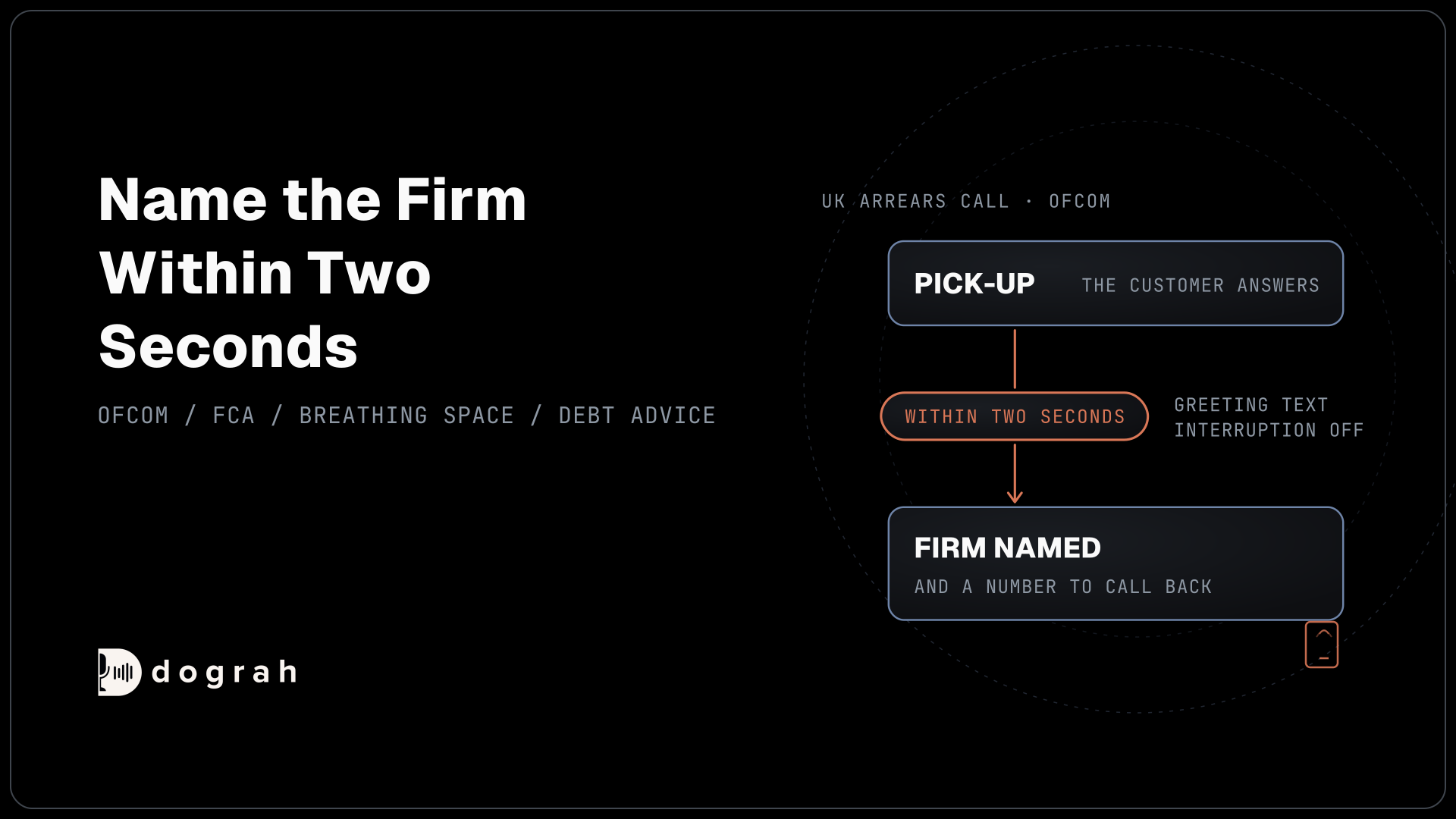
The call runs greet, verify, then disclose. Put the operator's name in the Greeting Text and ask for the account holder by name. Allow Greeting Interruption is on by default, which lets the customer cut in after two words, so switch it off on the Start Call node and the operator's name plays in full. Before the agent says anything about the account, it asks for an approved check, such as the account PIN or the last digits of the account number.
Pre-Call Data Fetch asks your billing or offer system for the end date, the price after and the offers this customer may hear, already filtered by consent and CPNI approval. The prompt tells the agent to read only those values and to make one offer, the first your system ranks.
Per-customer prices change from call to call, so they come from variables in the prompt rather than fixed text. Replace the QA System Prompt with instructions that flag any call where the price spoken differs from the returned value, and have a person review flagged calls that week.

Open Source Alternative to Vapi / Retell
Self-hosted voice agent platform — no per-minute fees
dograh-hq/dograh
Star on GitHub
Yes, no, or "I'm leaving"
Each answer the customer gives has one place to go, and it gets there before the call ends.
A yes is written to your system during the call. An HTTP API tool places the new contract in your order system, with a Preset Parameter named workflow_run_id set to {{initial_context.workflow_run_id}} so a repeated request never creates two orders. Your own system then sends the written confirmation and contract summary by email or text.
Questions the offer doesn't answer, and customers who want to negotiate, go to a person. The agent writes the question to your system first, then uses Transfer Call, which works on Twilio, Telnyx, Plivo, Cloudonix and Asterisk ARI. Your retention team's line rings first, and the subscriber joins only when someone there answers. No summary travels with the call by default, which is why the details go to your system first. Operators that run their own Asterisk can route the transfer through their own PBX.
A customer who says they are leaving gets a short question about why, recorded as they stated it, and no second offer. Calling them after they leave is a different call with its own consent checks, which AI voice agents for win-back in telecom covers. If the customer says to stop calling, the agent accepts it by voice and writes it to your system, and your system removes the number from the next list.
Join the Dograh Community
Dograh is an OSS alternative to Vapi. Join our Slack community for queries, releases, best practices & community interactions.
Where to start
In the UK, start with customers whose written notice went out last week, and keep the first calls to the notice's own figures plus the top offer. In the US, start with notice-only calls to customers with prior express consent, and add offers once the consent and CPNI flags in your system are clean.
Test on a real phone line before any customer hears the agent. Phone audio is narrower than a browser test, so plan names and prices can sound different to the speech model, and transfers only work on a real call. Dograh is self-hostable, so an operator can run the renewal agent on its own servers beside its own telephony. Our guide to AI voice agents for telecom, cable and broadband covers the other calls an operator can hand over.
Glossary
- End-of-contract notification
- The written notice UK phone, broadband and pay-TV providers must send 10 to 40 days before a contract ends, with the end date, the price after and the best deals. A renewal call should repeat its figures.
- CPNI
- Customer proprietary network information, such as a customer's plan and usage. US carriers can use it to market services the customer already buys, and need approval to market other categories.
- Prior express written consent
- A signed agreement, electronic signatures included, that names a phone number and allows sales calls with an artificial or AI voice. A renewal call that makes an offer needs it.
- Offer system
- The operator's own system that decides which offers a customer may hear, based on plan, value, consent and CPNI approval. The agent reads its answer and never makes up a deal.