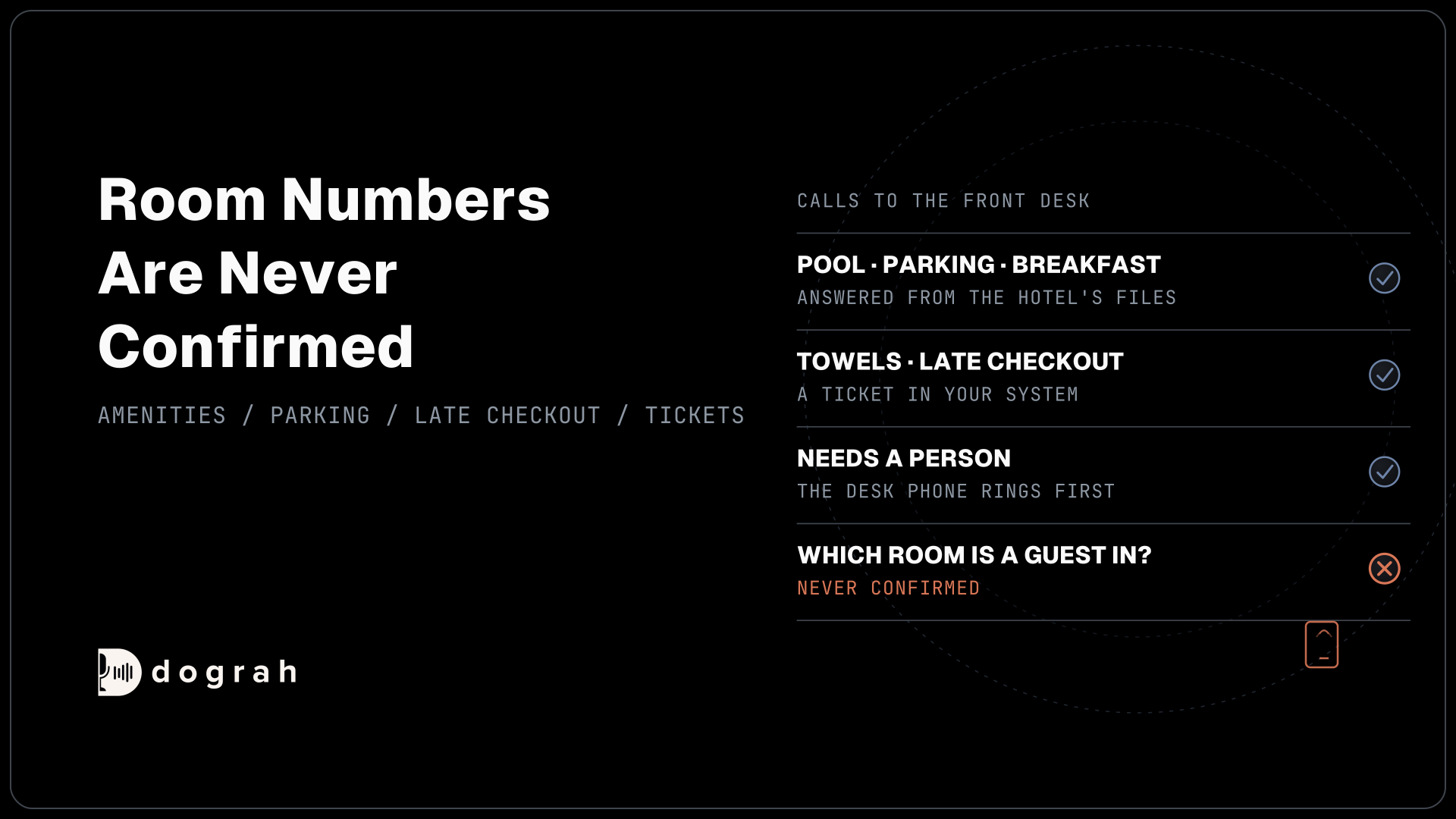

An AI voice agent for hotel reception and concierge calls answers questions about amenities, parking and policies from the hotel's own files. It logs requests such as towels or late checkout as tickets in the hotel's system. It never confirms a room number, and it hands guests to staff when they need a person. Dograh runs this as one agent.
Key Takeaways
- Most hotel calls are guest questions, and reservations are the smaller share.
- The agent answers only from the hotel's own files and lists.
- Room numbers and whether a guest is staying are never confirmed.
A caller asking which room a guest is in should get a polite refusal, never a number. We cover what guests call about, answering from the hotel's own files, turning requests into tickets, what stays private and handing calls to staff in Dograh. It sits under our guide to hotel voice agents.
What guests call the front desk about
Most calls to a hotel are not bookings. In Revinate's voice benchmark, a vendor report, reservation calls were 16 to 34% of inbound calls depending on the season. The rest come from guests asking about check-in times, parking, the pool, breakfast or a late checkout.
Those calls land on teams that are already short of people. In AHLA's survey release, more than half of hoteliers said their properties were somewhat or severely understaffed, even though 70% were offering higher wages.
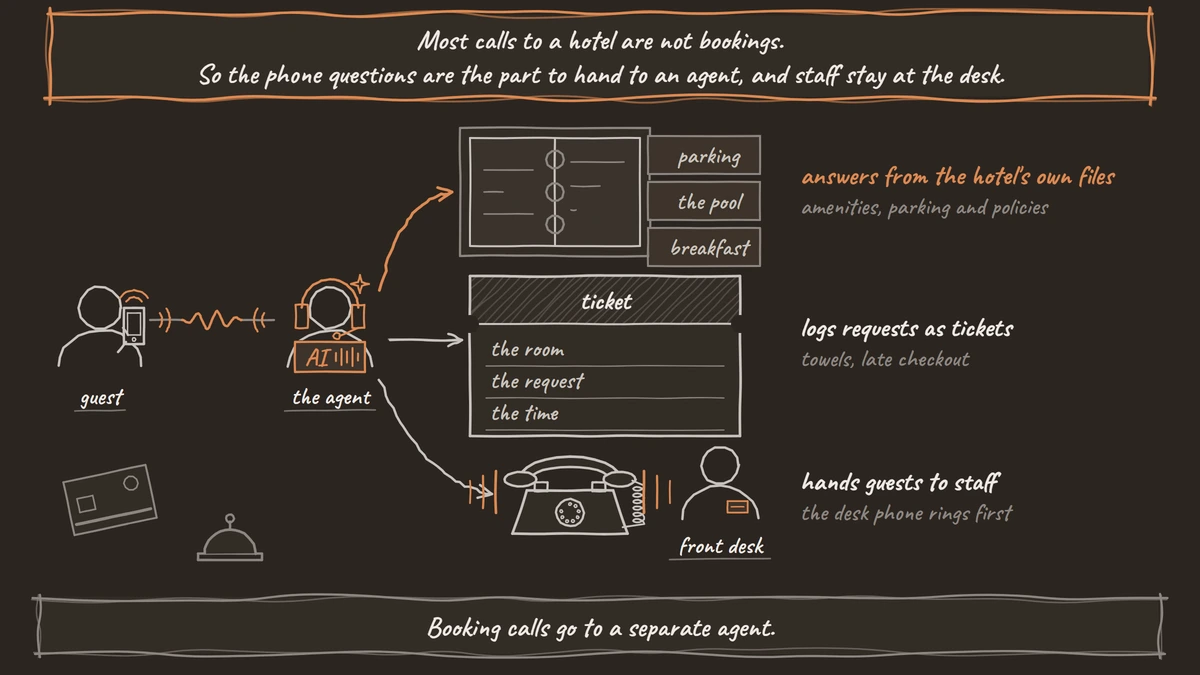
Guests still want a person in the lobby. The Mews traveller survey, run by a hotel software vendor, found 66% prefer a human for the front-desk welcome. So the phone questions are the part to hand to an agent, and staff stay at the desk. Booking calls go to a separate agent, covered in our post on hotel reservations.
Answer from the hotel's own files
The agent should answer only from what the hotel has written down. In Dograh, you upload files on the Knowledge Base Files page, such as amenity hours, parking rules, pet and cancellation policies and the concierge's list. Then you select them on the agent's node under Knowledge Base Documents.
Files can be PDF, Word, text or JSON, up to 5 MB each. Short files suit Full Document mode, which reads the whole file and needs no embedding key. Longer ones suit Chunked Search, which finds the relevant part and needs an embedding key. The Knowledge Base docs cover both.
Local recommendations come only from the concierge's own list. Write in the agent's prompt that it suggests nothing outside that list and never states another business's opening hours as live. If a guest asks for something the list does not cover, the agent offers to pass the question to the concierge. Our post on how a voice agent knowledge base works explains why grounded answers matter. Add the hotel's outlet names and local place names to the Dictionary in Settings, so the agent hears and says them correctly.
Requests become tickets in your system
A request such as extra towels, a late checkout or a restaurant table becomes a ticket in the hotel's own system. An HTTP API tool sends the room, the request and the time to your property management system or service tool. The tool calls your PMS's own API, so the hotel keeps the system it already runs.
The tool can play a short line when it starts, such as "Let me put that in for you." The agent then confirms the request back to the guest. If the tool returns an error, the prompt tells the agent to say a team member will follow up and to log a callback.
Wake-up calls work the other way round. The guest asks for one, and the tool writes the time to the hotel's system. At that time, the hotel's system starts the call through Dograh's API Trigger, and the agent plays the wake-up message.

Open Source Alternative to Vapi / Retell
Self-hosted voice agent platform — no per-minute fees
dograh-hq/dograh
Star on GitHub
What the agent never tells a caller
Some questions get no answer, however the caller asks. The agent never confirms a room number or whether a named guest is staying at the hotel. A caller asking "Which room is Mr. Patel in?" hears that the hotel can't share guest details, and the agent offers to take a message for the guest.
Booking details need the hotel's verification first, such as the confirmation number and the surname on the booking. Write that rule into the prompt. Payment card numbers are never taken on the call. If a guest needs to pay, the tool asks the hotel's own system to send its secure payment link.
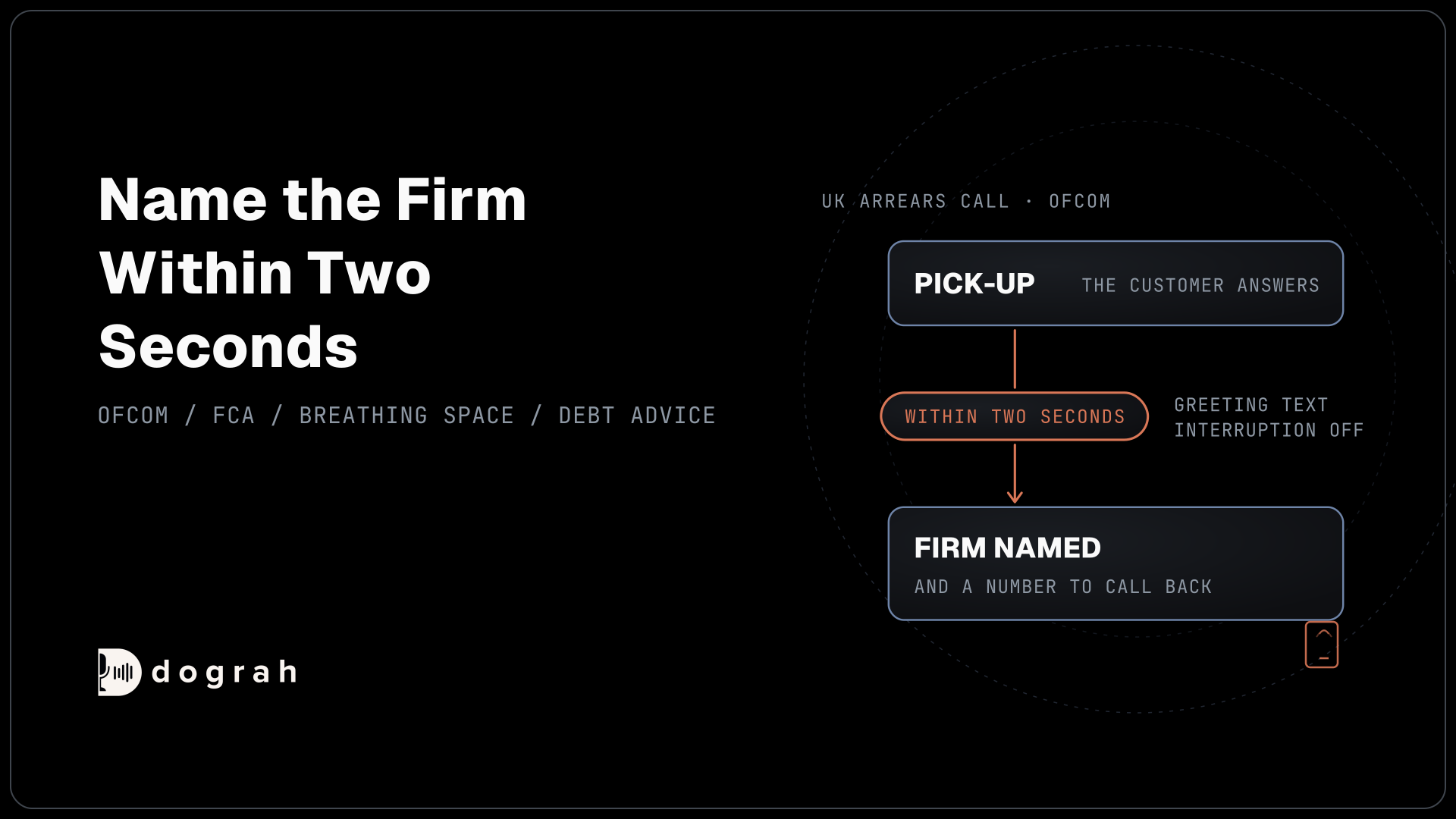
The Greeting Text on the Start Call node always names the hotel. If you want callers told that an automated assistant is answering, or a local law requires it, add that sentence to the same greeting. "Allow Greeting Interruption" is on by default, so switch it off there and the full notice plays even if the caller starts talking.
Handing over to the desk, and emergencies
Anything that needs a person goes to staff. With Transfer Call on Twilio, Telnyx, Plivo, Cloudonix or Asterisk ARI, the desk phone rings first and the guest is put through only after someone at the desk answers. Hotels on Twilio can also have a short spoken introduction play to the guest and the staff member before they are joined. The call transfer docs list the settings.
The desk gets 30 seconds to answer by default, and you can set it between 5 and 120. If nobody picks up, the guest stays with the agent, which offers a callback and writes the request to your system through an HTTP API tool.
Guests can also call the hotel's WhatsApp Business number. Dograh answers WhatsApp voice calls placed to that number, inbound only. These calls can't be transferred, so a WhatsApp caller who needs staff gets a callback request instead.
Emergencies get fixed wording in the prompt. A guest who reports a fire or feels unsafe is told to get to safety and call 911. For a medical emergency, the agent says "If this is a medical emergency, please call 911 now." Then it logs an urgent alert for staff through an HTTP API tool. Hotels outside the US use their local number, such as 999 in the UK.
Join the Dograh Community
Dograh is an OSS alternative to Vapi. Join our Slack community for queries, releases, best practices & community interactions.
Before you switch it on
One agent can answer several numbers. The front desk, the concierge line and each property can all point to the same agent. The dialled number reaches Pre-Call Data Fetch as to_number, so the agent loads the right property's details. A hotel group that self-hosts Dograh pays no per-minute platform fee across those numbers, just its own servers, model keys and phone minutes. On Dograh Cloud, each minute carries a 1¢ platform fee.
If your room phones run on an Asterisk PBX, Dograh connects through Asterisk ARI. A room extension may show which room is calling, depending on your PBX, but treat it as a hint, never as verification.
Test on a real phone line before go-live, with background noise and guests who ask two things at once. The same agent setup carries over to pre-arrival calls a day before check-in.
Glossary
- Grounded answer
- An answer the agent takes from the hotel's own uploaded files rather than from the language model's general knowledge. If the files don't cover it, the agent says so and offers to pass the question on.
- Service ticket
- A request such as towels or a late checkout written to the hotel's property management system or service tool by an HTTP API tool, so staff see it in the system they already use.
- Guest presence
- Whether a named person is staying at the hotel. The agent never confirms it to a caller, because doing so can put a guest at risk.
- Callback request
- A record the agent writes to the hotel's system when a guest needs staff and nobody can take the call, or the call came over WhatsApp and can't be transferred.