
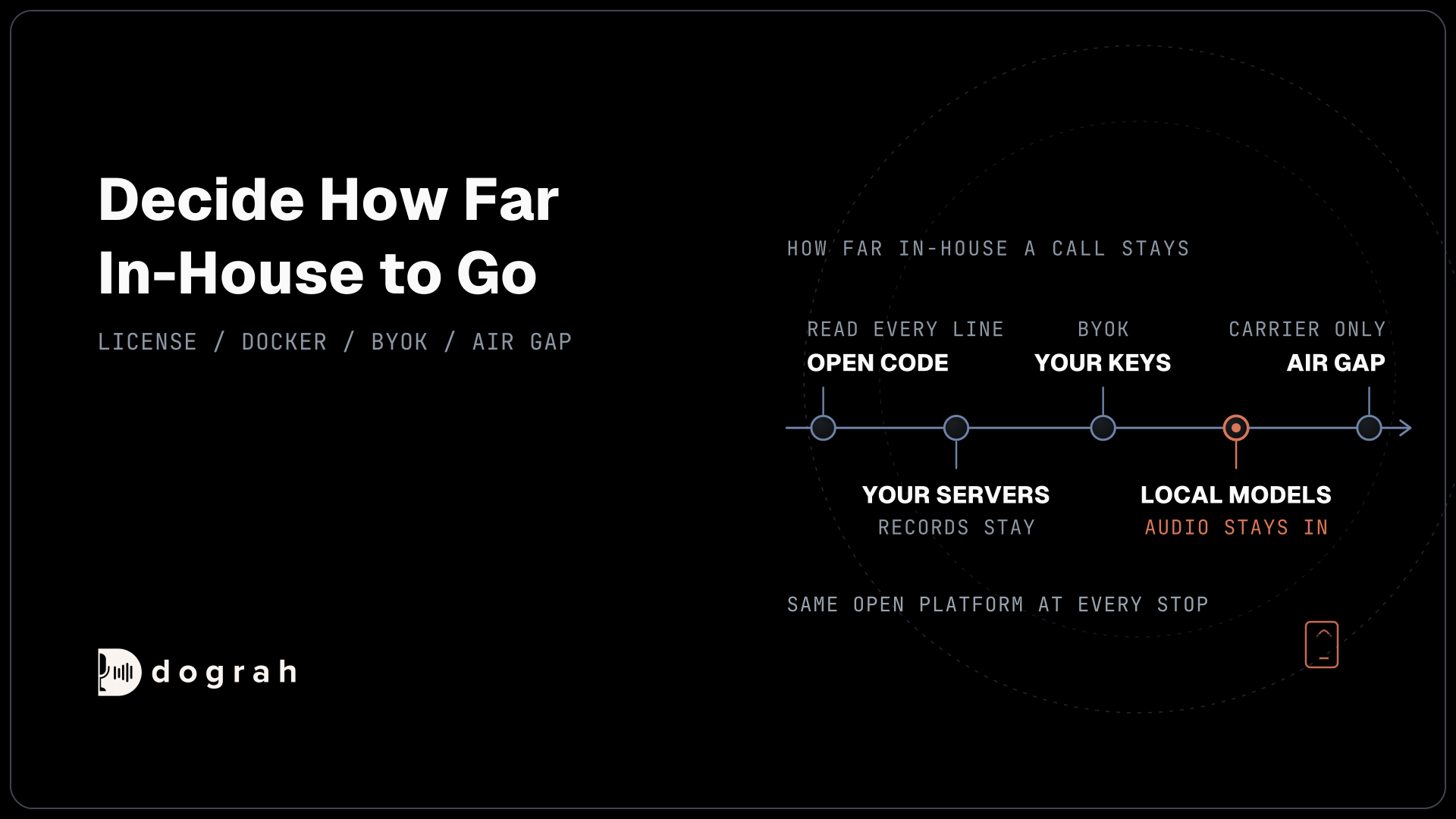
The Complete Guide to Open-Source Voice AI Agents: Own the Code
What open source changes for a voice agent: code you can read, two layers with two licenses, why regulated teams care, where it runs, Docker self-hosting, how far in-house to go, what BSD-2 lets you ship, and what stays your job.
Read the full guide →Deep Dives in This Series
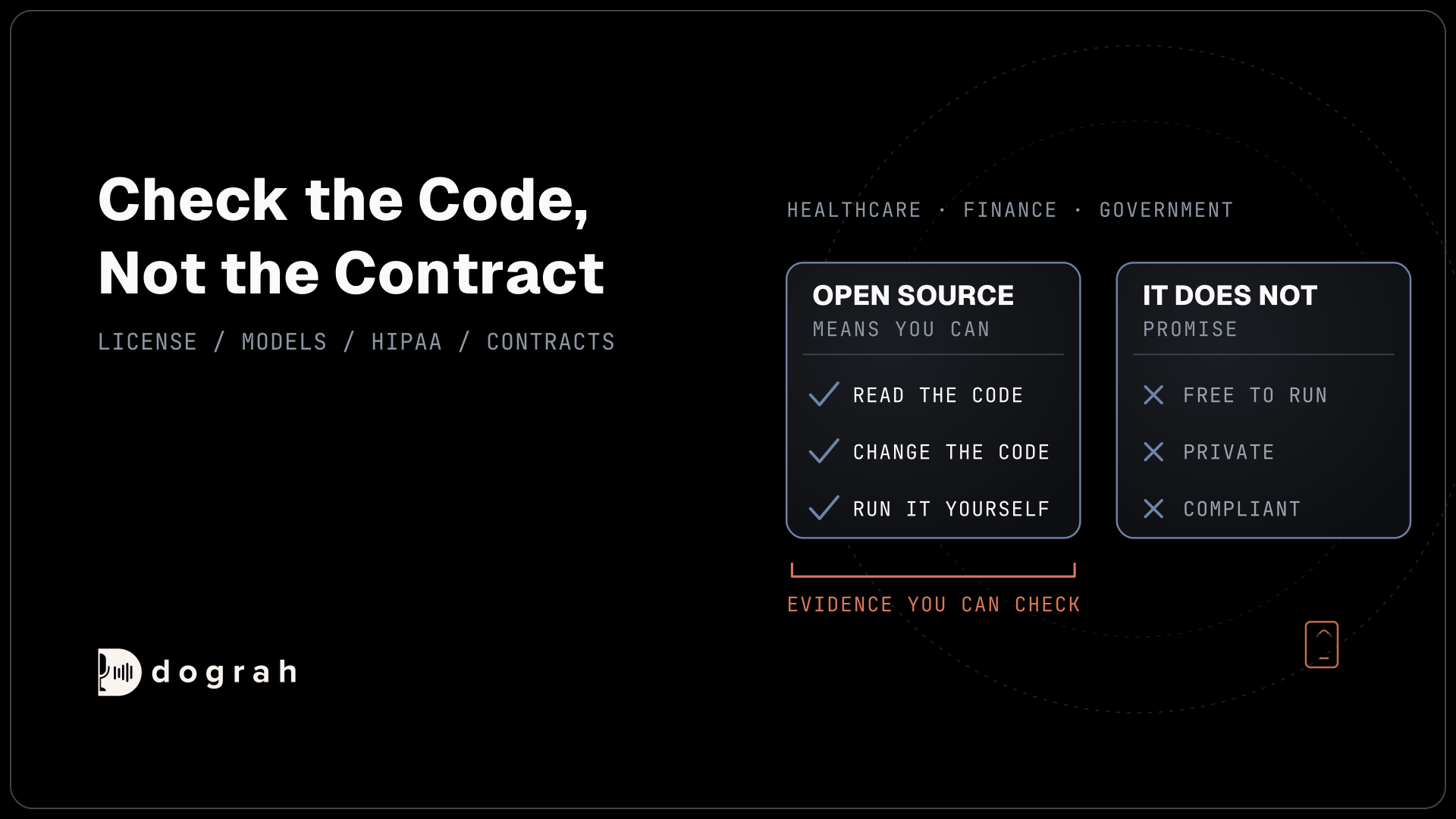
What Is Open-Source Voice AI? Why Regulated Teams Pick It
A short explainer for healthcare, finance and government buyers: what open-source voice AI means, what it does not promise, why regulated teams care, and the questions to ask any voice AI vendor.
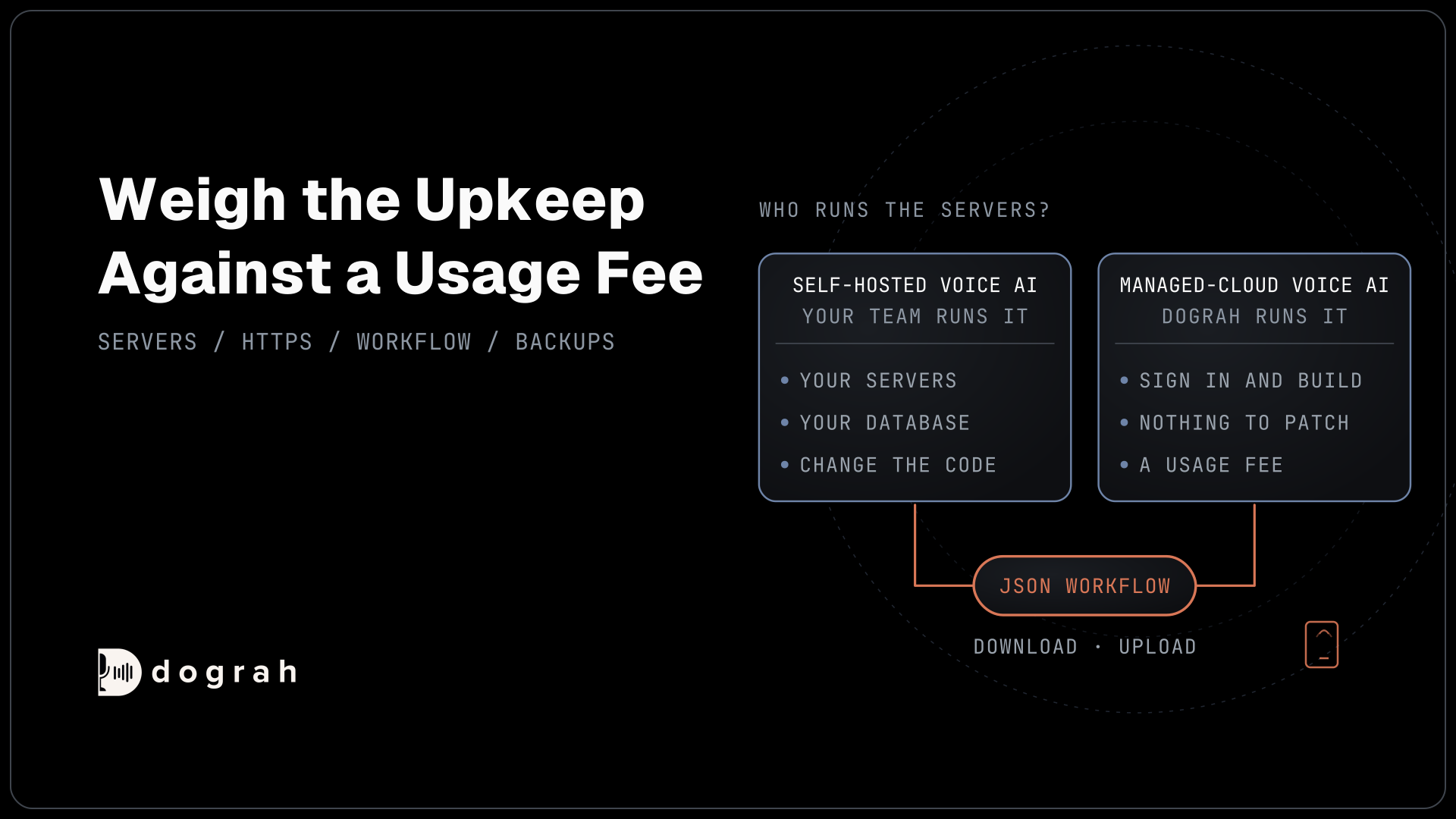
Self-Hosted vs Managed-Cloud Voice AI: Who Runs the Servers?
A decision guide between self-hosting a voice AI platform and using a managed cloud: two separate decisions, what self-hosting asks of your team, what a managed cloud gives, a side-by-side table and how to switch later.
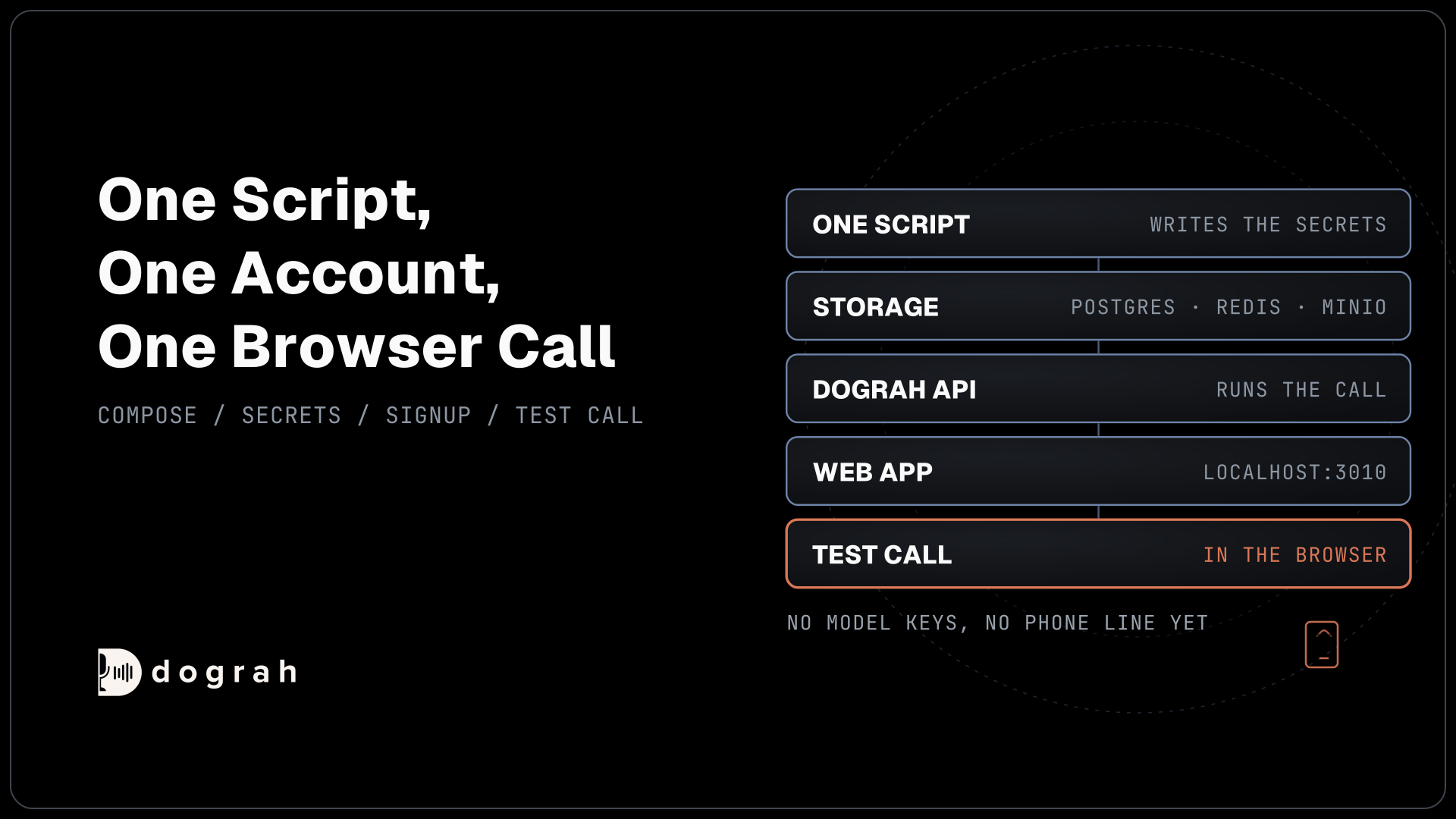
How to Self-Host a Voice AI Agent With Docker
A step-by-step tutorial to self-host Dograh with Docker: what you need, the start script and what it writes, creating an account and a first agent, a browser test call, and the defaults to close before real callers.
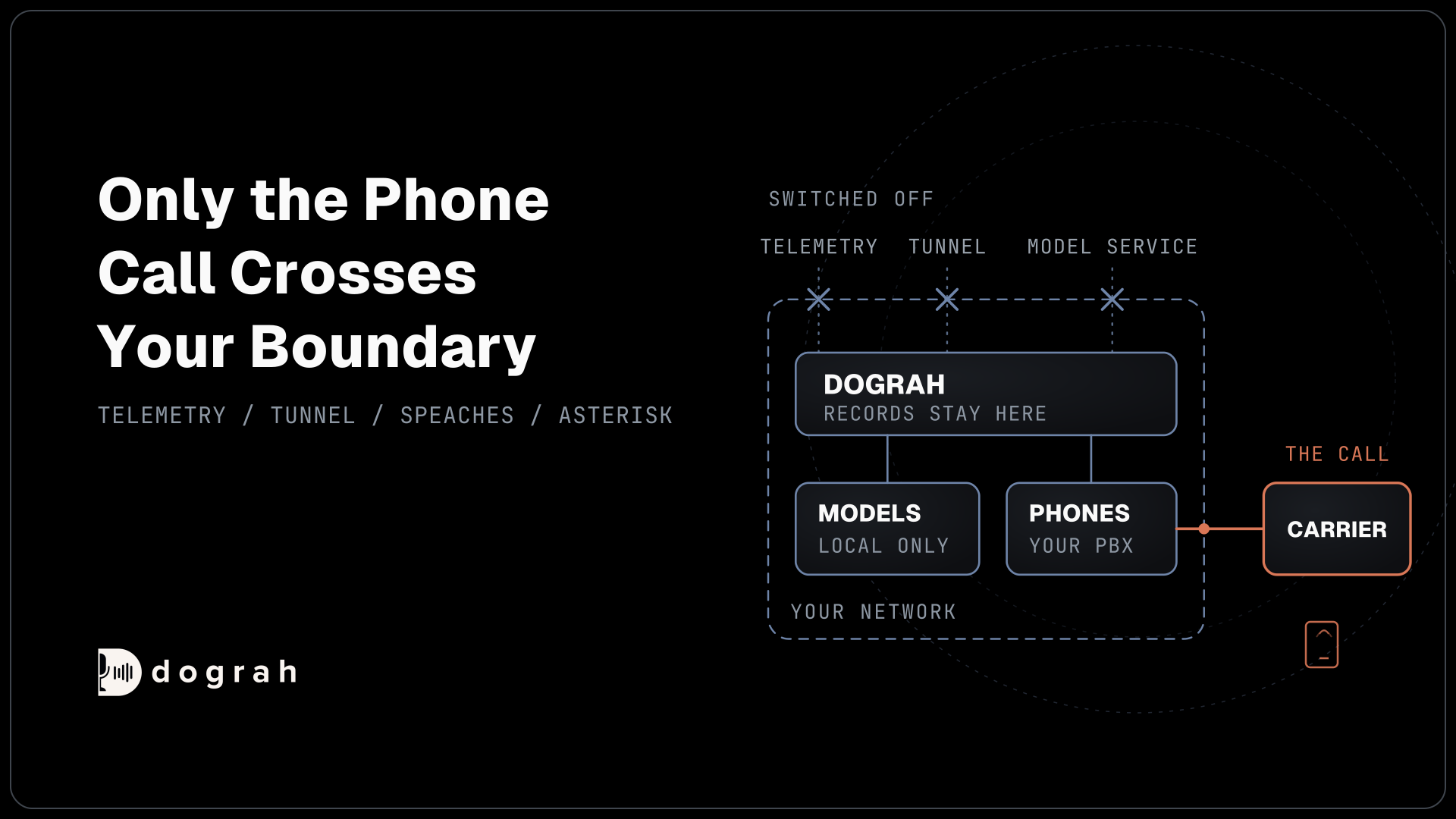
Air-Gapped Voice Agents: AI Calling With Zero Data Egress
What stays inside and what still needs the network when you run a voice agent air-gapped: every connection a default Dograh install makes and how to switch it off, local models, the carrier at your own PBX, and records.
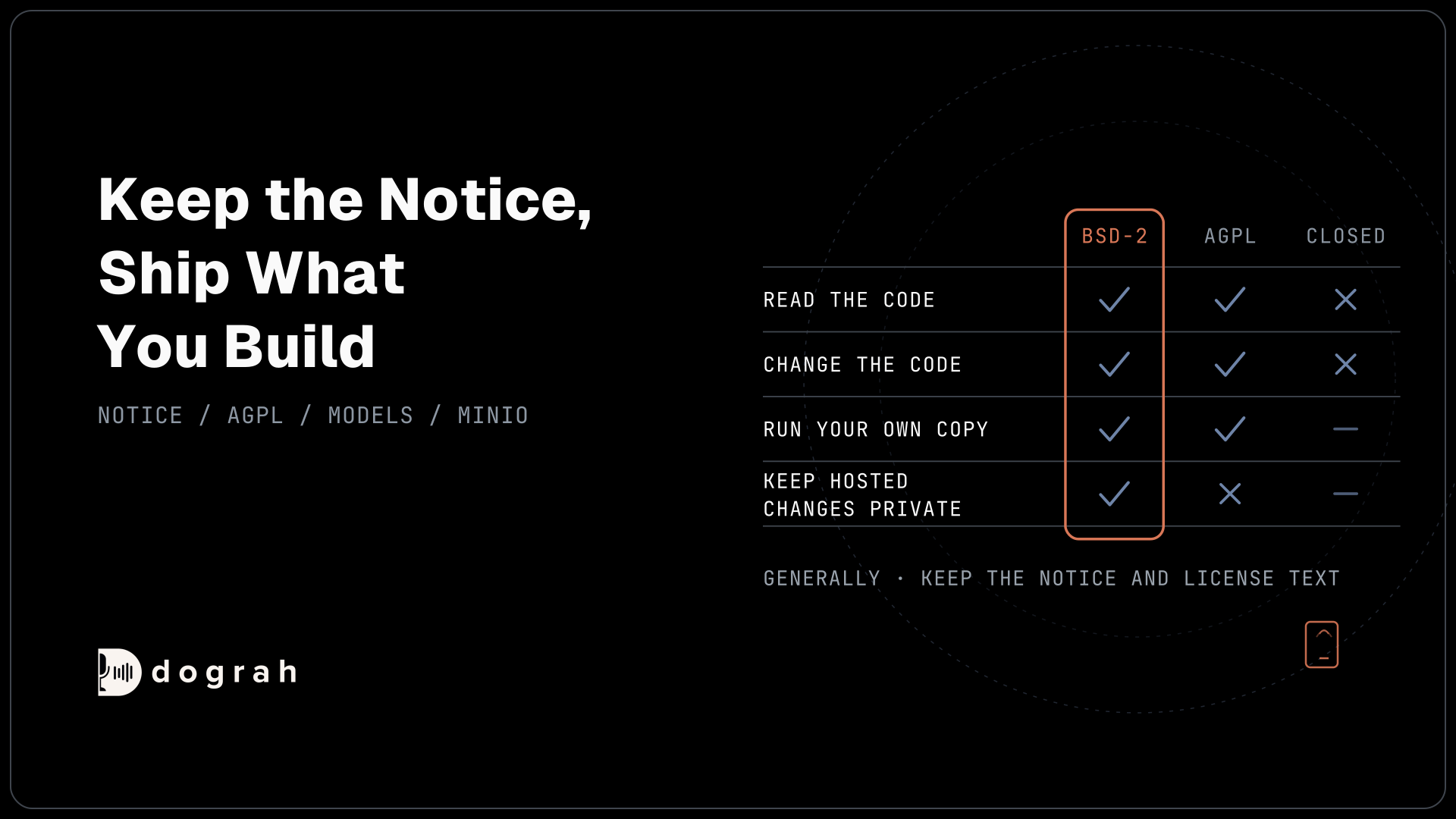
BSD-Licensed Voice AI: What You Can Build, Sell and Rebrand
A plain explanation of the BSD 2-Clause license for voice AI: what it says, what it lets you do with Dograh, how it compares with the AGPL and closed licenses, and what it does not cover.