
Convoso's Voice AI Agent qualifies outbound leads inside Convoso's own dialer. It asks screening questions, handles common objections and hands sales-ready prospects to your reps, so it suits high-volume outbound teams already on Convoso. Dograh, the open-source AI voice agent platform we build, can be self-hosted or run on Dograh Cloud beside a dialer you already run.
Key Takeaways
- Convoso's Voice AI Agent works with Convoso's own dialer today.
- You still own consent, disclosures and opt-outs inside the call flow.
- An open agent beside VICIdial writes outcomes and do-not-call requests back.
This post is part of our guide to AI voice agents for BPO and contact centers, where outbound work runs as one campaign per client program. Below, we cover what Convoso's AI agents do, where Convoso is strong, what to check, and running a Dograh agent beside your dialer.
What Convoso's AI agents do
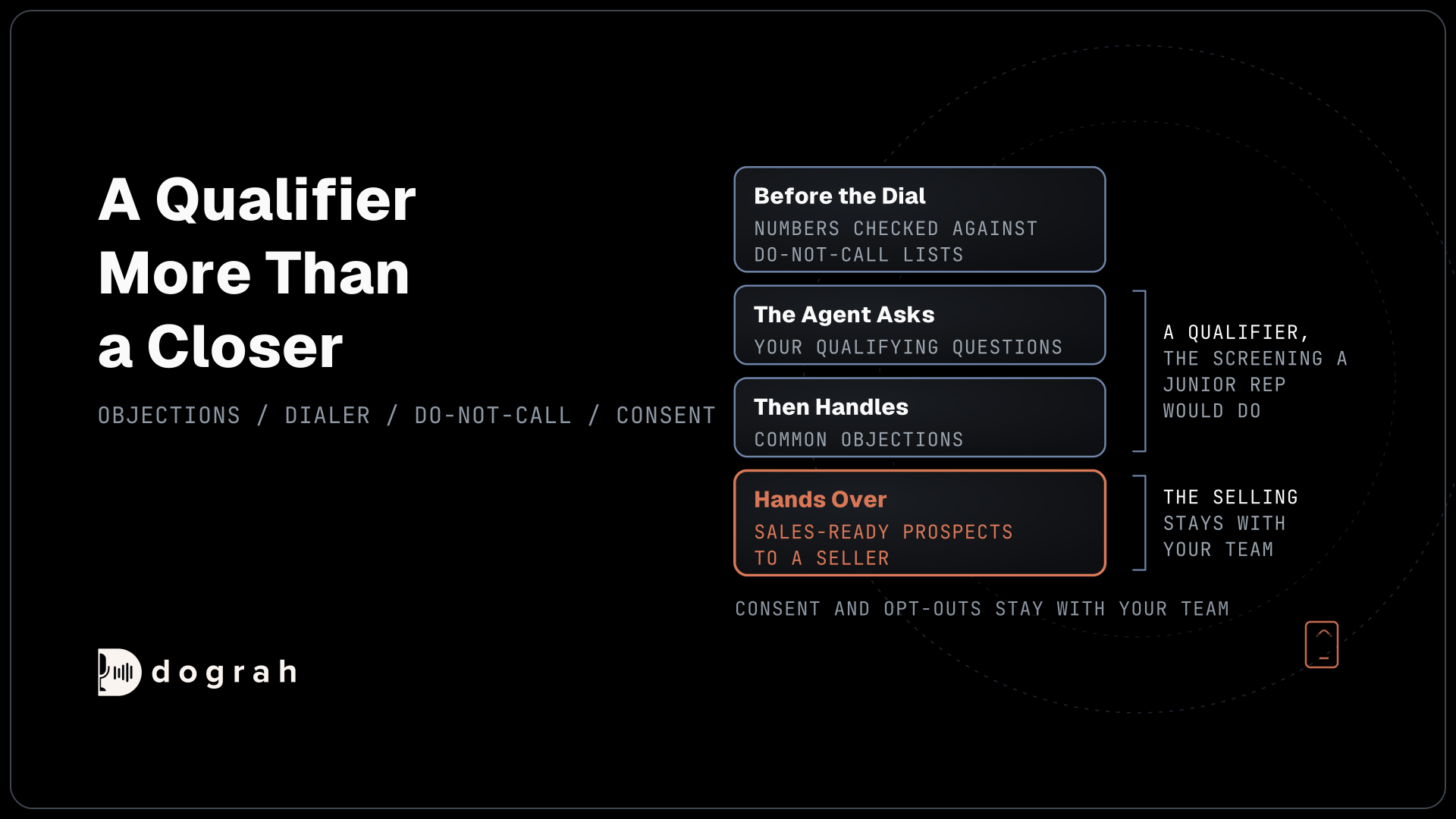
Convoso is an outbound dialer company first, and its AI agents are built into that dialer. The Voice AI Agent is meant to help high-velocity outbound teams automate the first conversation with a lead. On the call it talks in real time, asks your qualifying questions, handles common objections and then routes or dispositions the lead based on the answers. Sales-ready prospects are handed to a seller, and the agent supports transfers from the AI to a person.
That makes it a qualifier more than a closer. The agent does the screening a junior rep would do on the first dial, and the conversation that sells stays with your team. Convoso positions it for outbound lead qualification rather than simple IVR menus, so the questions and objections come from your own script.
Convoso also sells Voso.ai, an intelligent virtual agent that talks to customers and leads over SMS and voice, for qualification, follow-up and after-hours inquiries. Both products sit inside Convoso's platform, so the call list, the dialing and the AI conversation are managed in one place.
Where Convoso is strong
The first strength is the dialer underneath. Convoso offers several dialing modes, including predictive dialing, and describes its speed to lead as under five seconds. Because the AI agent is native, there is no integration project between the dialer and the agent, and the agent's dispositions land in the same reports your team already reads.
The second strength is compliance tooling that runs before a number is dialed. Convoso's compliance tools check numbers against the Reassigned Numbers Database and scrub them against internal, federal and state do-not-call lists. StateTracker enforces state-specific dialing rules, calls carry STIR/SHAKEN attestation, and caller ID reputation is managed for you. For a team calling across many US states, that list work is a large part of running outbound safely.
Put together, Convoso suits high-volume outbound sales teams that already dial on Convoso, in fields such as insurance, financial services and lead generation. For them, turning on the AI agent is a feature decision inside a platform they know, not a new vendor.
What to check before you sign
Start with price. Convoso mainly sells annual plans, with 20% off for paying annually, priced by seats, features and services. Carrier fees are billed separately, and there is no free trial, though Convoso runs live demos built around your use case. Ask for the AI agent's line on its own in the quote, along with the carrier rates, so you can compare it per call.
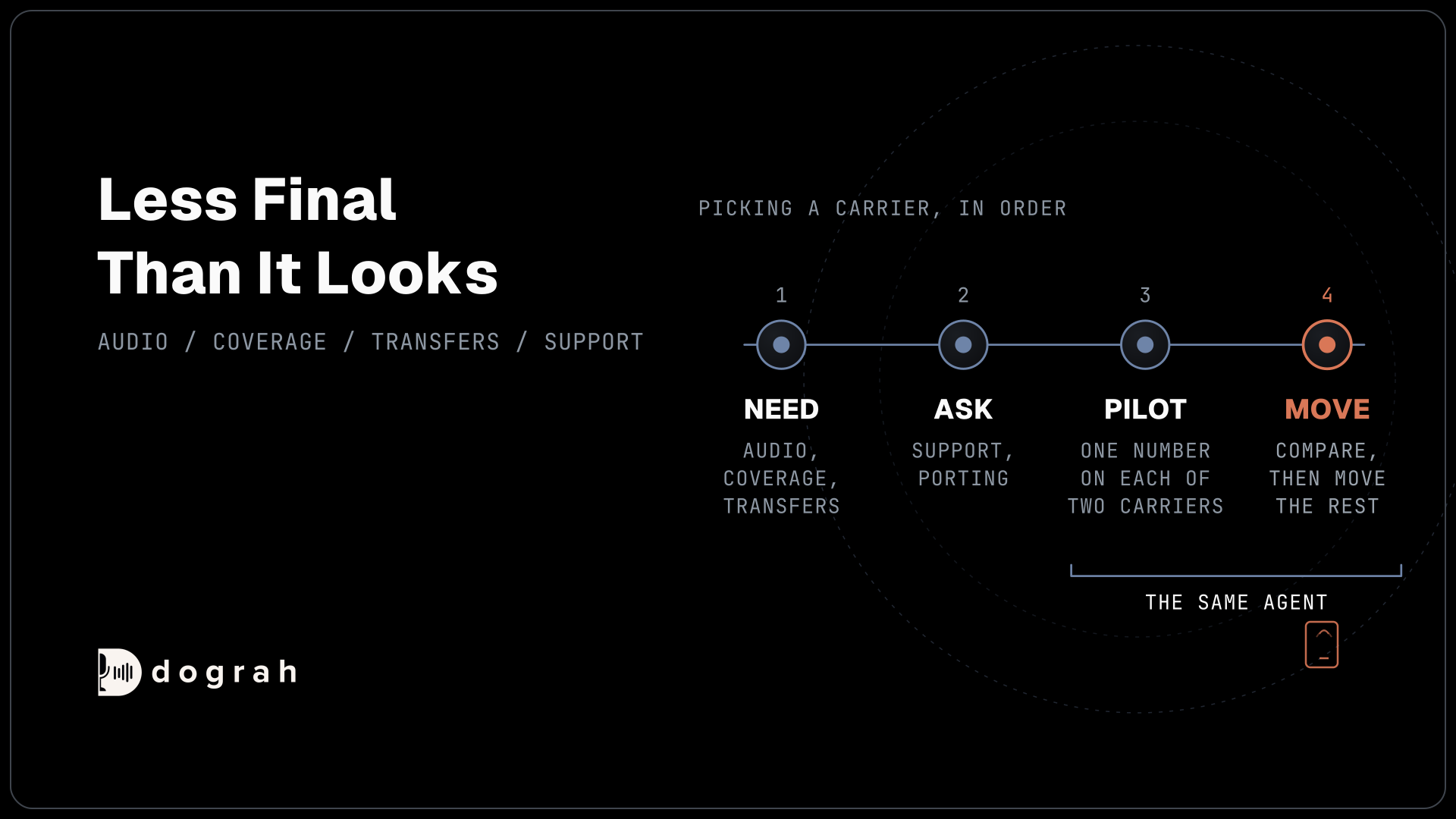
Next, check the dialer. Convoso says the Voice AI Agent integrates specifically with the Convoso Dialer Platform for now and connects over standard SIP and RTP. A team on another dialer would move its dialing to Convoso to use the agent. Ask which speech and language models run the calls, and whether you can change them, before you sign a year.
Then check who owns the rules. Convoso states that you keep ownership of consent handling, recording and disclosures, and that required disclosures and opt-out handling are things you configure into the call flow. So the script, the opt-out step and the consent records are your team's work, whichever agent you use.
The Federal Communications Commission (FCC) ruled that AI-generated voices count as an artificial or prerecorded voice under the Telephone Consumer Protection Act (TCPA). These calls need the called person's prior express consent, and prior express written consent when the call is telemarketing, under the FCC's TCPA rules. Have counsel confirm how that applies to your lists and the states you call before the first campaign.

Open Source Alternative to Vapi / Retell
Self-hosted voice agent platform — no per-minute fees
dograh-hq/dograh
Star on GitHub
Convoso or an open agent beside your dialer
The real choice is where the agent lives. Convoso puts it inside its dialer, while an open agent takes calls from the dialer you already run.
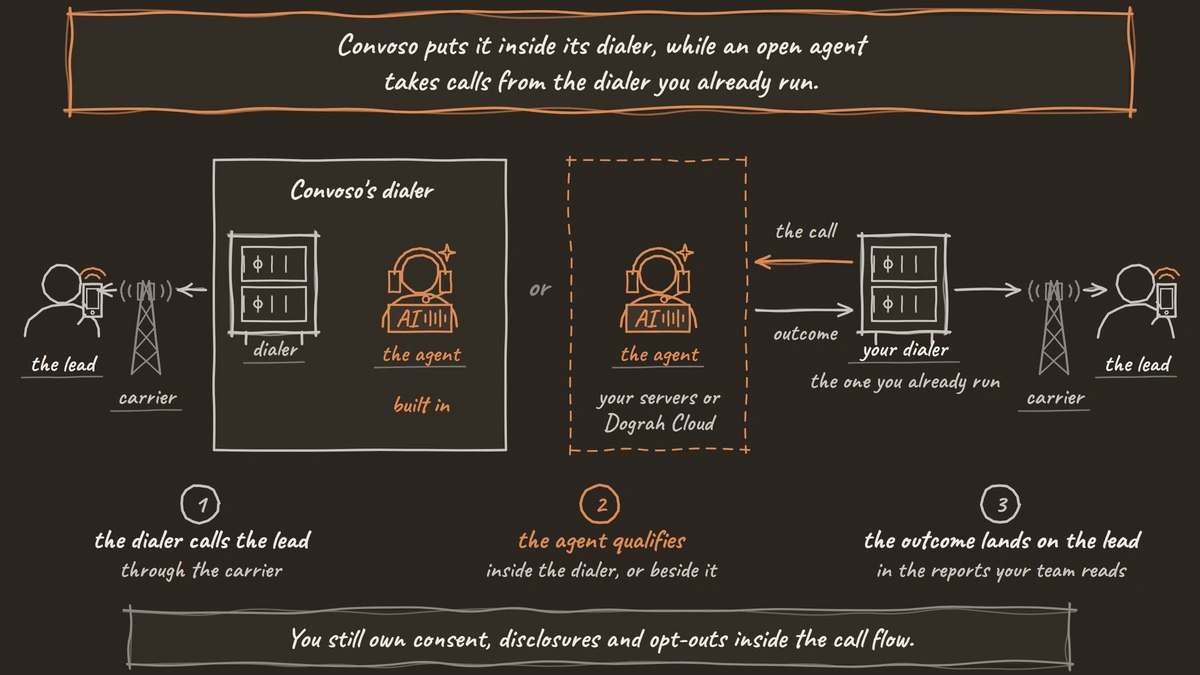
| Convoso Voice AI Agent | Open agent beside your dialer (Dograh) | |
|---|---|---|
| Dialer | Convoso's own dialer | The dialer you run now, such as VICIdial |
| How the agent connects | Built into Convoso's platform | From VICIdial through Asterisk ARI |
| Code | Closed | Open source |
| Where it runs | Convoso's platform | Your servers or Dograh Cloud |
| Do-not-call | Scrubbing against internal, federal and state lists before dialing | The agent's do-not-call outcome adds the number to VICIdial's internal list |
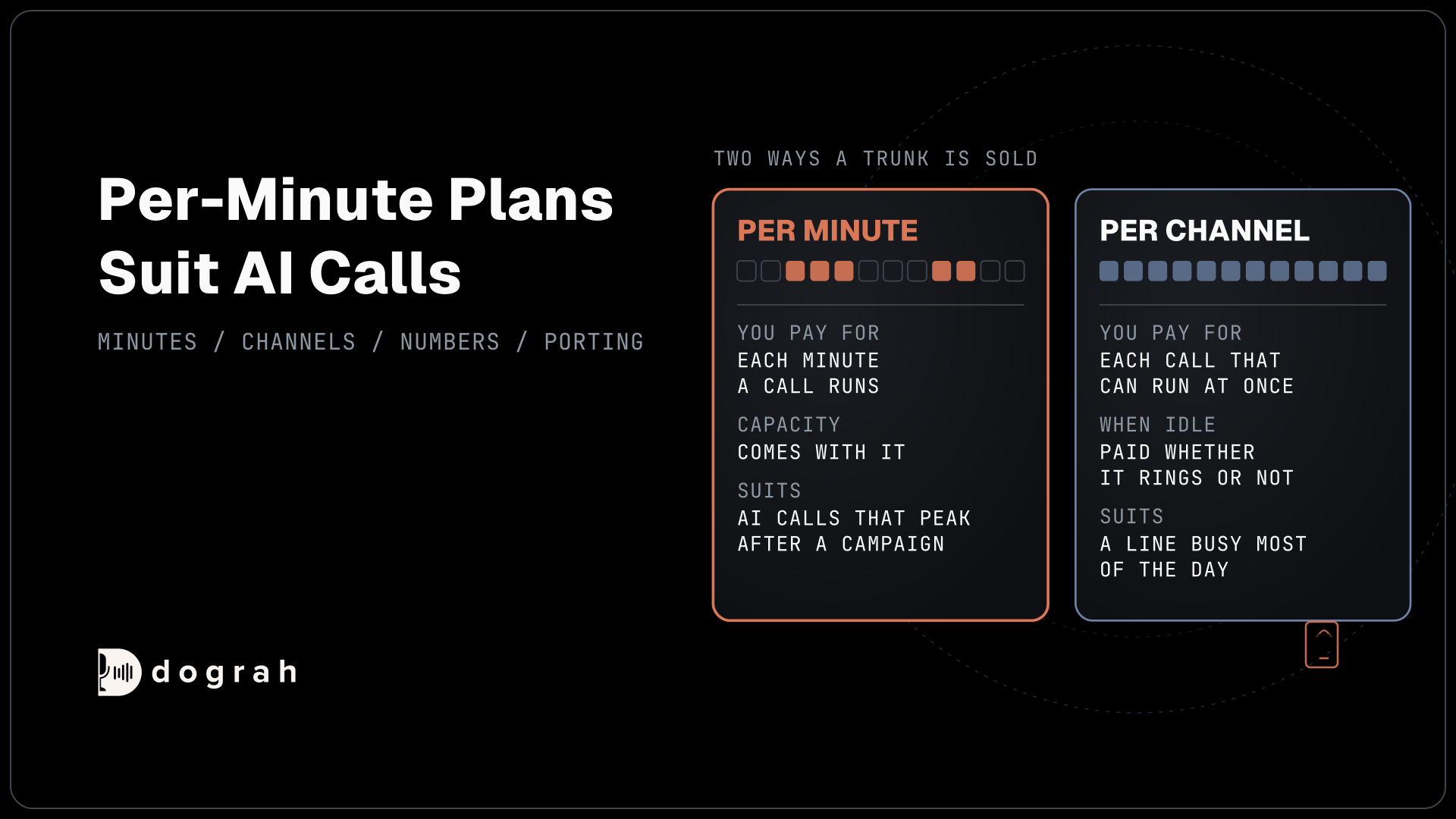
| Price | Annual plans by seats, features and services, carrier fees separate | No platform fee self-hosted, 1¢/min on Dograh Cloud, plus phone and models |
Convoso's agent makes sense when the dialer is already Convoso and you want one vendor for dialing, compliance checks and the AI conversation. A separate open agent fits when you want your own choice of models and servers, or want to keep an Asterisk-based dialer such as VICIdial.
Running Dograh next to VICIdial
In this setup VICIdial still owns the customer call. It sends the call into Asterisk, which hands it to a Dograh agent through Asterisk ARI, as the VICIdial integration guide shows. The agent can transfer the customer to a VICIdial in-group chosen from what it learned on the call, update lead fields, and end the customer leg when the conversation is over. It is an advanced organization feature, switched on in Platform Settings.
Outcomes go back to the dialer. With disposition mapping, Dograh records each call's outcome on the lead's status in VICIdial, so a call the agent handled shows up in the same reports as one a person handled. Map your do-not-call outcome to DNC, and Dograh adds the number to VICIdial's internal do-not-call list, which stays with the number on later lists. Our post on an open-source predictive dialer with an AI agent walks through the setup.
Pacing stays with VICIdial, since Dograh is a voice agent rather than a predictive dialer. For lists you run without a dialer, Dograh's Campaigns take an uploaded list, calling hours in one time zone per campaign, and the retries you set (0 to 10).
Handing a qualified lead to a rep outside VICIdial goes through Transfer Call, on Twilio, Telnyx, Plivo, Cloudonix and Asterisk ARI. Dograh dials the rep while the lead hears hold music and connects once the rep answers. If nobody picks up or the line is busy, the agent gets transfer_failed back and the call carries on, so it can book a callback instead.
Self-hosted Dograh has no per-minute platform fee, but servers, model keys and phone minutes still cost money. Dograh Cloud charges a 1¢-a-minute platform fee. Our guide to AI dialers explains dialer types and where an agent fits, and you can see how a self-hosted AI sales calling agent is set up.
Pick by the dialer you plan to keep. If it is Convoso, its own agent is the shorter path. If it is VICIdial or you want to own the agent, an open one beside it fits better.
Join the Dograh Community
Dograh is an OSS alternative to Vapi. Join our Slack community for queries, releases, best practices & community interactions.
Glossary
- Predictive dialer
- A dialer that calls several numbers for each free rep, on the bet that most won't answer. Convoso offers it as one dialing mode, and Dograh works beside a dialer that paces calls this way.
- Disposition
- The outcome code a dialer records for a call, such as sale, callback or do-not-call. Convoso's agent dispositions leads inside its dialer, and Dograh can write its outcome to the VICIdial lead's status.
- Speed to lead
- How fast a new lead gets its first call after it comes in. Convoso describes its dialer's speed to lead as under five seconds.
- Prior express written consent
- A signed agreement, which can be electronic, to receive telemarketing calls with an artificial or prerecorded voice. The FCC counts AI-generated voices as artificial voices under the TCPA.