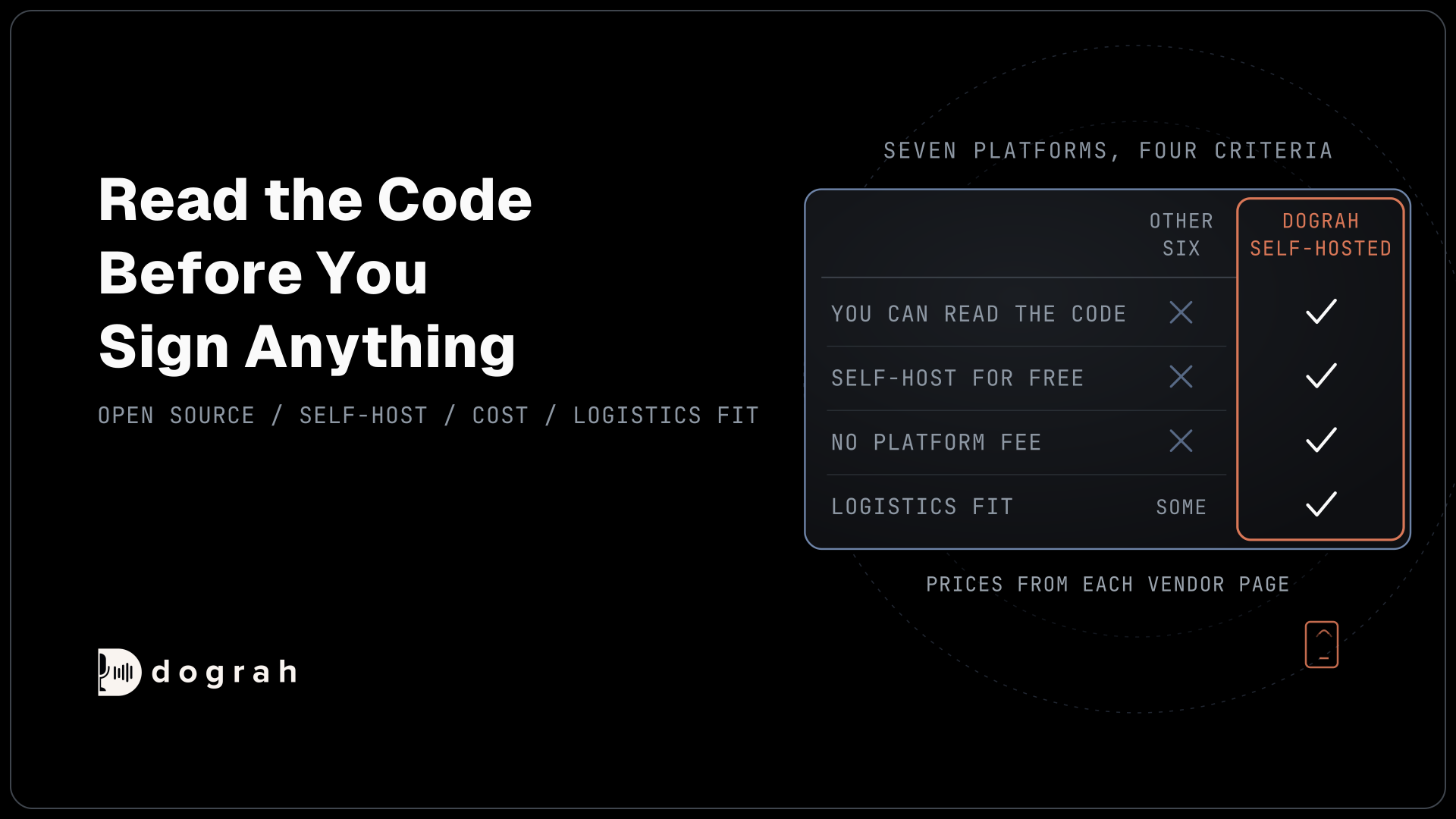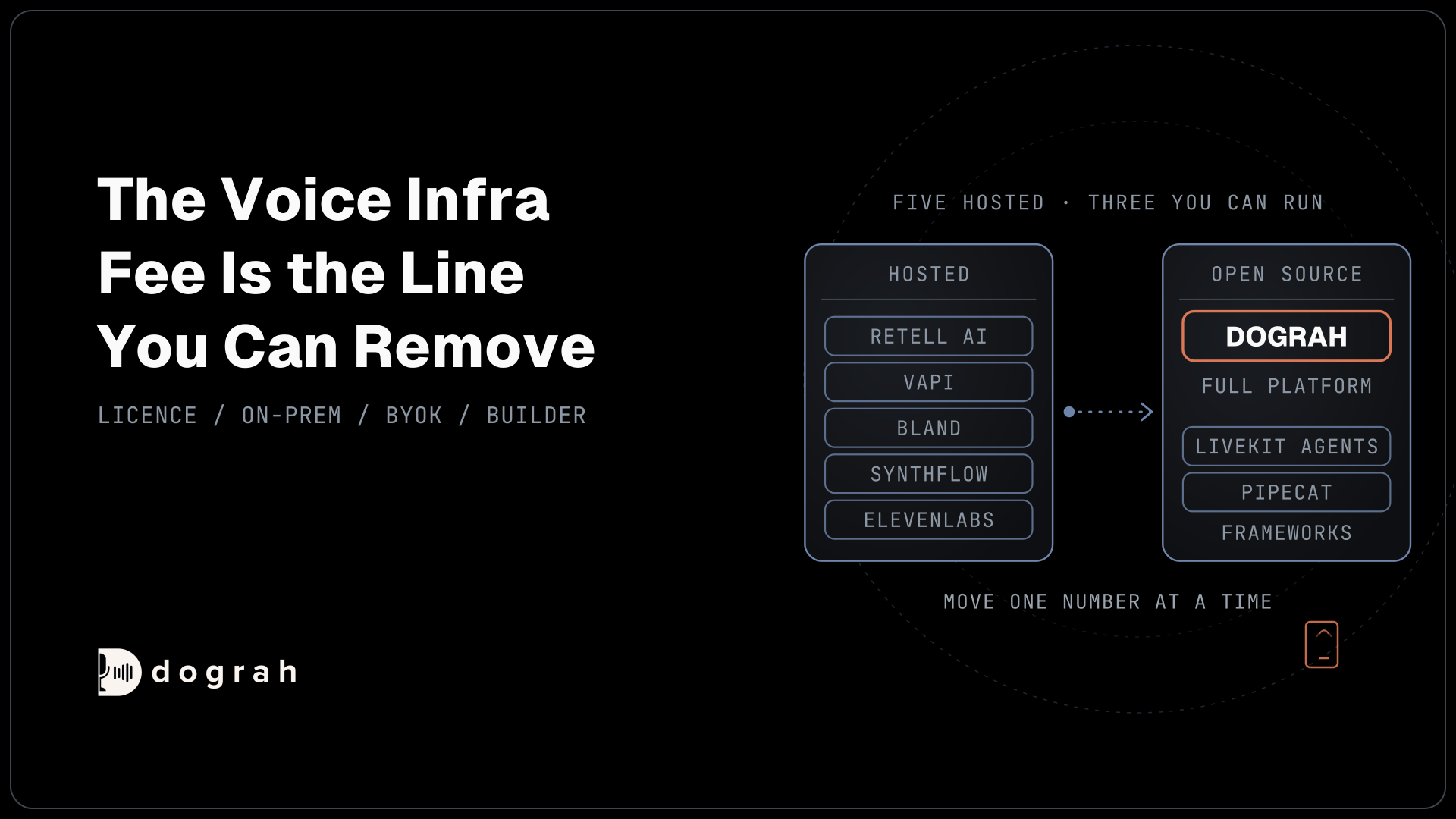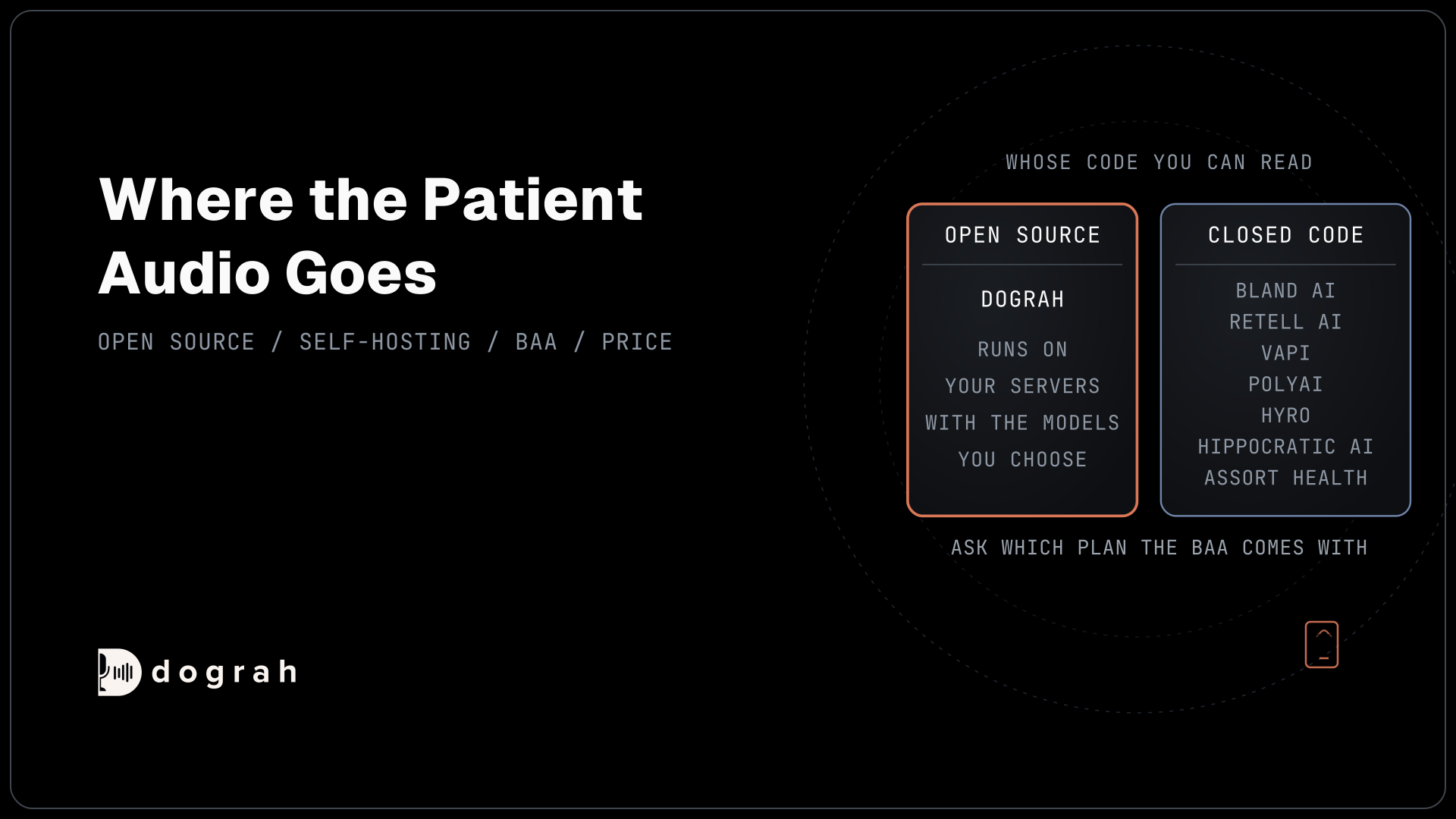

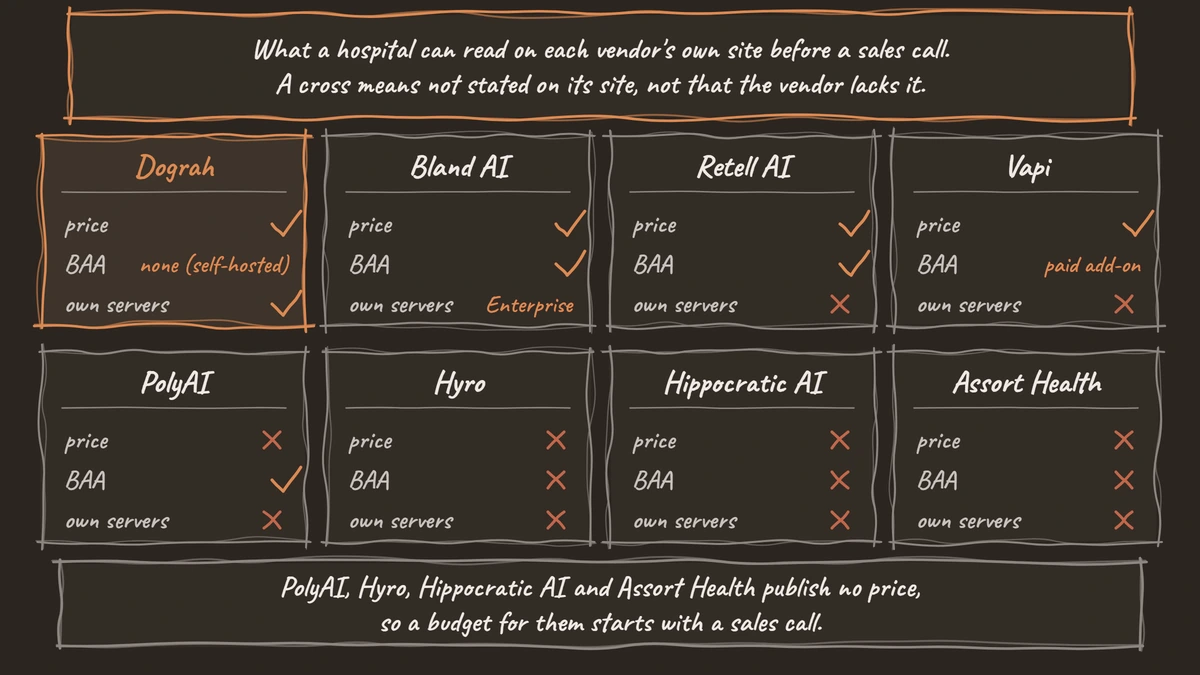
The best AI voice agents for healthcare, ranked on open source, self-hosting, business associate agreement (BAA) terms and published price, are Dograh, Bland AI, Retell AI, Vapi, PolyAI, Hyro, Hippocratic AI and Assort Health. Dograh is the only one you can self-host from open code. Four of the eight publish no price on their own sites.
Key Takeaways
- Only one of the eight platforms is open source and free to self-host.
- Four of the eight publish no price on their own sites.
- A BAA on some plan is common. Which plan, and at what cost, varies.
This post is part of our guide to AI voice agents for hospitals and health systems. The guide's section on building it yourself or choosing a platform points here for the choosing. Dograh, an open-source, self-hostable voice agent platform, is one of the eight, judged on the same criteria as the rest.
The four criteria we used to rank the platforms
Four criteria decide the order, and every platform is judged on all four. The first is open source: whether you can read the platform's code and run it without asking anyone. The second is self-hosting and on-prem: whether the platform can run on servers your hospital controls, and what that takes. The third is BAA terms: whether the vendor states it will sign a business associate agreement (BAA), the contract the Health Insurance Portability and Accountability Act (HIPAA) requires from vendors that handle protected health information (PHI), and on which plan and at what cost. The fourth is cost: whether a price is published at all, and what it includes.
The BAA criterion needs one note. There is no official HIPAA certification, so "HIPAA-compliant" on a vendor's page is the vendor's own description. The buyer's real question is which BAA, on which plan, covering which parts of the call. A BAA delegates obligations to the vendor and adds a duty for you to monitor them; it never transfers your liability. Our post on HIPAA-compliant voice AI for hospitals works through every vendor a call touches.
The set is voice-first platforms only, meaning products whose main job is answering and placing phone calls. Four are general voice platforms with a healthcare plan, and four are healthcare specialists. Clinical scribes and chat-first suites are different purchases and are left out. Every price, BAA line and deployment statement below comes from the vendor's own site.
How the eight platforms compare on each criterion
Dograh is first because it is the only product that meets all four criteria without a sales conversation. The rest are ordered by how much of the four a buyer can check on the vendor's own site.
| Platform | Open source | Self-host or on-prem | BAA terms on its site | Published price | What you get, and what's missing |
|---|---|---|---|---|---|
| Dograh | Yes, BSD 2-Clause | Self-host the full platform free, on your own servers or cloud; Enterprise adds a managed on-prem or private-cloud deployment | Self-hosted: no BAA with Dograh needed; model providers need their own, and the carrier may, depending on what it stores | Self-hosted: no per-minute platform fee. Dograh Cloud: 1¢/min platform fee | Visual builder, Pre-Call Data Fetch, HTTP API tools, webhooks, any model by key or self-hosted. But no prebuilt electronic health record (EHR) connector. |
| Bland AI | No | On-prem or virtual private cloud (VPC) on Enterprise only | "HIPAA-eligible with a signed BAA"; pricing page lists it under Enterprise, healthcare page says included | Start $0.14/min; Build $0.12/min plus $299/month | One price covers the model and both speech layers. But on-prem and data residency need an Enterprise contract, so confirm the BAA plan in writing |
| Retell AI | No | Vendor cloud; no on-prem on its pricing page | Self-signed BAA at no additional fee | $0.055/min voice infra; $0.07 to $0.31/min all-in | Per-agent retention from 1 day to 2 years, SOC 2 Type 1 and Type 2. But closed code in its cloud, and models billed by the minute |
| Vapi | No | Vendor cloud; no on-prem statement | BAA in a $2,000/month HIPAA add-on | $0.05/min hosting fee, before models and phone | Large model and voice choice for developers. But HIPAA handling is a $2,000 a month add-on on top of the per-minute fees |
| PolyAI | No | No deployment statement on its healthcare page | BAA "available for every deployment that handles protected health information" | Per-minute, no figure published | Epic and MyChart integrations, SOC 2 Type II and ISO 27001. But no price anyone can see before a sales call |
| Hyro | No | No deployment statement | Not stated on its site | No price published | Built for health system call centers, with Epic, Salesforce, Cisco and Five9 integrations. But closed, and priced only through sales |
| Hippocratic AI | No | No deployment statement | Not stated on its site | No price published | A clinical safety focus with stated exclusions and sampled calls. But no BAA, deployment or price on its site |
| Assort Health | No | No deployment statement | Not stated on its site | No price published | Scheduling, intake and referrals with integrations across more than 15 platforms. But no HIPAA, BAA or price wording on its homepage |
Dograh: the open-source platform you can run on your own servers
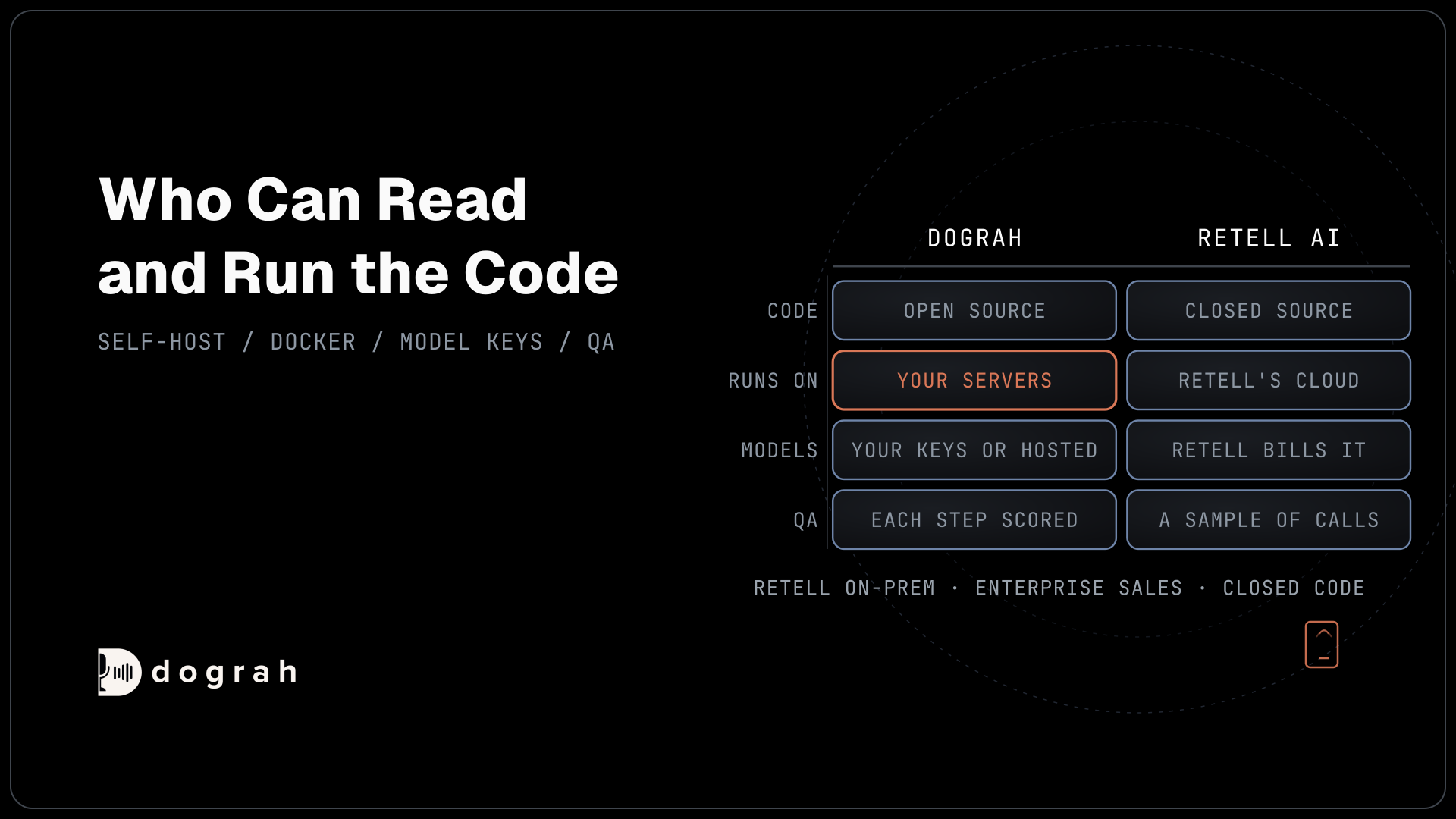
Dograh is the only entry whose code you can read before you sign anything. It is released under the BSD 2-Clause licence and has more than 5,800 stars on GitHub. Dograh is the orchestration layer: it runs the call flow, tools and telephony, and the speech and language models are a separate layer you choose. You can use Dograh's own models, bring a key for a supported provider, or run open-weight models on your own servers.
That choice decides the BAA chain. Self-hosting Dograh means no BAA with Dograh is needed, because the platform runs on your servers. A model provider you use through an API key still hears the audio, so each needs its own BAA. The phone carrier may need one too, depending on what it stores. Patient audio stays inside your network only when the models run there too.
For a healthcare call, the features that matter are the ones that keep the agent inside its job. Pre-Call Data Fetch looks the caller up in your system when the call connects. An HTTP API tool sends the date of birth and a reference to your own endpoint for verification, so the expected answers never enter the agent. A pathway's Transition Speech plays a fixed emergency instruction word for word, and a QA node scores a sample of live calls step by step. A self-hosted instance runs 10 concurrent calls by default, adjustable with a setting, and your servers and phone provider set the real ceiling.
On cost, self-hosted Dograh has no per-minute platform fee; you pay for servers, any paid model keys and phone minutes. Dograh Cloud, the managed version, has a 1¢-a-minute platform fee with 10 concurrent calls included. Enterprise adds on-prem deployment inside your perimeter, single sign-on and audit logs.
What's missing is worth saying plainly. Dograh ships no prebuilt EHR connector. Your scheduling or EHR API is reached through HTTP API tools you configure, which our tutorial on how to build a voice agent for healthcare walks through. Transfer Call, the tool that hands a call to a person, works on Twilio only. There is no retention setting, so your own policy decides when recordings and transcripts are deleted. The free version comes with community support.

Open Source Alternative to Vapi / Retell
Self-hosted voice agent platform — no per-minute fees
dograh-hq/dograh
Star on GitHub
Bland, Retell AI and Vapi: general voice platforms with a BAA option
These three sell to every industry, and each puts its healthcare terms on a different plan.
Bland AI. Bland prices by plan. Start costs $0.14 a minute with no platform fee, and Build costs $0.12 a minute plus $299 a month, per Bland's pricing page. The per-minute rate includes the language model, speech-to-text and text-to-speech, which makes it the simplest price in the set to reason about. Bland describes itself as "HIPAA-eligible with a signed BAA". Its pricing page lists the BAA, on-prem or VPC deployment and data residency under Enterprise, but its healthcare page says a BAA is included with healthcare deployments, so confirm the plan in writing. Bland also runs its own speech and language models on its own infrastructure, so call audio doesn't go to outside AI providers. That's Bland hosting its own stack, not your hospital hosting Bland.
Retell AI. Retell states that "a signed BAA is required before transmitting PHI" and that there is no additional fee to sign one, per Retell's compliance page. The same page offers per-agent retention for transcripts, recordings and logs from 1 day up to 2 years, which is a setting a records team will ask about. Its voice infra fee is $0.055 a minute, and its own all-in range runs $0.07 to $0.31 a minute. But the code is closed and the pricing page names no on-prem or VPC option. The full breakdown is in Retell AI Pricing Explained.
Vapi. Vapi charges a hosting fee of $0.05 a minute, before any model, voice or phone cost, per Vapi's pricing page. HIPAA-eligible data handling, with a BAA, is an add-on at $2,000 a month, the same as 40,000 minutes of the hosting fee. The page makes no on-prem or self-host statement. The arithmetic is in Vapi Pricing Explained.
PolyAI and Hyro: enterprise agents for health system call centers
PolyAI and Hyro sell finished agents to large health systems, and neither publishes a price.
PolyAI builds its own dialog models and serves healthcare as one of several industries. Its healthcare page says a BAA "is available for every deployment that handles protected health information", lists SOC 2 Type II and ISO 27001 controls, and names Epic and MyChart integrations. Its pricing page says use is priced per minute and gives no figure. The healthcare page makes no deployment or data residency statement.
Hyro is healthcare-only. Its healthcare page describes "HIPAA-compliant conversational AI, crafted for health systems", and its integrations page lists Epic, Salesforce, Cisco and Five9, which fits a contact center that already runs those systems. The site states no price, no BAA terms and no deployment option, so a buyer learns all three in a sales process.
Both make sense for a large system that wants a vendor to run the agent. Neither lets a team read the code, run it on its own servers or price it alone. The contact center itself is covered in AI Voice Agents for Healthcare Call Centers: Patients Still Call.
Hippocratic AI and Assort Health: healthcare specialists with no published price
These two are the most healthcare-specific products in the set, and neither site carries a price, BAA terms or a deployment option.
Hippocratic AI positions itself on clinical safety. Its homepage states "Our AI agents do not diagnose or prescribe", lists work it will not take on, such as hospice, mental health disorders and children under two, and says 0.5% to 1% of live calls are sampled for safety. It also says "Our contracts take responsibility", a liability claim a buyer should read in the contract itself. Those exclusions also mark what the product will not cover, such as behavioral health intake.
Assort Health focuses on the patient's path through scheduling, intake, triage, refills and referrals. Its homepage claims integration with more than 15 platforms, with Athena named first. It states no HIPAA or BAA terms and no price.
Both are closed and run by the vendor. For a practice on Athena, that integration list is the first thing to test in a demo. For a team that needs to show a security reviewer where the audio goes, neither site answers the question.
Join the Dograh Community
Dograh is an OSS alternative to Vapi. Join our Slack community for queries, releases, best practices & community interactions.
What no platform here should do on a patient call
Whichever platform you pick, the agent's job is to collect, remind and route. ECRI, the patient safety organization, put the misuse of AI chatbots at the top of its 2026 list of health technology hazards, noting that the tools "are not regulated as medical devices nor validated for healthcare purposes". ECRI was writing about general-purpose chatbots, not phone agents. The lesson carries over anyway.
So every configuration should hold the same lines. The agent verifies the caller with a date of birth and one reference before naming any appointment or result. It hands every clinical question to a nurse or clinician. An emergency gets a fixed instruction to call 911, played as fixed text or a recorded clip so the model never improvises it. A platform's safety claims help, but your own prompts, pathways and QA decide what is said on your calls.
Picking the right platform for your health system
The right choice depends on what your security review asks. A large system that wants a vendor to run everything, and has the procurement team for it, will take demos from Hyro, PolyAI, Hippocratic AI and Assort Health, and should ask each for the BAA, the price and the hosting terms in writing. A practice that wants to start this quarter on a published price will look at Bland, Retell or Vapi, and should put the BAA plan and the model and phone lines into the spreadsheet before comparing.
A hospital whose question is where the patient audio goes has a shorter list. Only one product here lets the answer be "our servers", and only when the hospital runs both the platform and the models itself, because a hosted model used by key still receives the audio. If your review asks that question, Dograh is the platform whose code you can show them. If it never comes up, pick on total cost per minute, BAA terms and the integrations you already run.
Whichever way you lean, get four answers in writing before you sign. Ask which plan the BAA comes with and what it costs. Ask for the list of sub-processors, meaning the speech, model and phone companies the vendor sends your patients' audio and transcripts to, and whether each one has signed a BAA with the vendor. Ask how long recordings and transcripts are kept, and who can delete them. And ask what the agent does when the transfer to a person goes unanswered. A vendor that answers all four on paper is one your compliance team can review; a vendor that answers them only on a call has told you something too. Keep the EHR and the scheduling system as the record whichever platform you choose.
Glossary
- Business associate agreement (BAA)
- The contract HIPAA requires before a vendor creates, receives, stores or transmits protected health information for a provider. It delegates obligations to the vendor; it never transfers the provider's liability.
- Self-hosting
- Running the platform's code on servers you control rather than in a vendor's cloud. Of the eight platforms here, only Dograh can be self-hosted without an Enterprise contract.
- Platform fee
- The per-minute charge for running the agent itself, billed before the speech models, the language model and the phone line. Self-hosted Dograh has none.
- Voice infra fee
- Retell's name for its per-minute platform charge, $0.055 a minute, with the language model and the phone line billed on top.