
AI voice agents for telehealth in Canada handle booking, call-back and reminder calls around phone-based virtual care. Provincial health privacy law applies, and AI scribe guidance carries over by analogy. Tell patients about the AI, assess privacy first and keep patient audio out of model training. Self-hosting in Canada with local models keeps call data in the country.
Key Takeaways
- Most Canadian virtual visits with family doctors are phone calls, not video.
- Provincial health privacy laws, not one national law, set most of the rules.
- Call data stays in Canada only if the models also run there.
A Canadian family doctor's virtual visit is usually a phone call, and each province writes its own privacy rules. We cover which law applies, what AI scribe guidance means for a phone agent, French notices and verification, and keeping data in Canada with Dograh. It sits within our guide to voice AI in healthcare.
In Canada, virtual care is mostly a phone call
Video gets the attention, but in Canada the phone carries most virtual care. Statistics Canada found that most virtual appointments with family doctors or nurse practitioners, 77.9%, were by telephone only, as were 62.1% of virtual appointments with specialists. The figures come from 2023 survey data published in June 2026.
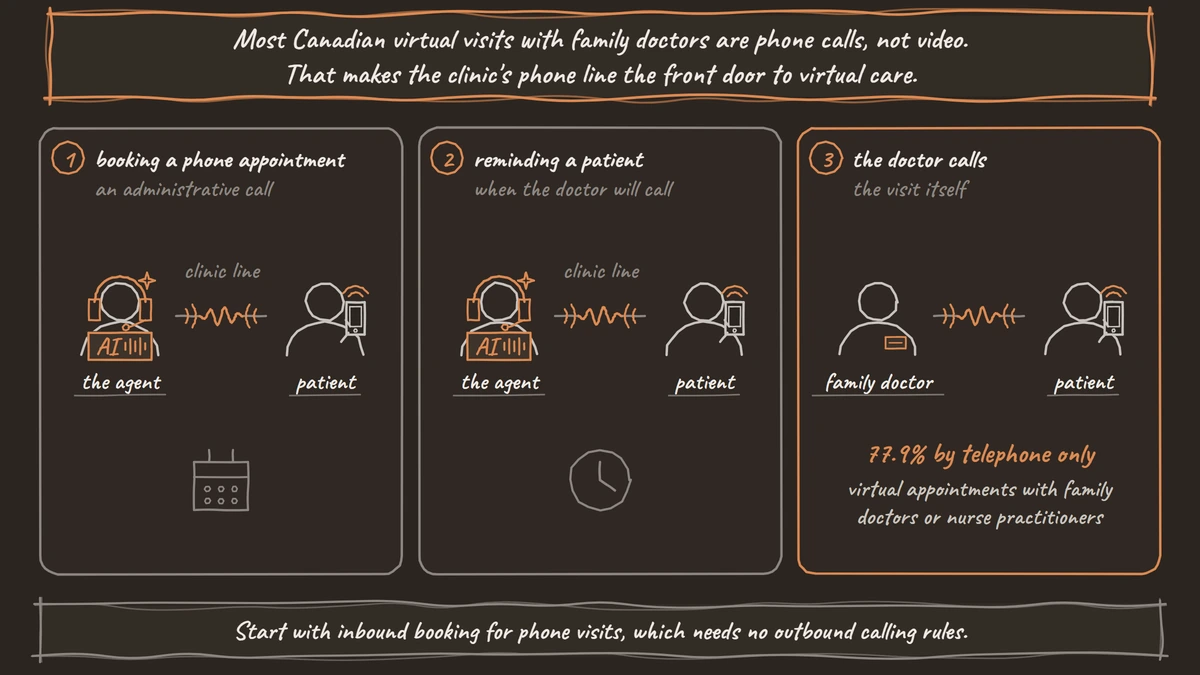
That makes the clinic's phone line the front door to virtual care. An AI voice agent can take the administrative calls around those visits, such as booking a phone appointment or reminding a patient when the doctor will call. It does not give medical advice. AI voice agents for telehealth covers how the same calls run with a US provider.
Which privacy law covers your clinic
There is no single Canadian health privacy law. The federal privacy commissioner's map of privacy laws shows health care generally falls under provincial laws, such as Ontario's Personal Health Information Protection Act (PHIPA) and Alberta's Health Information Act (HIA). The clinic or doctor holding the records is usually the health information custodian, and a supplier running the voice agent acts on its behalf, often as an information manager, under a written agreement.
Most provinces expect a privacy impact assessment (PIA) before a new system handles health information, and Alberta requires custodians to submit one to its commissioner. Quebec adds its own rules, including an assessment before personal information leaves the province. AI voice agents for hospitals and health systems in Canada covers the same laws from a health authority's side.
What AI scribe guidance means for a phone agent
Canadian regulators have written about AI scribes rather than phone agents so far. Scribes are the tools that listen to a visit and draft the note, and the same questions apply to a booking line because both record patients and send audio to models.
Ontario's privacy commissioner has said that patients' consent would generally be required for an AI scribe, as Borden Ladner Gervais summarized. It also expects detailed vendor contracts, and it calls deleting recordings and transcripts once a reviewed summary is stored the best practice. For a phone agent, that points to a clear notice at the start of each call and a plan for deleting audio once the clinic system holds what it needs.
Alberta's commissioner goes further on training: a vendor may not use health information to train its models. The speech and language models are a separate layer from the platform that runs the call. Hosted model providers receive the audio and text they process, so their terms on training belong in your PIA, while open-weight models on your own servers send nothing out.

Open Source Alternative to Vapi / Retell
Self-hosted voice agent platform — no per-minute fees
dograh-hq/dograh
Star on GitHub
Notice, French and verification on the call
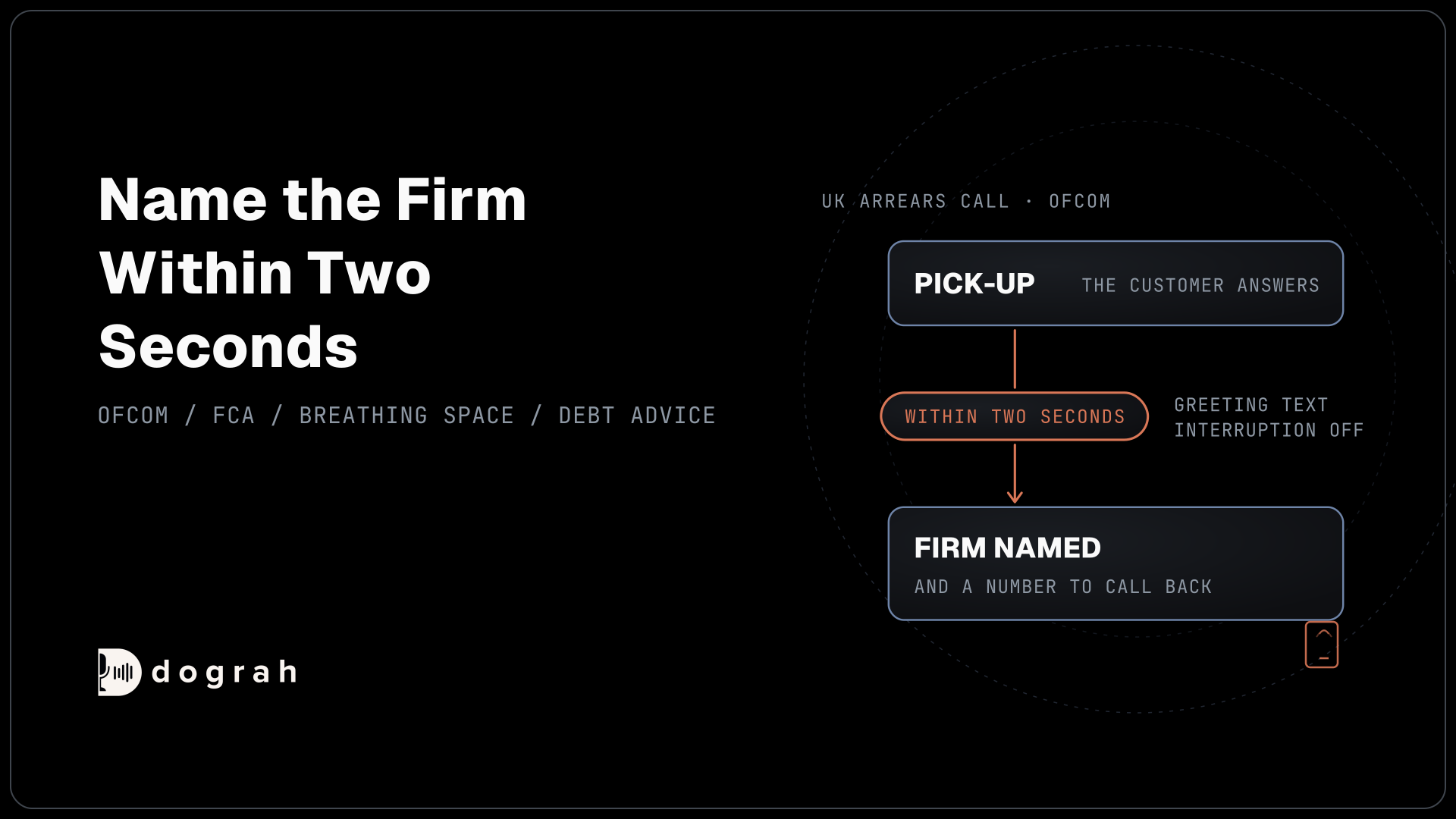
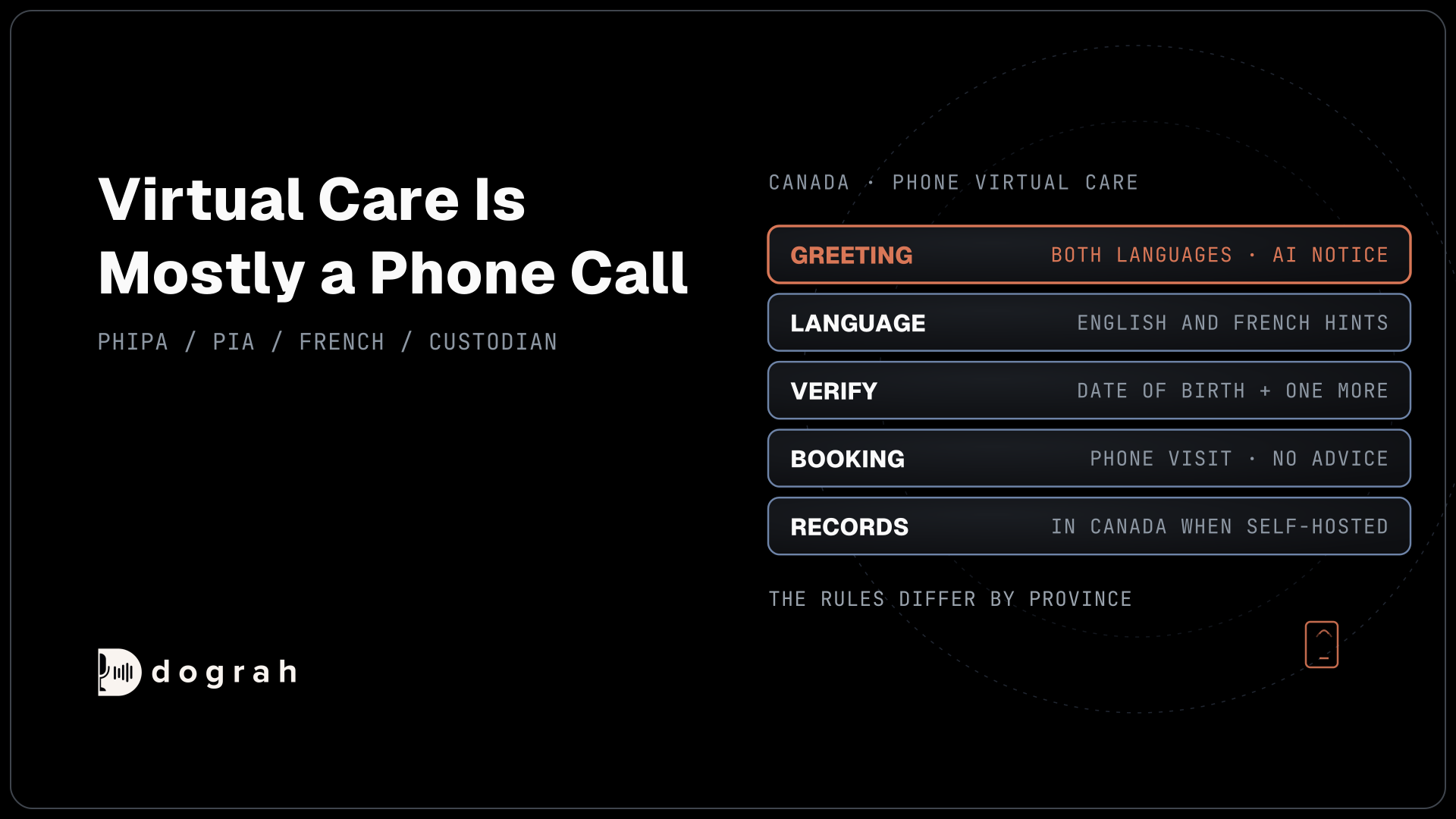
The Greeting Text on the Start Call node plays before the agent hears the caller's language, so write it in both: "Bonjour, hello, you've reached the clinic's automated assistant." Allow Greeting Interruption is on by default, which lets a caller cut the line short, so switch it off on that node when the greeting carries the notice.
For recognition, set the speech-to-text Language to Multilingual (Auto-detect) in the agent's Model tab and tick English and French under Language Hints, which work with Dograh models or Deepgram Flux. Multilingual voice agents covers voices and prompts in each language.
Before any visit detail, the agent checks a date of birth and one more item against the clinic system. Verifying patient identity before a voice agent shares PHI covers that check. When a patient needs a nurse, Transfer Call works on Twilio, Telnyx, Plivo, Cloudonix and Asterisk ARI. Dograh rings the nurse line first and puts the patient through only when someone answers. An emergency pathway plays one fixed line: "If this is a medical emergency, please call 911 now."
Keeping call data in Canada
Self-hosted in a Canadian data centre or cloud region, the saved copies of each call stay in the country, from the three recordings and the transcript to the call record with its extracted fields. Audio during the call stays only if the speech and language models run on Canadian servers too, so pick open-weight models or providers with Canadian hosting before you promise patients anything.
There is no retention setting, and nothing is deleted on its own. The clinic decides how long recordings and transcripts stay, and deletes them through its own process on its database and storage, which fits the Ontario approach of keeping the summary and letting the audio go. A self-hosted install also sends anonymous usage telemetry by default, so set ENABLE_TELEMETRY=false and remove POSTHOG_API_KEY.
Join the Dograh Community
Dograh is an OSS alternative to Vapi. Join our Slack community for queries, releases, best practices & community interactions.
Self-hosted Dograh has no per-minute platform fee, but servers, model keys and phone minutes still cost money, and Dograh Cloud charges a 1¢-a-minute platform fee. The rules differ by province and the scribe guidance is an analogy, so confirm your PIA and supplier agreement with your privacy officer or counsel before the first patient call.
Start with inbound booking for phone visits, which needs no outbound calling rules. It also tests the bilingual greeting, since the transcripts show where French and English callers get stuck.
Glossary
- Health information custodian
- The person or organization that holds personal health information and is responsible for it under a provincial law such as Ontario's PHIPA, usually the clinic or the doctor.
- Privacy impact assessment (PIA)
- A written review of how a new system collects, uses and protects health information. Alberta custodians submit one to the commissioner, and other provinces expect one in practice.
- Information manager
- A supplier that processes or stores health information for a custodian under a written agreement, the role a voice agent supplier usually plays.
- Virtual appointment
- A visit held by phone or video instead of in person. Most Canadian virtual appointments with family doctors and nurse practitioners are by telephone only, with no video.