
Introduction
Most businesses running global outbound campaigns already know the problem: you dial into 20 countries, and your English-speaking agents — or your English-configured AI — get hung up on within the first 15 seconds across half those markets.
The data backs this up. A CSA Research survey of 8,709 consumers across 29 countries found that 75% are more likely to repurchase from a brand when customer care is delivered in their native language. The same research found 40% won't engage at all with content in another language.
The traditional fix — hire native-speaker agents per market — doesn't scale. Contact center annual turnover runs as high as 60%, and replacing each agent costs $10,000–$20,000 when you factor in recruiting, training, and lost productivity. Multiplied across 10 or 15 language markets, the economics collapse.
This guide covers how multilingual Voice AI solves that equation: the technology stack behind it, what separates capable platforms from limited ones, and how campaigns running 70+ languages are compressing cost while improving conversion.
Key Takeaways
- 75% of consumers are more likely to repurchase when contacted in their native language — language isn't a nice-to-have, it's a conversion lever
- Simply translating a script isn't enough; cultural framing, formality, and pacing vary significantly by market
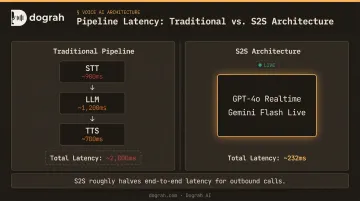
- Speech-to-Speech (S2S) architectures roughly halve pipeline latency compared to traditional STT → LLM → TTS chains
- Hybrid pre-recorded + TTS voice delivers 2× better outbound conversions and cuts compute costs up to 3×
- Data sovereignty and compliance (GDPR, TCPA, LGPD) must be designed into platform selection — not bolted on later
Why Multilingual Outbound Campaigns Need More Than Translation
Translating an English script into Spanish or Mandarin and running it through a TTS engine is not a multilingual campaign. It's an English campaign wearing a costume.
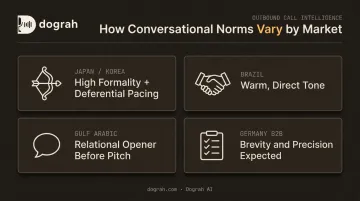
Each market carries distinct conversational norms that directly affect whether a prospect stays on the line:
- Formality register: Japanese and Korean outbound calls require formal honorifics and deferential pacing; Brazilian Portuguese is warmer and more direct
- Conversational cadence: Gulf Arabic calls often begin with longer relational openers before any business proposition; German B2B calls tend to expect brevity and precision upfront
- Trust signals: Local caller IDs, regional idioms, and culturally appropriate framing all affect whether a prospect perceives a call as legitimate or spam
Tone-deaf outbound — where the words are correct but the delivery is culturally misaligned — is one of the primary drivers of early call drop-offs in international campaigns.
The Staffing Problem at Scale
Traditional call centers solve this by hiring native speakers per region. The model works at small scale but breaks down quickly:
- Staffing costs multiply linearly with every new market
- Timezone coverage requires shift premiums or offshore teams
- QA across 8+ languages requires language-specific reviewers
- Per McKinsey research on contact center operations, agent attrition costs $10,000–$20,000 per hire — in a multilingual operation, that figure compounds across every language team
A single multilingual Voice AI platform can run simultaneous campaigns in Spanish for LATAM, German for DACH, and Mandarin for APAC, each with regionally appropriate personas, correct formality registers, and real-time language detection. No additional headcount. No timezone constraints. Platforms like Dograh AI support 70+ languages out of the box, making this kind of multi-market coverage operationally straightforward rather than a staffing exercise.
How Multilingual Voice AI Works: The Technology Stack
The Core Pipeline
The standard architecture chains three components:
- Speech-to-Text (STT) — transcribes the caller's spoken words in their language
- Large Language Model (LLM) — interprets intent and generates an appropriate response
- Text-to-Speech (TTS) — converts that response to natural-sounding audio in the same language and accent
For conversations to feel human, this full chain needs to execute end-to-end in roughly 500–800ms. ITU-T G.114 recommends one-way transmission delay not exceed 400ms for general network planning — voice AI latency adds on top of that floor.
Speech-to-Speech (S2S) Orchestration
S2S models collapse the three-component chain into a single model pass. Instead of routing through STT, LLM, and TTS sequentially, models like OpenAI GPT-4o or Gemini Flash Live process voice input directly into voice output. OpenAI reports GPT-4o responds to audio in as little as 232ms on average, compared to 2.8 seconds for the previous three-model pipeline.
For outbound calling specifically, where the first 15 seconds determine whether a prospect stays engaged, that latency difference is consequential. Dograh AI shipped S2S orchestration across its full stack — using GPT-4o Realtime and Gemini Flash Live — roughly halving end-to-end latency compared to the traditional pipeline.
Hybrid Pre-Recorded + TTS Voice
For high-frequency outbound phrases — greetings, value propositions, call-to-action lines — using real pre-recorded human voice clips blended with TTS for dynamic portions produces audio that sounds more natural than pure TTS alone.
The catch: this only works when the pre-recorded clips and TTS output are cloned to match the same voice persona. Dograh AI's hybrid voice feature achieves this matching — and reports up to 3× cost reduction versus pure TTS, alongside measurably better outbound conversion performance.
Language Detection and Code-Switching
Modern platforms can identify a caller's language within the first few words and adapt the full pipeline — voice persona, script logic, tone — without restarting the call. Research estimates over 250 million people in India engage in Hinglish-style code-switching, and Singapore, UAE, and other markets present similar complexity.
What this demands in practice:
- Real-time language detection within 1–2 spoken sentences
- Mid-sentence code-switching support — not just single-language detection
- Pipeline-wide adaptation — voice persona, prompt logic, and tone all shift together
Key Use Cases for Global Outbound Campaigns
Lead Qualification and Sales Prospecting
AI agents can run simultaneous outbound qualification campaigns across language markets — each with appropriate pacing and messaging — qualifying hundreds of leads per hour without human involvement at the top of funnel.
A LATAM campaign in Spanish, a DACH campaign in German, and an APAC campaign in Mandarin can run in parallel from a single platform, with per-language scripts, voice personas, and CRM sync configurations.
Appointment Reminders and Healthcare Outreach
The ROI case here is the strongest across all outbound use cases — and it's backed by data. HIMSS reports that telephone reminders seven days before a visit produced a 22% decrease in missed appointments, and staff phone reminders reduced no-shows from 17.3% to 13.6% compared to no reminder.
For global healthcare networks or insurers operating across language markets, multilingual Voice AI can deliver these reminder campaigns at scale — in the patient's preferred language, at the right local time, with the appropriate regional disclosure language — at any scale, without adding headcount.
Payment Nudges and Financial Services Outreach
Financial services teams use multilingual Voice AI for time-sensitive outbound: missed payment reminders, premium renewal calls, and loan repayment prompts. These campaigns demand consistent timing and precise scripting. That's where AI outperforms human agents: people introduce variability in both delivery and language quality across markets, while AI executes the same script identically on call one and call ten thousand.
Key requirements AI handles reliably:
- Precise delivery windows tied to local time zones
- Regulatory disclosure language per market
- Script adherence without drift across high call volumes
- Consistent tone regardless of agent workload or shift
Post-Purchase Surveys and NPS Collection
Global brands use multilingual outbound AI to run post-service surveys at scale, collecting structured NPS or CSAT data from customers in their native language. Response rates for native-language voice surveys significantly outperform IVR-style English-only surveys or email surveys, particularly in markets where English literacy or email engagement is lower.
What to Look for in a Multilingual Voice AI Platform
Many platforms claim multilingual support but deliver surface-level translation layered on English-trained models. The table below shows what to actually test before committing to a platform:
| Evaluation Criteria | What to Ask |
|---|---|
| Language depth | Does the platform have native-quality TTS voices and trained STT per language, or is it Google Translate on English logic? |
| Latency in target regions | Measure end-to-end response time from the geographies you're calling , not from a US data center |
| Code-switching support | Can the platform handle mid-sentence language blending for markets like India, Singapore, UAE? |
| Data sovereignty | Can call audio, transcripts, and metadata stay within your own infrastructure? |
| Script flexibility | Does the platform support per-language conversation flows, legal disclosure variants, and A/B testing without custom code? |
| CRM and telephony integration | Do call outcomes sync automatically to your CRM, and does the platform support regional phone numbers? |
A Note on Data Sovereignty
For GDPR-sensitive markets (EU, UK, Switzerland) or regulated industries, how a platform handles data is as important as what it can do. Dograh AI offers fully managed private-cloud deployments where the entire voice agent infrastructure runs within the customer's own cloud environment — meaning call audio, transcripts, and metadata stay on your infrastructure, and no vendor data processing agreement is required to run outbound campaigns.
This model sits alongside Dograh AI's cloud and open-source self-hosted options — giving teams flexibility based on their compliance posture. On the CRM side, call outcomes, sentiment scores, and lead statuses sync automatically to Salesforce, HubSpot, and Zendesk after each call.
Compliance and Data Sovereignty in Cross-Border Outbound
Running AI-powered outbound across multiple countries means navigating an expanding patchwork of regulations — one that keeps adding layers, not shedding them.
Key regulations to design around:
- TCPA (USA) — The FCC has confirmed that TCPA restrictions on artificial or prerecorded voice explicitly cover AI-generated voices. Consent requirements apply.
- GDPR (EU/UK/Switzerland) — Articles 28 and 44 govern how personal data including voice recordings can be processed and transferred across borders. Using a cloud-only vendor typically requires signed DPAs and Transfer Impact Assessments.
- EU AI Act, Article 50 — Requires that people interacting with AI systems be clearly informed they are doing so, at the latest at the start of the interaction.
- LGPD (Brazil) — Broadly aligned with GDPR; requires consent or legal basis for personal data processing.
- PDPA (Singapore/Thailand) — Singapore's DNC provisions require organizations to check the registry before sending telemarketing calls.
Three compliance behaviors every multilingual outbound platform must support:
- DNC registry checking — configurable per region and per campaign, not hardcoded as a single global rule
- AI disclosure messages — required by law in multiple jurisdictions, with per-language configuration built in
- Local calling hour restrictions — respect regional windows (no outbound calls at 8am on a Sunday in Germany)
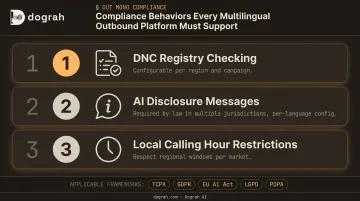
These should be configurable settings within the platform, not custom development projects. For teams running on self-hosted infrastructure, compliance also extends to data residency — voice recordings and call logs stay within your own environment, removing the need for vendor DPAs and Transfer Impact Assessments entirely.
How to Launch a Multilingual Outbound Campaign
Step 1: Define Your Language Matrix
Before touching any platform, map:
- Target markets and required languages
- Campaign objective per market (lead qualification, reminder, survey)
- Expected call volume per language
- Whether you need local phone numbers in each country
This determines whether you need 3 language variants or 30, and what your telephony setup looks like.
Step 2: Build and Localize Per-Language Configurations
With your language matrix defined, create a base conversation flow and build language-specific variants that address:
- Script localization (not just word-for-word translation — cultural framing, formality register, pacing)
- Voice persona selection per market
- Legal disclosure language per jurisdiction
- Calling hour rules per region
Test each language variant with 50–100 calls before scaling. Review recordings for early drop-off points, intent misrouting, and how the agent handles objections — these are the earliest signals that a localization is off.
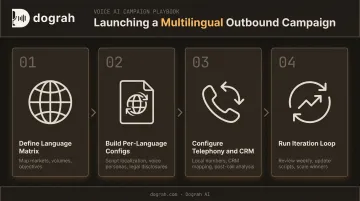
Step 3: Configure Telephony, CRM Sync, and Post-Call Analysis
- Assign local or regional phone numbers per campaign region — unknown international numbers get ignored. Hiya data shows 86% of unknown calls go unanswered.
- Map CRM fields so call outcomes (interested, DNC, callback requested, voicemail) sync automatically after each call
- Enable post-call analysis to flag calls where disclosures were missed, agents went off-script, or prospects showed strong interest but weren't advanced correctly
Step 4: Run the Iteration Loop
Multilingual outbound performance is more sensitive to pacing and objection-handling language than single-market campaigns — small wording changes can move conversion rates meaningfully. Establish a weekly review cadence:
- Review sentiment trends and drop-off points per language
- Compare conversion rates across language variants
- Update scripts based on where calls drop off
- Scale language variants that perform; pause those that don't
Frequently Asked Questions
How does multilingual Voice AI detect which language to use during an outbound call?
Most platforms allow campaigns to be pre-configured for a target language based on the lead's country or region. Advanced systems can also perform real-time language detection from the first few spoken words, enabling dynamic switching for bilingual or code-switching markets.
Can a single AI voice agent run campaigns in multiple languages simultaneously?
Yes. A single platform can run parallel outbound campaigns in many languages at once — each with its own voice persona, script logic, and telephony configuration — scaling to thousands of concurrent calls across all languages.
What languages are supported by today's multilingual Voice AI platforms?
Leading platforms support 50–100+ languages, but quality varies significantly. Some offer only translation layered on English TTS, while mature platforms provide genuinely trained STT, native-quality TTS voices, and LLM reasoning in the target language. Always test the specific languages you need before committing to a platform.
How do GDPR and data privacy regulations affect global outbound AI calling campaigns?
GDPR requires that call recordings, transcripts, and personal data linked to calls be processed in compliant ways — either under a DPA with the vendor or by keeping all data within your own infrastructure through self-hosted or private cloud deployments. The latter eliminates vendor processing agreements entirely.
What's the difference between translating a script and localizing it?
Translation converts words. Localization adapts the entire script for cultural norms, formality levels, pacing expectations, and regional trust signals. Wrong formality registers, mismatched idioms, and cultural framing misses are among the most common reasons multilingual outbound campaigns underperform.
How does the cost of multilingual Voice AI compare to hiring multilingual human agents?
Voice AI handles multilingual outbound at a fraction of the cost of staffing human agents per language market. McKinsey estimates each contact center agent costs $10,000–$20,000 to replace — in an operation running 8+ language markets, that compounds fast. Dograh AI's hybrid pre-recorded + TTS approach cuts compute costs further while delivering 2× better conversions on outbound campaigns.