
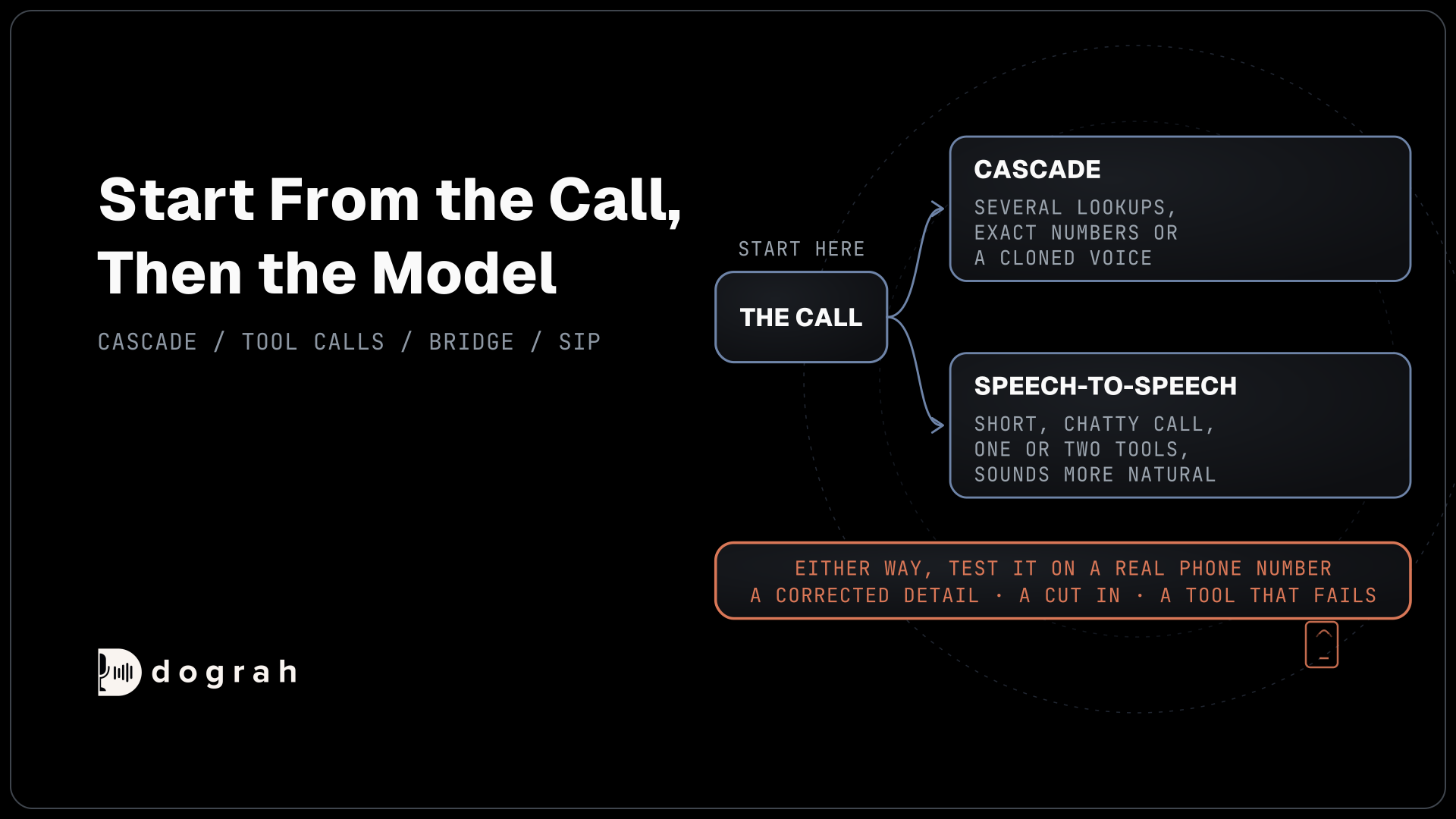
Speech-to-Speech Voice AI for Phone Calls: The Complete Guide
Speech-to-speech voice AI for phone calls: every API and open model on one map, how each reaches a phone line, where tool calls break, when a cascade fits better and which models run in Dograh.
Read the full guide →Deep Dives in This Series
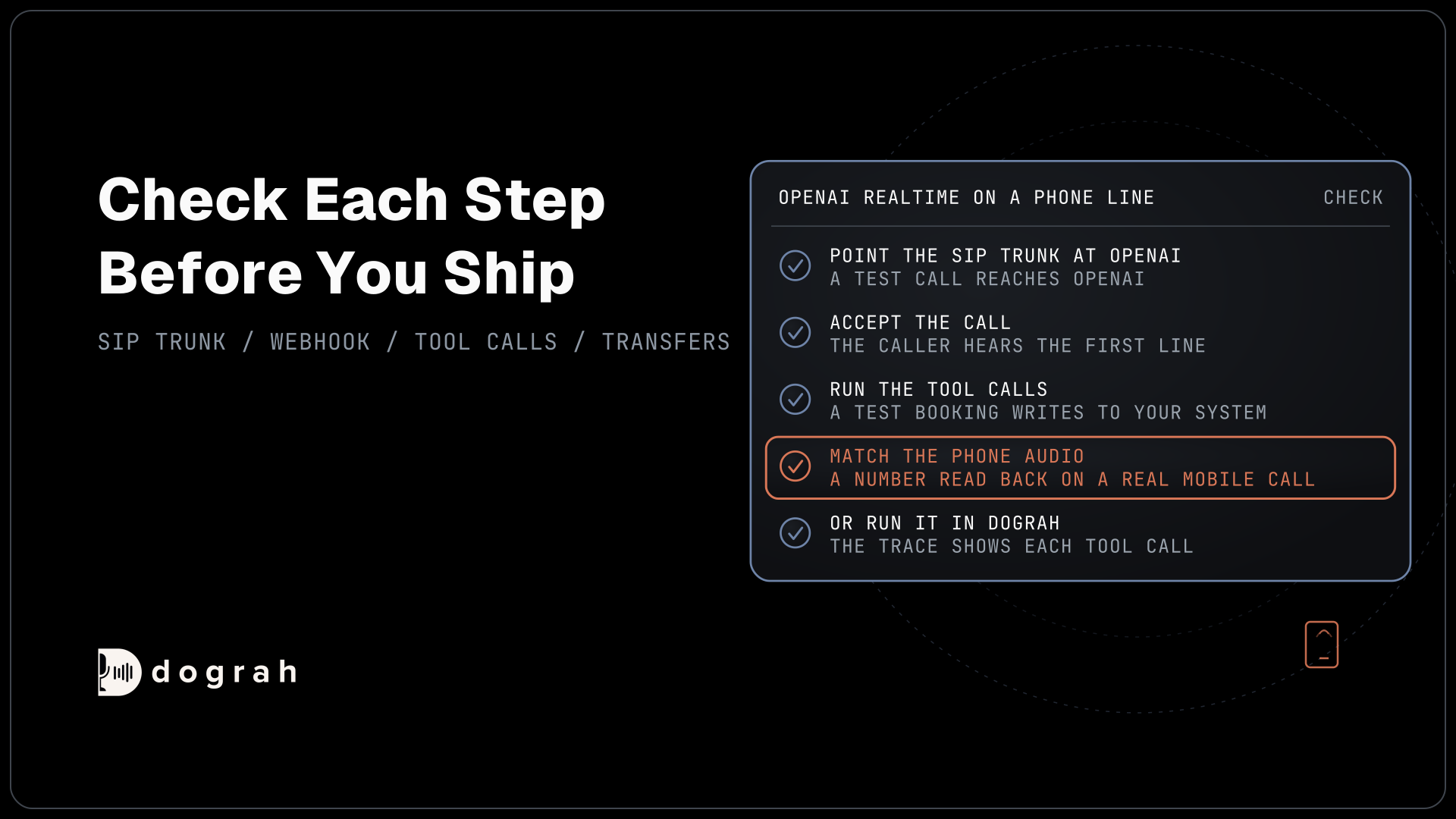
OpenAI Realtime API on Phone Calls: SIP, Tools and 8 kHz Audio
Put the OpenAI Realtime API and GPT-Live on phone calls: point a SIP trunk at OpenAI, accept calls, run tools and transfers, handle 8 kHz audio, or run the same models in Dograh.
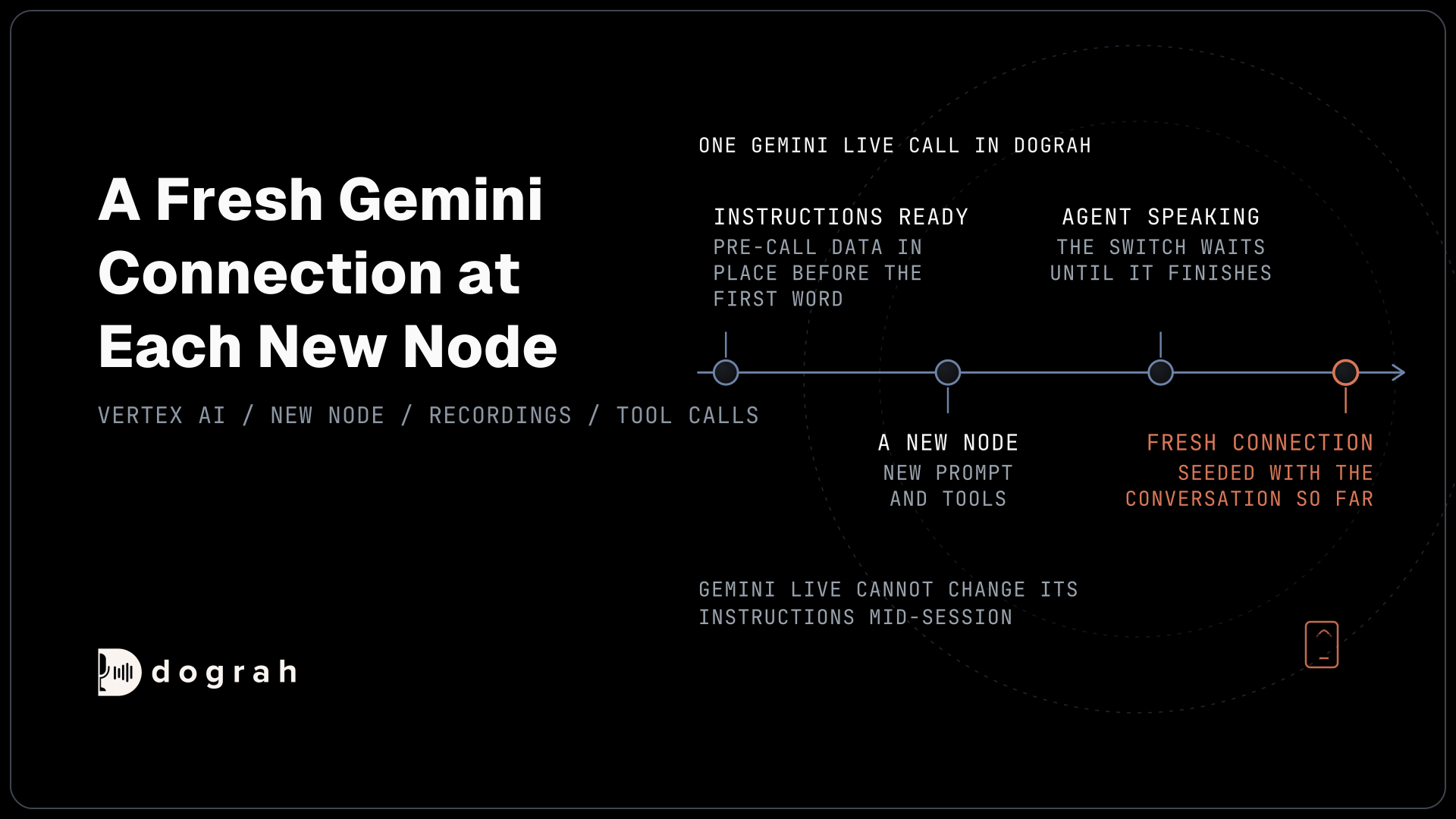
Gemini Live API on a Phone Line: What Works and What Breaks
Gemini Live API on a phone line: how calls reach it without SIP, 8 kHz audio, session limits on long calls, sync and async tool calls, languages, and running Gemini 3.8 Live in Dograh.
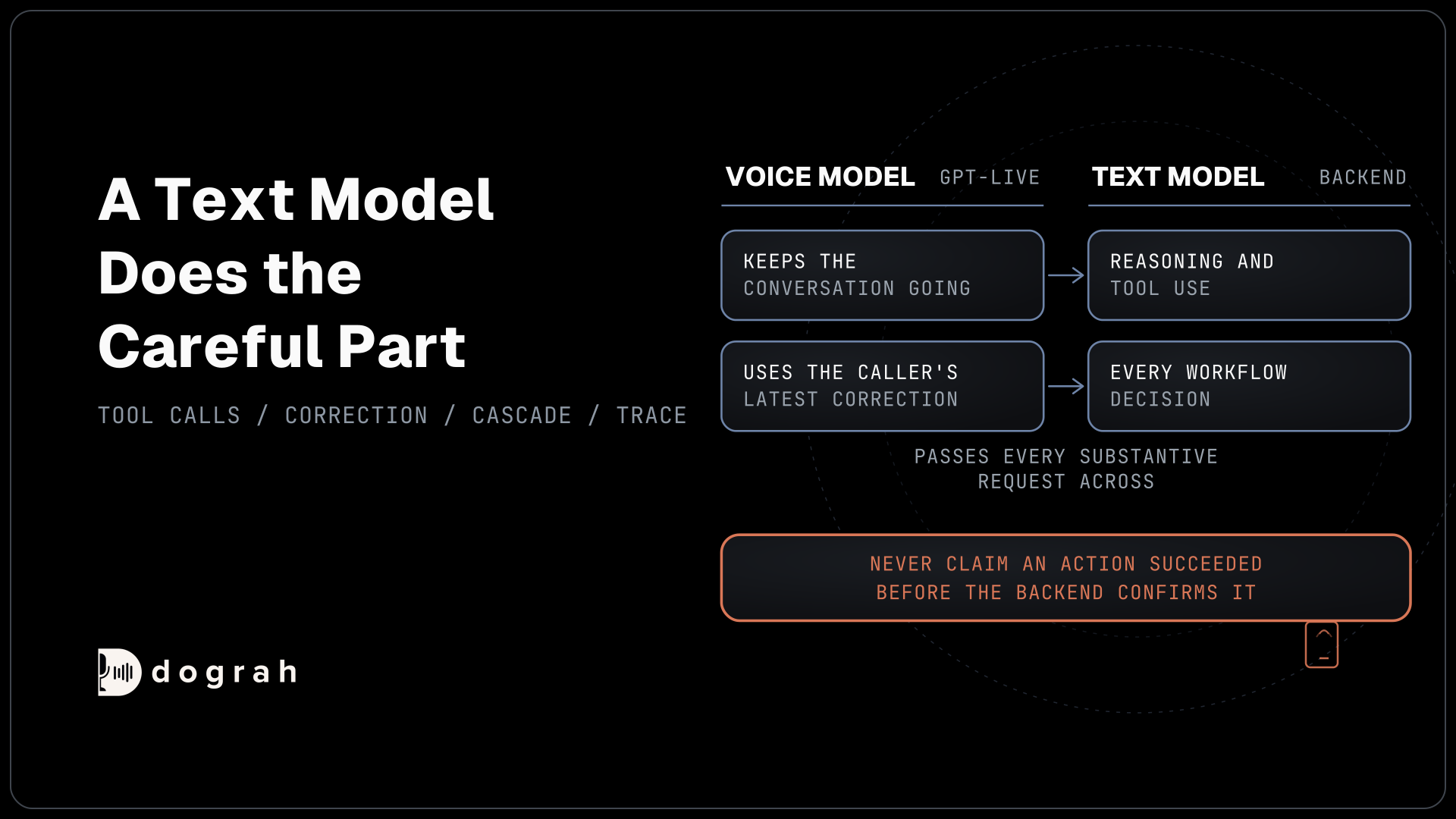
Speech-to-Speech Tool Calling: Where It Breaks on Phone Calls
Where speech-to-speech tool calling breaks on phone calls: tools fired before a correction, wrong values, silent tool runs, what the benchmarks show, how to test it and when to switch to a cascade.
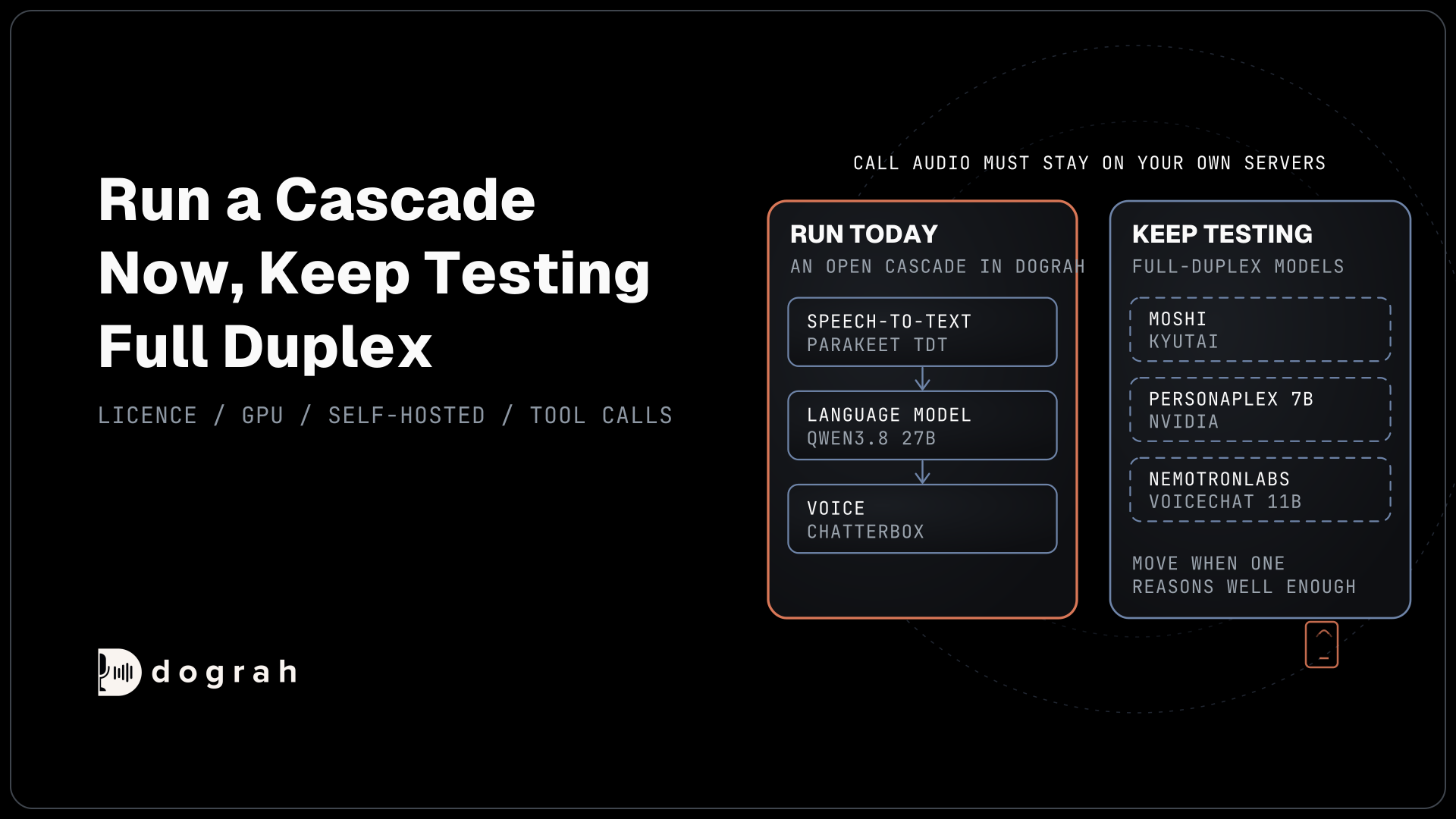
Open-Source Speech-to-Speech Models: Can They Take Phone Calls?
Open-source speech-to-speech models compared: Moshi, PersonaPlex, NemotronLabs VoiceChat and Qwen3-Omni by licence, size, GPU and phone readiness, and what to run on your own servers today.
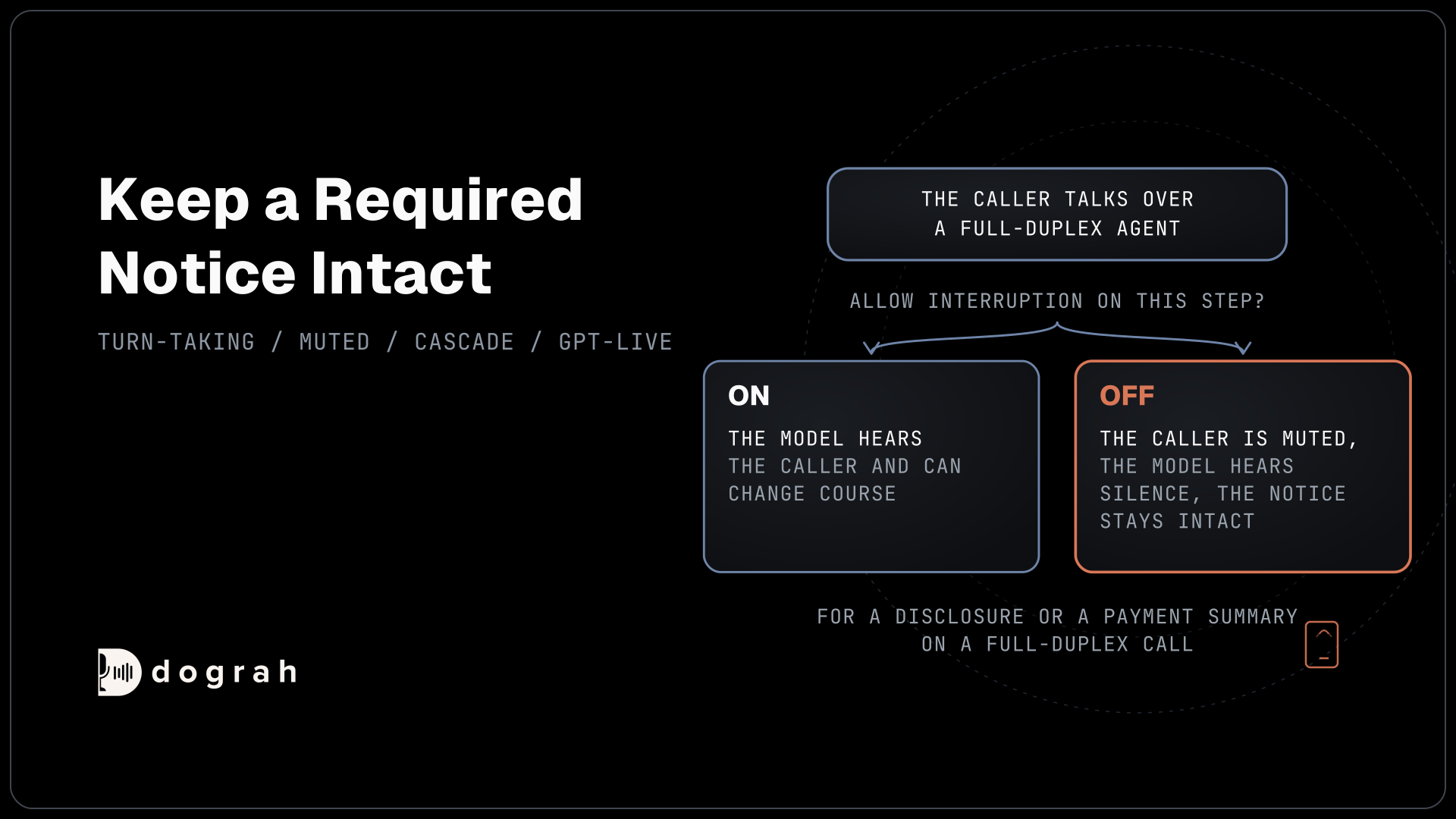
Full-Duplex Voice AI Explained: Talking and Listening at Once
Full-duplex voice AI explained in plain words: what talking and listening at once changes on a phone call, which models are full duplex today, what it fixes, and where a cascade still wins.