
Lindy is a general AI assistant for inbox, calendar, meetings and Slack work, with phone calls as a paid add-on billed from 25 credits a minute plus a monthly number fee. It suits office automation with occasional calls. For phone-first or self-hosted calling, Dograh, the open-source AI voice agent platform we build, runs on your servers or Dograh Cloud.
Key Takeaways
- Lindy phone calls cost from 25 credits a minute, plus a monthly number fee.
- Plan credits reset monthly, and Lindy pauses credit-using work at zero.
- HIPAA with a signed BAA comes only on the Enterprise plan.
Lindy is built as an office assistant, and on that job it does well. This review also asks what happens when you give it a phone line. We cover the product, the phone line, call costs, credit limits and security, then a last section on Dograh for phone-first teams.
What Lindy is, and who it suits
Lindy sells itself as a teammate that lives in Slack. It answers in threads and mentions, runs routines on a schedule, records and summarizes meetings, manages an inbox and can be messaged over iMessage. It also connects to a long list of apps and supports MCP, so most office tools a small company uses are already in reach.
That makes it a good fit for founders and small teams who do not code. You describe a routine in plain words and get a working assistant back, and for inbox triage, meeting prep and follow-up emails it saves real hours each week. Nobody on the team has to run a server or learn a flow editor.
The phone sits on top of all this as one more skill. It is useful, and it is clearly an add-on to an assistant whose center is office work. That framing drives the rest of this review, because the same strengths that make Lindy good at email shape how it handles calls.
How Lindy's phone line works
Lindy's phone works like a personal assistant's line. Lindy's phone line needs a paid plan, availability can vary by account, and numbers come with US or Canadian area codes. A newly bought number has its own monthly fee, and calls use credits.
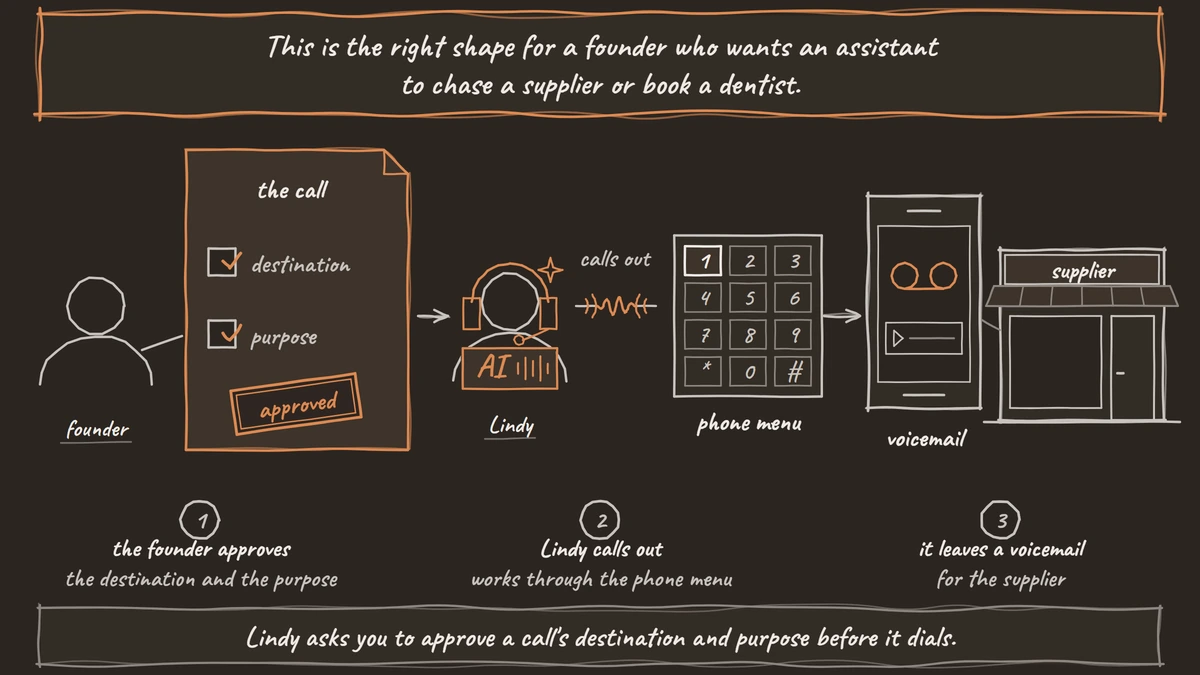
Calls go both ways. You can ring Lindy from your verified number and give it a job, and Lindy can call out for you once you approve the destination and the purpose of the call. On those calls it can work through phone menus, wait in a queue for a person and leave a voicemail. When other people call your Lindy number, it takes messages and books meetings from your booking link, and it can text the confirmation.
Calls are recorded. Lindy says regional, usage and calling-hours limits apply, and that it tells you when a requested call cannot go ahead. Test your real call volume against those limits before a number that clients ring depends on them.
This is the right shape for a founder who wants an assistant to chase a supplier or book a dentist. A support line or an outbound campaign has a different shape, where a team needs many calls at once, a handoff to a person and a record of every outcome. Our post on what an AI call assistant does on business calls covers that wider job.
What a call minute costs on Lindy
Lindy bills calls in credits, and phone minutes draw them fast. Lindy prices phone calls from 25 credits a minute, and at $0.01 a credit on base plans that is from $0.25 a minute. The number is a separate monthly fee billed with your plan, and pausing the number does not stop the fee.
An example shows the scale. Take 2,000 call minutes in one month, about 65 a day. At the floor rate that is 2,000 x 25 = 50,000 credits, or $500 at $0.01 a credit, before the number fee. Lindy's larger credit tiers lower the price per credit, for example 70,000 credits for $399.98 a month, but that pool also pays for everything else the team asks Lindy to do.
The shared credit pool is the real issue for a phone line. Every active user in a workspace is billed, from $49.99 a month for 5,000 credits each, and calls draw from the same credits as inbox work, meeting notes and research. A busy week on the phone leaves less for the rest of the office, and a heavy research week leaves less for calls. That works for a few calls a day. At campaign volume it turns budgeting into a guess.

Open Source Alternative to Vapi / Retell
Self-hosted voice agent platform — no per-minute fees
dograh-hq/dograh
Star on GitHub
Credits, limits and what happens at zero
Lindy states its credit rules plainly. Monthly plan credits refresh at the start of each billing cycle and don't roll over, while top-up credits, at $10 per 1,000, stay in the account until you use them.
At zero, Lindy pauses credit-using actions until your credits reset at the next cycle, unless an admin tops up first. Admins can also set a cap per teammate, and when one person reaches it, Lindy pauses that person's credit-using actions. If the pool empties on the 20th, calls that need credits are paused along with everything else until someone tops up or the cycle resets.
The fix is ordinary budgeting. Set per-teammate caps, keep a top-up budget aside for the phone, and check usage every week in the first month. Our post on the hidden costs of closed voice AI platforms shows how plan caps like these add up across vendors.
Security, HIPAA and closed code
Lindy reports AICPA SOC 2 Type II, GDPR, HIPAA and PIPEDA compliance, and says customer data is never used to train models. Enterprise adds single sign-on, SCIM provisioning and HIPAA with a signed business associate agreement (BAA). A clinic that wants Lindy to call patients therefore starts with an Enterprise contract.
The deeper limit is where the work runs. Lindy is closed source and runs on its own cloud, with no self-hosted version. Your recorded calls, the transcripts and everything the assistant reads in your inbox and calendar sit with Lindy under its terms.
For most small teams that trade is fine, and the certifications cover the usual security questions. For a team that must keep call data inside its own network, such as a bank or a hospital, it rules Lindy out whatever the plan, because there is no version of Lindy to run on your own servers.
Join the Dograh Community
Dograh is an OSS alternative to Vapi. Join our Slack community for queries, releases, best practices & community interactions.
Lindy AI pros and cons
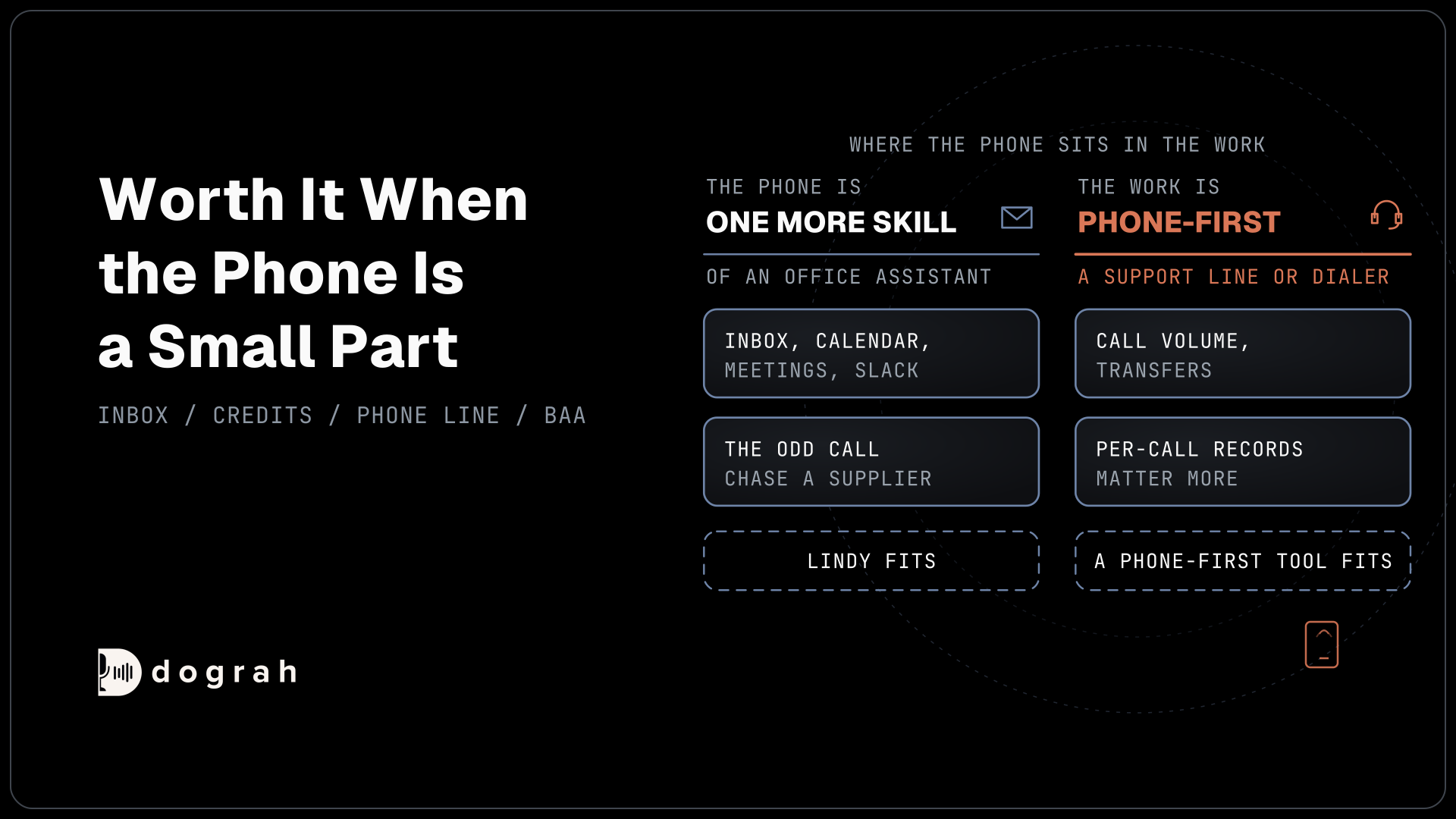
Lindy is worth it when the phone is a small part of a bigger office job. The table sums up where it helps and where it falls short once calls become the main work.
| Where Lindy helps | Where it falls short for calls |
|---|---|
| Plain-language setup for people who do not code | Calls cost from 25 credits a minute from a shared pool |
| Inbox, calendar, meetings and Slack in one assistant | The phone number is a separate monthly fee |
| A long list of app integrations and MCP | Regional, usage and calling-hours limits apply |
| Outbound calls only after you approve them | US and Canadian numbers only |
| SOC 2 Type II, GDPR, HIPAA and PIPEDA | BAA only on Enterprise, and the code is closed |
If you do try Lindy for calls, run a short pilot on one number first. Count the credits a typical call uses and note any call Lindy declines under its limits. Lindy asks you to approve a call's destination and purpose before it dials, a sensible guard for personal errands, so check how that fits a list of a few hundred reminders before you build around it.
Choose Lindy if you want one assistant that also makes and takes the odd call. Look elsewhere if the phone is the product, such as a support line or a sales dialer, where call volume, transfers and per-call records matter more than inbox skills. Our guide to Lindy AI alternatives sorts the options by reason for leaving.
Where Dograh fits
Dograh starts from the call, the opposite end from Lindy. Its code is open under BSD-2-Clause, so you can run it on your own servers or on the managed Cloud, and the Enterprise plan adds on-prem deployment inside your network. It is a phone agent, so inbox triage and meeting notes stay with tools built for them, and when a call should end in a text or a booking, an HTTP API tool asks your own messaging provider or calendar to do it during the call.
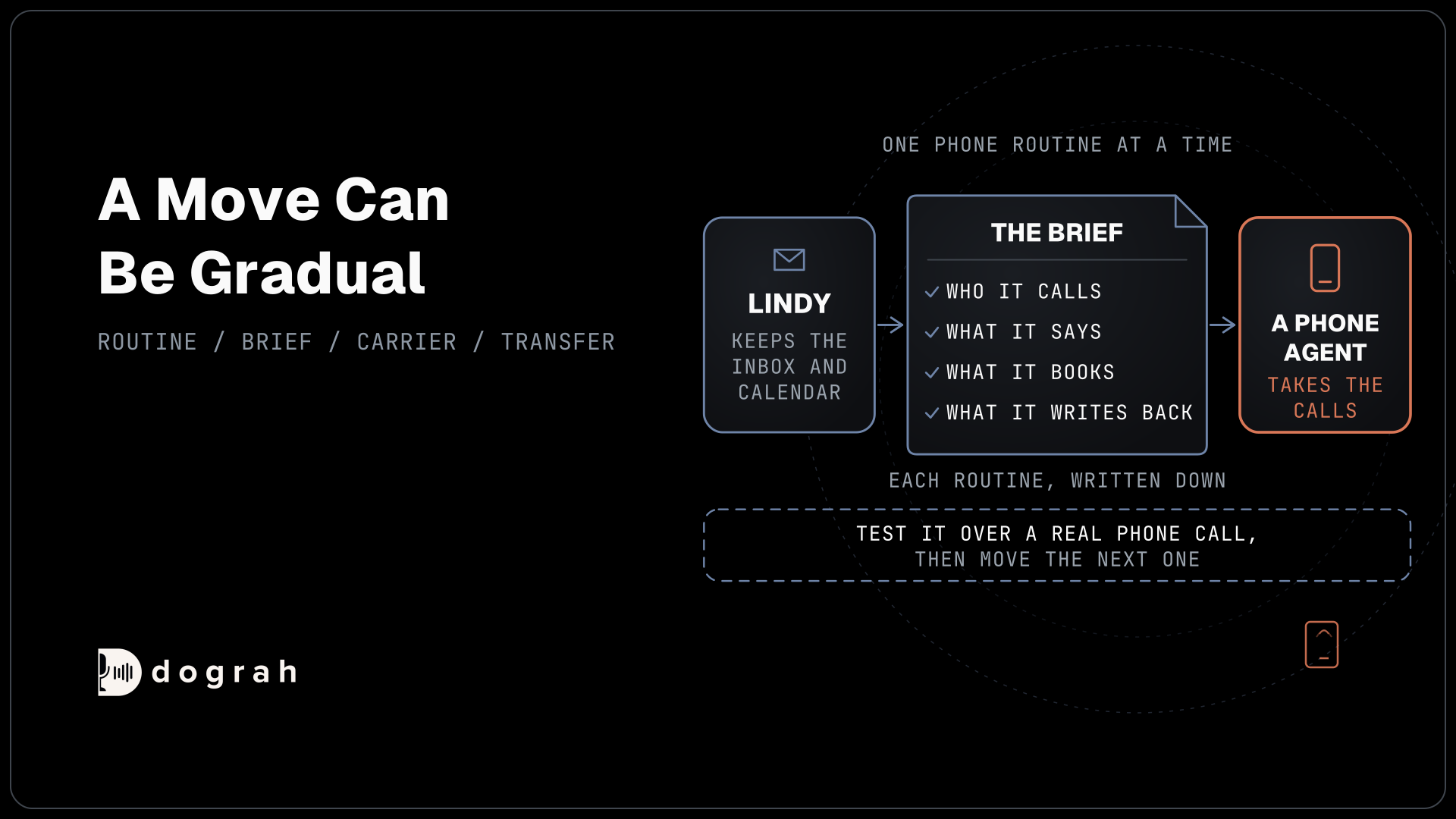
For phone work, the parts Lindy treats as extras are the core. Campaigns dial a call list from your own numbers within the calling hours you set and retry busy or unanswered calls automatically, and contacts that reached voicemail can be called again with Redial Campaign once the campaign completes. Inbound numbers connect through Twilio, Vonage, Plivo, Telnyx, Cloudonix, Exotel, Vobiz or Asterisk ARI.
When a caller needs a person, Transfer Call on Twilio, Telnyx, Plivo, Cloudonix and Asterisk ARI dials the destination first and joins the caller only when someone picks up. A transfer that is busy, fails or goes unanswered comes back to the agent, so the conversation carries on. Calls at once are a setting you control. A self-hosted install runs 10 concurrent calls by default, raised with one environment variable, and the Cloud's pay as you go plan includes 10, with more on request. No inbox or research work competes for them.
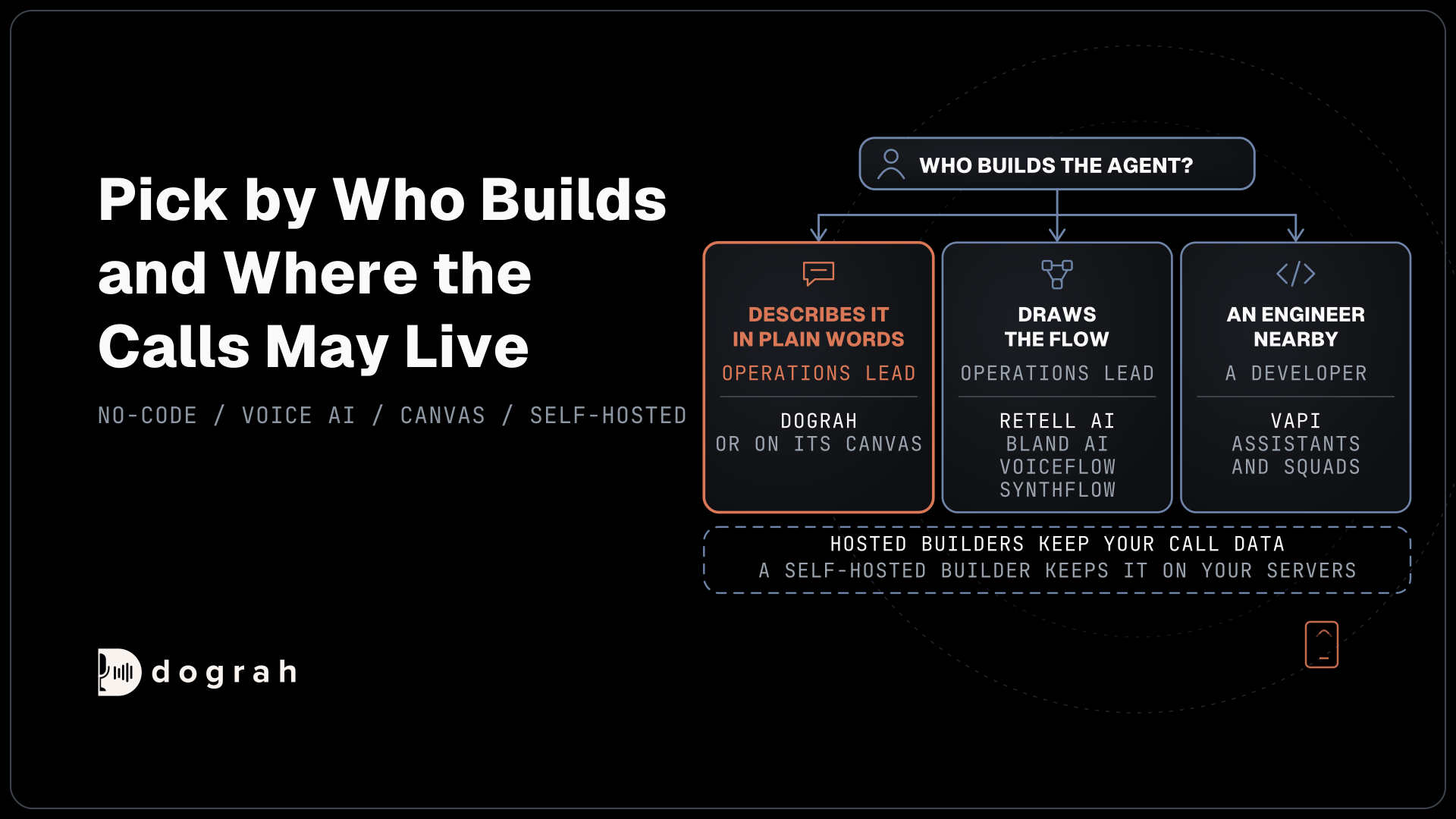
You build an agent by describing it on the "Create an agent" page in the Agent Builder and approving the "Your agent requirements" card, and "Test agent" publishes version 1. The QA step then scores each step of test and live calls, and every call has a trace and a recording to check.
On price, self-hosted Dograh carries no per-minute platform fee, though you still pay for servers, model keys and phone minutes. Dograh Cloud adds a platform fee of 1¢ per minute, so the 2,000-minute example above comes to $20 on that line, with your models and carrier billing you directly. Self-hosting asks for some ownership in return. Your team runs the server and the database, applies upgrades and keeps it healthy, with community support in the Dograh Slack for the open-source edition and custom SLAs on Enterprise.
Glossary
- Credit pool
- The credits a Lindy workspace spends on all of its work. Phone calls, inbox tasks, meeting notes and research all draw from the same pool, so one busy job shortens the month for the others.
- Top-up credits
- Credits bought on top of a Lindy plan, at $10 per 1,000. Unlike monthly plan credits, which reset each billing cycle, they stay in the account until used.
- Per-teammate cap
- A limit an admin sets on one person's credit use in Lindy. When that person reaches it, Lindy pauses their credit-using actions while the rest of the team carries on.
- Business associate agreement (BAA)
- The contract the Health Insurance Portability and Accountability Act (HIPAA) requires before a vendor handles patient data for a covered entity. Lindy signs one on its Enterprise plan.