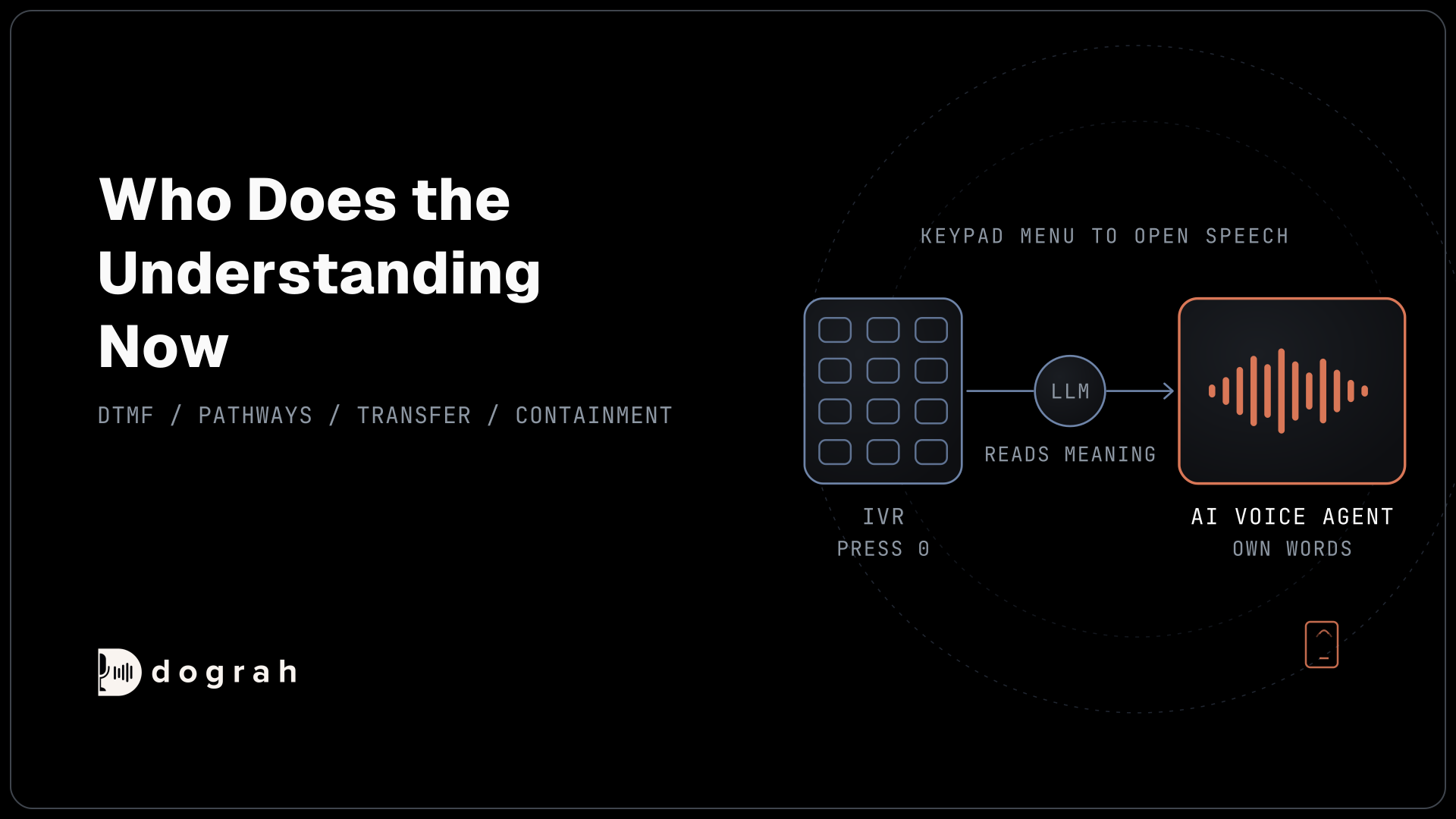

A traditional IVR (interactive voice response) understands only keypad presses and a few fixed words, each mapped to a menu someone drew in advance. An AI voice agent hears open speech, and a language model works out the request and acts on it through tools. The fixed parts, such as routing rules and required wording, move into the orchestration layer.
Key Takeaways
- Callers no longer pick from a menu. They say what they need, and a language model works out what they mean.
- Required wording and routing rules move into the orchestration layer.
- Keep the IVR for keypad card payments and very simple routing.
This post is part of our guide to voice AI explained. The guide covers IVR in one short section, and this post goes further into what moved when the menu went away and when a menu is still the better tool. Where a real flow helps, the examples use Dograh.
Where the understanding happens now
The biggest change is who does the understanding: in an IVR the caller does it, and in a voice agent the software does.
A traditional IVR plays a prompt and waits for an input it already knows. Usually that is a keypress, sent as dual-tone multi-frequency (DTMF) tones, where each key sends a pair of tones the system decodes. Some IVRs add directed dialog, where the caller may say one word from a short list, such as "billing" or "support".
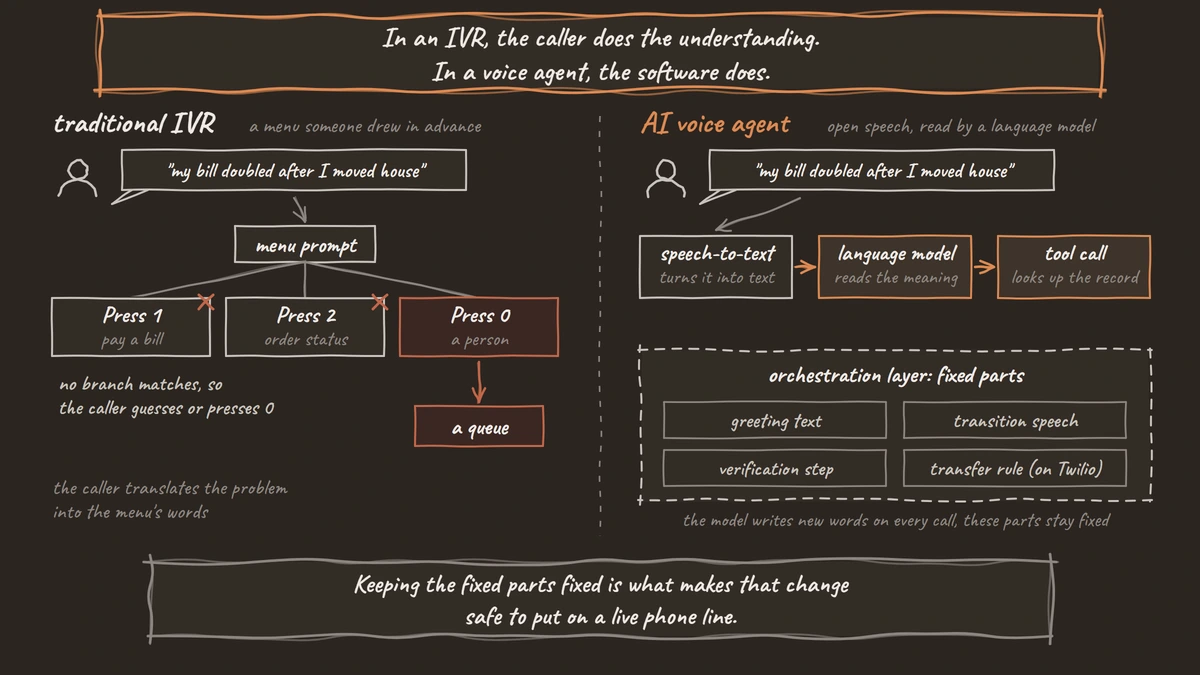
Every path is a branch someone drew in advance, so the caller has to translate their problem into the menu's words. If "my bill doubled after I moved house" matches no option, they guess or press 0.
That translation is expensive. In ContactBabel's 2026 US Contact Center Decision-Makers' Guide, an inbound call costs $7.20 on average, and 25% of callers had already tried to solve their problem online and failed. Those callers bring exactly the problems a fixed menu is least likely to list.
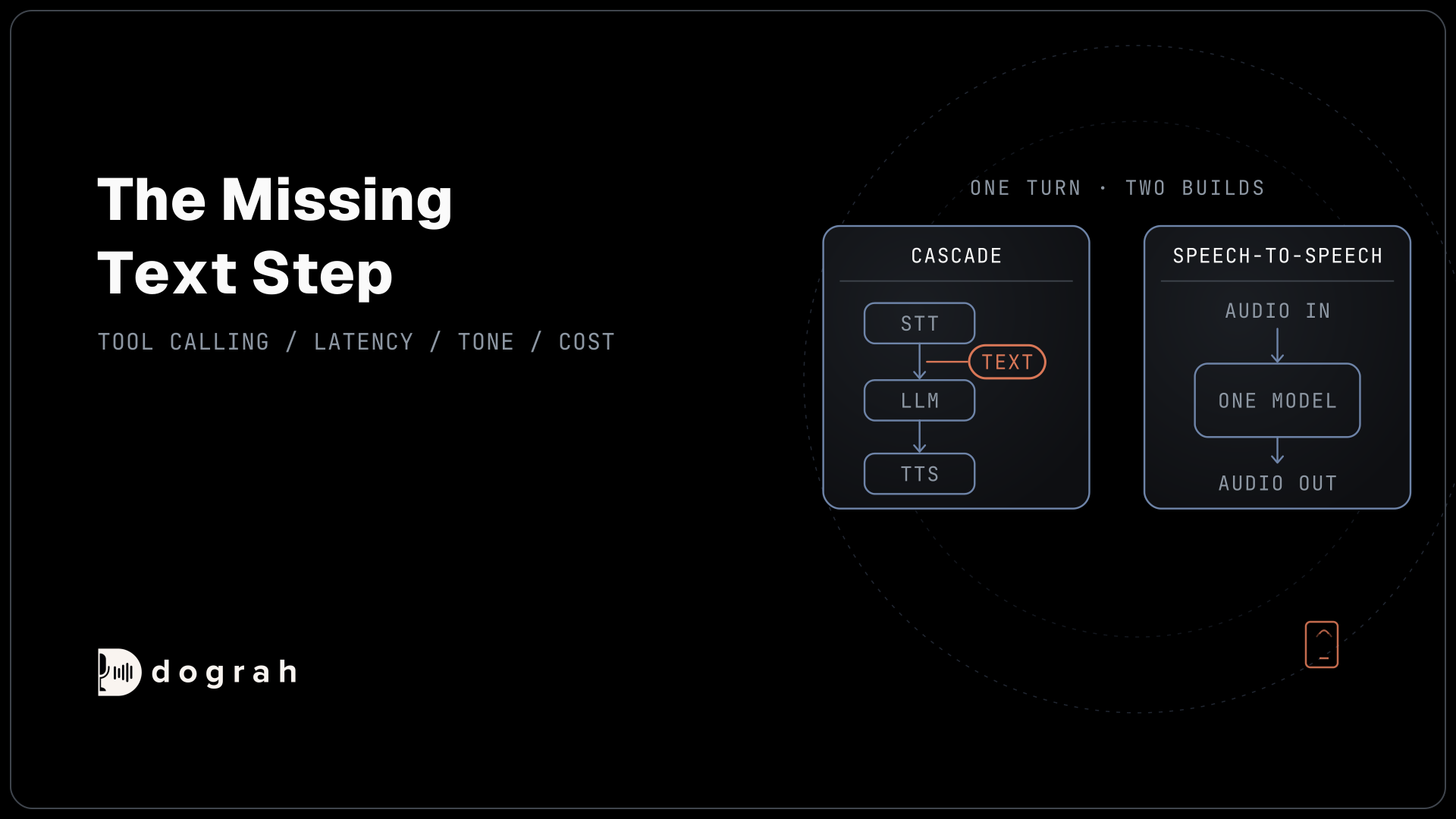
A voice agent turns the job around. The caller says what happened in their own words, speech-to-text turns it into text, and a language model reads it with the current step's instructions to decide what to do next. Our post on how the voice AI pipeline works follows that sentence through each model.
Because the model reads meaning instead of matching keys, a caller can answer two questions in one sentence or change their mind halfway through. The agent can also act. It can look up an order or move an appointment through a tool call, where an IVR could usually only send the call to a queue.
That freedom brings a problem an IVR never had. A keypress is a clear signal that the caller is done. Open speech is not, so the agent has to judge when someone has finished and when to stop talking if they cut in. Barge-in, endpointing and turn-taking covers those decisions.
Where the fixed parts of the call went
The rules an IVR enforced still exist in a voice agent, and they now live in the orchestration layer around the models.
In an IVR, the menu was the rulebook. Pressing 2 always reached billing, and the legal notice played word for word because it was a recording. A language model writes new words on every call, so a prompt that says "always read this disclosure exactly" cannot promise the exact wording.
So the fixed parts move out of the model. Dograh, an open-source, self-hostable voice agent platform, is the orchestration layer: it runs the call flow, tools and telephony, and the speech and language models are a separate layer you choose. What an orchestration layer does covers its other jobs.
Exact wording holds only where the platform speaks fixed text. In Dograh, that means the greeting text on the Start Call step and the transition speech on a pathway between steps. A pre-recorded clip also plays exactly as recorded. Inside a step, the model writes the words, so a required disclosure belongs in one of those fixed places. Transition speech needs a cascade agent, because it does not play on a speech-to-speech model.
The keypad PIN has a replacement too. A good flow runs greet, verify, disclose. The agent asks for an approved check, such as date of birth or the last digits of an account number, before it says anything personal. A phone number finds the caller's record, but it does not prove who is calling.
Routing rules become the pathways between steps, and "press 0" becomes a transfer rule. In Dograh, transfer to a person works on Twilio, and you test it on a real phone call. Answers the IVR stored as keyed digits become variables the agent records from the conversation, as the caller said them, with the transcript and recording as the exact record.
| What the call needs | Traditional IVR | AI voice agent on Dograh |
|---|---|---|
| Understanding the request | A keypress or one word from a short list | Open speech, read by a language model |
| Routing | Fixed menu branches | Pathways between steps in the flow |
| Required wording | A recorded prompt | Greeting text, transition speech or a pre-recorded clip |
| Identity check | PIN on the keypad | A verification step in the flow before anything personal |
| Acting on the request | Fixed lookups, otherwise a queue | Tool calls that look up or change records |
| Reaching a person | Press 0 | A transfer rule (on Twilio) |
| Changing the flow | Re-record prompts and redraw the tree | Edit the step's prompt or the flow |

Open Source Alternative to Vapi / Retell
Self-hosted voice agent platform — no per-minute fees
dograh-hq/dograh
Star on GitHub
Conversational IVR is still a menu underneath
Many vendors now sell a "conversational IVR" or "smart IVR", and the name hides how much of the menu is left.
Most of these products put speech recognition and intent sorting on top of the old tree. The caller may speak freely at the first prompt, the system sorts that sentence into one of a fixed set of intents, and from there the call follows the same branches as before.
An AI voice agent goes further in two ways. It keeps the whole conversation in view, so a caller who gives an order number in the first sentence is not asked for it again three steps later. It can also do the work during the call through tool calls, instead of passing the menu's result to a queue.
A quick test shows the difference on any product. Ask for two things in one sentence, then change one of them. A tree with speech on top tends to catch the first request and lose the second.
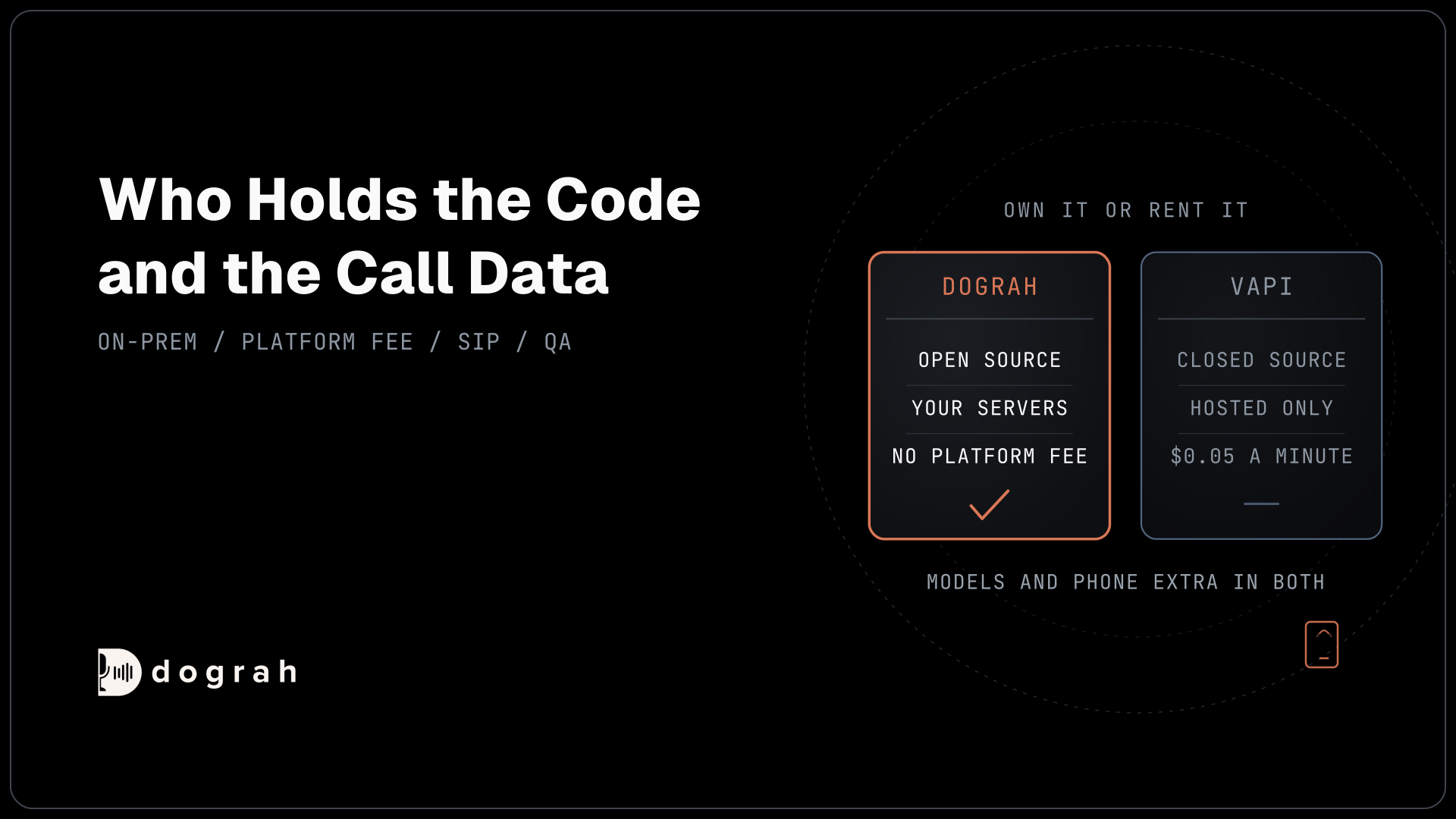
Ownership is the other question. Contact-center IVR suites keep the tree and the call data in their own cloud, while an open-source orchestration layer can run on your servers with models you choose. Our post on the cost and ownership side of leaving an IVR covers that decision.
When a traditional IVR still wins
An IVR still wins where the caller's input is short and exact, such as a card number or a choice between two departments.
Card payments are the clearest case. Keying a card number on the keypad keeps it out of the spoken conversation. Speaking a card number puts it into the call recording and the transcript. For that step, keep the keypad.
Very simple routing is the second case. If two or three options cover almost every call and nothing needs a lookup, a short menu is quick and never mishears anyone. Keypad tones survive any phone line, while most phone calls still reach the agent as 8 kHz audio, against 16 kHz in a browser demo. Long digit strings and unusual names are easier to mishear on a real call.
A badly built agent is also worse than a good menu. In the Qualtrics XM Institute's 2026 consumer trends research, nearly one in five consumers who had used AI for customer service saw no benefit from it, almost four times the rate for AI use in general.
This is why the containment rate, the share of calls finished without a person, is a weak measure on its own. An agent that loops callers until they hang up scores well on containment while failing the caller. Pair it with whether the caller's problem was actually solved.
Join the Dograh Community
Dograh is an OSS alternative to Vapi. Join our Slack community for queries, releases, best practices & community interactions.
How to move from an IVR to an AI voice agent, one call type at a time
Switch one call type at a time while the IVR keeps answering in front, and expand only when real calls show the agent solving problems.
List your call types by volume and pick one that is common and low-risk, such as order status or rescheduling. After-hours calls also make a good first slice.
Keep the IVR as the front door during the pilot. A caller who presses 1 to pay a bill still reaches the keypad payment flow, and only the chosen call type goes to the agent. If the agent struggles, you send that one route back to the old queue.
Build the handover to a person first, with a clear rule for when the agent transfers. Then test the agent over the phone line your callers will use. A browser test call runs at 16 kHz and cannot run a transfer, so it hides the two things most likely to go wrong.
After launch, listen to real calls, because leaders tend to rate their AI higher than callers do. In Twilio's 2025 conversational AI report, a vendor survey, 90% of business leaders believed their customers were satisfied with conversational AI, while only 59% of consumers said they were.
In our experience, running quality checks (QA) on a random 5-10% sample of live calls catches what a dashboard hides. Dograh's QA scores each step of a call separately, so you can see which step lost the caller. Expect the flow to change in the first weeks, since callers behave differently with an agent than with a person. Move the next call type over only when the first one is solving problems.
The real change from IVR is who does the understanding. Keeping the fixed parts fixed is what makes that change safe to put on a live phone line.
Glossary
- DTMF (dual-tone multi-frequency)
- The pair of tones each phone keypad key sends. A traditional IVR decodes these tones to follow its menu, and they survive any phone line, which is why keypad entry is still used for card numbers.
- Directed dialog
- An IVR prompt that accepts only one word from a short list, such as 'billing' or 'support'. It adds speech to the menu without letting the caller explain the problem in their own words.
- Conversational IVR
- An IVR that adds speech recognition and intent sorting on top of a fixed menu tree. The caller can speak at the first prompt, but the call still follows the branches someone drew in advance.
- Containment rate
- The share of calls an automated system finishes without handing the caller to a person. It can be inflated by looping callers until they hang up, so pair it with whether the problem was solved.